Char Siu (Chinese BBQ Pork)
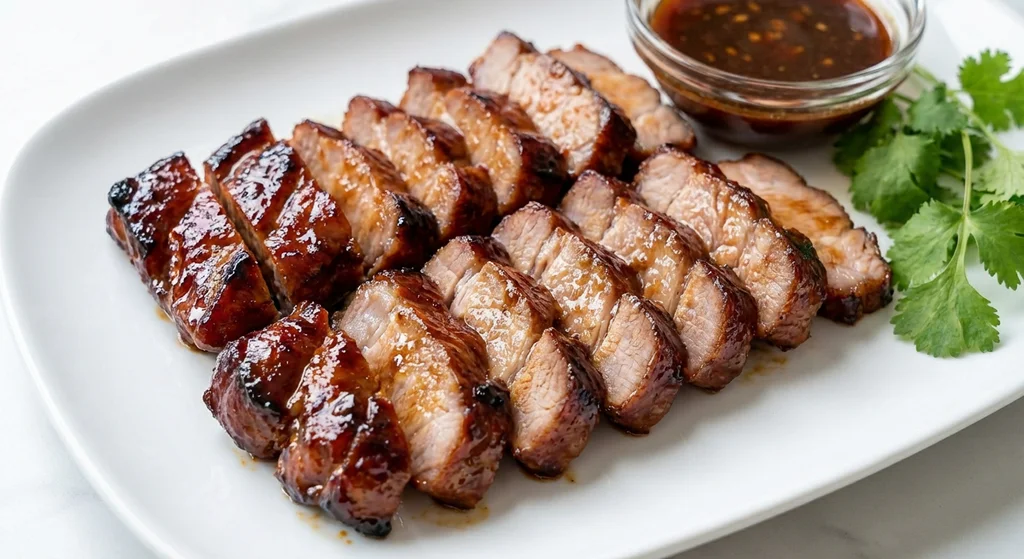
Char siu is a Cantonese-style barbecued pork known for its glossy red exterior, sweet-savory flavor, and tender, juicy interior. The name translates to “fork roasted,” referring to the traditional method of skewering marinated pork and roasting it in a covered oven or over charcoal. This iconic dish originated in Guangdong province, China, and has become a staple in Chinese restaurants worldwide, typically served over rice, in steamed buns, or as part of a roast meat platter.
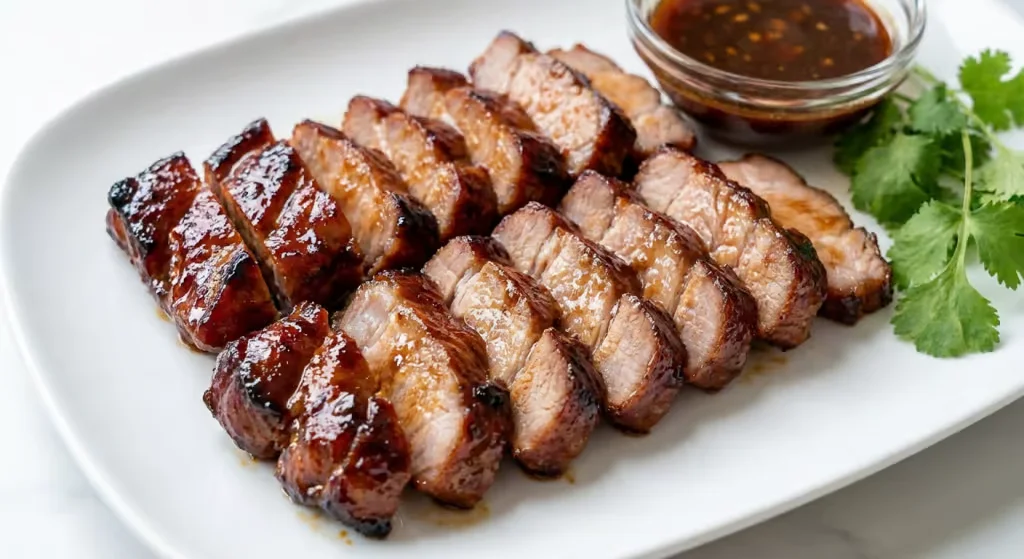
Why This Char Siu Recipe Works
After testing this recipe more than 20 times with different cuts, marinades, and cooking methods, I’ve refined it to deliver restaurant-quality results at home. The key differences from other recipes:
- Maltose syrup instead of only honey creates that signature sticky, glossy glaze without burning
- Red fermented bean curd (nam yu) provides authentic umami depth and natural color
- Two-stage roasting ensures the meat cooks through while developing a caramelized crust
- Strategic basting builds layers of flavor without making the surface too wet
This isn’t the easiest version of char siu, but it’s the most authentic one you can make in a home oven.
Essential Ingredients for Char Siu Marinade
The marinade is where char siu gets its soul. Each ingredient plays a specific role in creating the complex sweet-savory-umami flavor profile.
Core Marinade Ingredients:
- 2 lbs (900g) pork shoulder with fat
- 3 tablespoons hoisin sauce
- 2 tablespoons light soy sauce
- 1 tablespoon dark soy sauce
- 1½ cubes red fermented bean curd (nam yu) plus 1 tablespoon liquid
- 1 teaspoon Chinese five-spice powder
- 2 tablespoons Shaoxing rice wine
- 3 tablespoons brown sugar
- 1 teaspoon sesame oil
- 3 cloves garlic, minced
Glazing Ingredients:
- 2 tablespoons maltose syrup
- 1 tablespoon honey
- 3 tablespoons reserved marinade
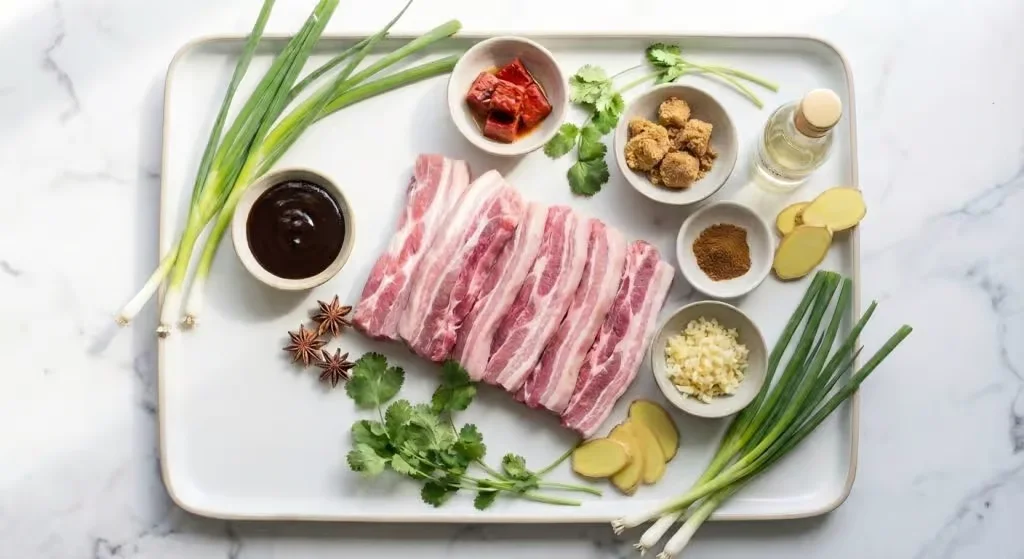
Where to Find Specialty Ingredients: Asian grocery stores or online retailers carry maltose syrup (often labeled “麦芽糖”), red fermented bean curd (nam yu, “南乳”), and Shaoxing wine. If unavailable, honey can replace maltose though the texture will be less sticky, pork belly or pork loin can substitute for pork shoulder, regular soy sauce works in place of light soy, dry sherry replaces Shaoxing wine, and miso paste can substitute for red fermented bean curd though the flavor profile will differ.
Choosing the Right Pork Cut
The cut you choose dramatically affects the final texture and juiciness. Pork shoulder (butt) with medium-high fat content is the best choice—tender, juicy, and forgiving, making it ideal for first-timers seeking maximum flavor with the perfect fat-to-lean ratio. Pork belly has very high fat content resulting in rich, fatty meat with crispy edges, great for fat lovers and indulgent meals though it can be greasy. Pork loin or tenderloin is very lean and can dry out easily, making it tricky and requiring precise cooking, though it works for health-conscious, low-fat diets. Pork collar is highly marbled and extremely tender, creating a premium version that’s hard to find but worth it. Look for pork shoulder with visible marbling—those white streaks of intramuscular fat melt during cooking, keeping the meat moist.
How to Make Char Siu: Step-by-Step Instructions
Step 1: Prepare the Pork (5 minutes)
Cut the pork shoulder into long strips about 2-3 inches thick. Cutting with the grain (lengthwise) creates a better texture than cutting against it. Pat the meat dry with paper towels—this helps the marinade adhere better.
Why this matters: Thicker strips retain more moisture during high-heat roasting. Thinner pieces (under 1.5 inches) tend to dry out.
Step 2: Make the Marinade (5 minutes)
- In a medium bowl, mash the red fermented bean curd cubes with a fork until smooth
- Add hoisin sauce, light soy sauce, dark soy sauce, five-spice powder, Shaoxing wine, brown sugar, sesame oil, and minced garlic
- Whisk until the sugar dissolves and the mixture is uniform
Pro tip: Reserve ¼ cup of marinade in a separate container before adding the raw pork. This reserved portion will be used for basting (never reuse marinade that touched raw meat without boiling it first).
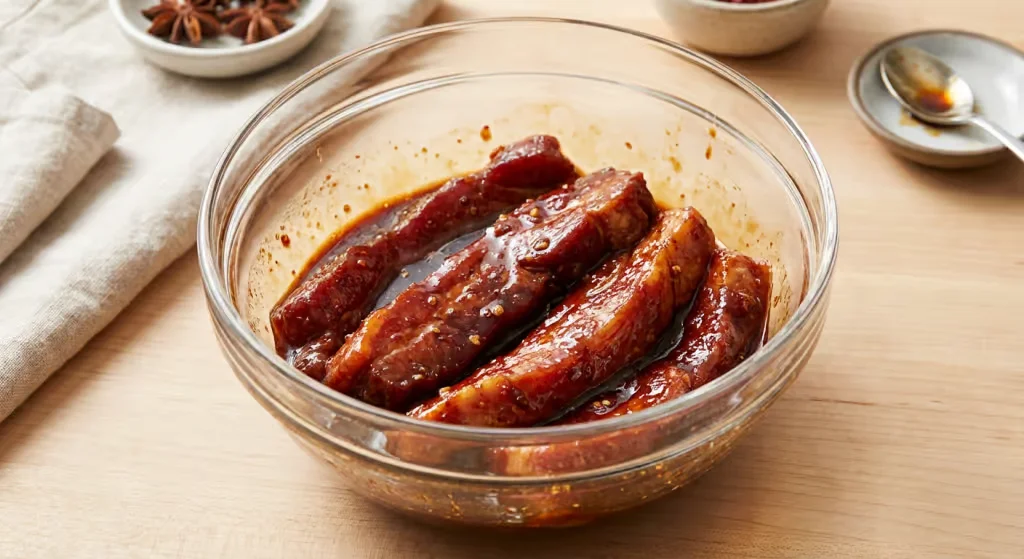
Step 3: Marinate the Pork (12-24 hours)
- Place pork strips in a large zip-top bag or shallow dish
- Pour marinade over the meat, massaging it in to coat all surfaces
- Seal and refrigerate for at least 12 hours, ideally 24 hours
- Flip the bag or turn the meat every 6-8 hours for even marination
Why this timing? The enzymes and salt need time to penetrate deep into the muscle fibers. Under 12 hours yields a surface-level flavor; over 36 hours can make the texture mushy.
Step 4: Prepare for Roasting (5 minutes)
- Remove pork from refrigerator 30 minutes before cooking to take the chill off
- Preheat oven to 375°F (190°C)
- Set a wire rack on a foil-lined baking sheet
- Fill a shallow pan with water and place on the bottom oven rack (creates humidity to prevent drying)
- Place the wire rack with pork on the middle rack
Equipment note: The rack allows heat to circulate around all sides. The water bath below adds moisture to the oven environment.
Step 5: First Roasting Phase (25 minutes)
Roast the pork at 375°F for 25 minutes without opening the oven. During this phase, the meat cooks through while beginning to develop color on the outside.
Step 6: Make the Glaze (2 minutes)
While the pork roasts, prepare the glaze:
- In a small bowl, mix 2 tablespoons maltose syrup, 1 tablespoon honey, and 3 tablespoons of the reserved marinade
- Microwave for 15 seconds to make the maltose easier to stir
- Mix until smooth
Maltose vs. Honey: Maltose’s high viscosity creates a thicker, stickier coating that clings to the meat. Pure honey tends to slide off and burn more easily.
Step 7: Basting and High-Heat Finish (10-15 minutes)
- After the first 25 minutes, remove the baking sheet from the oven
- Increase oven temperature to 425°F (220°C)
- Brush the pork generously with the glaze on all sides
- Return to the oven for 5 minutes
- Remove, flip the pork strips, brush again, and roast another 5 minutes
- Repeat one more time for a total of 3 basting sessions
Watch for: The edges should be caramelized and slightly charred (not black). The surface should look glossy and sticky.
Step 8: Rest and Slice (5 minutes)
- Remove the pork from the oven when the internal temperature reaches 145°F (63°C)
- Let rest on a cutting board for 5 minutes—this allows juices to redistribute
- Slice against the grain into ¼-inch thick slices
Slicing tip: Use a sharp knife and wipe it between cuts. The sticky glaze can make slicing messy if the knife isn’t clean.
Alternative Cooking Methods
While oven roasting is most reliable, other methods can work depending on your equipment and desired outcome.
Oven Method (Detailed Above)
Best for: Consistent results, even cooking, home kitchens
Pros: Reliable, less supervision needed
Cons: Lacks the smoky char of charcoal
Grill or BBQ Method
Best for: Outdoor cooking, smoky flavor
Setup: Indirect heat, medium-high (350-400°F)
Process:
- Grill over indirect heat for 20 minutes
- Move to direct heat for 2-3 minutes per side, basting constantly
- Watch closely—sugar-heavy marinade burns fast
Pros: Authentic charred flavor
Cons: Requires constant attention; easy to burn
Air Fryer Method
Best for: Small batches, crispy exterior
Setup: 375°F, pork in a single layer
Process:
- Cook 15 minutes, flip
- Brush with glaze, cook 5 minutes
- Flip, glaze again, cook final 5 minutes
Pros: Fast, crispy edges
Cons: Limited capacity, less juicy than oven
Traditional Charcoal Method (Reference)
In Hong Kong siu mei shops, char siu hangs vertically in cylindrical charcoal ovens. The dripping fat creates smoke that flavors the meat. This method is difficult to replicate at home without specialized equipment, but it’s the gold standard for flavor.
Frequently Asked Questions About Char Siu
Why is char siu red?
The red color comes from two sources: traditionally, red fermented bean curd (nam yu) and dark soy sauce create a natural mahogany-red hue. Many commercial restaurants add red food coloring for a vibrant, neon-red appearance that customers expect. Homemade char siu without food dye will be darker and more brownish-red, which is actually more authentic.
Can I make char siu without red food coloring?
Yes, absolutely. Red food coloring is not traditional to authentic char siu. Using red fermented bean curd and allowing the sugars to caramelize will give you a beautiful dark reddish-brown color naturally. The flavor won’t be affected at all—in fact, many people prefer the natural appearance.
How long should I marinate char siu?
Marinate for a minimum of 12 hours and ideally 24 hours. Less than 12 hours doesn’t allow enough time for the flavors to penetrate deep into the meat. More than 36 hours can cause the meat to become mushy from the salt and enzymes breaking down the proteins too much.
What temperature should I cook char siu at?
Use a two-stage approach: 375°F (190°C) for the main roasting phase to cook the meat through, then increase to 425°F (220°C) for the final basting and caramelization. The higher heat at the end creates the signature sticky, charred glaze without overcooking the interior.
Can I use chicken or beef instead of pork?
Chicken thighs can work, but they’ll have a different texture and less fat. Reduce cooking time significantly to avoid drying out. Beef can be used, but the flavor profile won’t be traditional—char siu is specifically designed for pork’s sweetness and fat content. If using alternatives, adjust expectations accordingly.
How do I store leftover char siu?
Refrigerate in an airtight container for up to 5 days. To reheat, microwave briefly (30-45 seconds) or pan-fry the slices in a hot skillet for 1-2 minutes per side. Char siu also freezes well for up to 3 months—wrap tightly in plastic wrap, then foil. Thaw overnight in the refrigerator before reheating.
What dishes can I make with char siu?
Char siu is incredibly versatile:
- Char siu bao (steamed BBQ pork buns)
- Char siu fried rice (diced and stir-fried with rice)
- Ramen topping (sliced thin and placed on noodle soups)
- Char siu lo mein (stir-fried noodles with pork)
- Char siu pizza (yes, really—it’s popular in Hong Kong)
- Over rice with vegetables (classic one-plate meal)
Is char siu healthy?
Char siu is high in protein but also high in sugar and sodium from the marinade. A typical 4-ounce serving contains approximately 250-300 calories, depending on the cut. Using pork loin instead of pork shoulder reduces fat content significantly. To make it healthier, reduce the sugar in the marinade by one-third and choose leaner cuts.
Nutritional Information
Per Serving (approximately 6 oz or 170g):
- Calories: 285
- Total Fat: 12g
- Saturated Fat: 4g
- Cholesterol: 85mg
- Sodium: 680mg
- Total Carbohydrates: 18g
- Dietary Fiber: 0g
- Sugars: 15g
- Protein: 26g
Nutritional values are estimates based on pork shoulder. Values may vary depending on the cut of pork used and portion size. Using pork loin will reduce fat and calories; using pork belly will increase them.
Tips for Restaurant-Quality Results
After dozens of iterations, here are the techniques that made the biggest difference:
1. Don’t Skip the Maltose
Honey alone doesn’t create the same glossy, sticky texture. Maltose (available at Asian grocery stores) is worth finding. If you absolutely can’t source it, mix honey with a tiny bit of corn syrup as a compromise.
2. Score the Meat Lightly
Before marinating, use a knife to make shallow diagonal cuts (⅛-inch deep) across the pork surface. This creates more surface area for the marinade to penetrate and helps the glaze adhere better.
3. Room Temperature Matters
Taking the pork out of the refrigerator 30 minutes before roasting ensures even cooking. Cold meat straight from the fridge can result in overcooked exteriors and undercooked centers.
4. Water Bath Is Non-Negotiable
The pan of water on the lower oven rack creates steam that keeps the oven environment humid. Without it, the pork surface dries out before the glaze can properly caramelize.
5. Baste Multiple Times
One glaze session isn’t enough. Three rounds of basting (flip, brush, roast, repeat) builds layers of flavor and creates that thick, lacquered coating.
6. Know When to Stop
The line between caramelized and burnt is thin. If you see black spots forming, remove immediately. Aim for deep mahogany with crispy edges, not charcoal.
Common Mistakes to Avoid
Using Only Lean Meat
Pork tenderloin or extra-lean loin will dry out. You need some fat for juiciness and flavor. If you must use lean meat, reduce cooking time and baste more frequently.
Over-Marinating
More than 36 hours turns the texture mushy. The salt and enzymes break down the meat’s structure. Stick to the 12-24 hour window.
Skipping the Rest Period
Cutting into the pork immediately after roasting causes all the juices to run out onto the cutting board. Five minutes of resting makes a significant difference in moisture retention.
Using a Baking Dish Instead of a Rack
If the pork sits in its own drippings, the bottom won’t caramelize properly and can become soggy. The wire rack allows air circulation on all sides.
Glazing Too Early
If you apply the maltose glaze during the initial roasting phase, it will burn before the meat is cooked through. The glaze only goes on during the final high-heat stage.
Serving Suggestions
Traditional Presentations
- Over white rice with blanched bok choy and soy sauce (classic Hong Kong style)
- In steamed buns (char siu bao) with a fluffy white bun wrapper
- As part of a siu mei platter alongside roast duck and soy sauce chicken
- Cold appetizer sliced thin and arranged on a plate
Modern Fusion Ideas
- Char siu tacos with pickled vegetables and sriracha mayo
- Char siu pizza with scallions and hoisin drizzle
- Char siu grain bowls with quinoa, edamame, and sesame dressing
- Char siu bánh mì sandwich with pickled daikon and cilantro
Regional Variations Worth Exploring
Hong Kong Style (Standard)
The version detailed in this recipe—balanced sweetness, natural red-brown color, sticky glaze.
Malaysian/Singaporean Char Siu
Often darker with more pronounced charring, sometimes served with a thin savory gravy on the side.
Honey Char Siu
Uses a much higher proportion of honey in both marinade and glaze, resulting in a more floral sweetness and lighter color.
Iberico Char Siu
Premium restaurants in Hong Kong have started using Spanish Iberico pork for an incredibly tender, melt-in-your-mouth texture. The marbling is exceptional, though the cost is significantly higher.
Final Thoughts
Char siu requires patience mostly in the marinating phase, but the active cooking time is minimal. The key to success is understanding that each ingredient and step serves a specific purpose: the maltose creates gloss, the fermented bean curd adds umami, and the two-stage roasting ensures both thorough cooking and caramelization. This isn’t a weeknight dinner recipe, but it’s absolutely worth planning ahead for—make a double batch and freeze half so future you will be grateful.
*This post may contain affiliate links which means I may earn commissions for purchases made through links at no extra cost to you. See https://asianfoodsdaily.com/disclaimer/* for more infomation here…
*This post may contain affiliate links which means I may earn commissions for purchases made through links at no extra cost to you. See https://asianfoodsdaily.com/disclaimer/* for more infomation here…
Post your Comment
0 Comments
No comments yet. Be the first to share your thoughts!