How to Make Perfect Char Kway Teow
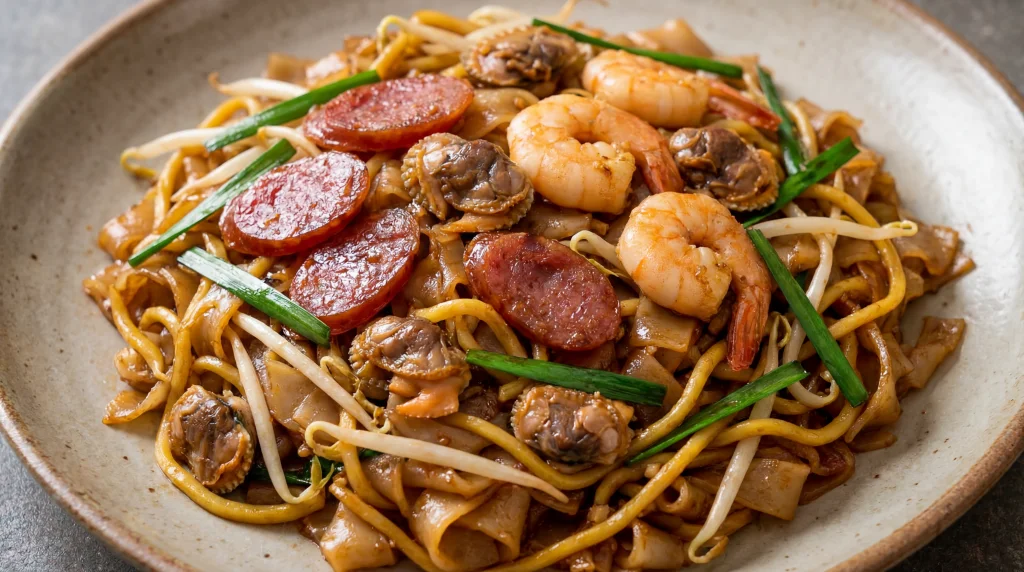
How to Make Perfect Char Kway Teow
This post is for anyone craving that authentic Penang Char Kway Teow recipe with duck egg you had on vacation—or maybe you’ve never tried it but keep hearing about this legendary flat rice noodle stir fry. I’m showing you exactly how to get that smoky wok hei in homemade Char Kway Teow, right in your own kitchen, without needing a restaurant-grade setup.
Last summer, I watched my friend Mei’s grandmother make Char Kway Teow in her Kuala Lumpur kitchen. She didn’t measure anything—just tossed handfuls of noodles, cracked a duck egg with one hand, and threw in Chinese sausage with the other. When I tasted it, everything clicked—the noodles had this incredible smoky flavor and texture I’d been chasing for years.

At a Glance
Prep Time: 15 minutes
Cook Time: 8 minutes
Total Time: 23 minutes
Servings: 2 generous plates
Difficulty: Medium (timing is everything)
Key Ingredients: Fresh flat rice noodles, duck egg, Chinese sausage, bean sprouts, chives
Best For: Weekend cooking when you want restaurant-quality results at home
Why This Recipe Wins
This isn’t just another step by step dry style Char Kway Teow technique you’ll try once and forget.
• You get actual wok hei — that smoky, charred flavor most home recipes can’t achieve
• The noodles don’t clump — I figured out the flat rice noodle preparation for non-sticky Char Kway Teow
• It works on a regular stove — no special equipment needed
• Real flavor depth — the secret dark soy sauce blend for Char Kway Teow makes everything taste like it came from a hawker stall
• Customizable — whether you want halal beef or seafood Char Kway Teow variations, or prefer the Singapore style fried Kway Teow with blood cockles, this base recipe adapts
Ingredients You’ll Need

The Noodles
- 400g fresh flat rice noodles (kway teow) — These are the wide, slippery noodles that make this dish what it is. Fresh ones don’t break apart when you stir fry them.
The Protein
- 100g medium prawns, peeled — Adds sweetness and that classic seafood element
- 2 Chinese sausages (lap cheong), sliced — This is where you get those pockets of sweet, fatty flavor
- 50g fish cake, sliced — Gives you that bouncy texture contrast
- 100g blood cockles (see-hum), blanched — These give you that authentic Singapore style touch with a briny, iron-rich flavor. Optional but traditional
The Vegetables
- 100g bean sprouts — Adds crunch and freshness to cut through the richness
- 3 stalks garlic chives, cut into 2-inch pieces — The slight garlic bite is essential
The Flavor Base
- 2 duck eggs — Richer than chicken eggs, they create a better coating on the noodles
- 3 cloves garlic, minced — Foundation of the aromatic base
- 2 tbsp crispy pork lard croutons (or vegetable oil for halal version) — This is traditional and adds incredible flavor, but you can skip it
The Sauce Mix
- 2 tbsp dark soy sauce — Gives that signature dark color
- 1 tbsp regular soy sauce — For saltiness
- 1 tsp fish sauce — Adds umami depth
- 1 tsp sugar — Balances everything out
- 2 tbsp spicy chili paste sambal (optional but recommended) — For heat and complexity
Equipment You’ll Need
Look, I’m not going to tell you to buy a commercial wok burner. Here’s what actually works:
- Large wok or the biggest frying pan you own — The bigger the better for tossing
- Metal spatula or wok turner — You need something sturdy for flipping
- Small bowl for mixing sauce — Pre-mixing saves you during cooking
- High heat source — Crank your stove to maximum
The key is working fast once you start. Have everything next to your stove before you turn on the heat.
How I Make It (Step by Step)

Step 1: Get Your Noodles Ready
Take the fresh flat rice noodles out of the fridge 20 minutes before cooking. Cold noodles stick together like crazy. Gently separate them with your fingers. If they’re stuck, run them under lukewarm water for 10 seconds and drain immediately. Pat them dry.
Step 2: Mix Your Sauce
In a small bowl, combine the dark soy sauce, regular soy sauce, fish sauce, and sugar. Stir until the sugar dissolves. This takes 30 seconds. Put this bowl right next to your stove.
Step 3: Heat That Wok
This is where achieving smoky wok hei in homemade Char Kway Teow happens. Put your wok on the highest heat your stove allows. Wait until you see a wisp of smoke—about 2 minutes. Add 2 tablespoons of oil (or pork lard if you’re using it). Swirl it around.
Step 4: Cook the Aromatics and Protein
Toss in the minced garlic. It should sizzle immediately. Stir for 5 seconds. Add the prawns and Chinese sausage slices. Stir fry for 1 minute until the prawns turn pink. Push everything to the side of the wok.
Step 5: The Egg Coating Trick
Crack both duck eggs into the empty space in your wok. Let them sit for 5 seconds, then scramble them quickly. Before they’re fully set, add the fish cake slices and toss everything together. The eggs should coat the proteins.
Step 6: Add the Noodles
Now dump in your noodles. Don’t stir immediately. Let them sit for 20 seconds to get some charring on the bottom. Then use your spatula to fold and toss (not stir—there’s a difference). You want big, confident movements.
Step 7: The Sauce Goes In
Pour your pre-mixed sauce around the edges of the wok (not directly on the noodles). This lets it heat up and caramelize slightly before mixing in. Toss everything for about 1 minute. The noodles should turn that gorgeous dark brown color.
Step 8: Finish with Vegetables and Cockles
Add the bean sprouts, garlic chives, and blood cockles (if using). Toss for 30 seconds. The vegetables should stay crunchy and the cockles just need to heat through since they’re already blanched. If you’re using the spicy chili paste sambal for Char Kway Teow, add it now and give it a quick toss.
Step 9: Plate Immediately
Turn off the heat. Divide between two plates. If you have crispy pork lard croutons for traditional Char Kway Teow, sprinkle them on top now.
Tips That Make a Difference
The heat thing is real. Your wok needs to be smoking hot. I know it feels wrong, but that’s how you get the char. If your noodles are steaming instead of sizzling, your heat is too low.
Don’t overcrowd. This recipe serves 2 for a reason. If you try to make it for 4 people in one go, you’ll just get soggy noodles. Make two batches instead.
Fresh noodles only. Dried noodles don’t work the same way. Find an Asian grocery store—they almost always have fresh kway teow in the refrigerated section.
The pause is important. When you add the noodles, that 20-second pause lets the bottom layer get slightly crispy. That’s where the texture magic happens.
Taste your sauce first. Before you start cooking, dip a finger in your sauce mix and taste it. It should be salty, slightly sweet, and very dark. If it’s not punchy enough, add a bit more soy sauce.
Substitutions that work: Can’t find duck eggs? Use 3 chicken eggs instead. No pork lard? Use 2 tablespoons of neutral oil plus a small pat of butter for richness. Skip the blood cockles if you’re not into that—the dish works without them.
Easy Variations
Halal Version: Use halal beef or seafood Char Kway Teow variations—swap the Chinese sausage for thinly sliced beef or extra prawns. Use vegetable oil instead of pork lard. The technique stays exactly the same.
Vegetarian Option: Replace all proteins with firm tofu cubes, shiitake mushrooms, and extra vegetables like bok choy. Use vegetarian mushroom sauce instead of fish sauce.
Spicier Version: Double the sambal and add fresh sliced red chilies when you cook the aromatics.
Singapore Style: Add blood cockles (blanched for 30 seconds) in Step 8 along with the vegetables for that authentic Singapore style fried Kway Teow with blood cockles experience.
Extra Smoky: Add a tiny pinch of smoked paprika to your sauce mix. I learned this trick from a Malaysian chef who adapted recipes for home cooks.
Storage and Reheating
Real talk—Char Kway Teow is best eaten immediately. The texture changes once it cools down. But I get it, sometimes you have leftovers.
Storing: Put cooled noodles in an airtight container. They’ll keep in the fridge for 1 day, maybe 2 if you’re not picky.
Reheating: Don’t use the microwave unless you want rubber noodles. Heat a wok or large pan over high heat, add a tablespoon of oil, and toss the noodles for 2 minutes. Add a splash of water if they seem dry. They won’t be quite as good as fresh, but this method gets you closest.
Freezing: I don’t recommend it. The noodles get mushy and weird when thawed.
Frequently Asked Questions
What’s the difference between Penang and Singapore style Char Kway Teow?
Penang Char Kway Teow tends to be drier with more emphasis on wok hei and uses duck eggs traditionally. Singapore style is often slightly wetter, includes blood cockles, and sometimes has a bit more sauce. Both are delicious—it’s just regional preference.
Can I make this without a wok?
Yes. Use the largest, heaviest frying pan you have. Cast iron works great. You won’t get quite the same wok hei, but you can still make really good Char Kway Teow. The key is maximizing your heat and working in small batches.
Why do my noodles always stick together?
Three common reasons: your noodles are too cold (let them come to room temperature), your wok isn’t hot enough (it should be smoking), or you’re stirring too much instead of tossing. That flat rice noodle preparation for non-sticky Char Kway Teow matters—separate them gently before cooking.
Where do I find fresh flat rice noodles?
Check the refrigerated section of Asian supermarkets, usually near the tofu and fresh noodles. They’re often labeled as “rice stick noodles,” “hor fun,” or “kway teow.” They should feel soft and pliable, not dried out.
Can I prepare anything ahead of time?
Yes, absolutely. Mix your sauce, slice all your ingredients, and separate your noodles up to 2 hours before cooking. Just keep everything at room temperature (except raw proteins—those stay in the fridge until you’re ready). Once you start cooking, the whole thing takes 8 minutes, so prep is where you save time.
Final Note
The first time you make Char Kway Teow at home, it might not look like the picture-perfect plates you’ve seen at restaurants. That’s fine. You’re learning a technique that hawker stall cooks have practiced thousands of times. Your second attempt will be better than your first, and by the third time, you’ll start to feel the rhythm of when to toss, when to pause, when to add what. That’s when it gets fun.
*This post may contain affiliate links which means I may earn commissions for purchases made through links at no extra cost to you. See https://asianfoodsdaily.com/disclaimer/* for more infomation
How to Make Perfect Char Kway Teow
Main course15 minutes
8 minutes
23 minute
Ingredients
- • 400g fresh flat rice noodles (kway teow)
- • 100g medium prawns, peeled
- • 2 Chinese sausages (lap cheong), sliced
- • 50g fish cake, sliced
- • 100g blood cockles (see-hum), blanched
- • 100g bean sprouts
- • 3 stalks garlic chives, cut into 2-inch pieces
- • 2 duck eggs
- • 3 cloves garlic, minced
- • 2 tbsp crispy pork lard croutons
- • 2 tbsp dark soy sauce
- • 1 tbsp regular soy sauce
- • 1 tsp fish sauce
- • 1 tsp sugar
- • 2 tbsp spicy chili paste sambal
Instructions
- 1 Get Your Noodles Ready
- 2 Mix Your Sauce
- 3 Heat That Wok
- 4 Cook the Aromatics and Protein
- 5 The Egg Coating Trick
- 6 Add the Noodles
- 7 The Sauce Goes In
- 8 Finish with Vegetables and Cockles
- 9 Plate Immediately
Post your Comment
0 Comments
No comments yet. Be the first to share your thoughts!