How to Make Traditional Nasi Lemak with Sambal
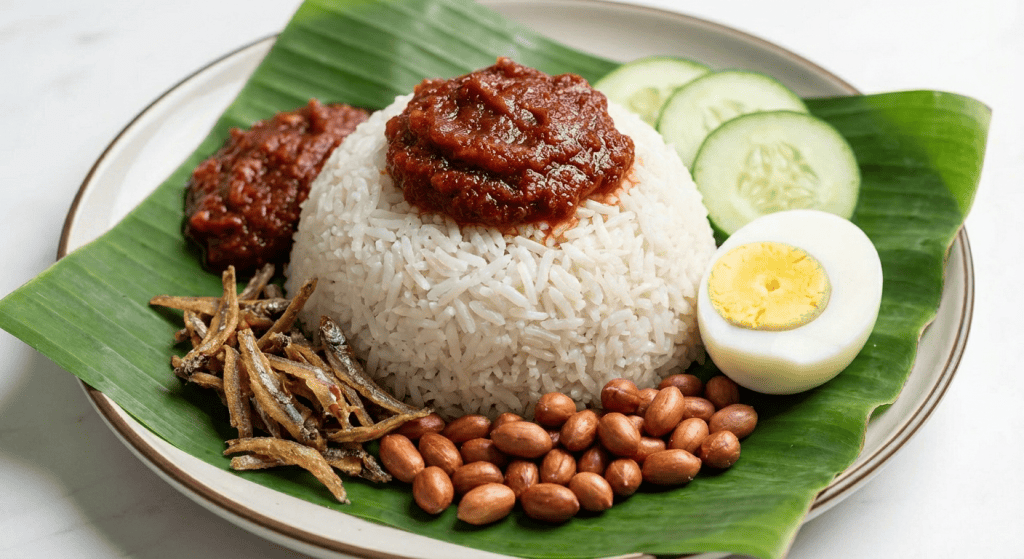
Ever stood in your kitchen, craving that fragrant coconut rice you had at a Malaysian street stall, but the recipes you found online just didn’t cut it? This authentic Malaysian nasi lemak guide walks you through making the real thing—the coconut rice with sambal recipe that Malaysians actually eat for breakfast, lunch, and dinner. Whether you’re Malaysian missing home or someone who fell in love with this dish on vacation, this step by step nasi lemak guide solves the problem of bland, disappointing versions.
My grandmother used to wake up at 5 AM to make this for the family. The smell of pandan leaves steaming with coconut milk would drift through the whole house. That’s the version I’m sharing today.
Why This Traditional Nasi Lemak Recipe Works
This traditional nasi lemak recipe uses the exact method my family’s been using for decades. No shortcuts. No weird substitutions that make it taste off.
The coconut rice stays fluffy, not mushy. The sambal has that perfect balance—spicy, sweet, a bit sour. You get crispy ikan bilis (anchovies) that actually stay crispy. Everything comes together in under an hour if you prep smart.
What sets this apart? The rice steams in actual coconut milk, not watered-down stuff. The sambal gets cooked low and slow until the oil separates. That’s how you know it’s done right. These details matter.
Ingredients for Authentic Malaysian Nasi Lemak
For the Malaysian Coconut Milk Rice
- 2 cups jasmine rice – Use good quality rice. Cheap rice gets gummy
- 1 cup coconut milk – Full fat only. Light coconut milk makes sad, watery rice
- 1 cup water – Balances the richness
- 3 pandan leaves, knotted – The secret to that authentic smell. No substitutes work
- 1 inch ginger, smashed – Adds a subtle kick
- ½ teaspoon salt – Brings out the coconut flavor

How to Make Sambal for Nasi Lemak
- 15-20 dried red chilies – Soak these in hot water for 10 minutes
- 5 fresh red chilies – For color and extra heat
- 4 shallots – Sweetness and depth
- 3 garlic cloves – Can’t skip this
- 1 tablespoon belacan (shrimp paste) – Toasted until fragrant. This is what makes it Malaysian
- 1 tablespoon tamarind paste – Mixed with 3 tablespoons water
- 2 tablespoons sugar – Balances the heat
- ½ cup oil – For cooking the sambal
- Salt to taste
Nasi Lemak Sambal Ikan Bilis Ingredients
- 1 cup ikan bilis (dried anchovies) – Remove heads and guts if you’re picky
- 2 tablespoons oil – For frying
- 2 tablespoons sambal – From your main batch
Traditional Malaysian Sides
- 4 hard-boiled eggs – Cut in half
- 1 cucumber – Sliced thin
- Roasted peanuts – A handful

Equipment for Making Coconut Rice with Sambal
Here’s what makes this easier:
- Rice cooker or heavy-bottomed pot with lid
- Blender or food processor for sambal paste
- Wok or large frying pan
- Small frying pan for ikan bilis
- Strainer for washing rice
Step by Step Nasi Lemak Guide
Step 1: Preparing the Coconut Rice
Wash your jasmine rice three times. Keep rinsing until the water runs clear. This removes excess starch so your coconut rice doesn’t turn into porridge.
Put the rice in your rice cooker. Add coconut milk, water, pandan leaves, ginger, and salt. Stir once. Turn it on. Walk away. Don’t lift that lid while it cooks—steam needs to stay trapped.
Takes about 20 minutes. When it’s done, let it sit for 5 minutes before fluffing.

Step 2: Making Authentic Sambal
This is where how to make sambal for nasi lemak gets real. Drain your soaked dried chilies. Toss them in a blender with fresh chilies, shallots, garlic, and toasted belacan. Blend until smooth. Add a splash of water if needed, but keep it thick.
Heat oil in a wok over medium heat. When it shimmers, add your chili paste. Here’s the trick—cook it low and slow. Stir constantly for about 15-20 minutes. You’ll smell it changing. The color deepens. Oil starts separating at the edges. That’s your sign.
Add tamarind water and sugar. Keep stirring. Another 5 minutes. Taste it. Adjust salt. The sambal should taste bold—spicy, sweet, tangy, all at once.
Step 3: Preparing Nasi Lemak Sambal Ikan Bilis
Heat oil in a small pan. Medium heat. Add ikan bilis. They’ll sizzle immediately. Stir them around. They crisp up fast—maybe 3 minutes. Watch them. They go from golden to burnt in seconds.
Drain on paper towels. While still hot, toss with 2 tablespoons of your sambal. This nasi lemak sambal ikan bilis technique keeps them crispy but flavorful.
Step 4: Preparing the Eggs
Bring water to a rolling boil. Add eggs gently. Set a timer for 7 minutes for slightly soft yolks, 9 minutes for fully cooked. Transfer to ice water immediately. This stops them cooking and makes peeling easier.
Step 5: Assembling Your Traditional Nasi Lemak
Scoop coconut rice onto a banana leaf or plate. Add a generous spoonful of sambal. Arrange your ikan bilis, half an egg, cucumber slices, and peanuts around it. That’s traditional nasi lemak.
Tips for the Best Easy Nasi Lemak Recipe
Toast your belacan properly. Hold it over a flame with tongs or wrap in foil and toast in a dry pan. You’ll know it’s ready when the smell hits you—pungent and savory.
Don’t rush the sambal. That 20-minute cooking time matters. Raw-tasting sambal ruins the whole dish. When oil pools at the edges, you’re there.
Use pandan leaves if you can find them. Asian grocery stores stock them frozen. They give the rice that distinct fragrance no vanilla extract or screwpine substitute can match.
For spicier sambal, add more fresh chilies. For milder, remove some dried chili seeds before soaking.
Day-old rice works better than fresh for this. It’s drier, absorbs coconut milk better.
Easy Nasi Lemak Recipe Variations
Add a piece of fried chicken or rendang beef. These turn your easy nasi lemak recipe into a full meal. Lunch stalls in Malaysia do this.
Make sambal tumis (with onions and tomatoes) instead of pure chili sambal. Different flavor, still delicious.
Vegan version? Skip ikan bilis and eggs. Add fried tempeh and more peanuts. Use vegetarian belacan or miso paste—not traditional, but works.
Some people add lemongrass to the rice. Try it if you like that citrus note.
Prawns cooked in sambal make an excellent addition. Just don’t call it traditional unless you’re from Penang—they do that there.
Storing Your Coconut Rice with Sambal Recipe
Store the coconut rice separately from sambal and sides. Rice keeps 3 days in the fridge, sambal lasts a week.
Reheat rice in the microwave with a damp paper towel on top. Prevents drying out. Or steam it again briefly.
Sambal actually tastes better the next day. The flavors meld overnight. Just warm it gently on the stove.
Don’t refrigerate ikan bilis after frying. They get soggy. Make them fresh each time or keep unfried ones in an airtight container.
Freeze extra sambal in ice cube trays. Pop out what you need later. Convenient for quick meals.
Frequently Asked Questions
Can I use canned coconut milk for Malaysian coconut milk rice?
Yes. That’s what most people use. Shake the can well before opening. Full-fat only—the light stuff won’t give you the right texture or flavor.
What if I can’t find pandan leaves for my coconut rice?
Your rice will still work, just less fragrant. Some people use a tiny drop of pandan extract, but honestly? Skip it rather than use vanilla or other weird substitutes. Plain coconut rice is fine.
How spicy is traditional nasi lemak sambal?
Pretty spicy with 15-20 dried chilies. Cut back to 10 if you’re sensitive to heat. The sugar and tamarind help balance it, but this isn’t mild. That’s the point.
Can I make sambal for nasi lemak in advance?
Definitely. Make a big batch and jar it. Keeps a week in the fridge, three months frozen. Having sambal ready makes this authentic Malaysian nasi lemak come together in 20 minutes.
Why did my coconut rice turn out mushy?
Too much liquid or you didn’t wash the rice enough. Rice-to-liquid ratio matters—2 cups rice to 2 cups total liquid (1 cup coconut milk + 1 cup water). Also, opening the lid while cooking releases steam and messes with the texture.
Final Note on Making Traditional Nasi Lemak
Learning how to make traditional nasi lemak with sambal takes practice. Your first batch might not be perfect. Maybe the sambal’s too thin or the rice is off. That’s normal.
My grandmother always said the best nasi lemak comes with patience. Don’t rush the sambal. Don’t skip steps. Taste as you go. Adjust.
The real magic happens when you plate it up and that smell hits you—coconut, pandan, spicy sambal. You’ll know you got it right when you can’t stop eating.
This coconut rice with sambal recipe connects you to something bigger than just food. It’s morning markets in Kuala Lumpur. It’s family breakfasts. It’s comfort wrapped in banana leaves.
Now go make some. Your kitchen’s about to smell amazing.
*This post may contain affiliate links which means I may earn commissions for purchases made through links at no extra cost to you. See https://asianfoodsdaily.com/disclaimer/* for more infomation
Post your Comment
0 Comments
No comments yet. Be the first to share your thoughts!