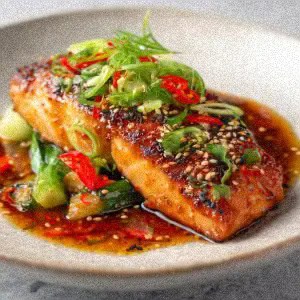
Asian Glazed Salmon is a bright, sticky-sweet supper that lands on the table in twelve minutes. The fish stays silky inside while the soy-honey glaze turns into a shiny coat of salty-sweet armor. Set it over rice, noodles, or last night’s greens and watch the sauce drip into every crevice. One pan, one whisk, no stress—just the kind of fast comfort that feels like a stolen night-market bite without leaving your kitchen.
Why This Recipe Wins
It tastes like you stood over a hot wok for hours. You didn’t.
The glaze is shiny, sticky, a little sweet, a little fierce. The fish stays juicy inside. The skin, if you leave it on, turns into salty glass.
You need one pan and twelve minutes. That’s it. No marinating the night before. No hunting down mystery sauces. Just a bowl, a whisk, and a skillet that can handle high heat.
Fast-Food Rescue
Last Tuesday the clock said 6:47 p.m., the kids were circling like hungry gulls, and I still had one more Zoom. I pulled salmon from the fridge, whispered “please thaw fast,” and set the skillet on high. While the pan heated I whisked the glaze one-handed, phone pinned to my ear.
Three minutes sear, two minutes bubble, rice from yesterday microwaved for ninety seconds. Supper hit plates at 7:02. The eldest said, “Tastes like take-out.” I counted that a win and unmuted myself before anyone noticed I was gone.

Ingredients You’ll Need
Salmon fillets – 4 pieces, 6 oz each, skin on or off. Skin gives crackle; off keeps things tidy.
Soy sauce – 3 tbsp, the deep kind, not low-sodium watery stuff.
Honey – 2 tbsp, for gloss and quick caramel.
Rice vinegar – 1 tbsp, lifts the sweet.
Sesame oil – 1 tsp, nutty perfume.
Garlic – 2 cloves, smashed then minced.
Ginger – 1 inch, peeled and grated. Juice and fiber both go in.
Sriracha – ½ tsp, or more if you like a slow burn.
Cornstarch – 1 tsp, keeps the glaze thick enough to coat a spoon.
Scallions & sesame seeds – scatter at the end for color and snap.
How I Make It
- Pat fish very dry. Water is the enemy of sear.
- Whisk soy, honey, vinegar, sesame oil, garlic, ginger, sriracha, and cornstarch in a mug.
- Heat a non-stick or cast-iron pan until a drop of water skitters. Medium-high.
- Oil the pan lightly. Lay salmon in, presentation side down. Do not nudge.
- After 3 minutes the edges turn opaque. Flip.
- Pour the glaze over. It bubbles fast. Spoon it over the fish like you’re basting a turkey mini.
- Two more minutes for medium. Three if you like it flaking.
- Plate. Spoon the leftover syrup on top. Shower scallions and seeds.
Tip I learned the hard way: If the glaze darkens too fast, yank the pan off heat. The residual fire finishes it.
Tips That Make a Difference
- Cold salmon cooks unevenly. Let it sit out 15 minutes.
- If you only have table vinegar, cut it with a splash of water and a pinch of sugar.
- No Sriracha? Gochujang works. Ketchup plus chili flakes work.
- Want restaurant shine? Add a thumbnail of cold butter to the glaze right before serving. Swirl, don’t stir like crazy.
- Cast iron gives the best crust. Non-stick gives peace of mind. Pick one and commit.
Easy Variations
Swap salmon for thick cod or sea bass. Time stays the same.
Make it soy-free: use tamari or coconut aminos.
Add citrus: a squeeze of yuzu or lime right at the end wakes everything up.
Vegetarian? Use tofu bricks pressed under a plate for 20 minutes. Crisp sides, then glaze.
Bulk it out: toss in sugar-snap peas during the last minute. They glaze themselves.
Storage and Reheating
Cool leftovers fast. Refrigerate in a glass box up to 2 days.
Reheat in a dry skillet, lid on, low heat, 4 minutes. Microwave works but the glaze goes gummy.
Flake cold salmon over salad greens. The dressing clings to the sticky bits.
Do not freeze. The soy turns the fish spongy.
Recipe FAQ’s
No honey?
Brown sugar melts fine. Maple tastes like Sunday morning.
White stuff on salmon?
Albumin. Harmless. Brush with glaze and no one notices.
Double batch?
Use two pans or cook in waves. Crowding steams instead of sears.
Can I use frozen salmon?
Yes, thaw it first. Pat dry or the glaze slides off.
Skin on or off?
Your call. Skin crisps like salty paper; off keeps things neat.
No honey in the house?
Brown sugar, maple, even agave work. Use the same spoon, no math.
Gaze tastes too salty?
Splash in a tablespoon of water and a pinch more honey. Taste, adjust, smile.
How do I know it’s done?
Fish flakes under gentle pressure and turns opaque coral inside. 145 °F if you own a thermometer.
Can I bake instead of sear?
425 °F on foil, 9 min, glaze halfway. Skin stays soft but flavor stays.
Will the sauce thicken without cornstarch?
It will, just slower. Let it bubble an extra minute and spoon, spoon, spoon.
What pan is safest?
Non-stick for calm nerves, cast iron for swagger. Both work.
Leftovers for lunch boxes?
Cool fast, fridge two days max. Reheat low and slow, or eat cold on salad.
Doubling for a crowd?
Use two pans or cook in shifts. Crowd the pan and you steam, not sear.
Equipment Note
A 10-inch cast-iron skillet passed down from my aunt. She seasoned it with pork fat and stubbornness. I still hear her saying, “Hot pan, cold oil, food won’t stick.” Same pan sears salmon, bakes cornbread, and once served as a weight for tofu. One tool, many stories.
Cultural Footnote
In Taiwan night markets vendors brush whole mackerel with a similar glaze, slap them onto open flames, and hand them over in paper sleeves. The first time I tasted one I was twelve, standing barefoot on flip-flops, sauce dripping down my wrist. This recipe is my weeknight version of that memory—no charcoal, no crowds, just the same sweet-salty echo.
Final Note
Cook it once and the sauce lives in your head rent-free. You’ll find yourself glazing carrots, chicken, maybe even a piece of toast. That’s okay. Recipes wander. Let this one stay.
This post may contain affiliate links which means I may earn commissions for purchases made through links at no extra cost to you. See https://asianfoodsdaily.com/disclaimer/ for more infomation