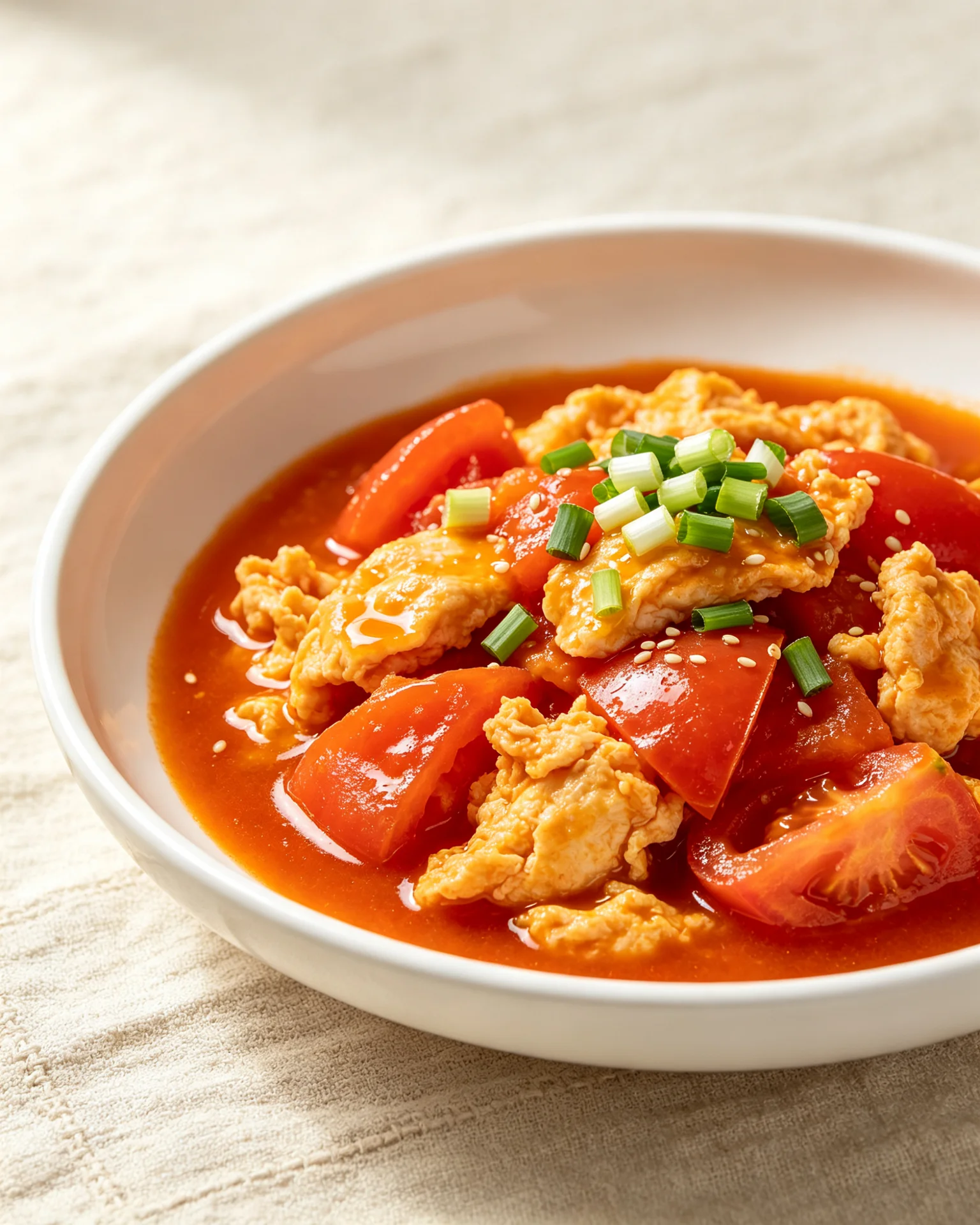
Chinese Tomato Egg Stir Fry Recipe (番茄炒蛋)
Jump to Section
The first time I made this without sugar, I assumed it would taste like a lighter version of the same dish. It tasted completely different, sharp, slightly harsh, the tomato acidity unbalanced in a way that made the whole thing unpleasant to eat. I added the sugar back and made it again. The sauce rounded out immediately. Not sweet. Just no longer sharp.
The sugar in this dish is not for sweetness. Tomatoes cooked down are significantly acidic, pH around 4.0-4.5 from their citric and malic acid content. A teaspoon of sugar corrects that acidity rather than adding a new flavour. Without it, the sauce tastes raw and sharp. With it, the tomato flavour is present and complex without the harsh edge. It is one of the smallest amounts of one ingredient that makes the biggest difference in any dish I know.
What is 番茄炒蛋 and why does it taste more complex than two ingredients should?
Fān qié chǎo dàn (番茄炒蛋) means fried tomato egg in Mandarin. It is the most widely made home-cooked dish in China, the first thing most Chinese children learn to cook, the last thing on the table when nothing else was planned. Two ingredients, fifteen minutes, eaten over rice. The simplicity is the point.
What is less obvious is why it tastes the way it does. Tomatoes contain approximately 140-250mg of glutamate per 100g, one of the highest concentrations in any common vegetable. Egg yolks contain inosinate, a different umami compound from the nucleotide family. When glutamate and inosinate are present simultaneously in a dish, the perceived umami is not additive. It is multiplicative, the combination produces an intensity significantly greater than either compound alone.
This is why tomato and egg together taste far more complex than either tastes separately. The same principle explains parmesan on tomato pasta (parmesan glutamate plus tomato glutamate), dashi with soy sauce (dashi inosinate plus soy glutamate), and anchovy in tomato sauce. Two umami compounds combining produces something that registers as deeply savoury even in a dish with no meat.
Why do the eggs go in first and why do you remove them before they are fully cooked?
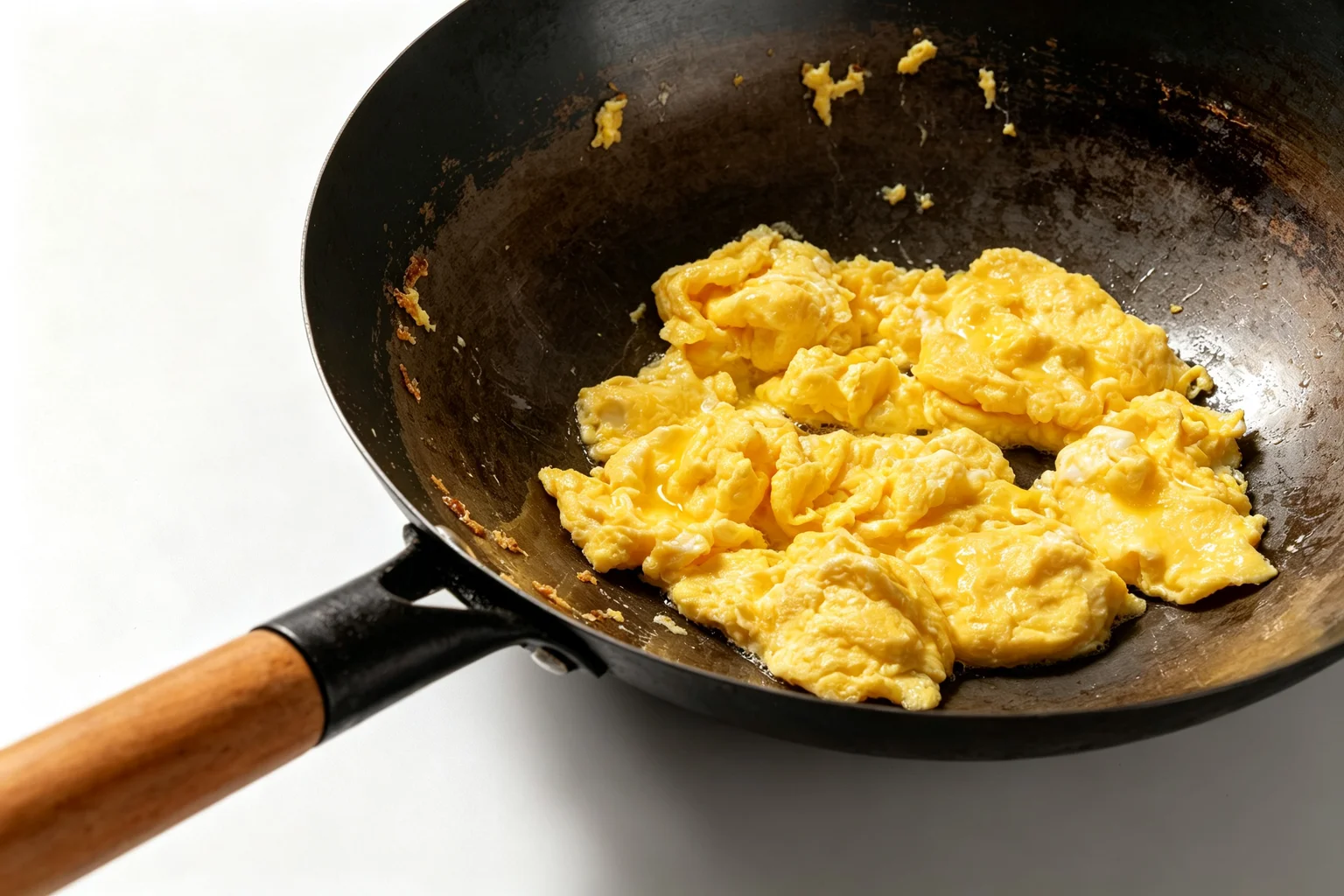
Both questions have the same answer: moisture.
Raw tomatoes release significant water when they hit a hot pan. If tomatoes go in first, that water floods the pan before the eggs arrive. The eggs then cook in a humid, watery environment rather than in dry, hot oil. The result is scrambled eggs that are slightly waterlogged, cooked through but soft and undifferentiated, without the custardy texture that makes the dish what it is.
Eggs in dry, hot oil first, no water, no steam, direct contact with the hot fat, produce the large, slightly firm curds with a custardy interior that the dish is built around. Remove them before the tomatoes, and the two components cook in their correct environments.
The 80% cooked removal point is the other key. Eggs removed at 80%, glossy in the centre, set at the edges, still moving slightly when the pan is shaken, will finish cooking from residual heat and from the heat of the tomato sauce when they are returned. Fully cooked eggs returned to a hot sauce overcook within 30-60 seconds and become slightly rubbery. The margin is narrow. Pull them early and trust the residual heat to finish the job.
Why is sugar not optional?
Covered in the opening, but worth stating plainly: the sugar corrects the pH of the tomato sauce, not the sweetness. Cooked-down tomatoes are acidic enough that without acid correction the sauce tastes sharp and unpleasant regardless of how ripe the tomatoes are or how good the eggs are.
One to two teaspoons of sugar for 2-3 medium tomatoes is the right range. Start with one, taste, add the second if the sauce still tastes sharp after the eggs go back in. You should not taste the sugar as sweetness, you should notice that the sharpness is gone.
A pinch of baking soda achieves the same result faster (baking soda directly neutralises acid) but changes the texture of the tomatoes slightly and can produce an off note if overdone. Sugar is the traditional and more controllable approach.
Why does ripeness matter so much?
Ripe tomatoes have more glutamate than unripe ones, the ripening process converts amino acid precursors into free glutamate, which is why a sun-ripened August tomato tastes fundamentally more complex than a hard February greenhouse tomato, even at the same size and colour.
Ripe tomatoes also have higher natural sugar content, which means less correction is needed. Their cell walls break down more readily during stir frying, releasing juice naturally and creating the sauce without the cook having to add water. Unripe tomatoes have lower glutamate, higher acid, thicker cell walls, and produce a thin, sharp sauce regardless of technique.
If the only tomatoes available are firm and slightly underripe, add a teaspoon of tomato paste to the sauce stage. Tomato paste has concentrated glutamate from its longer cooking process and partially compensates for the missing flavour complexity.
What does Shaoxing wine do in the eggs?
Add a teaspoon of Shaoxing wine to the beaten eggs before cooking. When the wine-seasoned eggs hit the hot oil, the alcohol evaporates in seconds. That evaporation releases the volatile ester compounds from the wine’s rice fermentation, aromatic molecules that deposit on the cooking egg surface and contribute a subtle, slightly sweet depth that is distinctly absent in eggs cooked without wine.
The eggs do not taste alcoholic. They taste more complex. It is one of those additions where the absence is easier to notice than the presence, make the dish once with the wine and once without, and the version without tastes slightly flat.
Sesame oil is the other aromatic element, but it goes in at the end, off heat. Added during cooking it smokes and turns slightly bitter. Added after the heat is off, the fragrance is preserved fully and coats the finished dish.
Ingredients
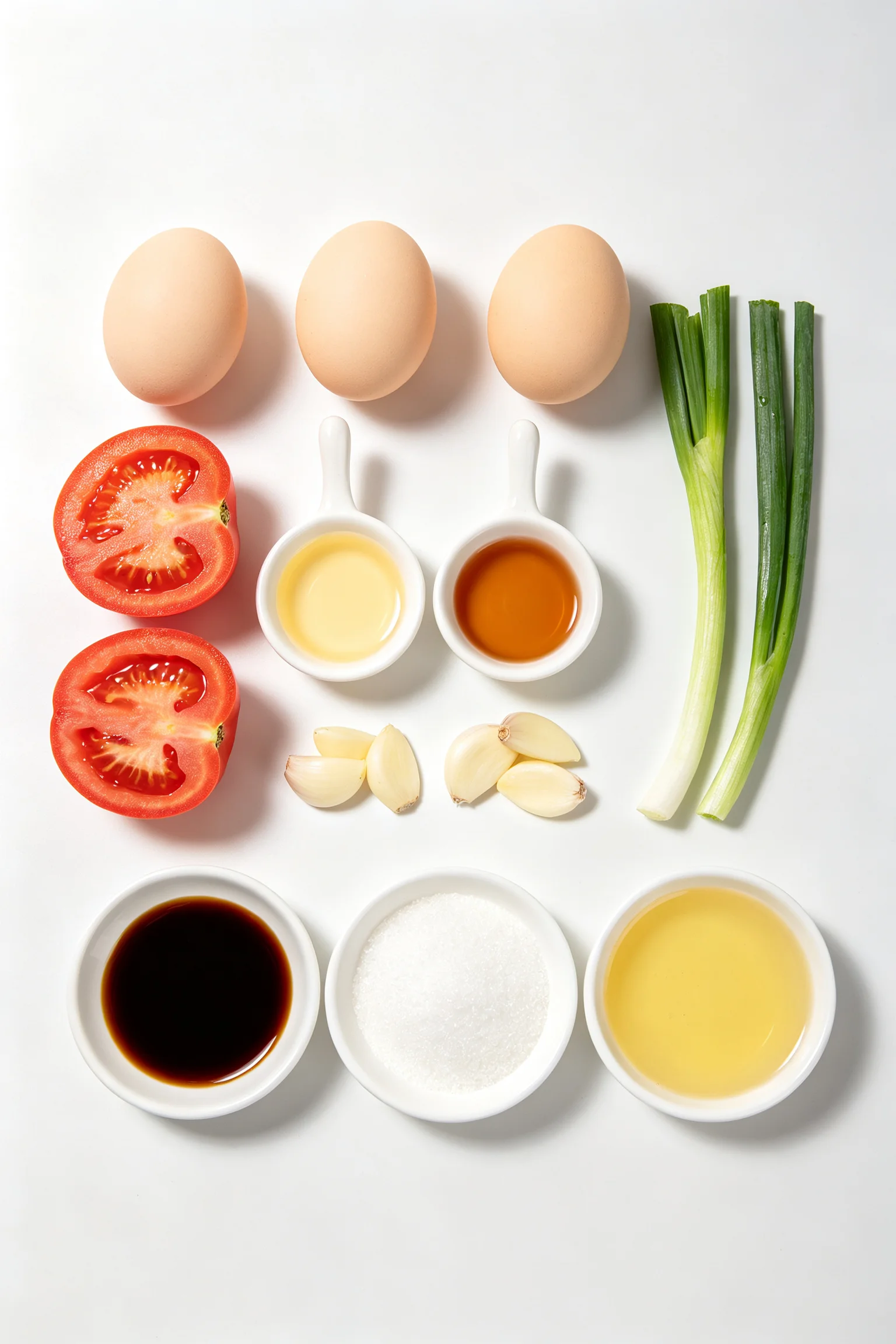
Serves 2, scale directly for more
- 3 eggs
- 1 tsp Shaoxing wine
- ¼ tsp salt
- ¼ tsp white pepper
- 1 tsp sesame oil (added off heat)
- 2 medium ripe tomatoes (approximately 300g), cut into wedges
- 3 tbsp neutral oil, divided
- 2 garlic cloves, thinly sliced
- 1-2 tsp white sugar
- 1 tbsp light soy sauce
- 2 spring onions, sliced, whites separated from greens
Instructions
Everything ready before the wok is lit. This moves fast.
Step 1: Beat the eggs
Crack 3 eggs into a bowl. Add Shaoxing wine, salt, and white pepper.
Step 2: Scramble the eggs at 80%
Heat a wok over medium-high heat. Add 2 tablespoons of oil.
Step 3: Cook the tomatoes
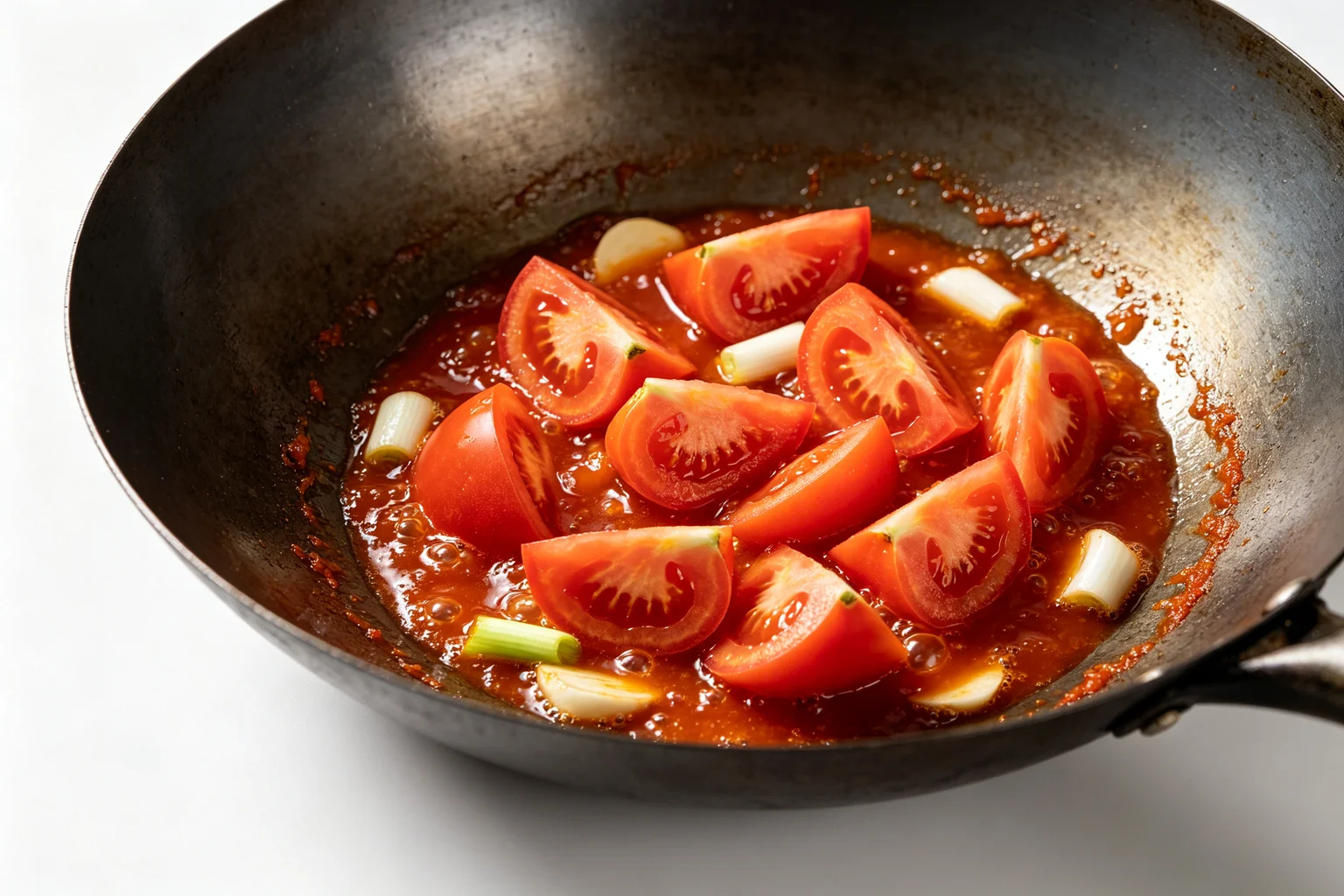
Add the remaining tablespoon of oil to the wok over high heat. Add the garlic and spring onion whites.
Add soy sauce and sugar. Toss. Let the sauce bubble and reduce for 30-45 seconds until slightly thickened. Taste, the sauce should taste rounded, not sharp. If still sharp, add the second teaspoon of sugar.
Step 4: Return the eggs
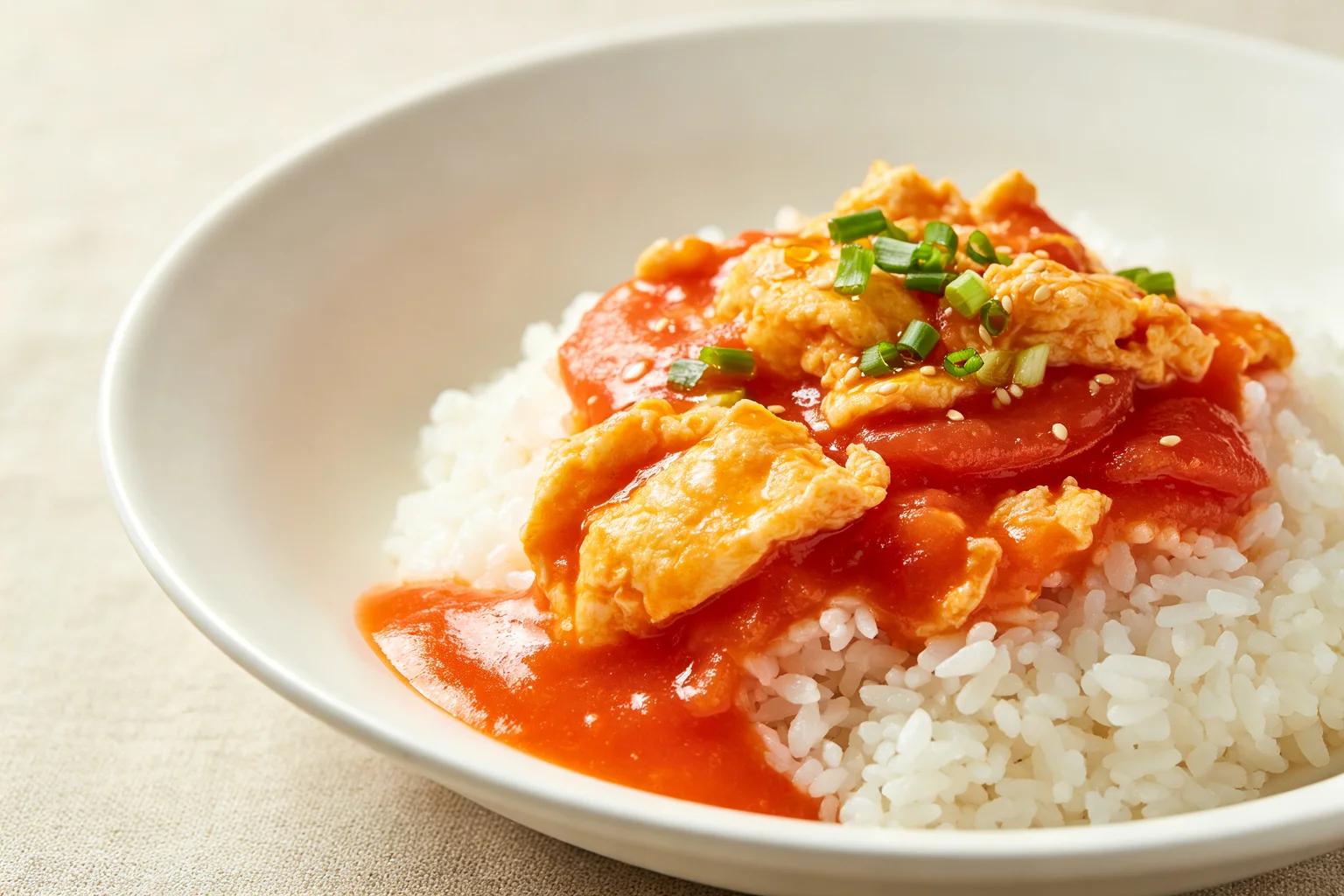
Add the partially cooked eggs back to the wok. Fold them gently into the tomato sauce, do not stir vigorously or they will break into small pieces.
Add the spring onion greens. Remove from heat. Add sesame oil. Toss once. Serve immediately over steamed white rice.
What is the difference between the northern and southern Chinese versions?
Regional preferences produce noticeably different versions of the same dish.
Northern Chinese versions tend to use more eggs relative to tomato and produce a drier result with larger egg curds dominating the plate. The sauce is less prominent. The dish is more egg-forward.
Southern Chinese, particularly Cantonese versions, use more tomato relative to egg, produce a saucier result, and often go lighter on seasoning. The tomato sauce is meant to pool around the rice rather than just coating the eggs. Some versions add a small amount of ketchup alongside fresh tomato for deeper colour and additional sweetness.
Both are correct. The ratio of eggs to tomatoes (3 eggs to 2 medium tomatoes) in this recipe sits between the two regional approaches, enough egg for custardy curds, enough tomato for a sauce that coats the rice.
How do you store and reheat tomato egg stir fry?
Keeps in the refrigerator for 1 day. The eggs absorb the tomato sauce overnight and the texture softens. Day two is still edible but noticeably different from fresh.
To reheat: add a small amount of oil to a pan over medium heat. Add the stir fry and heat gently for 1-2 minutes, folding carefully. Do not use high heat, the eggs will toughen. Do not microwave, it turns the eggs rubbery and separates the sauce. A gentle reheat in a pan produces the closest result to fresh.
This dish is best made fresh and eaten immediately. The 15-minute cook time means there is rarely a reason to make it in advance.
Love Chinese food?
Check out my complete guide to Chinese home cooking, pantry essentials, and techniques.
FAQ
Why are my eggs rubbery in tomato egg stir fry? Two causes. First, the eggs were fully cooked before being returned to the tomato sauce, fully cooked eggs continue cooking when returned to a hot sauce and overcook within 30-60 seconds. Remove eggs at 80% cooked, glossy in the centre, and let the sauce finish them. Second, the dish was microwaved on reheating, microwave heat is uneven and specifically toughens egg protein. Reheat gently in a pan.
Do I have to use Shaoxing wine? No, but the dish tastes flatter without it. The wine contributes aromatic volatile compounds that evaporate during cooking and add depth that is subtle but noticeable when absent. Dry sherry substitutes at equal quantity. If neither is available, omit it rather than substituting with rice wine vinegar, which is acidic not alcoholic and changes the flavour balance.
Why does my tomato sauce taste too sour? Either the tomatoes were underripe (higher acid, lower natural sugar) or the sugar was omitted. Start by adding the full teaspoon of sugar and tasting. If the sauce is still sharp, add the second teaspoon. The sugar is correcting the pH of the cooked tomato, not sweetening the dish. A pinch of baking soda can also be used as a faster alternative for acid correction, but use very sparingly, a small pinch only.
Can I use cherry tomatoes instead of regular tomatoes? Yes. Cherry tomatoes tend to have higher sugar content than larger varieties and often more glutamate when fully ripe. They break down faster in the wok, reduce the stir fry time for the tomatoes to 45-60 seconds rather than 1-2 minutes. The sauce will be slightly less voluminous but more intensely flavoured.
You might also like: Check out our complete Chinese cooking guide for more essential ingredients and techniques.
Chinese Tomato Egg Stir Fry Recipe (番茄炒蛋)
PT5M
PT10M
PT15M
Nutrition Facts
Ingredients
- 3 eggs
- 1 tsp Shaoxing wine
- ¼ tsp salt
- ¼ tsp white pepper
- 1 tsp sesame oil
- 2 medium ripe tomatoes
- 3 tbsp neutral oil
- 2 garlic cloves
- 1-2 tsp white sugar
- 1 tbsp light soy sauce
- 2 spring onions
Instructions
- *Everything ready before the wok is lit. This moves fast.*
- Crack 3 eggs into a bowl. Add Shaoxing wine, salt, and white pepper. Beat until fully combined with no streaks of white visible. The eggs should be uniform. Set aside.
- Heat a wok over medium-high heat. Add 2 tablespoons of oil. When the oil shimmers, pour in the eggs. Leave for 5-8 seconds until the edges begin to set. Then gently push the eggs from the edges toward the centre with a spatula, forming large curds. Stop when the eggs are 80% set, glossy in the centre, set at the edges, still slightly jiggly. This takes about 30-45 seconds total. Remove the eggs to a plate immediately. They will finish cooking off heat.
- Add the remaining tablespoon of oil to the wok over high heat. Add the garlic and spring onion whites. Stir 10-15 seconds. Add the tomato wedges. Stir fry over high heat for 1-2 minutes until the tomatoes begin to soften and release their juice. Press them gently with the spatula to help them break down and release more liquid. Add soy sauce and sugar. Toss. Let the sauce bubble and reduce for 30-45 seconds until slightly thickened. Taste, the sauce should taste rounded, not sharp. If still sharp, add the second teaspoon of sugar.
- Add the partially cooked eggs back to the wok. Fold them gently into the tomato sauce, do not stir vigorously or they will break into small pieces. The eggs should remain in large curds and absorb the sauce without dissolving into it. The combined heat from the sauce finishes cooking the eggs to the correct point in about 20-30 seconds. Add the spring onion greens. Remove from heat. Add sesame oil. Toss once. Serve immediately over steamed white rice.
Did you make this recipe?
Tag @asianfoodsdaily on Instagram or leave a comment below!
Testing Notes
Tested in Asha's kitchen. Last reviewed January 20, 2025.
Ingredient Substitutions
Substitution notes coming soon.
About Asha
Half Asian, half African cook raised between two food-obsessed cultures. I've spent 10 years learning Asian cooking traditions through family, friends, and thousands of hours at the stove — testing every dish until it works in a standard home kitchen.
Read my full storyTechnique & Pantry Guides
Related Recipes
More delicious dishes you might enjoy


Loading comments...