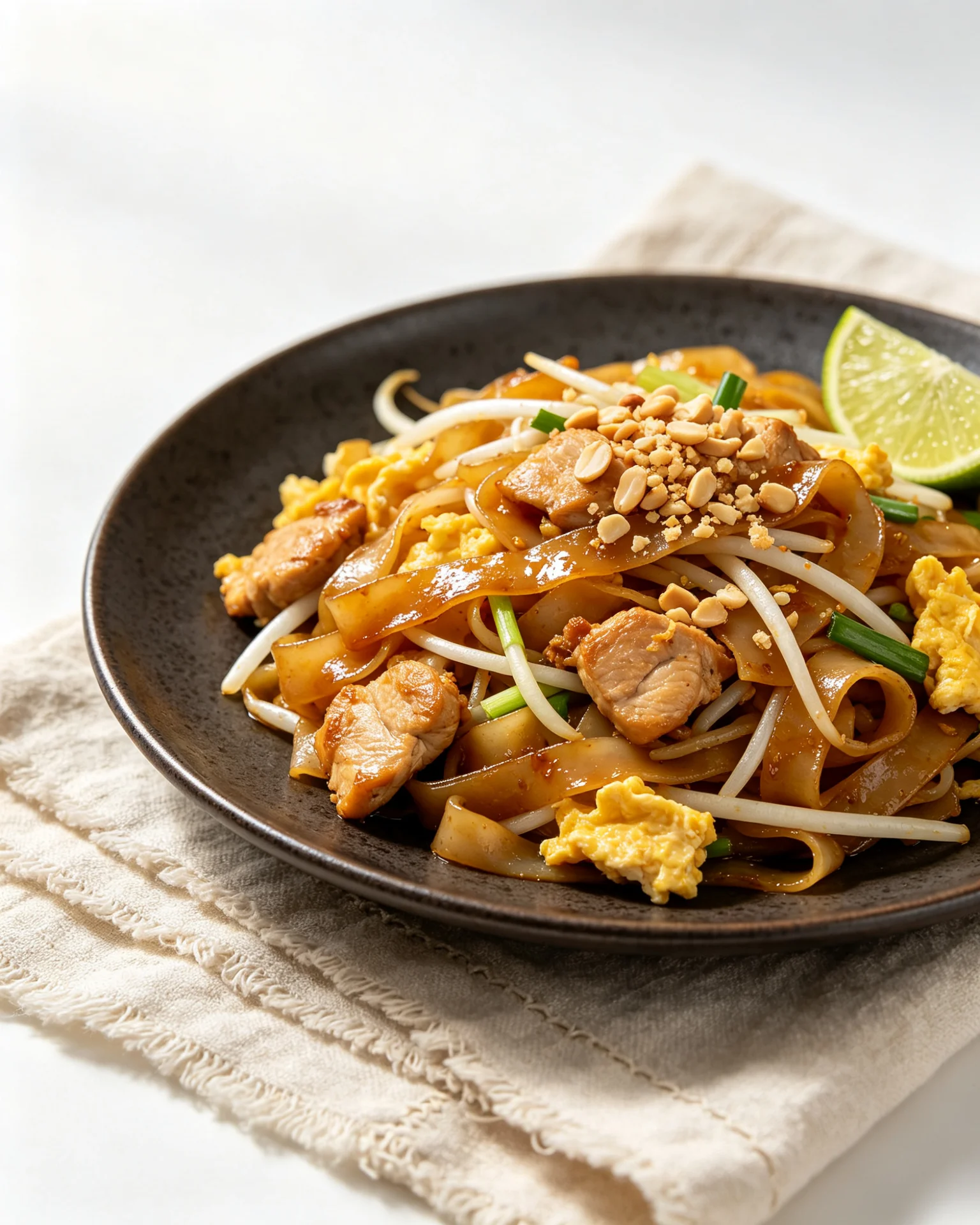
Traditional Thai Chicken Pad Thai Recipe with Tamarind Glaze
40 min
Thai food gets the balance right every time — sour, sweet, salty, spicy, all in one bite. These recipes show you exactly how to dial that in yourself.
Thai home cooking is built around four flavours in balance — sour, sweet, salty, and spicy. No single flavour dominates. A Thai cook tastes constantly, adjusting fish sauce for salt, lime juice for sour, palm sugar for sweet, and fresh chilies or chili paste for heat.
The goal is a dish where no single element stands out because all four are present simultaneously. This balance is what separates authentic Thai food from approximations.
The other defining characteristic is freshness — Thai cooking uses fresh aromatics (lemongrass, galangal, kaffir lime leaves, fresh chilies) that cannot be substituted with dried versions without significantly changing the result.
Balancing the four flavours: Every Thai dish is built on the simultaneous presence of sour (lime juice, tamarind), sweet (palm sugar, coconut sugar), salty (fish sauce, soy sauce), and spicy (fresh chilies, chili paste). Taste after every addition. If the dish tastes flat — add fish sauce. If it tastes harsh — add sugar. If it tastes heavy — add lime. If it lacks depth — add more chili paste.
Making curry paste: Thai curry paste is made by pounding fresh aromatics — lemongrass, galangal, shallots, garlic, dried chilies, kaffir lime zest, coriander root, and shrimp paste — in a mortar and pestle until completely smooth. Store-bought paste works for weeknight cooking but fresh paste produces a brighter, more complex result. When cooking curry paste, fry it in oil or coconut cream until fragrant and the oil separates — this takes 3 to 5 minutes and cannot be skipped.
Cooking with coconut milk: Thai curries use coconut cream (the thick top layer) to fry the curry paste first, then coconut milk (the thinner liquid) to build the sauce. Frying the paste in coconut cream rather than oil produces a richer, more integrated flavour. Simmer uncovered so the sauce reduces and concentrates — covered simmering produces a thin, watery curry.
Wok cooking Thai noodles: Pad Thai and pad see ew require high heat, a well-seasoned wok, and dry noodles. Wet noodles steam instead of fry and produce a soft, clumped result. Soak dried rice noodles in room temperature water until pliable but not fully soft — they finish cooking in the wok. Never boil pad thai noodles before wok cooking.
40 min

55 min

45 minutes

30 minutes

22 minutes

40 minutes
-768.webp)
20 min
Check out my complete guides to Thai, Filipino, and Vietnamese home cooking, pantry essentials, and techniques.
READ THE GUIDESGreen curry is the spiciest — made with fresh green chilies, lemongrass, and kaffir lime. It uses coconut milk and is typically lighter in colour and flavour.
Red curry uses dried red chilies and is moderately spicy with a deeper, earthier flavour. Yellow curry uses turmeric and dried spices — it is the mildest and closest in flavour to Indian curry.
All three follow the same cooking method — fry the paste, add coconut cream, then coconut milk, then protein and vegetables.
Tamarind is a sour, fruity paste made from the tamarind fruit. In Thai cooking it provides the primary sour element in pad thai sauce, som tam dressing, and many dipping sauces.
To use tamarind block — break off a piece, dissolve in warm water, and press through a strainer to remove fibres and seeds. The resulting paste keeps refrigerated for 2 weeks. Substitute lime juice at a 1:1 ratio if tamarind is unavailable — the flavour differs but works.
Yes for weeknight cooking. Good quality store-bought curry paste (Mae Ploy or Maesri) replaces the fresh aromatics in the paste.
Use fresh kaffir lime leaves if possible — dried leaves lose most of their fragrance. Fresh lemongrass in the simmering liquid adds flavour even if it was not in the paste. The result with good store-bought paste and fresh garnishes is close to authentic.
Pad thai uses thin rice noodles, tamarind-based sauce, and is finished with crushed peanuts, bean sprouts, lime, and dried shrimp.
Pad see ew uses wide rice noodles and dark soy sauce — it is sweeter, darker, and less sour than pad thai. Pad kee mao (drunken noodles) uses wide rice noodles with fresh chilies and Thai basil — it is spicier and more aromatic than both.