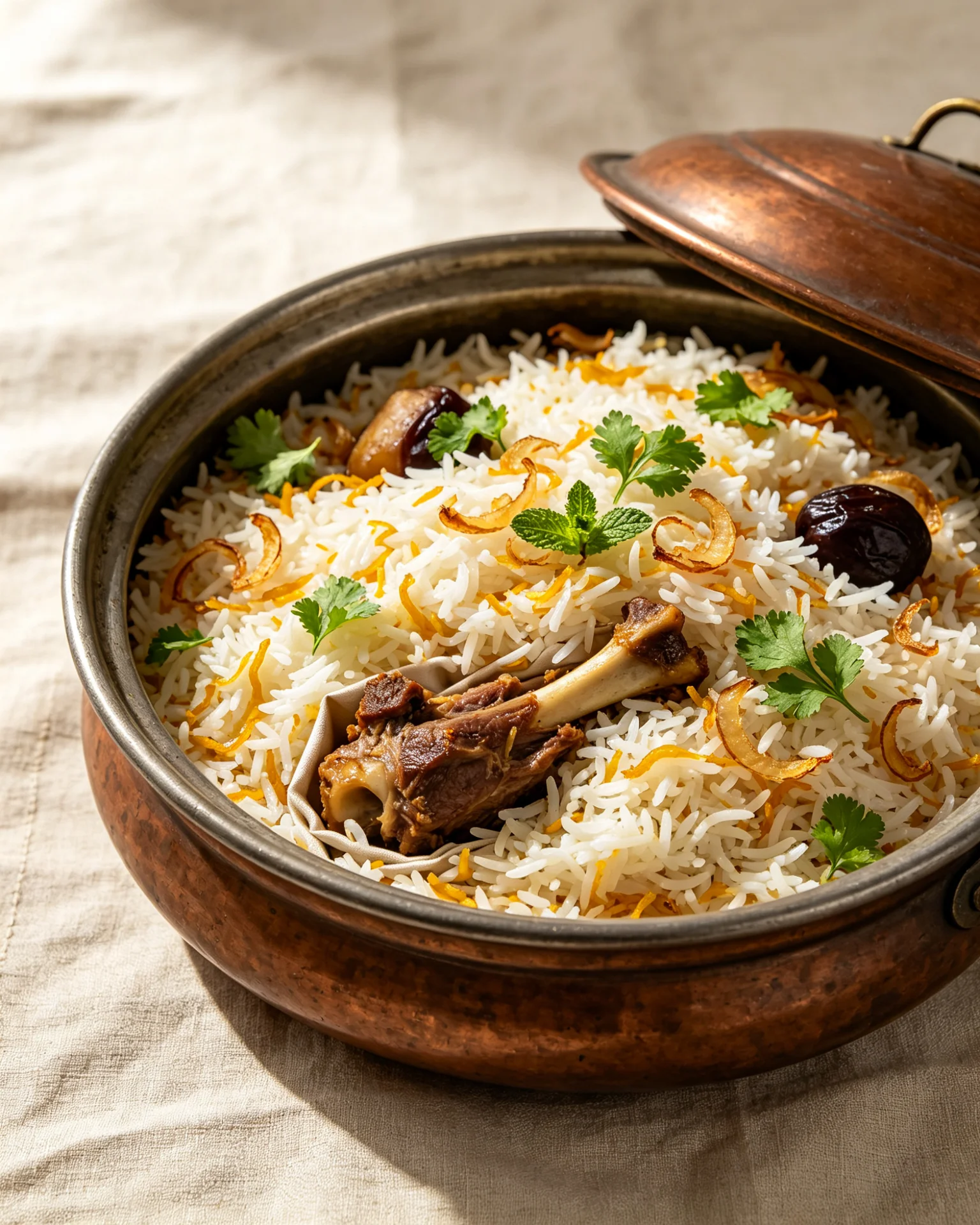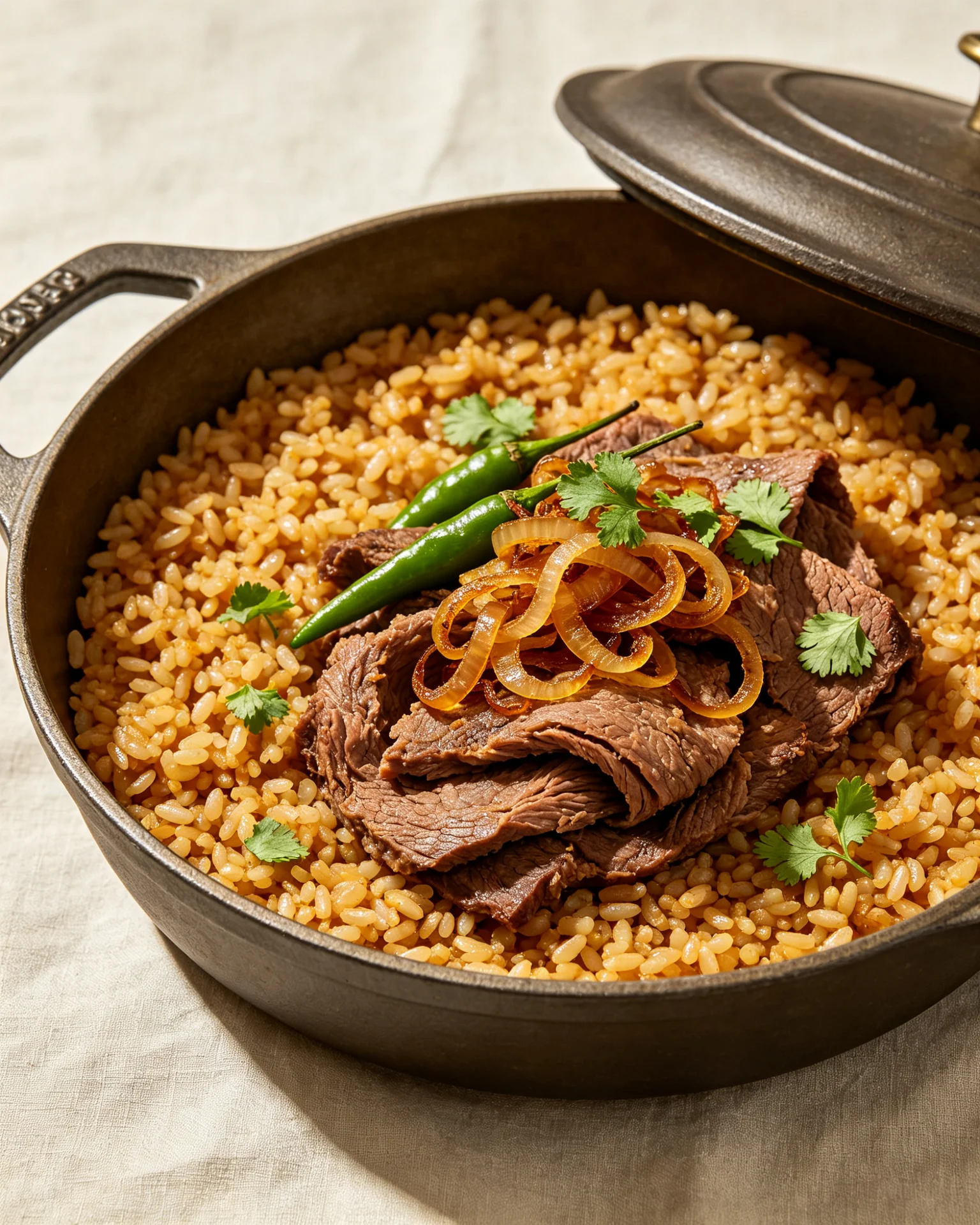
Bangladeshi Beef Tehari Recipe (গরুর তেহারী)
2 hr |
Bangladeshi food surprised me more than almost any other cuisine I have cooked. I expected something close to Indian, similar spices, similar techniques, recognisable pantry. What I found was a cuisine that uses mustard oil as a finishing ingredient the way Italian cooking uses good olive oil, treats fish with a seriousness that makes most other food cultures look casual, and has an entire category of dish, bhorta, that has no real equivalent anywhere else in Asia. These are the recipes I keep going back to and the ones I think about the most.
Bangladeshi home cooking is built on the geography of the Bengal Delta, a flat, river-crossed landscape where freshwater fish is more abundant than meat, mustard grows everywhere, and the cooking reflects both. Rice is the anchor of every meal. Around it sits dal, at least one fish preparation, a cooked vegetable, and almost always a bhorta, something mashed or crushed, dressed with raw mustard oil, raw onion, and green chilli, eaten as a sharp counterpoint to everything else on the plate.
The cuisine is not a regional variation of Indian cooking, though it shares some ingredients. The differences are structural. Bangladeshi cooking uses mustard oil raw as a finishing element, a practice absent from most Indian regional cooking where mustard oil is always cooked. It centres freshwater fish, particularly ilish (hilsa), a fish so important it functions as a national symbol, in a way that no other South South Asian cuisine does. And it treats the bhorta tradition as a complete culinary category in its own right, with dozens of distinct preparations built around different base ingredients.
What looks simple from the outside, rice, dal, fish, bhorta, is a deeply considered meal system that produces extraordinary flavour from ingredients that cost almost nothing.
Bhorta: The defining technique of Bangladeshi cooking. A bhorta is made by roasting, boiling, or frying a base ingredient, potato, aubergine, dried fish, tomato, mustard greens, until soft, then mashing it roughly with raw mustard oil, chopped raw onion, green chilli, and sometimes roasted garlic. The oil goes in raw, not cooked. This is the technique that most distinguishes Bangladeshi cooking from its neighbours: the raw mustard oil adds a sharp, pungent, slightly bitter note that cooked mustard oil does not have. Bhorta is not a side dish in the Western sense. It is a flavour event that resets the palate between bites of rice and curry.
Sorshe (mustard paste) cooking: Many Bangladeshi fish preparations use a paste of ground mustard seeds as the primary sauce base rather than a tomato or onion base. The mustard paste is made by soaking yellow or black mustard seeds in water, then grinding with green chilli and a small amount of turmeric until smooth. Applied to fish and cooked on low heat, it produces a sauce that is sharp, slightly bitter, and intensely fragrant. Shorshe ilish, hilsa cooked in mustard paste, is the most famous application and one of the most distinctive preparations in all of South Asian cooking.
Bhuna (dry frying): Bangladeshi cooking makes extensive use of the bhuna technique, frying onions, ginger, garlic, and spices in oil at medium-high heat until the mixture is almost dry and deeply caramelised. The bhuna base produces a thick, dark, intensely flavoured foundation for meat curries and biryanis. The key is patience: the mixture needs 20-30 minutes of consistent stirring to reach the correct state. Rushed bhuna produces a raw, slightly bitter base. Properly done bhuna is sweet, complex, and rich.
Dum cooking: Kacchi biryani, the most celebrated dish in Bangladeshi cooking, uses the dum technique: raw marinated meat and par-cooked rice are layered in a sealed pot, then cooked together over very low heat, sometimes with a flame-heated tray placed on top of the lid to provide heat from above as well as below. The steam trapped inside the sealed pot cooks everything simultaneously and the flavours integrate into each other in a way that no other cooking method produces. The sealed pot is not opened during cooking, the seal holds the pressure and the fragrance inside.
The differences are real and not just regional variations. Mustard oil used raw as a finishing element is specifically Bangladeshi, most Indian regional cooking uses mustard oil cooked at high heat where its pungency is mellowed. The centrality of freshwater fish, particularly hilsa, has no equivalent in Indian regional cooking at the same cultural level. The bhorta tradition, mashed preparations dressed with raw oil and raw aromatics, exists in a more limited form in West Bengal but reaches its fullest expression in Bangladesh. Panch phoron is shared with West Bengal but used differently across the border. And kacchi biryani, the Dhaka-style dum-cooked biryani with raw meat layered with par-cooked rice, is specifically Bangladeshi in its technique and character.
Over 95% of British curry houses, the restaurants that defined what most British people think of as Indian food, are owned and operated by Bangladeshis, predominantly from the Sylhet region in northeast Bangladesh. The British curry house as an institution is a Bangladeshi achievement. The chicken tikka masala, the lamb rogan josh, the saag aloo on every curry house menu, these dishes were developed and popularised by Bangladeshi restaurateurs cooking for British tastes, not by Indian restaurants serving Indian food. Understanding this changes how you read British food culture.