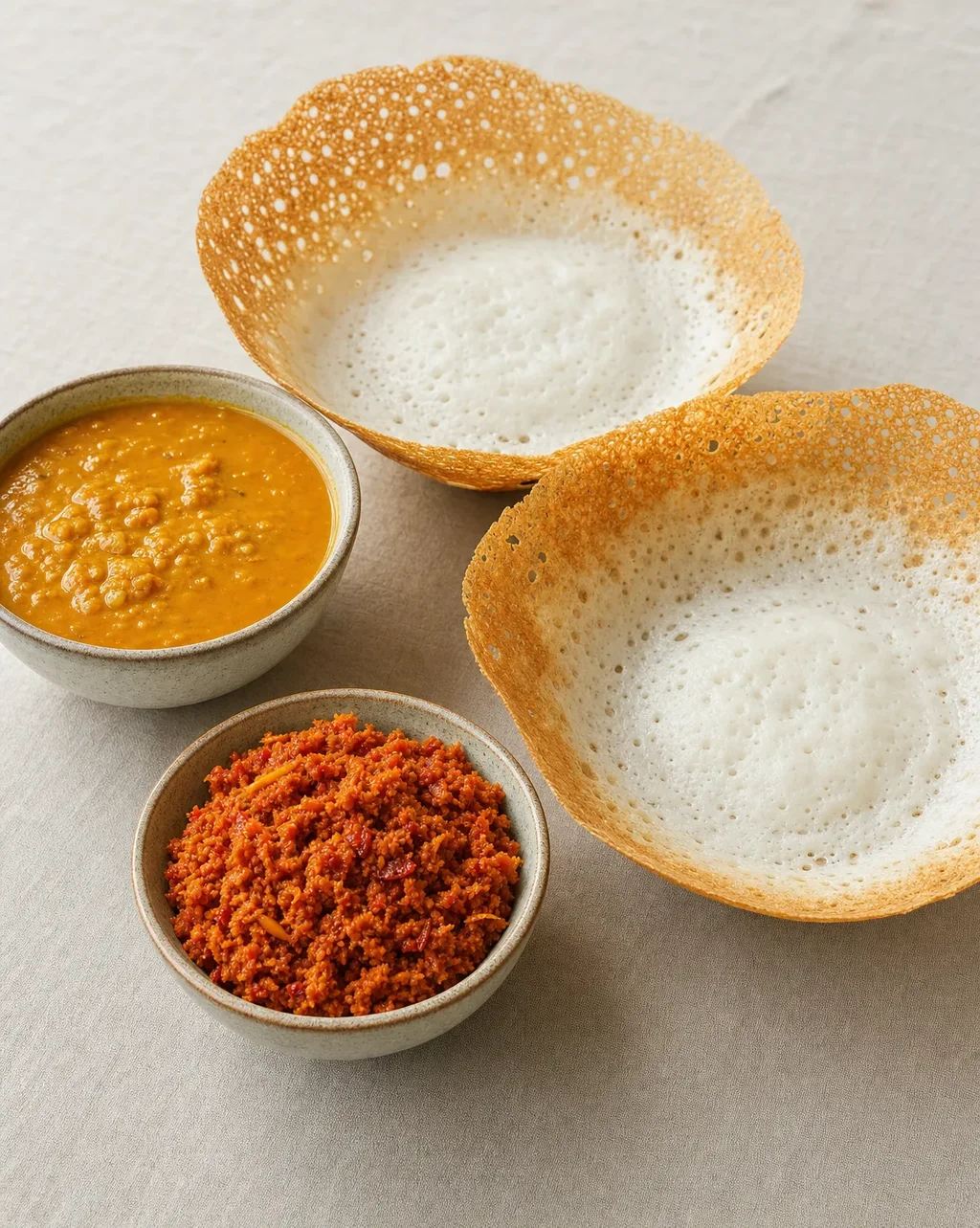
Sri Lankan Pol Sambol (Coconut Sambol) Recipe
10 min
Sri Lankan food is one I came to late — and then couldn't stop. The roasted spice logic is unlike anything else in Asian cooking, and the moment it clicks it rewires how you think about curry entirely. What looks like a cousin of Indian food is its own distinct cuisine, built on different techniques, different souring agents, and a meal format that has no real equivalent anywhere else. These are the recipes I've tested most, broken most, and know best.
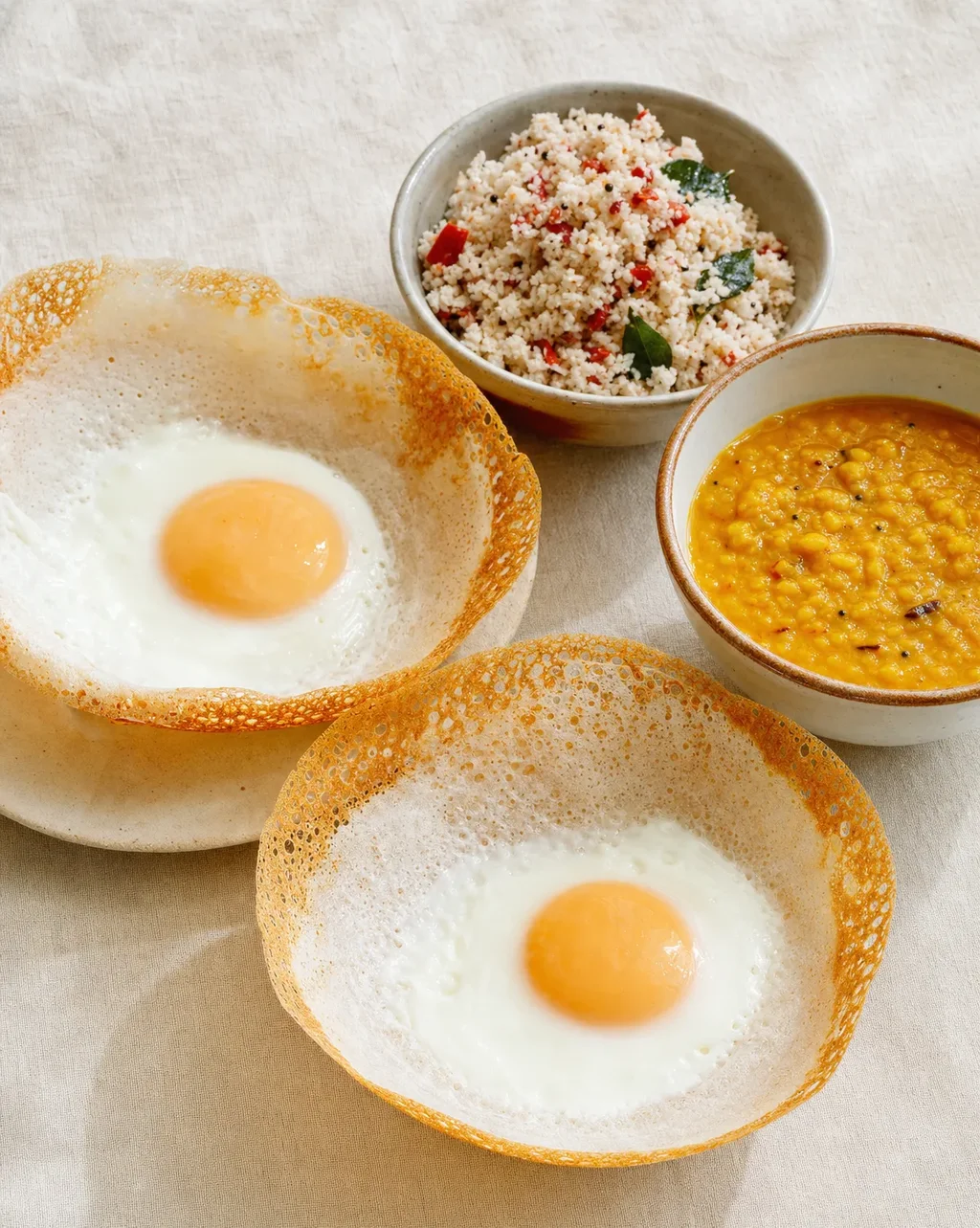
Sri Lankan home cooking is a cuisine built on one daily format: steamed white rice surrounded by multiple small, intensely flavoured dishes — at minimum one curry, a portion of parippu (red lentil curry), pol sambol (fresh coconut relish), and a cooked vegetable. That format is eaten at lunch and dinner across the island, in homes of every background, every day. It is not a special occasion structure. It is just how people eat.
The cuisine is not a regional variation of Indian cooking. The defining difference is what happens to the spice before it enters the pot. Sri Lankan black curry powder is made from whole spices — coriander, cumin, fennel, black pepper, cardamom, cloves, cinnamon — dry-roasted in a pan until dark brown, then ground after cooling. That roasting step produces a flavour that is smoky, bitter, and deeply complex in a way that no unroasted curry powder can replicate. When someone tastes a Sri Lankan curry and says it tastes different from Indian curry, the roasted spice is almost always the reason.
A Sri Lankan home cook keeps curry powder in two forms: roasted for black curries, unroasted for white coconut milk curries. The same vegetable cooked in each becomes a completely different dish. That distinction — roasted versus unroasted — is the single most useful thing to understand before you cook your first Sri Lankan recipe.
Tempering (tarka): Sri Lankan cooking starts with a tempering — mustard seeds, fresh curry leaves, dried red chilli, and shallots fried in coconut oil until the mustard seeds pop and the curry leaves crackle. This is the aromatic base every dish is built on, not optional garnish. The mustard seeds need full heat before they pop; if you add them to warm oil they go bitter instead of nutty. For curries, tempering goes in at the start. For parippu and some sambols, it goes in at the end, poured hot over the finished dish so the oil carries the fragrance straight through.
Roasting spices for black curry powder: Dry-roast whole spices in a heavy pan over medium heat with no oil. Coriander seeds go in first — they take the longest. Cumin, fennel, and black pepper follow. Curry leaves and dried red chilli go in last, 30 seconds before the end. The target colour is dark brown, not golden. Remove the spices the moment they reach that colour and spread them on a cold plate immediately — they continue cooking from residual heat for another 15 seconds after leaving the pan. Grind only after they are fully cool. Grinding warm spices produces a damp powder that clumps and loses half its fragrance within days.
Scraping coconut: Pol sambol and most Sri Lankan condiments are built on hand-scraped fresh coconut, not desiccated, shredded, or blended coconut. The texture matters — slightly coarse, with individual fibres intact — because that texture is what gives the sambol its body and how it holds the lime juice and chilli without turning to paste. When fresh coconut is unavailable, frozen grated coconut thawed and drained is the closest substitute. Desiccated coconut rehydrated in water is a distant third and produces a noticeably inferior result.
Reducing the curry: Sri Lankan fish curries, particularly ambul thiyal, are cooked down much further than most Indian curries. The liquid reduces until the goraka-spice paste coats each piece of fish and almost no liquid remains in the pan. This is intentional — the reduction concentrates the sourness and the roasted spice into a coating rather than a sauce. Knowing when to stop adding coconut milk and when to let the curry dry down is the skill that separates a competent Sri Lankan cook from a great one.
Chopping on the griddle: The most famous Sri Lankan street food technique is the rhythmic chopping of kottu roti. Two flat metal blades are used to chop cooked flatbread into small pieces on a hot iron griddle while stir-frying it with egg, meat, and curry gravy. The sound and the technique are essential to the dish's character.
10 min

40 min
14 hr 50 min
Check out my complete guide to Sri Lankan home cooking, pantry essentials, and techniques.
Sri Lankan curry and Indian curry differ in their spice base, souring agents, and meal structure. Sri Lankan black curry uses a fully dark-roasted spice powder that produces smoky, bitter depth — a flavour profile that does not exist in Indian regional curry powders, which use unroasted or lightly toasted spices. Sri Lankan cooking also relies on two ingredients with no Indian equivalents: maldive fish as an umami base and goraka as a souring agent. The meal format differs too — Sri Lankan rice and curry is a daily structured system of small dishes eaten around a rice base, consistent across the island in a way that few Indian regional meal structures are.
Coconut is used in Sri Lankan cooking in three distinct forms because each form does a different job. Fresh scraped coconut goes into sambols for texture and fat. Thin coconut milk goes into curries during cooking to build body without overwhelming the spice. Thick coconut milk goes in at the end to add richness and round the heat. Coconut oil is the cooking fat. The island's climate made coconut the most abundant ingredient for centuries, and Sri Lankan cooking developed techniques that use every part of it — not as a flavour theme, but as a functional toolkit.
Parippu is the right starting point. Red lentils cooked with turmeric and thin coconut milk, finished with a tempering of curry leaves, mustard seeds, dried red chilli, and shallots poured hot over the top. It requires no specialty equipment, uses ingredients available in most Asian grocery stores, and teaches the two techniques that appear in almost every Sri Lankan recipe: cooking with coconut milk and making a tempering. Every Sri Lankan meal includes parippu. Once you can make it, you have the foundation for the entire cuisine.
Sri Lankan cooking uses dried red chillies in curry powders and sambols and fresh green chillies in curries — so yes, the baseline heat is real. Dishes from Jaffna in the Tamil north and from the southern coast tend to be the most intense. But heat is fully adjustable at home without breaking the dish. The flavour logic of Sri Lankan cooking lives in the roasted spice, the maldive fish, the goraka, and the tempering — not in the chilli level. Reduce the chilli and the dish still tastes unmistakably Sri Lankan. The heat is a dial, not a fixed ingredient.