Sri Lankan Parippu (Dhal Curry) Recipe

Jump to Section
Parippu is the one dish that appears at every Sri Lankan meal without exception — breakfast with string hoppers, lunch with rice and curry, dinner with roti. Every Sri Lankan cook has a version. This is the home kitchen version: thick, creamy, properly tempered, and built on the technique that most recipes skip over entirely.
What is parippu?
Parippu is Sri Lankan red lentil curry, made from masoor dal cooked with turmeric and coconut milk, then finished with a tempering of mustard seeds, curry leaves, dried red chilli, and shallots fried in coconut oil. The word parippu simply means lentils in Sinhala and Tamil. The dish is vegetarian, naturally vegan, and one of the easiest entry points into Sri Lankan cooking.
What separates Sri Lankan parippu from an Indian dal is the tempering. Indian dals are tempered too, but the Sri Lankan version uses coconut oil, fresh curry leaves, and a specific sequence that produces a different aromatic character — earthier, slightly smoky from the dried red chilli, with that crackle-and-pop moment that signals the tempering is ready to go over the lentils.
Why does the tempering go on at the end?
Most Sri Lankan curries start with tempering. Parippu is one of the exceptions where tempering goes on at the end — poured hot, straight over the finished lentils just before serving.
The reason is texture. When you cook lentils from raw, anything in the pot with them gets soft and absorbed into the base. A tempering added at the start disappears into the curry. You get the flavour but you lose the contrast — the crunch of the shallot, the pop of mustard seed, the crackle of curry leaf.
Adding it at the end means those aromatics land on top of a finished, creamy base with their texture intact. You get both things: the depth of the cooked lentils and the brightness of the fresh tempering. That contrast is what makes parippu taste the way it does.
Thin coconut milk vs thick coconut milk — does it matter?
It matters more than most recipes acknowledge.
Coconut milk has two fractions. Thin coconut milk — the first press diluted with water, or the second press from a fresh coconut — is mostly water with a small amount of coconut fat. Thick coconut milk — the first press undiluted — is dense, rich, and high in fat.
For parippu, thin coconut milk goes in during cooking, with the lentils and the water. It adds body to the curry as the lentils absorb it without making the base heavy. Thick coconut milk goes in at the end, once the lentils are cooked. It enriches the finished curry and gives it that creamy surface.
If you add thick coconut milk at the start and cook it for 20 minutes, two things happen: the fat splits from the liquid and rises to the surface, and the coconut flavour turns slightly bitter from prolonged heat. The curry looks greasy and tastes flat. Keep the thick coconut milk for the final two minutes of cooking, off or on very low heat.
If you only have one can of coconut milk, use two thirds of it diluted with water during cooking and the remaining third undiluted at the end. The result is close enough.
Ingredients
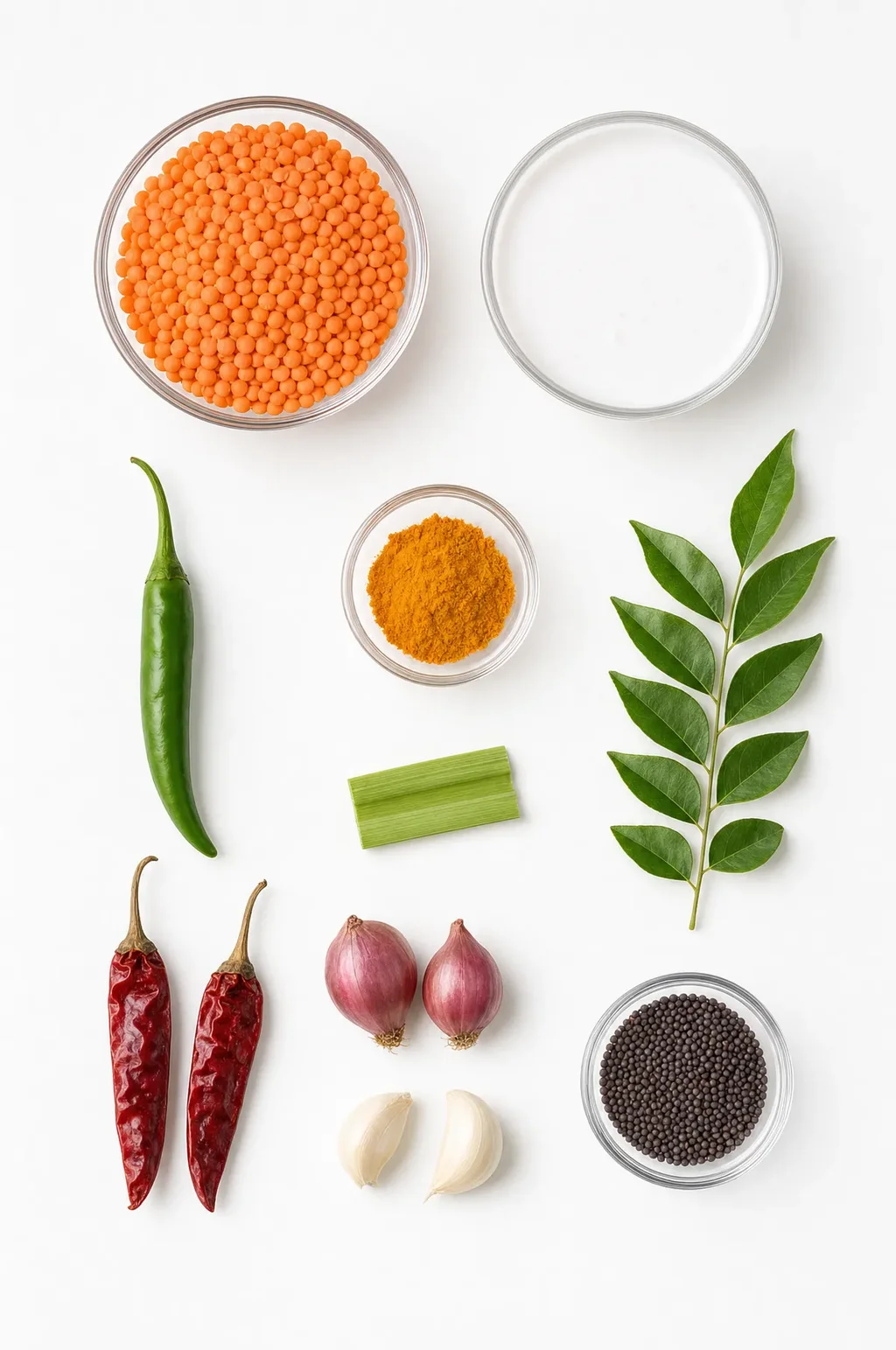
Serves 4
For the lentils:
- 200g (1 cup) red lentils (masoor dal)
- 500ml (2 cups) water
- 120ml (½ cup) thin coconut milk
- ½ tsp ground turmeric
- 1 green chilli, slit lengthways
- 1 sprig fresh curry leaves (8–10 leaves)
- 1 small piece pandan leaf (rampe), about 5cm — optional but worth it
- ¾ tsp salt, or to taste
For the tempering:
- 2 tbsp coconut oil
- ½ tsp black mustard seeds
- 8–10 fresh curry leaves
- 2 dried red chillies, broken in half
- 2 shallots (or ½ small red onion), thinly sliced
- 2 garlic cloves, thinly sliced
- ¼ tsp ground turmeric
To finish:
- 80ml (⅓ cup) thick coconut milk
Instructions
Step 1: Rinse the lentils
Rinse the red lentils in cold water three times, until the water runs mostly clear. Red lentils release a lot of starch — skipping this step produces a gluey, stodgy curry rather than a creamy one.
Step 2: Cook the lentils
Put the rinsed lentils, water, thin coconut milk, turmeric, green chilli, curry leaves, and pandan leaf (if using) into a medium saucepan. Bring to a boil over medium-high heat, then reduce to a steady simmer.
The right texture is thick enough that a spoon drawn through the centre leaves a trail for a second before closing. If it holds a firm peak it is too dry — add water and stir. If it pools like soup it needs more time on the heat.
Step 3: Add thick coconut milk and salt
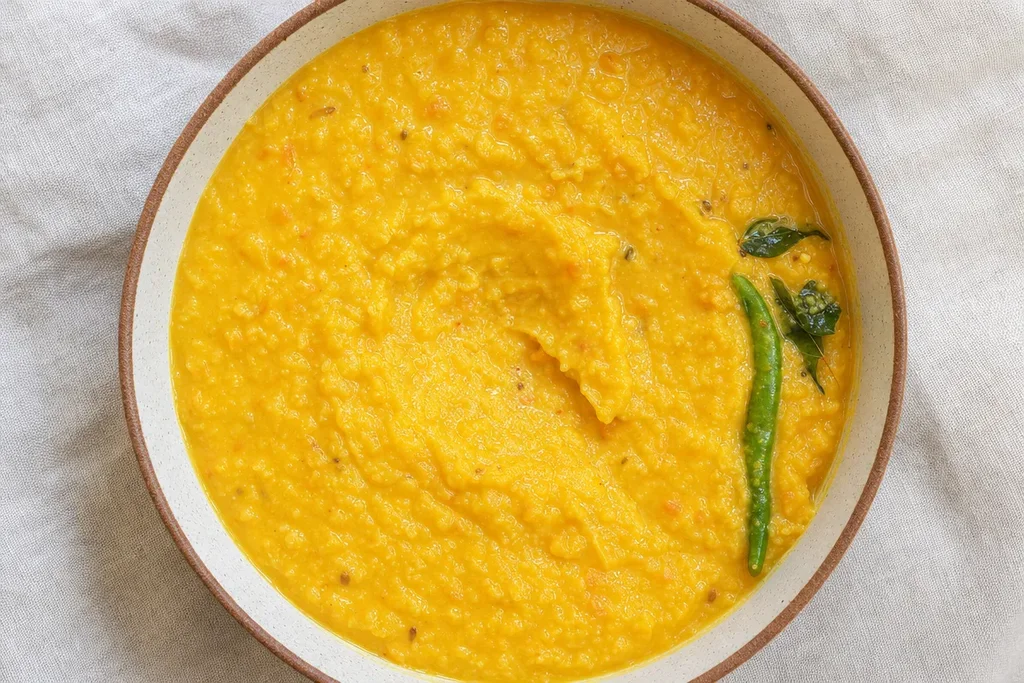
Once the lentils are fully cooked, reduce the heat to low. Stir in the thick coconut milk and the salt.
Step 4: Make the tempering
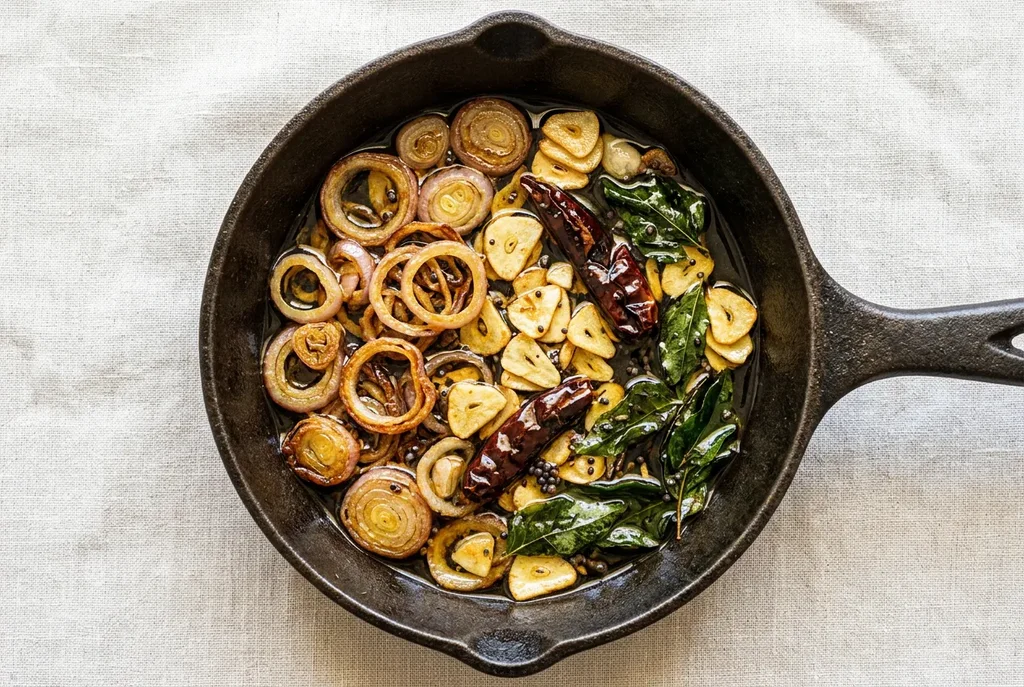
Heat the coconut oil in a small pan over medium-high heat until it shimmers — about 1 minute. Add the mustard seeds.
Add the sliced shallots and garlic. Reduce the heat to medium. Fry for 3–4 minutes, stirring frequently, until the shallots are golden at the edges and soft in the centre. Add the turmeric, stir once, and remove the pan from the heat immediately — turmeric burns in seconds in hot oil.
The tempering is ready when it smells nutty and slightly smoky, and the shallots are a pale gold rather than raw white or dark brown.
Step 5: Combine
Pour the hot tempering directly over the lentils. Do not stir it in — leave it sitting on top so people can see it when the dish is served.
Serve immediately alongside rice, roti, or string hoppers.
What to serve parippu with
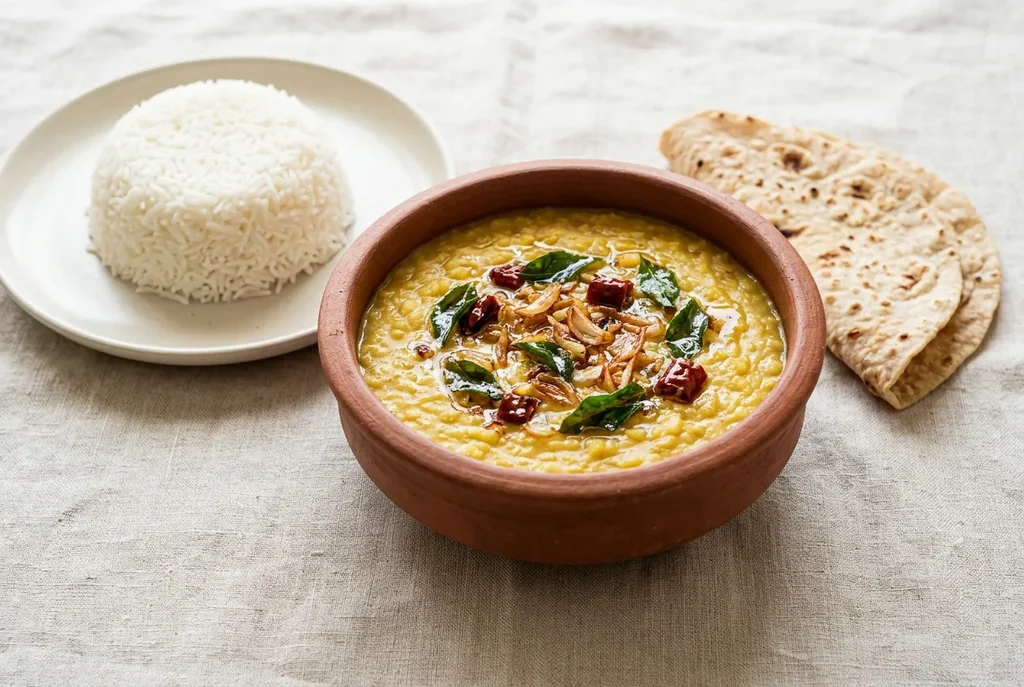
Parippu is not a standalone dish. It is part of a spread. The minimum Sri Lankan meal it belongs to is rice, parippu, and pol sambol. Add a fish or vegetable curry and you have a complete lunch.
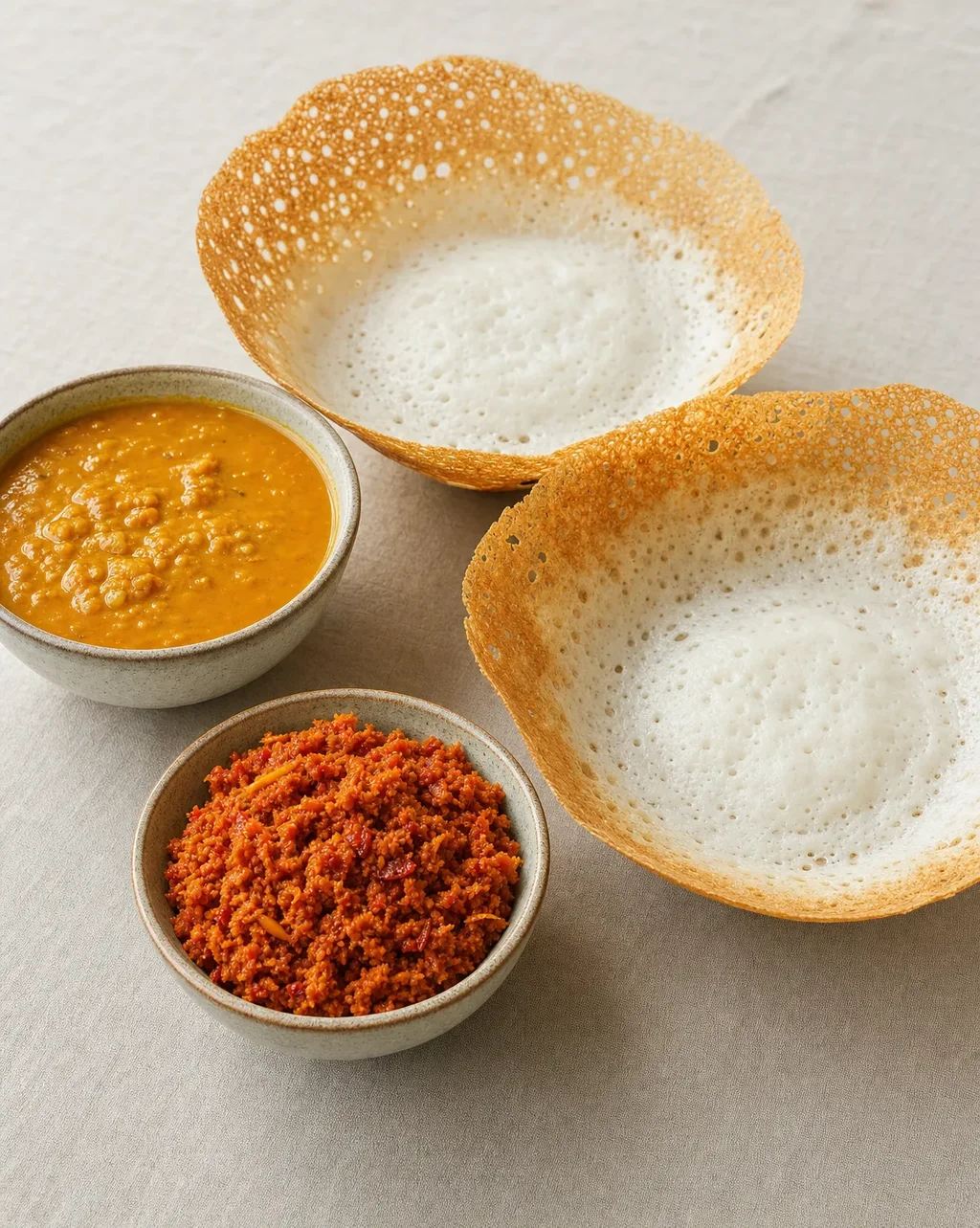
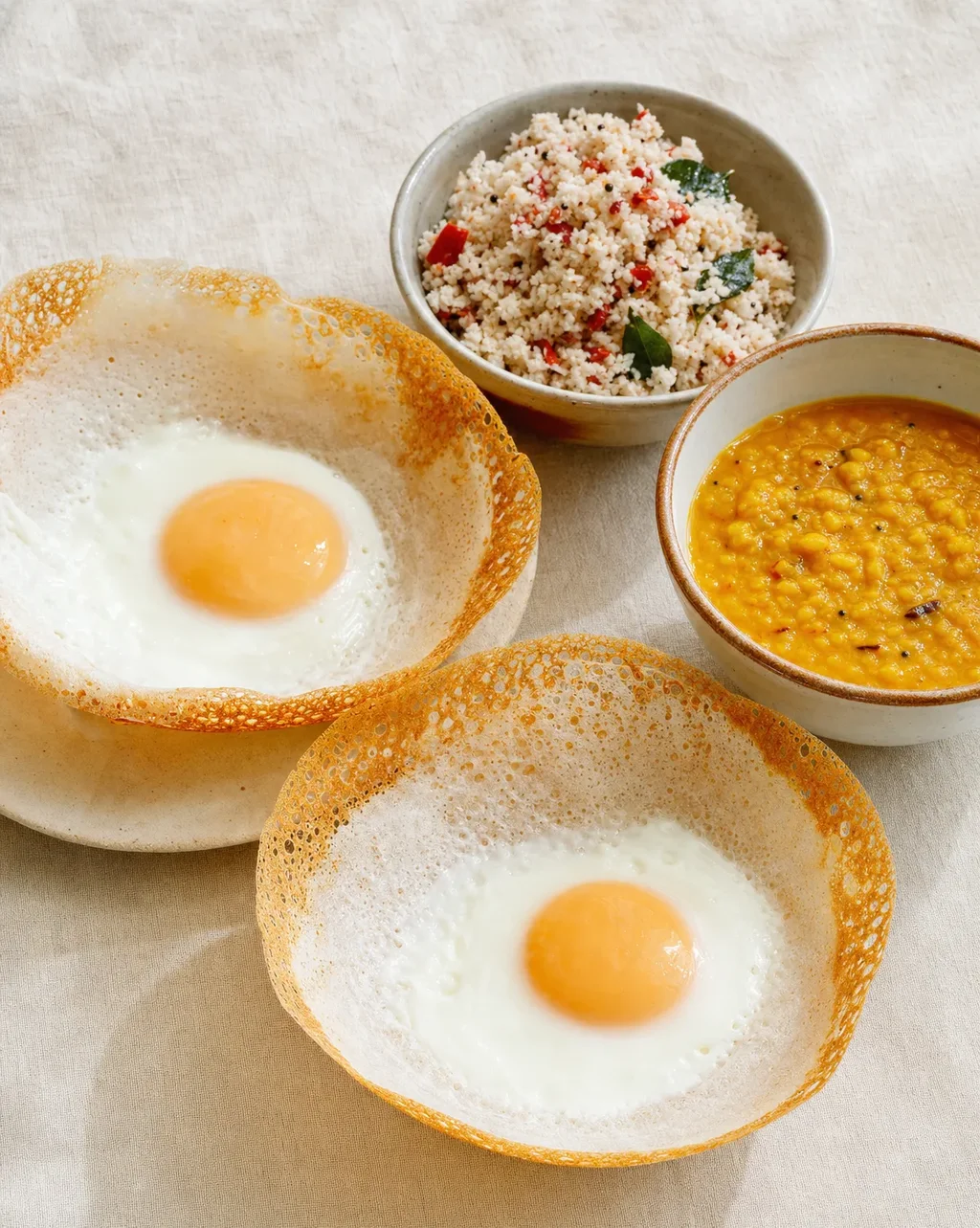
For breakfast, serve it alongside hoppers or string hoppers — the lentils act as the protein element and the curry leaves in the tempering carry enough fragrance to make the whole plate smell right from the first bite.
Storage and reheating
Parippu keeps in the refrigerator for 3 days in a sealed container. The lentils will thicken significantly as they cool — add a small splash of water when reheating and stir over low heat until loose and hot again. Do not reheat in a microwave without a cover; the lentils splatter.
If you want to batch cook, make the lentil base and freeze it before adding the thick coconut milk. Defrost, reheat, then add fresh thick coconut milk and a fresh tempering. The result is noticeably better than freezing the finished dish.
Substitutions
No fresh curry leaves: Leave them out of both the cooking stage and the tempering rather than using dried. Dried curry leaves have almost no flavour — they will add nothing. The dish will still work without them, just with less aromatic depth.
No coconut oil: Any neutral oil works for the tempering. Ghee is the next best option and gives the dish a slightly richer, more buttery character. The coconut oil note is subtle enough that most people won’t notice the swap.
No pandan leaf: Leave it out. Pandan adds a faint grassy sweetness to the lentil base, but parippu is complete without it.
Canned coconut milk for both thin and thick: Use one 400ml can. Add 200ml of it with 100ml of water during cooking (this approximates thin coconut milk). Use the remaining 200ml undiluted at the end. Shake the can well before opening — the fat and liquid separate in storage.
Love Sri Lankan food?
Check out my complete guide to Sri Lankan home cooking, pantry essentials, and techniques.
FAQ
What lentils do you use for Sri Lankan parippu? Red lentils (masoor dal) — the small, salmon-orange split lentils that cook down to a soft, thick consistency without soaking. Brown or green lentils can be used but they hold their shape and produce a different texture. Sri Lankan parippu is meant to be thick and creamy, not individual lentils in broth.
Is parippu the same as Indian dal? Parippu and Indian dal use the same base ingredient — red lentils — but the technique and flavour profile are different. Sri Lankan parippu uses coconut milk during cooking and a tempering in coconut oil added at the end. The curry leaves, dried red chilli, and coconut oil give it a specific aromatic character that distinguishes it from most Indian dals, which typically use ghee, cumin, and sometimes tomato.
Can you make parippu without coconut milk? You can cook the lentils in water only and still produce a functional lentil curry. But coconut milk is what gives Sri Lankan parippu its texture and sweetness — without it the dish is closer to a plain boiled dal. If you cannot have coconut milk, oat milk added at the end approximates the creaminess without significantly changing the flavour.
Why is my parippu watery? Two common reasons. First, the lentils were not cooked long enough — red lentils need 18–22 minutes at a steady simmer to break down fully and thicken the liquid. Second, too much water was added. Start with the ratio in this recipe and only add more water if the lentils absorb everything before they are fully cooked. If the curry is already watery, simmer uncovered for a few more minutes to reduce it.
Sri Lankan Parippu (Dhal Curry) Recipe
Sri Lankan, Lentils, Vegan
PT10M
PT30M
PT40M
Ingredients
- 200g (1 cup) red lentils (masoor dal)
- 500ml (2 cups) water
- 120ml (½ cup) thin coconut milk
- ½ tsp ground turmeric
- 1 green chilli, slit lengthways
- 1 sprig fresh curry leaves (8–10 leaves)
- 1 small piece pandan leaf (rampe), about 5cm — optional but worth it
- ¾ tsp salt, or to taste
- 2 tbsp coconut oil
- ½ tsp black mustard seeds
- 8–10 fresh curry leaves
- 2 dried red chillies, broken in half
- 2 shallots (or ½ small red onion), thinly sliced
- 2 garlic cloves, thinly sliced
- ¼ tsp ground turmeric
- 80ml (⅓ cup) thick coconut milk
Instructions
- Rinse the red lentils in cold water three times, until the water runs mostly clear. Red lentils release a lot of starch — skipping this step produces a gluey, stodgy curry rather than a creamy one.
- Put the rinsed lentils, water, thin coconut milk, turmeric, green chilli, curry leaves, and pandan leaf (if using) into a medium saucepan. Bring to a boil over medium-high heat, then reduce to a steady simmer. Cook uncovered for 18–22 minutes, stirring occasionally, until the lentils are completely soft and have broken down into a thick, porridge-like consistency. Add an extra splash of water if the lentils absorb everything before they are fully cooked. The right texture is thick enough that a spoon drawn through the centre leaves a trail for a second before closing. If it holds a firm peak it is too dry — add water and stir. If it pools like soup it needs more time on the heat.
- Once the lentils are fully cooked, reduce the heat to low. Stir in the thick coconut milk and the salt. Taste and adjust salt. Simmer for 2 minutes on very low heat — just enough to warm the coconut milk through. Do not boil it. Remove from heat and set aside while you make the tempering.
- Heat the coconut oil in a small pan over medium-high heat until it shimmers — about 1 minute. Add the mustard seeds. They will pop within 20–30 seconds. The moment they are popping consistently, add the dried red chillies and curry leaves. They will crackle and spit — this is correct. Stand back slightly. Fry for 15–20 seconds until the curry leaves are crisp and the chillies have darkened slightly. Add the sliced shallots and garlic. Reduce the heat to medium. Fry for 3–4 minutes, stirring frequently, until the shallots are golden at the edges and soft in the centre. Add the turmeric, stir once, and remove the pan from the heat immediately — turmeric burns in seconds in hot oil. The tempering is ready when it smells nutty and slightly smoky, and the shallots are a pale gold rather than raw white or dark brown.
- Pour the hot tempering directly over the lentils. Do not stir it in — leave it sitting on top so people can see it when the dish is served. Stir it through at the table or just before eating. Serve immediately alongside rice, roti, or string hoppers. ## What to serve parippu with Parippu is not a standalone dish. It is part of a spread. The minimum Sri Lankan meal it belongs to is rice, parippu, and pol sambol. Add a fish or vegetable curry and you have a complete lunch. For breakfast, serve it alongside hoppers or string hoppers — the lentils act as the protein element and the curry leaves in the tempering carry enough fragrance to make the whole plate smell right from the first bite.
Did you make this recipe?
Tag @asianfoodsdaily on Instagram or leave a comment below!
Testing Notes
Tested in Asha's kitchen. Last reviewed May 20, 2026.
Ingredient Substitutions
Substitution notes coming soon.
About Asha
Half Asian, half African cook raised between two food-obsessed cultures. I've spent 10 years learning Asian cooking traditions through family, friends, and thousands of hours at the stove — testing every dish until it works in a standard home kitchen.
Read my full storyRelated Recipes
More delicious dishes you might enjoy

Loading comments...