What Is Tamarind and How Do You Use It in Asian Cooking?
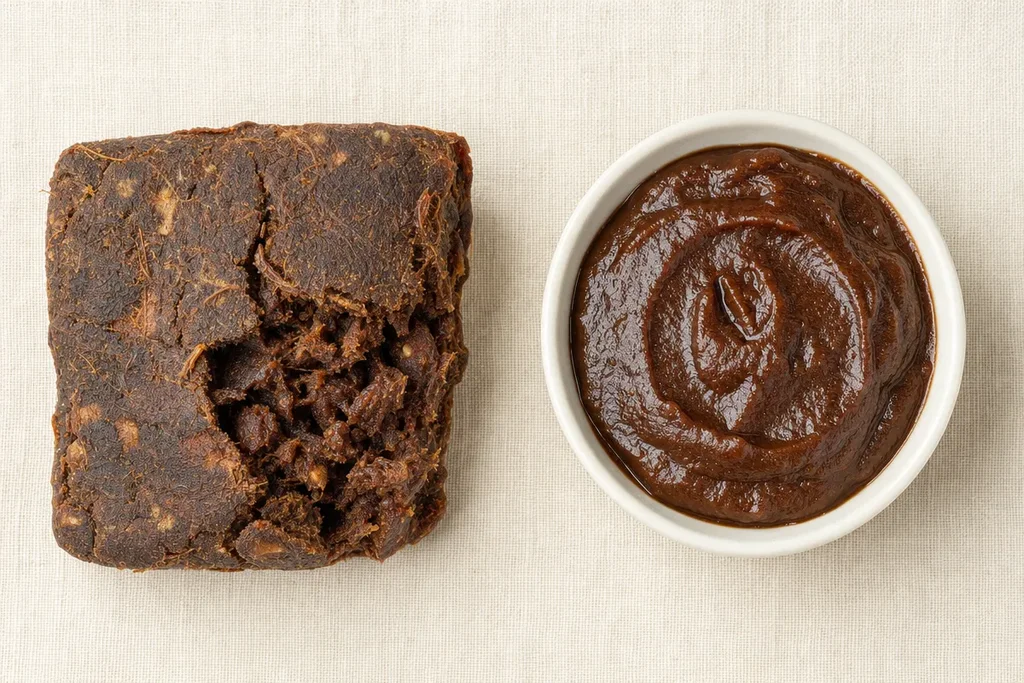
Tamarind (Tamarindus indica) is the ingredient I spent two years substituting with lime juice before I finally bought the real thing and understood what I had been missing. They are both sour. That is where the similarity ends. Lime juice is sharp, clean, and one-dimensional in its acidity. Tamarind is fruity, complex, slightly sweet underneath the sourness, and produces a depth in a finished dish that lime juice simply cannot replicate.
It is the primary souring agent in pad thai, som tam, Filipino sinigang, and dozens of other Southeast Asian and South Asian dishes. If a dish tastes sour but also slightly sweet and fruity simultaneously — tamarind is almost always the reason.
What is tamarind made from and where does it come from?
Tamarind is the dried pulp of the fruit from the tamarind tree, native to tropical Africa and now grown throughout South Asia, Southeast Asia, and Latin America. The fruit grows in brown pods — inside each pod is a sticky, fibrous pulp surrounding hard seeds. That pulp, dried and compressed, is what is sold as tamarind block. Concentrated tamarind paste is made by dissolving and straining the block, then reducing the liquid.
According to Wikipedia’s entry on tamarind, the fruit has been used in cooking across Asia and Africa for over 5,000 years. The sourness comes from tartaric acid — a natural fruit acid that produces a gentler, more complex acidity than the citric acid in lime juice.
How do you prepare tamarind from a block?
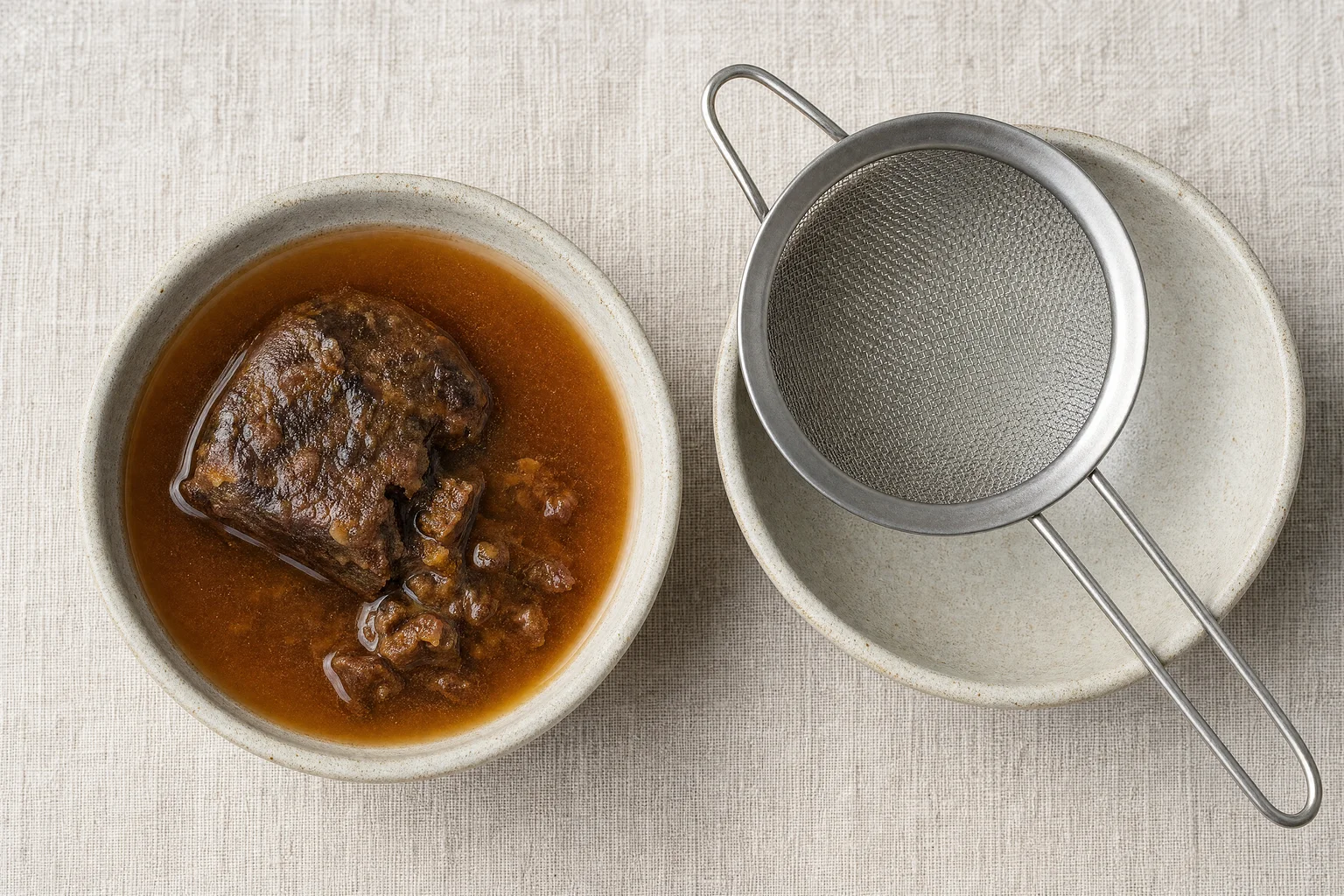
Tamarind block requires preparation before use — it does not dissolve directly into cooking liquid the way paste does.
Step 1: Break off approximately 50g (2 oz) of tamarind block — roughly the size of a golf ball. Step 2: Place in a bowl and cover with 120ml (½ cup) of warm water. Step 3: Leave to soak for 10 to 15 minutes until softened. Step 4: Use your fingers to break up the block and dissolve the pulp into the water. Step 5: Press through a fine mesh strainer to remove fibres and seeds. The strained liquid is tamarind water — ready to use.
The resulting tamarind water keeps refrigerated for up to 2 weeks. I make a batch at the start of the week when I know I am cooking pad thai or Thai curries — it saves the preparation step mid-recipe.
Tamarind paste skips this process entirely — it is pre-dissolved and strained. Use half the quantity of paste compared to tamarind water prepared from block.
How does tamarind taste and what makes it different from lime juice?
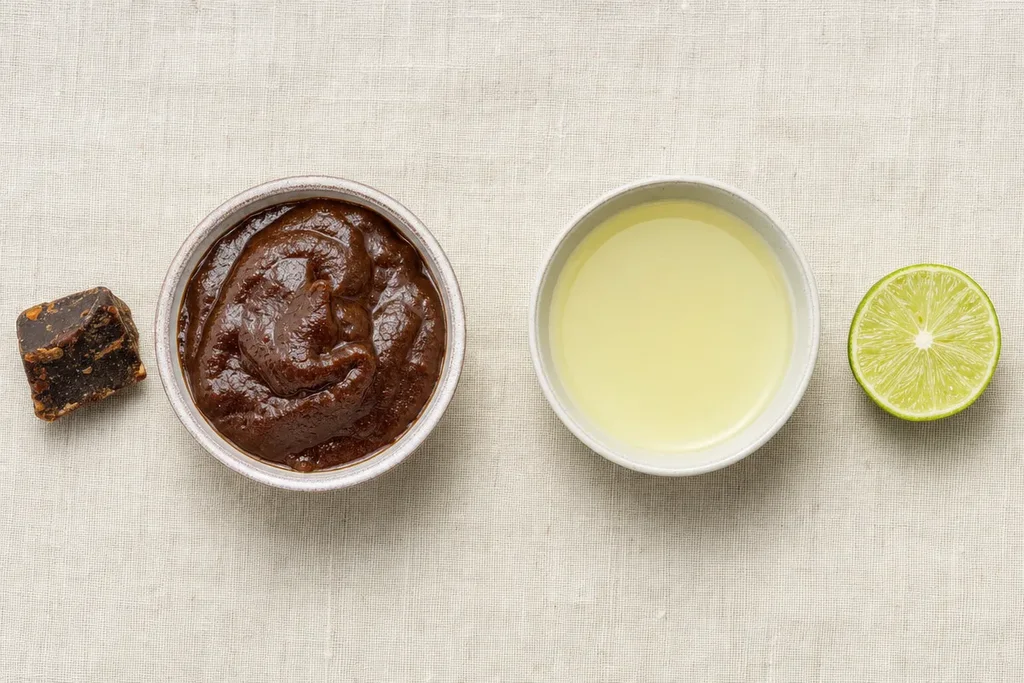
Tamarind tastes sour, fruity, and slightly sweet simultaneously — the tartaric acid provides the sourness, the natural fruit sugars provide sweetness, and the dried pulp provides a fruity, almost date-like depth. Lime juice provides sharp citric acidity with no sweetness or fruity complexity.
The practical difference in cooking: lime juice brightens a finished dish and its flavour is immediately present. Tamarind integrates into a dish during cooking and provides a background sourness with complexity that builds rather than hits immediately. Pad thai made with lime juice instead of tamarind tastes sharp and thin. Pad thai made with tamarind tastes rounded, complex, and authentically Southeast Asian.
How do you use tamarind in Asian cooking?
Tamarind serves as the primary souring agent across multiple Asian cuisines — each using it differently.
In Thai cooking: Tamarind water is the primary souring component in pad thai sauce — combined with fish sauce, palm sugar, and sometimes dried shrimp. See the Thai cooking guide for the complete pad thai sauce ratio.
In Filipino cooking: Tamarind is the traditional souring agent in sinigang — sour tamarind broth with pork or shrimp and vegetables. Fresh tamarind pods, tamarind block, or tamarind powder all work. See the Filipino cooking guide for more.
In Indian cooking: Tamarind is used in chutneys, sambar (lentil soup), and rasam (thin pepper broth). In South Indian cooking specifically, tamarind is as essential as fish sauce is in Vietnamese cooking — it appears in almost every savoury dish.
In Vietnamese cooking: Tamarind appears in canh chua (sweet and sour fish soup) and in dipping sauces. See the Vietnamese cooking guide for more.
What is the best substitute for tamarind?
Lime juice is the most practical substitute at a 1:1 ratio — accept that the dish will be sharper and less complex. For a closer approximation: combine lime juice with a small amount of brown sugar (1 tablespoon lime juice plus ½ teaspoon brown sugar per tablespoon of tamarind water). This adds the sweetness that lime juice lacks but still does not replicate the fruity depth.
Worcestershire sauce contains tamarind and works as a substitute in Western-influenced recipes — 1:1 ratio. It will not work in Southeast Asian dishes where tamarind is the primary flavour.
Tamarind paste is available at Asian grocery stores, Indian grocery stores, and online. It is shelf-stable before opening and keeps refrigerated for 6 months after opening.
FAQ
What is the difference between tamarind block and tamarind paste? Tamarind block is compressed dried tamarind pulp that requires soaking in warm water and straining before use. Tamarind paste is pre-dissolved and strained — ready to use directly. Use half the quantity of paste compared to prepared tamarind water from block. Both produce the same flavour — paste is more convenient, block is more economical.
Can I substitute lime juice for tamarind? Yes at a 1:1 ratio for sourness, but the flavour profile differs significantly. Lime juice provides sharp citric acidity without the fruity sweetness and complexity of tamarind. For a closer substitute, combine lime juice with a small amount of brown sugar. In dishes where tamarind is the primary souring agent — pad thai, sinigang — sourcing actual tamarind produces a noticeably better result.
What does tamarind taste like? Tamarind tastes sour, fruity, and slightly sweet simultaneously. The sourness comes from tartaric acid — gentler and more complex than the citric acid in lime juice. The natural fruit sugars provide underlying sweetness. The overall effect is a rounded, complex sourness that integrates into dishes during cooking rather than sitting on top.
How long does tamarind paste keep? Tamarind paste keeps at room temperature before opening indefinitely. After opening, refrigerate and use within 6 months. Tamarind block keeps at room temperature for up to 12 months wrapped tightly. Prepared tamarind water (from soaked block) keeps refrigerated for up to 2 weeks.
About Asha
Half Asian, half African cook raised between two food-obsessed cultures. I've spent 10 years learning Asian cooking traditions through family, friends, and thousands of hours at the stove — testing every dish until it works in a standard home kitchen.
Read my full storyRecipes to Try

Best Asian Glazed Salmon

How to Make Authentic Asian Beef Stew

Asian-Style Chicken Rice Bowls

Sinigang na Baboy – Authentic Filipino Tamarind Soup

Delicious Asian Style Chicken Wings

Japanese Yakisoba Stir Fry Noodles Recipe | Asian Foods Daily

Easy Asian Pasta Salad Recipe

Easy 30-Minute Asian Chicken Meatballs
Peking Duck Recipe (北京烤鸭)

Quick and Easy Dim Sum Recipes for Weekend Brunch
Momo Achar Recipe (Nepali Dipping Sauce)

Loading comments...