Pepper Steak Stir Fry Recipe (Chinese Style)
Jump to Section
Most pepper steak recipes treat the black pepper as a seasoning quantity, a pinch here, half a teaspoon there, adjustable to taste. The dish is called pepper steak. The pepper is not optional seasoning. It is the flavour architecture. Understanding what piperine, the active compound in black pepper, does differently from chilli heat, why freshly ground pepper produces a completely different dish from pre-ground, and why splitting the pepper between the marinade and the sauce changes how the heat lands on the palate: these are the decisions that separate a genuinely good pepper steak from a beef stir fry that happens to have some pepper in it.
What is pepper steak stir fry and where does it come from?
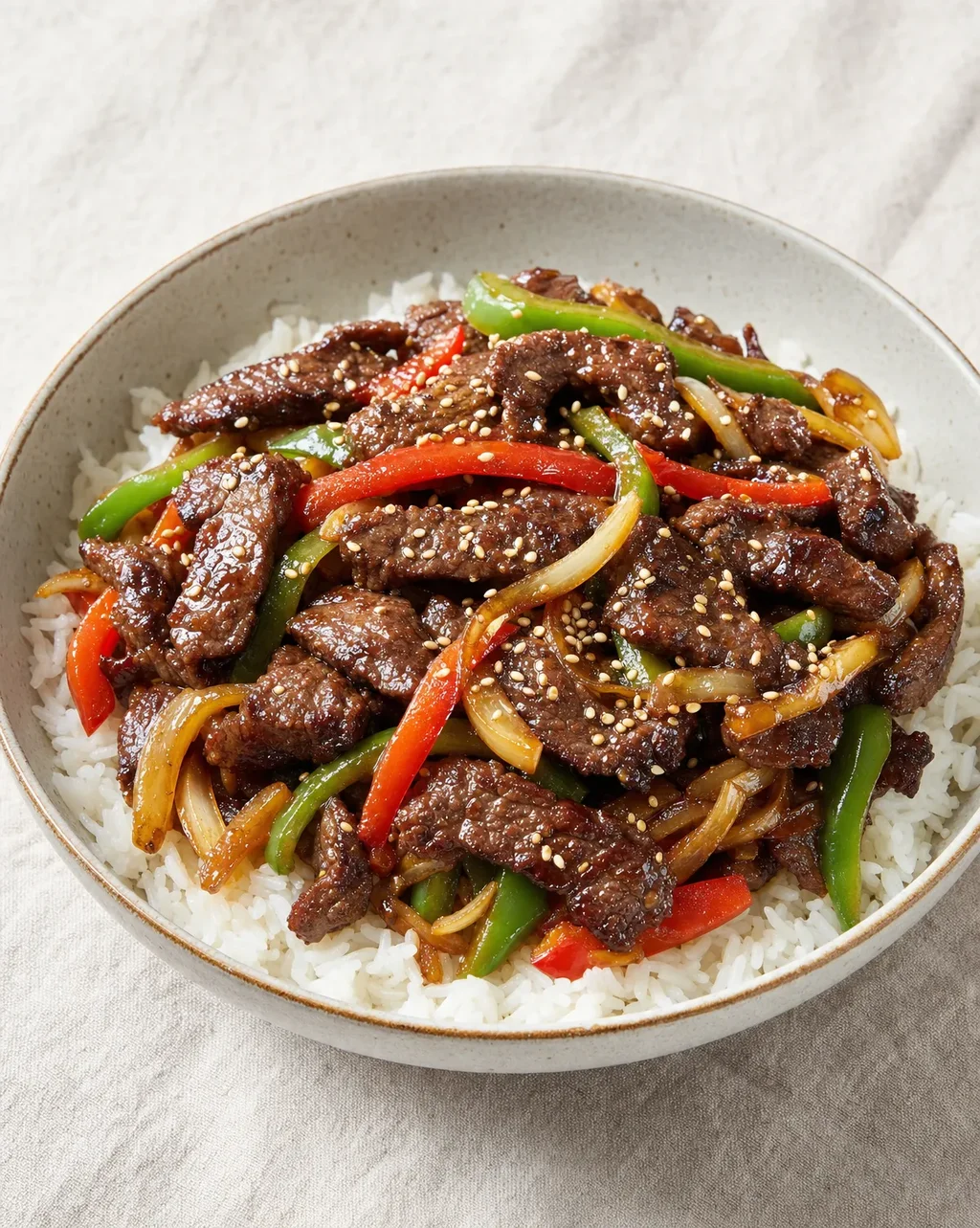
Pepper steak stir fry is a Chinese-American dish of thinly sliced velveted beef stir-fried with bell peppers, onion, and a soy-oyster sauce heavily seasoned with black pepper. It is not the same dish as its Chinese ancestor.
The original dish is qīngjiāo ròusī (青椒肉丝), from Fujian province in southeastern China. It uses only green bell pepper or long green pepper, no onion, no tomato, and a simpler seasoning of soy sauce and Shaoxing wine. The beef shreds are stir-fried fast at extreme heat and the result is dry, intensely savoury, and lightly spiced, a side dish, not a main.
The Chinese-American version that appears on restaurant menus across the United States from the 1950s onward is a different dish. Multiple bell pepper colours appear (green, red, yellow or orange), adding sweetness that balances the soy sauce. Onion adds body and caramelised sweetness. Tomato sometimes appears, contributing acidity. The sauce is richer and glossier from oyster sauce. Black pepper is used more assertively, not as background seasoning but as a structural flavour element. It became one of the defining dishes of Chinese-American restaurant cooking precisely because it adapted Fujian technique to American ingredient preferences and palate expectations.
This recipe covers the Chinese-American version, which is what most people are searching for and cooking at home.
What does black pepper actually do in pepper steak?
Black pepper’s active heat compound is piperine, an alkaloid that produces heat through the same TRPV1 receptors as capsaicin in chilli. But piperine and capsaicin behave very differently on the palate.
Capsaicin heat is immediate, front-of-mouth, and lingers. Piperine heat is slower to build, sits at the back of the throat, and fades faster. In a dish like pepper steak, this slower build means the pepper heat does not dominate the first bite, you taste the beef, the oyster sauce sweetness, and the bell pepper before the pepper heat arrives. Then it builds through the meal. That progression is what makes pepper steak taste different from a generic beef stir fry with chilli added.
Freshly ground black pepper matters for a different reason: volatile aromatic terpenes. Black pepper contains sabinene, limonene, and other terpene compounds that produce its distinctive fragrance. These compounds are volatile, they evaporate rapidly once the pepper is ground. Pre-ground black pepper has typically lost most of its terpene content during storage, leaving only piperine. The heat remains but the fragrance is reduced. A pepper steak made with freshly ground pepper smells different and tastes more complex than one made with pre-ground.
The split technique in this recipe adds half the black pepper to the beef marinade and half to the sauce. Marinade pepper penetrates the beef during velveting and seasons it from inside. Sauce pepper hits the palate directly when the sauce makes contact. The two applications produce different heat experiences from the same compound.
Why do you velvet the beef and how?
Pepper steak uses a tougher cut, flank steak, skirt, or sirloin, that requires proper tenderisation before it goes anywhere near a hot wok. Cornstarch-only velveting protects the surface. Baking soda velveting changes the protein structure itself.
Step 1: Baking soda treatment. Add ¼ teaspoon of baking soda per 250g of sliced beef. Mix with 2-3 tablespoons of cold water until the beef absorbs the liquid. Leave at room temperature for 25-30 minutes. The baking soda raises the surface pH of the beef from approximately 5.5 to 7-8. In this alkaline environment, the actomyosin bonds in the muscle protein break down before heat can tighten them, the beef stays tender at high heat rather than seizing up.
The 30-minute maximum is a hard limit. Beyond 30 minutes the alkaline environment continues degrading the protein past tenderisation into the beginning of breakdown, producing a mushy texture.
Step 2: Rinse thoroughly. Rinse the beef under cold running water for 60-90 seconds until the water runs clear. Baking soda left on the beef produces a metallic, slightly soapy taste and inhibits Maillard browning during searing.
Step 3: Cornstarch secondary marinade. After rinsing and drying, add 1 tablespoon cornstarch, 1 tablespoon neutral oil, 1 teaspoon soy sauce, 1 teaspoon Shaoxing wine, and the first half of the black pepper (¼ tsp freshly ground). Mix well. Leave 10 minutes while you prepare everything else.
Note: the black pepper goes into the marinade after rinsing, not before. Baking soda in combination with aromatic compounds like piperine can produce off-flavours during the alkaline treatment.
Why do bell peppers need to be cooked to crisp-tender and not beyond?
Bell peppers contain approximately 92% water by weight, more water than most vegetables that go into a stir fry. At sustained high heat above 180°C for more than 3 minutes, the cell walls in the pepper begin to rupture and release that water into the wok.
The released water does three things that damage the dish. First, it dilutes the oyster-soy sauce that needs to be a glaze, turning it thin and watery. Second, it drops the wok temperature, halting the Maillard reaction on the beef surface and preventing any further caramelisation of the sauce. Third, it makes the peppers soft and slightly slimy rather than crisp and slightly charred.
Crisp-tender (2-3 minutes) keeps the cell walls intact. No significant moisture release. The peppers retain their structure, colour, and flavour. The sauce stays concentrated.
The technique in this recipe removes the peppers from the wok after they reach crisp-tender, sets them aside, combines the beef and sauce, and returns the peppers only in the final 30 seconds. This ensures they do not overcook during the sauce reduction stage.
What is the best cut of beef for pepper steak?
Flank steak is the standard choice. Visible grain direction makes against-the-grain slicing straightforward. Good beef flavour. Responds well to baking soda velveting at 25-30 minutes. Available in most supermarkets and butchers.
Skirt steak has stronger beef flavour than flank with a similar grain structure. Slightly harder to slice evenly because the grain runs at an angle. Excellent if you can find inside skirt, it is more tender than outside skirt. Same velveting time as flank.
Sirloin is more tender by nature. Baking soda treatment can be shortened to 15 minutes or replaced with cornstarch-only velveting. Less intense beef flavour than flank but produces a very silky result. Good option if flank is unavailable.
Round steak is the budget option. Tougher than flank with a less pronounced grain. Use the full 30-minute baking soda treatment and slice thinner, 2-3mm rather than 3-4mm, to compensate for the coarser muscle structure.
Avoid ribeye or tenderloin for stir fry. Both are too expensive for a high-heat application where the exterior sears while the interior barely warms, and neither benefits from velveting.
Ingredients
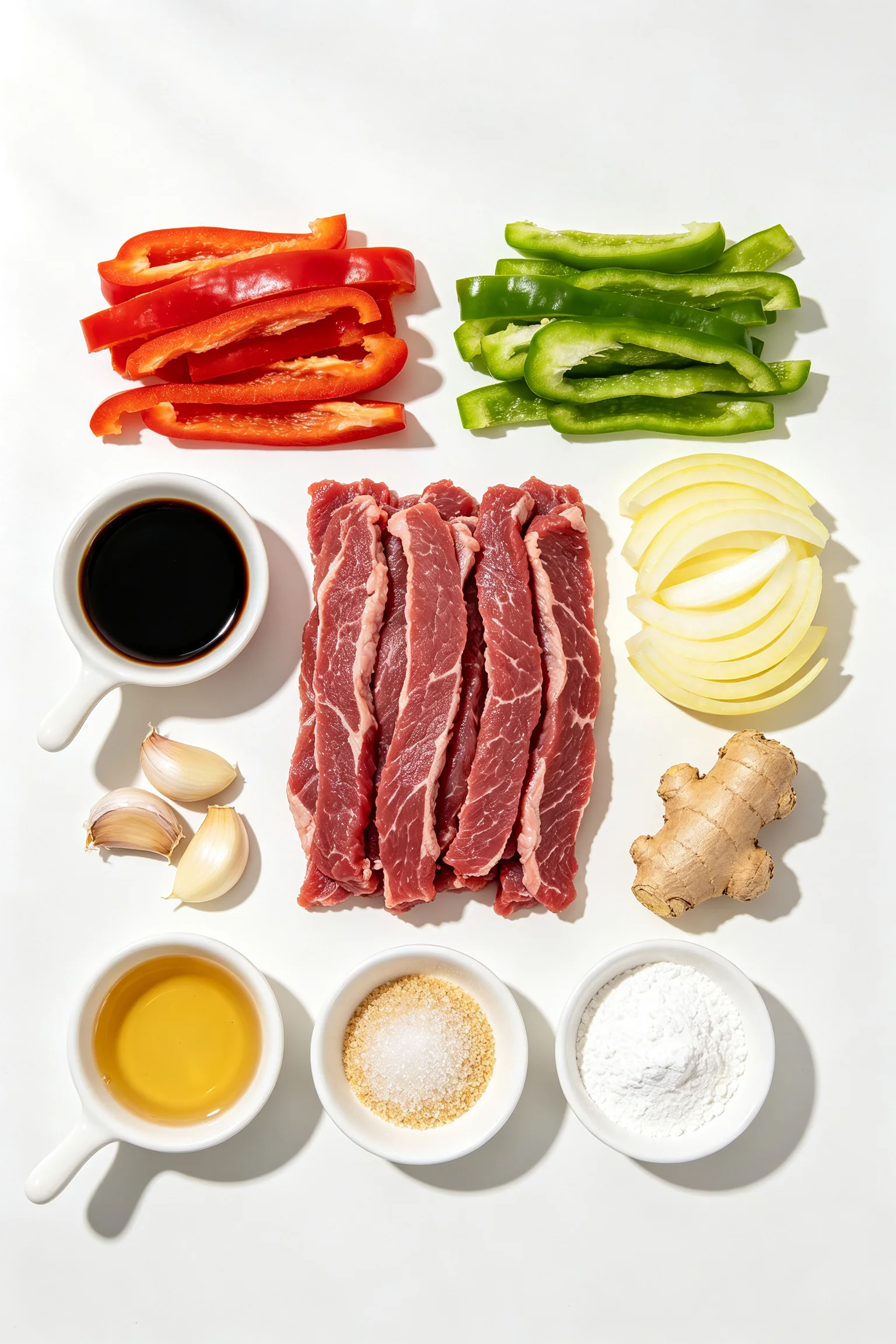
Serves 4
Beef and velveting:
- 500g (1lb 2oz) flank steak, sliced 3-4mm against the grain
- ¼ tsp baking soda
- 3 tbsp cold water
- 1 tbsp cornstarch
- 1 tbsp neutral oil
- 1 tsp light soy sauce
- 1 tsp Shaoxing wine
- ¼ tsp freshly ground black pepper (first half, goes into marinade)
Sauce (mix in advance):
- 3 tbsp oyster sauce
- 1 tbsp dark soy sauce
- 1 tbsp light soy sauce
- 1 tsp Shaoxing wine
- 1 tsp white sugar
- ½ tsp cornstarch
- 3 tbsp cold beef stock or water
- ¼ tsp freshly ground black pepper (second half, goes into sauce)
- ½ tsp sesame oil (added off heat at the end)
For the stir fry:
- 3 tbsp neutral oil (divided)
- 500g (3-4) mixed bell peppers (red, green, yellow), sliced into 1cm strips
- 1 medium onion, sliced into half-moons
- 4 garlic cloves, minced
- 2cm fresh ginger, grated
- 2 spring onions, sliced into 3cm pieces
Instructions
Everything must be prepared before the wok is lit. This dish cooks in under 15 minutes once the wok is hot.
Step 1: Velvet the beef (start 35 minutes before cooking)
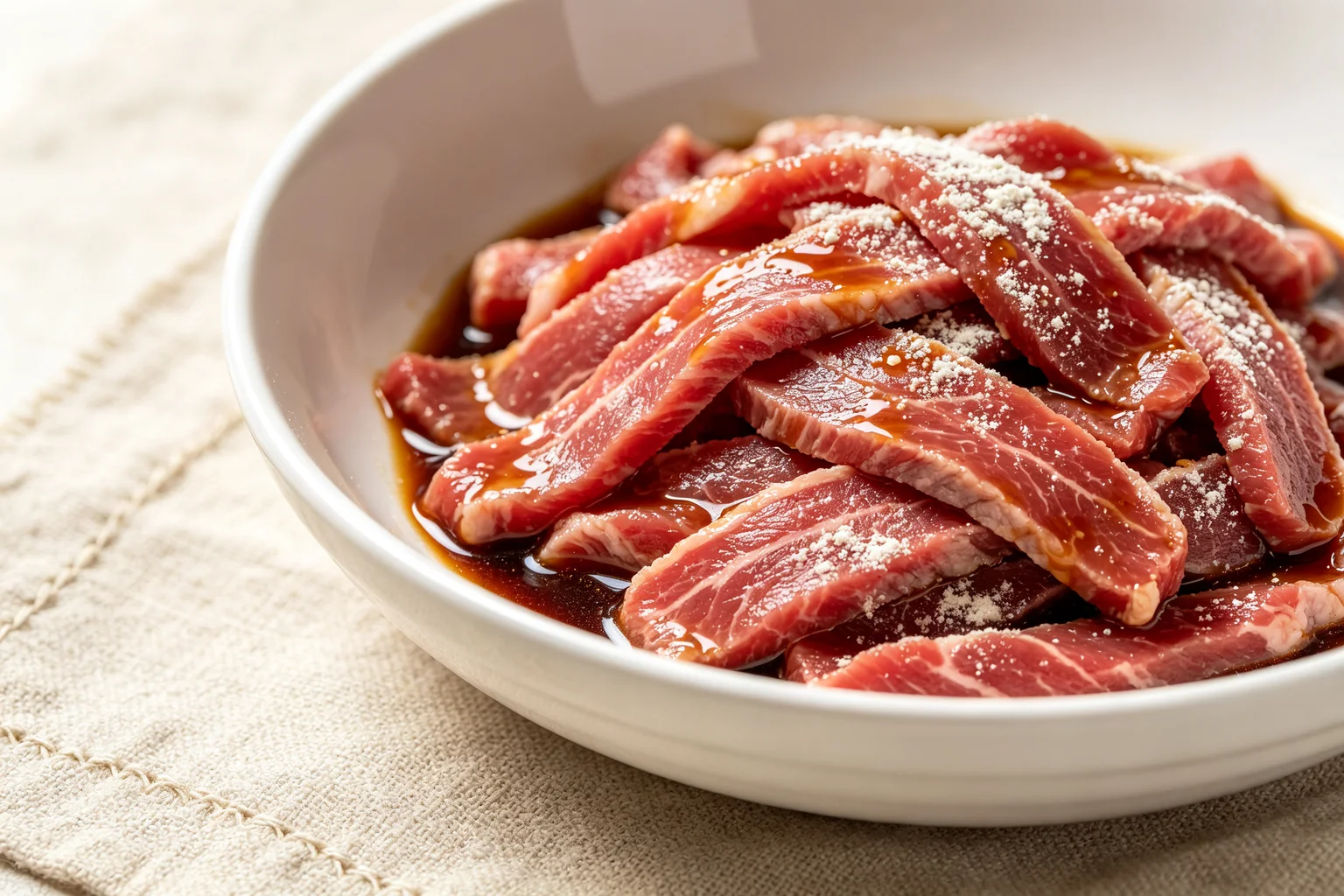
Slice flank steak against the grain, 3-4mm thick, at a slight angle to the cutting board. Mix with baking soda and cold water.
Add cornstarch, neutral oil, light soy sauce, Shaoxing wine, and the first ¼ teaspoon of black pepper. Mix well. Leave 10 minutes.
Step 2: Mix the sauce
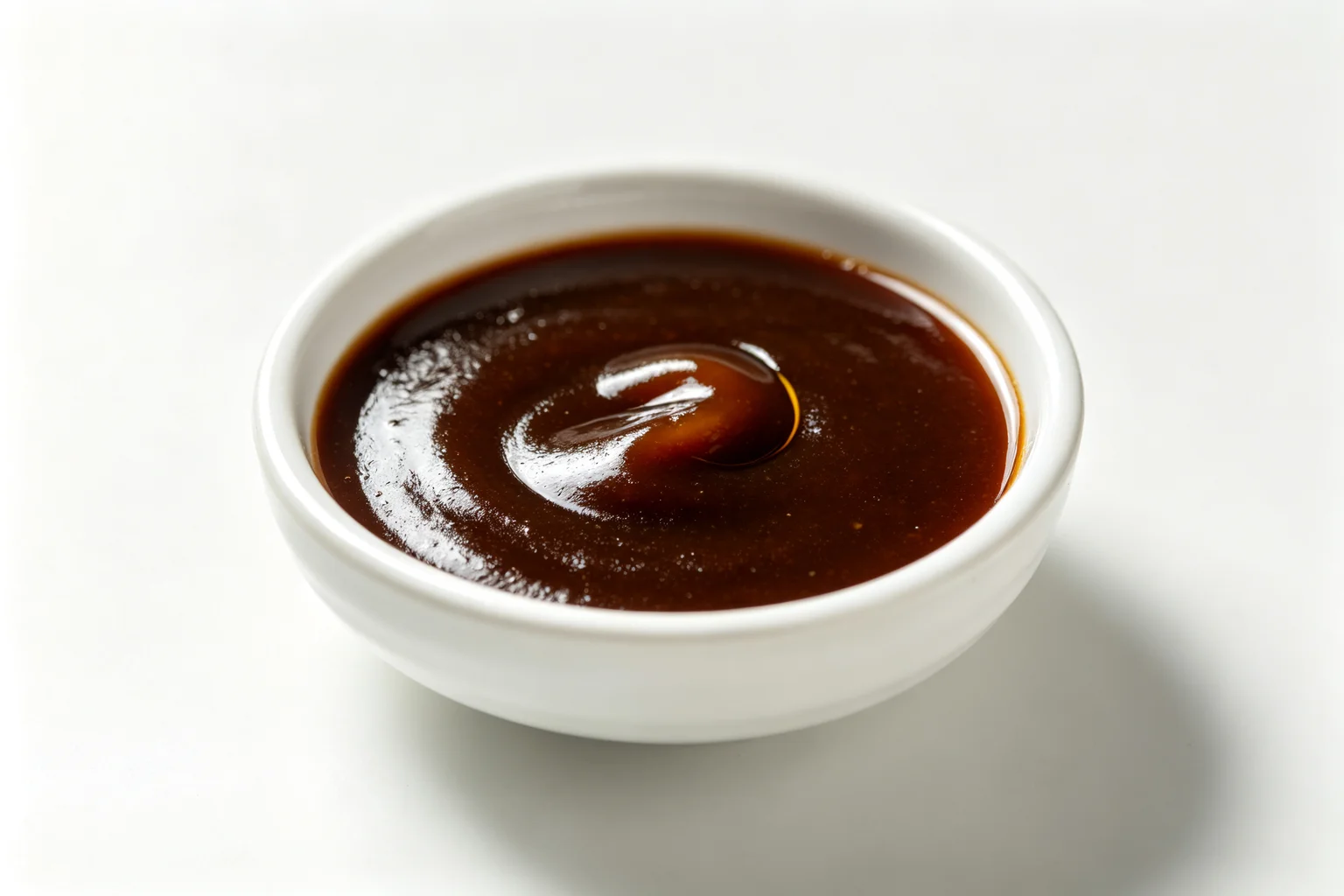
Combine all sauce ingredients except the sesame oil in a small bowl. Add the second ¼ teaspoon of black pepper.
Step 3: Sear the beef in batches
Heat wok over maximum heat until smoking. Add 1.5 tablespoons neutral oil.
Wipe the wok. Reheat to smoking. Add remaining oil. Repeat with second batch of beef.
Step 4: Cook the onion and peppers
After removing the beef, add a small amount of oil if the wok looks dry. Add the sliced onion.
Add the bell peppers. Toss together for 2 minutes until the peppers are crisp-tender, bright in colour, slightly softened, still with resistance when pressed. Do not cook further.
Remove peppers and onion to the same plate as the beef. Set aside.
Step 5: Build the aromatics
Add garlic and ginger to the wok. Stir for 20-30 seconds until fragrant.
Step 6: Combine and glaze
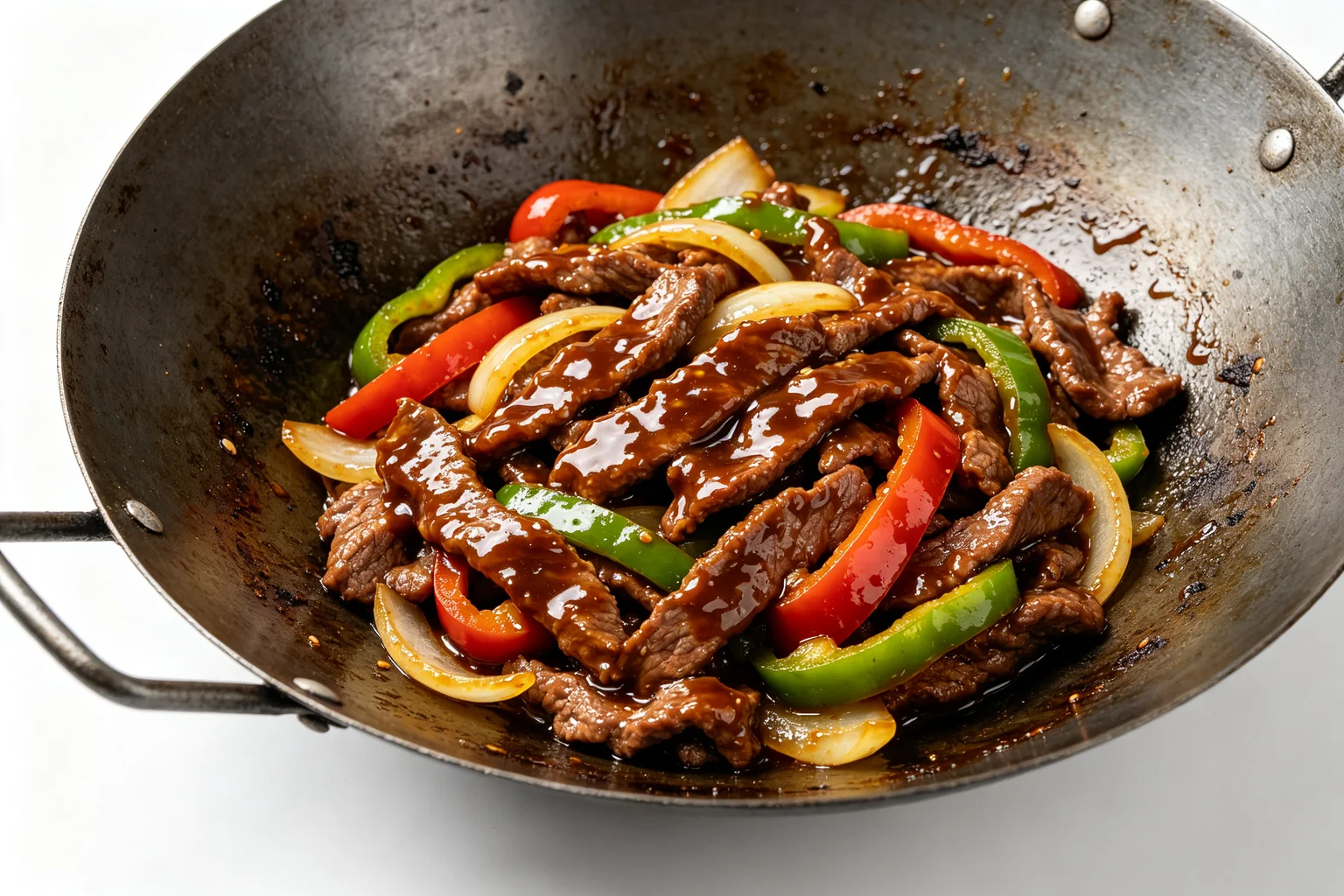
Return all the beef to the wok. Pour the sauce over the beef immediately.
Add the peppers, onion, and spring onions. Toss everything together for 30 seconds, just enough to reheat the vegetables and coat them in sauce. Do not cook longer or the peppers will begin releasing moisture.
Remove from heat. Add sesame oil. Toss once. Serve immediately over steamed jasmine rice.
How is Chinese pepper steak different from Chinese beef stir fry with broccoli?
Both are Chinese-American stir fry dishes using velveted beef, oyster sauce, and high-heat wok technique. The differences are in the flavour emphasis and vegetable treatment.
Beef with broccoli is built around oyster sauce as the primary flavour. Black pepper appears as minor seasoning. The broccoli is blanched before stir frying to pre-cook the dense florets. The overall flavour profile is sweeter, richer, and cleaner.
Pepper steak is built around black pepper as a co-primary flavour alongside the oyster sauce. The bell peppers are not blanched, they go directly into the wok to develop slight char. The onion adds a sweetness that beef broccoli does not have. The overall flavour profile is more complex, sweet from the peppers and onion, savoury from the oyster sauce, and peppery heat building through the meal.
Both dishes use the same velveting technique and the same sauce thickening approach. The difference is what the dish is for: beef broccoli is a vegetable-forward side, pepper steak is a pepper-forward main.
How do you store and reheat pepper steak stir fry?
Pepper steak keeps in the refrigerator for 2 days in a sealed container. The bell peppers will soften overnight as they continue releasing moisture into the sauce. The beef flavour deepens and is sometimes better on day two, though the texture softens.
To reheat: add a small amount of oil to a very hot wok. Add the stir fry and toss over high heat for 60-90 seconds until hot through. Add a splash of water if the sauce has thickened too much. Do not microwave, it steams the beef and makes the peppers soft and waterlogged.
For meal prep, the velveted beef can be stored after rinsing (before the secondary marinade) for up to 24 hours in the refrigerator. Cook fresh when needed.
Love Chinese food?
Check out my complete guide to Chinese home cooking, pantry essentials, and techniques.
FAQ
What is the best black pepper for pepper steak? Freshly ground black pepper from whole peppercorns produces the best result. Whole peppercorns retain their volatile aromatic terpenes until ground, pre-ground pepper has lost most of these compounds during storage, leaving only the piperine heat without the fragrance. Grind immediately before using for maximum flavour. Tellicherry peppercorns (a larger, more aromatic variety) produce particularly good results in pepper steak. Use approximately ½ teaspoon total freshly ground per 500g of beef, split between marinade and sauce.
Can I make pepper steak without Shaoxing wine? Dry sherry substitutes at equal quantity and is the closest approximation. Rice wine vinegar is not a substitute, it is acidic not alcoholic and produces a sour rather than aromatic result. If neither is available, omit it entirely. The dish loses the aromatic bloom when the wine hits the hot wok but the flavour is otherwise complete.
Why are my bell peppers soft and the sauce watery? The peppers were overcooked or cooked simultaneously with the sauce. Bell peppers contain approximately 92% water, extended cooking ruptures their cell walls and releases that water into the wok, diluting the sauce. Cook peppers to crisp-tender (2-3 minutes), remove from the wok before adding sauce, and return them only in the final 30 seconds of cooking.
Can I use chicken instead of beef? Yes. Chicken breast or thigh sliced thinly against the grain works well. Baking soda velveting is optional for chicken, cornstarch-only velveting (1 tbsp cornstarch, 1 tbsp oil, 1 tsp soy sauce, 15 minutes) produces good results. Chicken cooks faster than beef, 2-3 minutes per batch in the wok rather than 45-60 seconds per side. The rest of the recipe is identical. The result is a dish sometimes called “chicken pepper steak” on Chinese-American menus.
You might also like: Check out our complete Chinese cooking guide for more essential ingredients and techniques.
Pepper Steak Stir Fry Recipe (Chinese Style)
Chinese, Chinese-American, Weeknight Meal
PT35M (30 min velveting + 5 min prep)
PT15M
PT50M
Nutrition Facts
Ingredients
- 500g (1lb 2oz) flank steak, sliced 3-4mm against the grain
- ¼ tsp baking soda
- 3 tbsp cold water
- 1 tbsp cornstarch
- 1 tbsp neutral oil
- 1 tsp light soy sauce
- 1 tsp Shaoxing wine
- ¼ tsp freshly ground black pepper (first half, goes into marinade)
- 3 tbsp oyster sauce
- 1 tbsp dark soy sauce
- 1 tbsp light soy sauce
- 1 tsp Shaoxing wine
- 1 tsp white sugar
- ½ tsp cornstarch
- 3 tbsp cold beef stock or water
- ¼ tsp freshly ground black pepper (second half, goes into sauce)
- ½ tsp sesame oil (added off heat at the end)
- 3 tbsp neutral oil (divided)
- 500g (3-4) mixed bell peppers (red, green, yellow), sliced into 1cm strips
- 1 medium onion, sliced into half-moons
- 4 garlic cloves, minced
- 2cm fresh ginger, grated
- 2 spring onions, sliced into 3cm pieces
Instructions
- *Everything must be prepared before the wok is lit. This dish cooks in under 15 minutes once the wok is hot.*
- Slice flank steak against the grain, 3-4mm thick, at a slight angle to the cutting board. Mix with baking soda and cold water. Leave at room temperature for 25-30 minutes. Rinse thoroughly under cold running water for 60-90 seconds. Pat completely dry. Add cornstarch, neutral oil, light soy sauce, Shaoxing wine, and the first ¼ teaspoon of black pepper. Mix well. Leave 10 minutes.
- Combine all sauce ingredients except the sesame oil in a small bowl. Add the second ¼ teaspoon of black pepper. Stir until cornstarch is fully dissolved. Set aside.
- Heat wok over maximum heat until smoking. Add 1.5 tablespoons neutral oil. Add half the beef in a single layer. Press gently against the wok. Leave 45-60 seconds without stirring until the bottom develops a crust. Flip each piece once, cook 20-30 seconds on the second side. Remove to a plate. The beef should be seared outside and slightly undercooked inside, it finishes in the sauce. Wipe the wok. Reheat to smoking. Add remaining oil. Repeat with second batch of beef.
- After removing the beef, add a small amount of oil if the wok looks dry. Add the sliced onion. Toss over high heat for 90 seconds until the edges begin to caramelise and the onion smells sweet. Add the bell peppers. Toss together for 2 minutes until the peppers are crisp-tender, bright in colour, slightly softened, still with resistance when pressed. Do not cook further. Remove peppers and onion to the same plate as the beef. Set aside.
- Add garlic and ginger to the wok. Stir for 20-30 seconds until fragrant. Add the Shaoxing wine directly to the hot wok, it will evaporate immediately. This aromatic bloom is the fragrance moment of the dish.
- Return all the beef to the wok. Pour the sauce over the beef immediately. Toss to coat. The sauce will begin to thicken in 20-30 seconds as the cornstarch gelatinises and the oyster sauce sugars caramelise. Add the peppers, onion, and spring onions. Toss everything together for 30 seconds, just enough to reheat the vegetables and coat them in sauce. Do not cook longer or the peppers will begin releasing moisture. Remove from heat. Add sesame oil. Toss once. Serve immediately over steamed jasmine rice. ## How is Chinese pepper steak different from Chinese beef stir fry with broccoli? Both are Chinese-American stir fry dishes using velveted beef, oyster sauce, and high-heat wok technique. The differences are in the flavour emphasis and vegetable treatment. Beef with broccoli is built around oyster sauce as the primary flavour. Black pepper appears as minor seasoning. The broccoli is blanched before stir frying to pre-cook the dense florets. The overall flavour profile is sweeter, richer, and cleaner. Pepper steak is built around black pepper as a co-primary flavour alongside the oyster sauce. The bell peppers are not blanched, they go directly into the wok to develop slight char. The onion adds a sweetness that beef broccoli does not have. The overall flavour profile is more complex, sweet from the peppers and onion, savoury from the oyster sauce, and peppery heat building through the meal. Both dishes use the same velveting technique and the same sauce thickening approach. The difference is what the dish is for: beef broccoli is a vegetable-forward side, pepper steak is a pepper-forward main. ## How do you store and reheat pepper steak stir fry? Pepper steak keeps in the refrigerator for 2 days in a sealed container. The bell peppers will soften overnight as they continue releasing moisture into the sauce. The beef flavour deepens and is sometimes better on day two, though the texture softens. To reheat: add a small amount of oil to a very hot wok. Add the stir fry and toss over high heat for 60-90 seconds until hot through. Add a splash of water if the sauce has thickened too much. Do not microwave, it steams the beef and makes the peppers soft and waterlogged. For meal prep, the velveted beef can be stored after rinsing (before the secondary marinade) for up to 24 hours in the refrigerator. Cook fresh when needed.
Did you make this recipe?
Tag @asianfoodsdaily on Instagram or leave a comment below!
Testing Notes
Tested in Asha's kitchen. Last reviewed June 24, 2025.
Ingredient Substitutions
Substitution notes coming soon.
About Asha
Half Asian, half African cook raised between two food-obsessed cultures. I've spent 10 years learning Asian cooking traditions through family, friends, and thousands of hours at the stove — testing every dish until it works in a standard home kitchen.
Read my full storyTechnique & Pantry Guides
Related Recipes
More delicious dishes you might enjoy


Loading comments...