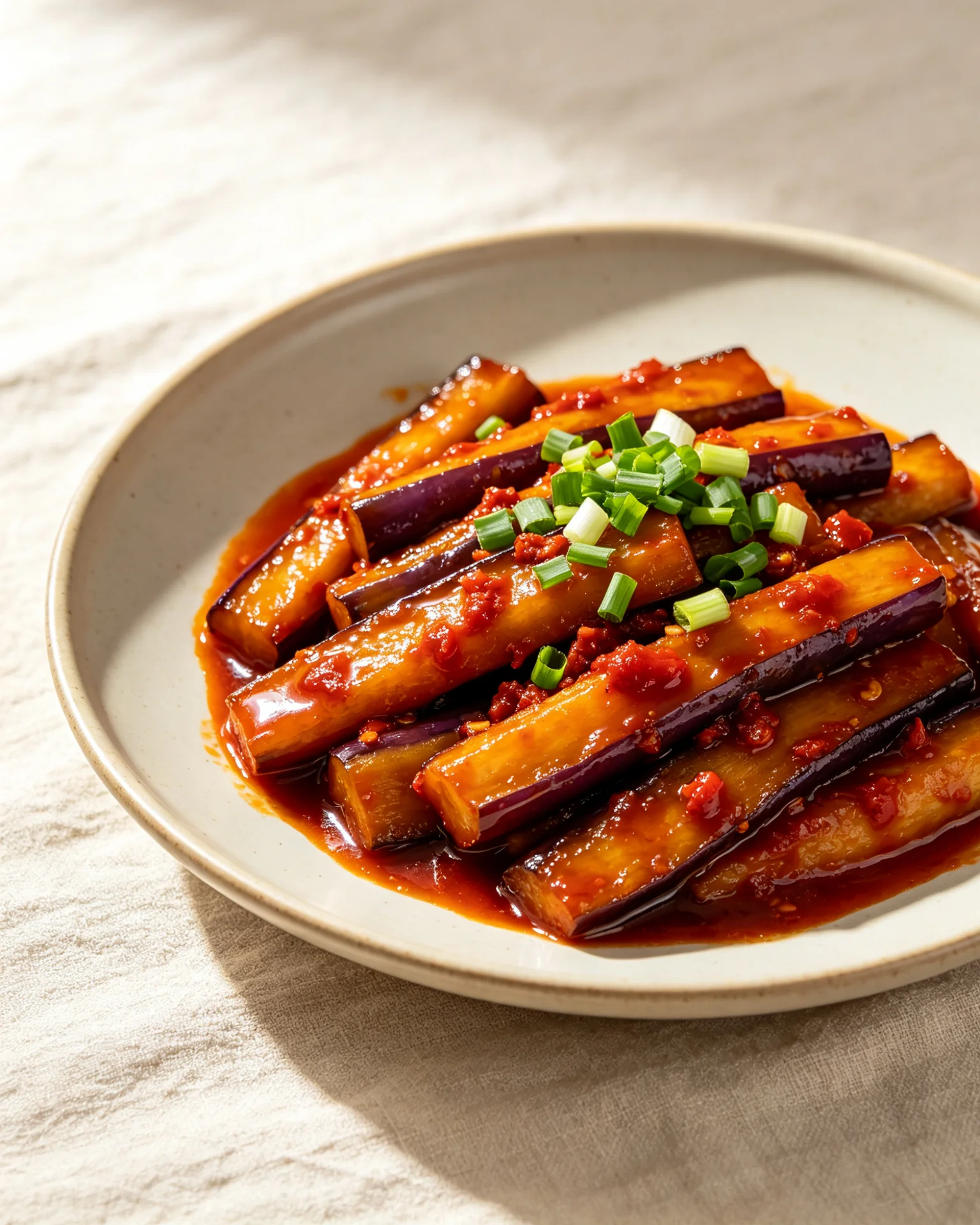
Chinese Eggplant with Garlic Sauce (鱼香茄子)
Jump to Section
The first batch I made without salting or cornstarch coating. I fried the eggplant directly in oil. It absorbed so much oil it came out heavy and greasy, the sauce could not coat it properly because the eggplant was already saturated. The dish tasted of oil with eggplant in it rather than eggplant with sauce on it.
The problem is the cellular structure of eggplant. Eggplant flesh contains large air spaces between its cells. When raw eggplant contacts hot oil, the trapped air expands rapidly and escapes outward. Oil follows the pressure gradient and rushes in to fill the vacated space. Without intervention, eggplant absorbs its own weight in oil. Two steps interrupt this: salting (sha shui) collapses the air pockets before frying by drawing water out of the cells through osmosis, deflating them and reducing the air space. Cornstarch coating (guo fen) gelatinises on contact with the hot oil and forms a sealed outer layer that blocks oil from entering the flesh directly. Together they produce eggplant that is silky inside and lightly sealed outside rather than oil-saturated throughout.
What is yu xiang qiezi and what does fish fragrant actually mean?
Yu xiang qiezi (鱼香茄子, yú xiāng qiézi) means fish-fragrant eggplant. There is no fish in the dish. The name requires some explanation.
Yu xiang (鱼香, fish fragrant) is one of the seven canonical flavor profiles of Sichuan cuisine. The sauce was originally developed to cook fish, the combination of pickled chilli, garlic, ginger, scallion, vinegar, and sugar was specifically designed to mask the fishiness of freshwater fish while producing a complex multi-layer sauce. The aromatics were so successful that Sichuan cooks applied them to other proteins. Yu xiang rou si (鱼香肉丝, fish-fragrant shredded pork) became one of the most widely eaten Chinese dishes globally. The sauce was then applied to eggplant, where the vegetable’s capacity to absorb sauce completely made it one of the best vehicles for the yu xiang flavor profile.
The name yu xiang does not mean the dish tastes like fish. It means the sauce was developed in the fish-cooking tradition. The name stayed even as the sauce traveled far from its original context.
In Western Chinese restaurants the dish is often called eggplant with garlic sauce because restaurant owners assumed yu xiang would not translate. Garlic sauce is accurate, garlic is a dominant element, but it loses the sweet-sour-spicy-savory complexity that distinguishes yu xiang from a simple garlic preparation.
Why does eggplant absorb so much oil?
Understanding the mechanism behind this makes every step in the recipe make sense rather than just following instructions.
Eggplant flesh is composed of large parenchyma cells with significant vacuoles, fluid-filled spaces within cells, and substantial air spaces between adjacent cells. The spongy, light texture of raw eggplant reflects this cellular architecture: it is mostly water and air held in a thin protein matrix.
When raw eggplant contacts hot oil, the air trapped in the cell spaces expands rapidly from the heat and escapes outward through the eggplant’s relatively porous surface. As the air escapes it creates low-pressure voids in the interior. The surrounding hot oil, following the pressure gradient, rushes in to fill these vacated spaces. Raw or improperly treated eggplant can absorb close to its own weight in oil during frying.
The two pre-treatment steps, sha shui salting and guo fen cornstarch coating, address this at different points. Sha shui reduces the air space available for oil to fill. Guo fen seals the exterior so oil cannot enter even if air space remains. Both steps together produce a result that neither alone achieves fully.
What is sha shui and why does it work?
Sha shui (杀水) literally means killing water, the deliberate removal of moisture from the eggplant before cooking.
Salt applied to cut eggplant surfaces creates a solute concentration gradient: higher salt concentration outside the cells than inside. Water moves from high concentration inside the cells to low concentration outside through the cell membranes via osmosis, the same mechanism that draws water from cucumber in the smashed cucumber salad recipe on this site.
As the eggplant cells lose water, they partially deflate. The air pockets between partially deflated cells also compress, there is simply less void space than in fully hydrated eggplant. Pre-salted eggplant placed in the same frying conditions as unsalted eggplant absorbs significantly less oil because the collapsed structure has less space to fill.
An additional benefit: the salting seasons the eggplant from within. The salt that enters the cells during osmosis provides baseline seasoning before any sauce is added.
15-20 minutes of salting is sufficient for Chinese eggplant. Longer does not produce significantly more compression and can make the eggplant too salty. Rinse thoroughly after salting and squeeze out as much water as possible, the water expelled must be removed before frying or the eggplant will steam rather than seal in the oil.
What is guo fen and what does the cornstarch actually do?
Guo fen (过粉, passing through powder) is the coating of the salted and dried eggplant pieces in a light layer of cornstarch before frying.
When cornstarch-coated eggplant contacts hot oil, the cornstarch on the exterior surface gelatinises immediately, the same gelatinisation process that thickens the sauce in mapo tofu and Chinese beef stir-fry. Here the gelatinisation happens at the eggplant surface rather than in the sauce, and it happens within the first few seconds of oil contact.
The gelatinised cornstarch forms a semi-permeable sealed layer around each piece. This layer acts as a barrier between the oil and the eggplant flesh. Oil cannot readily penetrate the sealed cornstarch surface. The interior of the eggplant heats by conduction through the sealed crust, it effectively steams in its own remaining moisture inside the cornstarch shell rather than frying in direct oil contact.
The texture result: the exterior has a thin, slightly sealed surface that holds the yu xiang sauce without the sauce sliding off. The interior is silky and almost custardy from steam cooking rather than oil-saturation. This is the restaurant texture that is nearly impossible to achieve without both sha shui and guo fen together.
Coat lightly, the cornstarch should barely visible on the surface. Too thick a coating produces a batter-fried result rather than a thin seal.
Why use Chinese eggplant and not globe eggplant?
Chinese eggplant (长茄子, cháng qiézi, long eggplant) and the very similar Japanese eggplant are long, slender, light purple varieties. Globe eggplant, the large, round, dark purple variety common in Western supermarkets, is structurally different in ways that affect this recipe specifically.
Chinese eggplant has thinner skin, smaller undeveloped seeds, and fewer air pockets per unit of flesh volume. These properties mean less oil absorption during frying even without pre-treatment, less bitterness from seeds, and skin that cooks evenly at the same rate as the surrounding flesh.
Globe eggplant has significantly more air space per unit of flesh volume, more void space for oil to fill even after sha shui treatment. The thicker, tougher skin may remain slightly firm while the interior is fully softened. The larger seeds contribute a slight bitterness that Chinese eggplant does not have.
Globe eggplant with the sha shui and guo fen treatment still produces good yu xiang qiezi, Omnivore’s Cookbook and CiCi Li both confirm this. But the texture is less uniformly silky and the skin less integrated with the flesh. If you can find Chinese or Japanese eggplant, use it. If you cannot, globe eggplant works with the same technique.
What does doubanjiang do and why does it go in first?
Doubanjiang (豆瓣酱, fermented spicy broad bean paste) is the central umami ingredient in yu xiang sauce. Pixian doubanjiang, aged 3-5 years, is the correct variety, the extended fermentation produces more complex glutamate compounds and a deeper, more rounded spice character than younger doubanjiang.
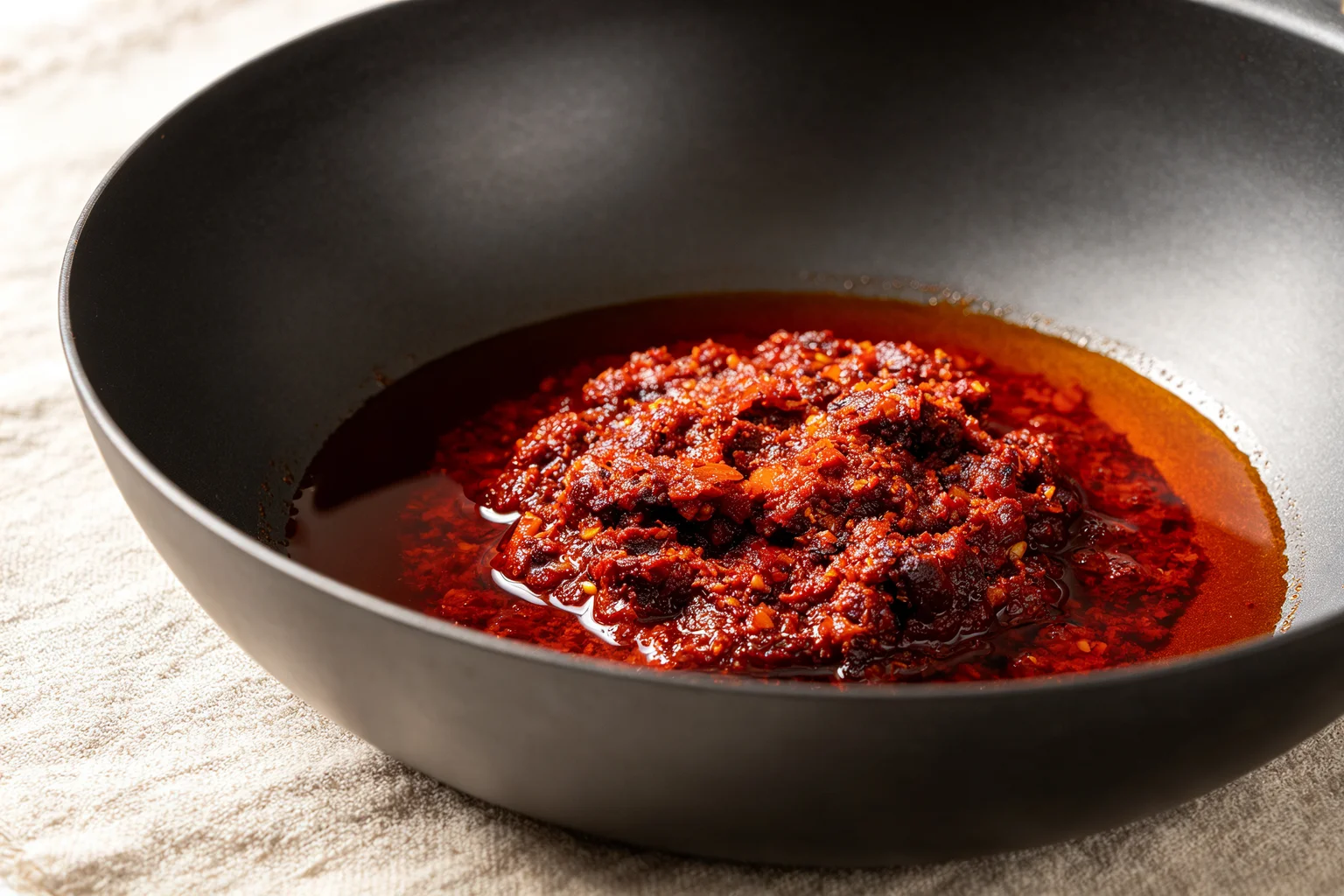
When doubanjiang contacts hot oil, the fat-soluble colour and flavour compounds, primarily capsanthin and capsorubin, dissolve from the paste into the surrounding oil. The oil turns vivid red-orange. This is the same red oil transfer mechanism covered in the mapo tofu recipe on this site. Red oil means the fat-soluble compounds have fully transferred from the paste into the cooking medium that will coat the eggplant.
This is why doubanjiang goes into the oil before the garlic, ginger, or scallion. It needs direct hot oil contact to transfer its compounds. Adding it after the aromatics means it contacts the already-cooled oil and the transfer is less complete.
Fry the doubanjiang for 1-2 minutes over medium heat until the surrounding oil is clearly red-orange. Then add the remaining aromatics.
Why black vinegar and not rice vinegar?
The yu xiang sauce requires an acid component for its characteristic sour note. The choice of vinegar changes the character of the finished sauce significantly.
Chinese black vinegar (Chinkiang, 镇江香醋) is aged from glutinous rice and wheat bran. The ageing process produces a complex range of organic acids, esters, and aromatic compounds beyond simple acetic acid, a slightly smoky, fruity, mildly sweet complexity. This character functions as background depth in the yu xiang sauce rather than sharp prominent sourness.
Rice vinegar contains primarily acetic acid and produces a cleaner, more immediately sharp sourness. Used in yu xiang sauce, rice vinegar produces bright acidity that can dominate the other flavour elements rather than integrating behind them.
Black vinegar is the correct ingredient for this recipe. The same complexity distinction is covered in the smashed cucumber salad recipe on this site, where black vinegar performs the same integrated background sourness function versus rice vinegar’s sharper front-palate arrival.
Ingredients
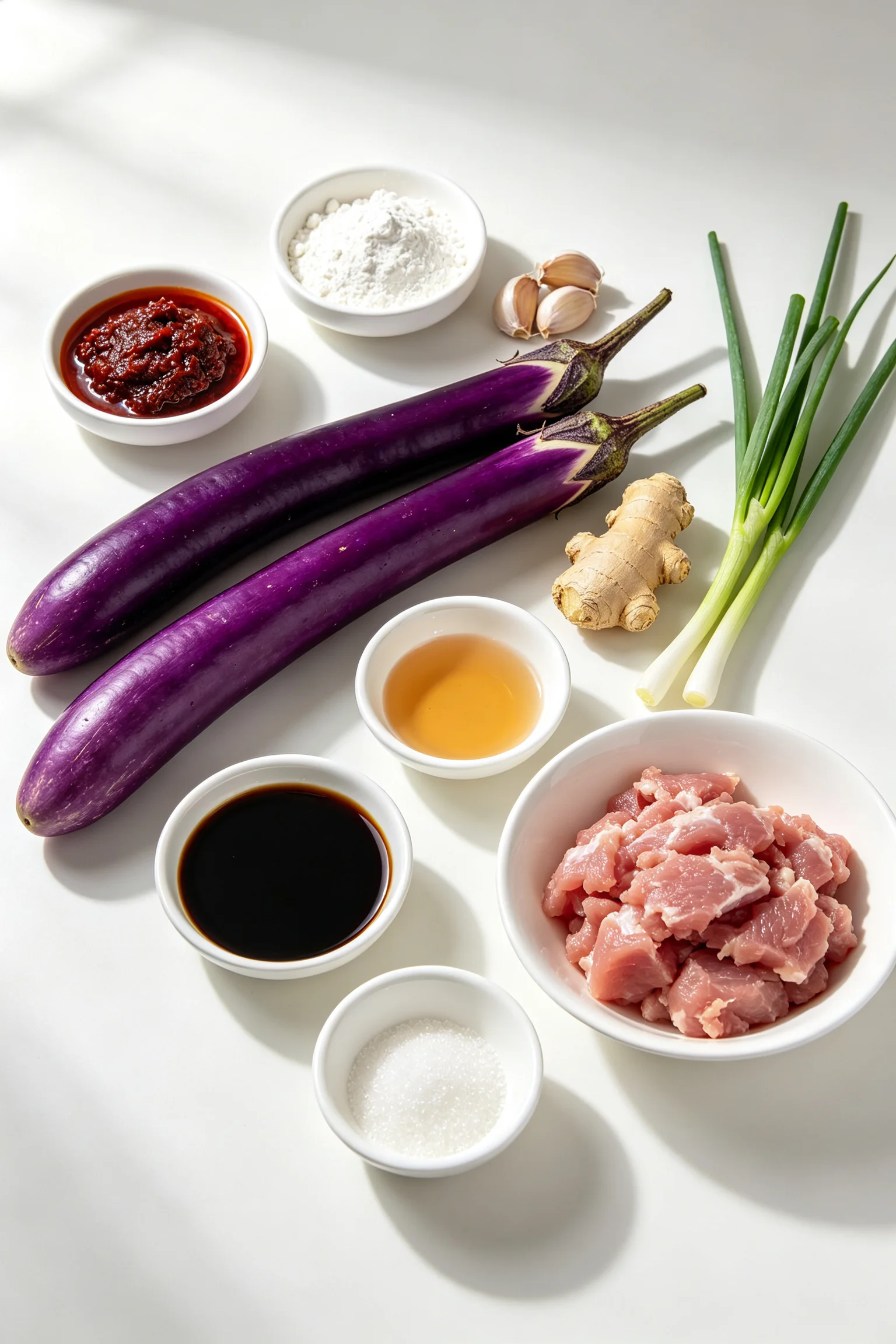
Serves 3 as a main with rice, or 4-5 as part of a larger spread
Eggplant:
- 600g (1.3lb) Chinese or Japanese eggplant (approximately 3 large), cut into 5cm batons
- 1 tsp salt (for sha shui)
- 3 tbsp cornstarch (for guo fen)
- 3 tbsp neutral oil for frying
Yu xiang sauce (mix together in a bowl):
- 2 tbsp light soy sauce
- 1 tbsp Chinkiang black vinegar
- 1 tbsp sugar
- 1 tbsp Shaoxing wine
- 2 tsp cornstarch
- 4 tbsp water
Stir-fry base:
- 150g (5oz) ground pork (optional but traditional, omit for vegan)
- 1½ tbsp Pixian doubanjiang, finely chopped
- 1 tbsp pickled red chilli (泡椒, pào jiāo), substitute extra doubanjiang if unavailable
- 5 cloves garlic, finely minced
- 2cm fresh ginger, finely minced
- 3 spring onions, white and green parts separated, thinly sliced
Instructions
The sha shui salting takes 15-20 minutes. Start this first and prepare everything else while the eggplant sits.
Step 1: Sha shui, salt the eggplant
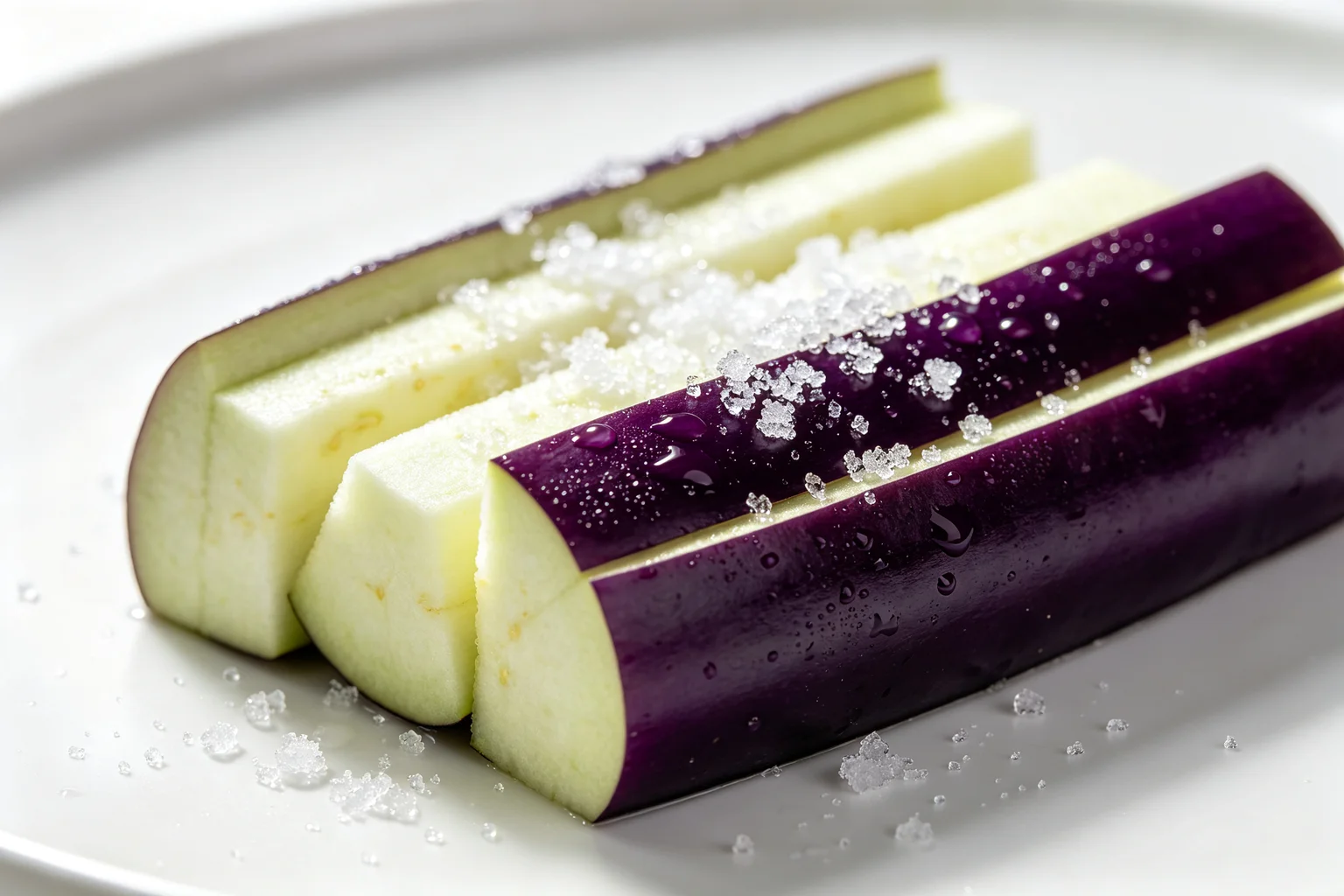
Place the eggplant batons in a colander. Toss with 1 teaspoon of salt.
Rinse thoroughly under cold water. Then squeeze each piece firmly to extract as much water as possible. The eggplant should feel noticeably drier and slightly denser than before salting. Pat dry with kitchen paper.
Step 2: Guo fen, coat with cornstarch
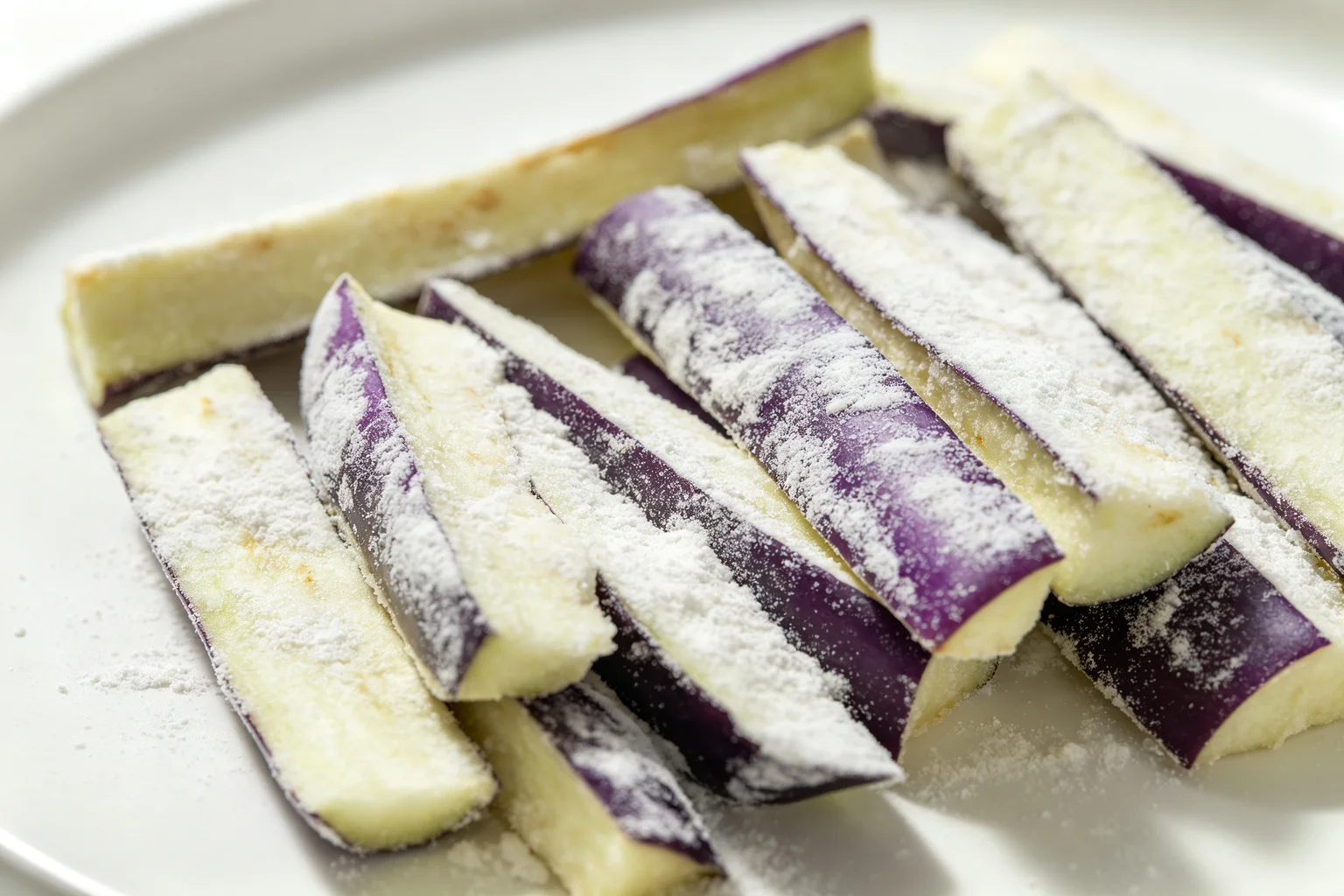
Place the dried salted eggplant in a large bowl. Add the cornstarch.
Step 3: Mix the sauce
Combine all the yu xiang sauce ingredients in a small bowl. Stir until the sugar and cornstarch are fully dissolved.
Step 4: Fry the eggplant
Heat 2 tablespoons of oil in a wok or large flat-bottomed pan over high heat until shimmering. Add the eggplant in a single layer, work in batches if needed.
Step 5: Cook the pork (if using)
Add the remaining 1 tablespoon of oil to the wok over high heat. Add the ground pork.
Step 6: Doubanjiang to red oil
Reduce heat to medium. Add the finely chopped doubanjiang and pickled chilli to the wok.
Step 7: Add aromatics
Add the garlic, ginger, and spring onion whites. Stir 30-45 seconds over medium heat until fragrant but not darkened.
Step 8: Sauce, eggplant, and finish
Stir the yu xiang sauce bowl once more (the cornstarch settles). Pour into the wok.
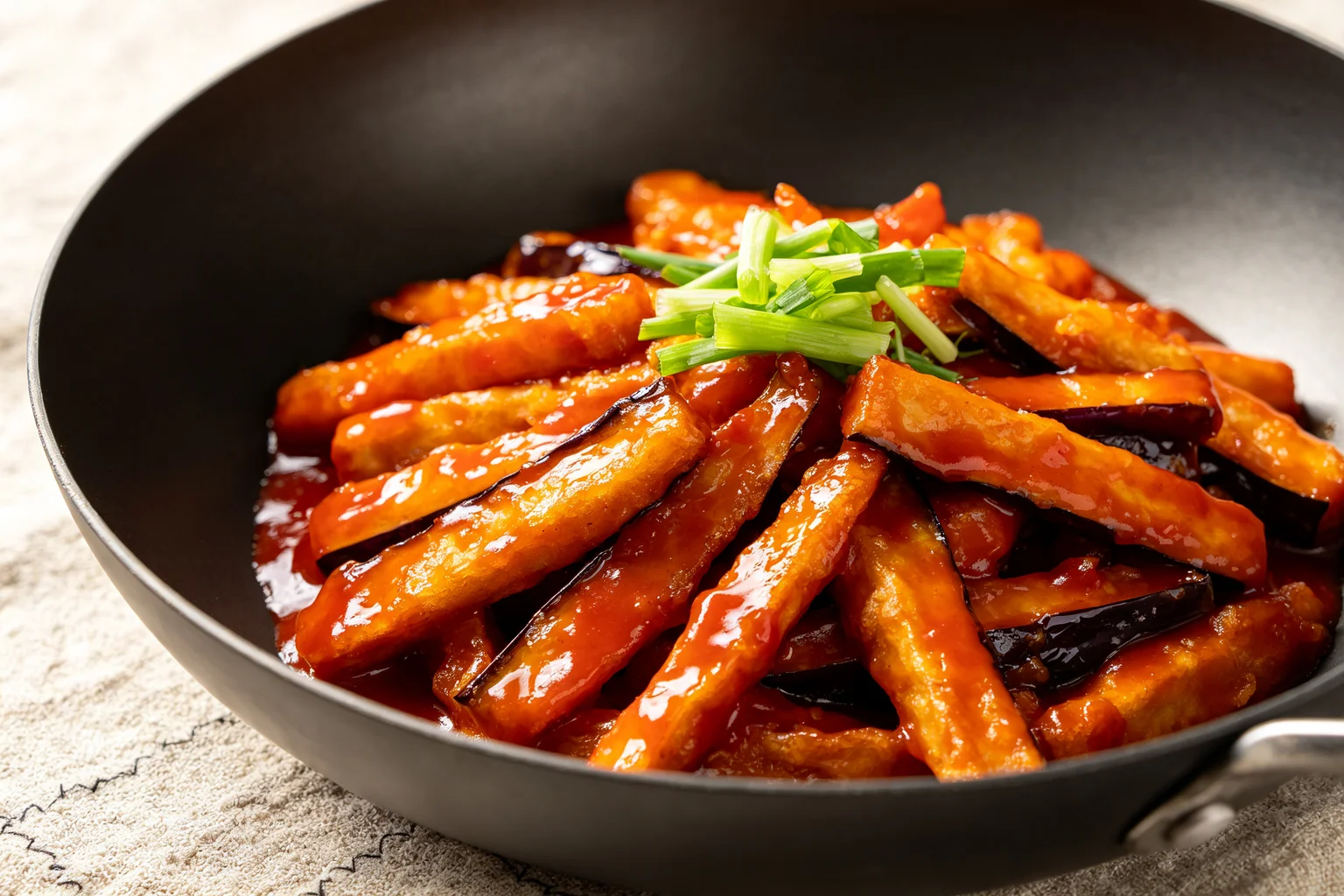
Return the fried eggplant and pork to the wok. Toss gently to coat every piece in the sauce. The sauce should cling to the eggplant and look glossy. If the sauce is too thick, add a splash of water. If too thin, a small additional cornstarch slurry.
Remove from heat. Add the spring onion greens. Toss once.
Serve immediately over steamed rice. The eggplant softens quickly once sauced, serve within 5 minutes for the best texture.
Love Chinese food?
Check out my complete guide to Chinese home cooking, pantry essentials, and techniques.
FAQ
Why is my eggplant still greasy even after salting? The eggplant was not squeezed dry enough after salting and rinsing. Residual water on the eggplant surface produces steam when it hits the oil, which prevents the cornstarch from sealing properly. Squeeze each piece firmly after rinsing, you should feel resistance as the compressed cells push back. Pat dry with kitchen paper after squeezing. The eggplant should feel noticeably denser than before salting.
Can I make this vegan by omitting the pork? Yes. The ground pork adds umami depth and textural contrast but the dish works well without it. Increase the doubanjiang by half a tablespoon to compensate for the missing umami. The vegan version is actually the more common restaurant version outside China, the pork is a traditional addition but not a defining element of the yu xiang flavor profile.
What is the difference between yu xiang qiezi and mapo tofu? Both are Sichuan dishes using doubanjiang as the primary spice base and both use a cornstarch-thickened sauce. The flavor profile differs: mapo tofu is pure mala (numbing and spicy) with no sweet or sour element. Yu xiang sauce is the sweet-sour-spicy-savory combination unique to the yu xiang profile, it contains black vinegar and sugar in proportions that mapo tofu does not. The doubanjiang red oil technique is identical in both, covered in detail in the mapo tofu recipe on this site.
Why does the eggplant turn brown and how do I keep the purple colour? Eggplant flesh oxidises rapidly when cut and exposed to air, the same enzymatic browning process that turns cut apples brown. To slow this: cut and immediately soak in the salt water during the sha shui step rather than leaving cut pieces exposed to air. Adding a small amount of vinegar (1 teaspoon) to the salting water also slows oxidation. CiCi Li’s method of soaking in salt and rice vinegar water specifically addresses this. The finished dish will be darker than the raw purple in any case from the doubanjiang and soy sauce, so some browning is expected and does not affect flavour.
You might also like: Check out our complete Chinese cooking guide for more essential ingredients and techniques.
Chinese Eggplant with Garlic Sauce (鱼香茄子)
Chinese, Sichuan, Main Dish
PT20M
PT15M
PT35M
Nutrition Facts
Ingredients
- 600g (1.3lb) Chinese or Japanese eggplant (approximately 3 large), cut into 5cm batons
- 1 tsp salt (for sha shui)
- 3 tbsp cornstarch (for guo fen)
- 3 tbsp neutral oil for frying
- 2 tbsp light soy sauce
- 1 tbsp Chinkiang black vinegar
- 1 tbsp sugar
- 1 tbsp Shaoxing wine
- 2 tsp cornstarch
- 4 tbsp water
- 150g (5oz) ground pork (optional but traditional, omit for vegan)
- 1½ tbsp Pixian doubanjiang, finely chopped
- 1 tbsp pickled red chilli (泡椒, pào jiāo), substitute extra doubanjiang if unavailable
- 5 cloves garlic, finely minced
- 2cm fresh ginger, finely minced
- 3 spring onions, white and green parts separated, thinly sliced
Instructions
- *The sha shui salting takes 15-20 minutes. Start this first and prepare everything else while the eggplant sits.*
- Place the eggplant batons in a colander. Toss with 1 teaspoon of salt. Leave for 15-20 minutes. The eggplant will release water and soften slightly. Rinse thoroughly under cold water. Then squeeze each piece firmly to extract as much water as possible. The eggplant should feel noticeably drier and slightly denser than before salting. Pat dry with kitchen paper.
- Place the dried salted eggplant in a large bowl. Add the cornstarch. Toss until every piece is lightly coated, a thin, barely visible dusting. Shake off excess. Over-coating produces a batter-fried result.
- Combine all the yu xiang sauce ingredients in a small bowl. Stir until the sugar and cornstarch are fully dissolved. Taste, it should be balanced between sour, salty, and sweet. Set aside.
- Heat 2 tablespoons of oil in a wok or large flat-bottomed pan over high heat until shimmering. Add the eggplant in a single layer, work in batches if needed. Fry without stirring for 2-3 minutes until the contact side is golden and sealed. Turn and fry the other sides briefly. The eggplant should be lightly golden and slightly collapsed but not fully soft. Remove to a plate.
- Add the remaining 1 tablespoon of oil to the wok over high heat. Add the ground pork. Break up with a spatula and fry until crispy and beginning to brown, 2-3 minutes. Remove to the plate with the eggplant.
- Reduce heat to medium. Add the finely chopped doubanjiang and pickled chilli to the wok. Fry for 1-2 minutes, stirring constantly, until the surrounding oil turns clearly red-orange. The doubanjiang should darken slightly and smell deeply savoury.
- Add the garlic, ginger, and spring onion whites. Stir 30-45 seconds over medium heat until fragrant but not darkened. Do not let the garlic brown at this stage, the wok is still very hot and garlic burns fast at this temperature.
- Stir the yu xiang sauce bowl once more (the cornstarch settles). Pour into the wok. Stir until the sauce bubbles and begins to thicken, 30-45 seconds. Return the fried eggplant and pork to the wok. Toss gently to coat every piece in the sauce. The sauce should cling to the eggplant and look glossy. If the sauce is too thick, add a splash of water. If too thin, a small additional cornstarch slurry. Remove from heat. Add the spring onion greens. Toss once. Serve immediately over steamed rice. The eggplant softens quickly once sauced, serve within 5 minutes for the best texture.
Did you make this recipe?
Tag @asianfoodsdaily on Instagram or leave a comment below!
Testing Notes
Tested in Asha's kitchen. Last reviewed June 22, 2025.
Ingredient Substitutions
Substitution notes coming soon.
About Asha
Half Asian, half African cook raised between two food-obsessed cultures. I've spent 10 years learning Asian cooking traditions through family, friends, and thousands of hours at the stove — testing every dish until it works in a standard home kitchen.
Read my full storyRelated Recipes
More delicious dishes you might enjoy

Loading comments...