Orange Chicken Recipe
Jump to Section
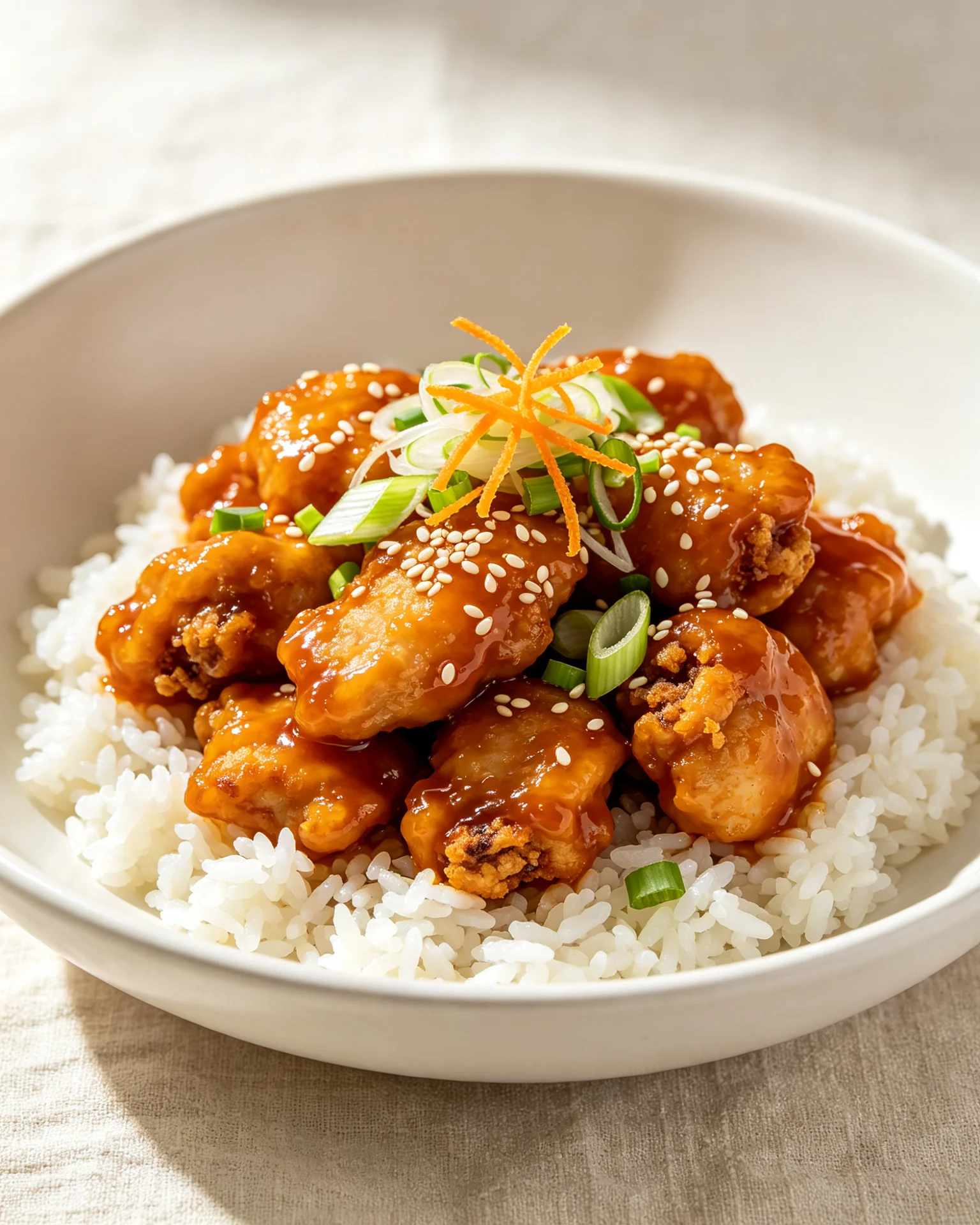
The first time I made orange chicken at home, I used bottled orange juice and no zest. The sauce came out sour-sweet and the colour was right but it smelled of nothing. No orange fragrance at all. I thought the problem was the brand of juice or the ratio. I added more juice, more sugar, more vinegar. The sauce tasted more intense but still flat.
The second time I zested two oranges before juicing them and added the zest to the sauce. The difference was immediate, when the zest hit the hot pan the kitchen filled with orange fragrance. The finished sauce smelled and tasted of real orange rather than just sweet acid. The fragrance comes from limonene and other terpene compounds in the essential oil of the orange peel. These are almost entirely absent from processed juice, which retains the citric acid and sugar but loses the volatile aromatics during production. Fresh zest is not an optional extra. It is where the orange character lives.
What is orange chicken and where does it actually come from?
Orange chicken is a Chinese-American dish with a documented creator: Andy Kao, a chef at Panda Express, developed it in 1987 at the Encino, California location. Kao was inspired by a Hunanese dish called Chen Pi Ji (陈皮鸡), which translates as tangerine peel chicken, a traditional dish that uses dried aged tangerine peel for deep, slightly bitter citrus flavour. The American version substituted fresh orange juice for the dried peel and added significantly more sugar to suit American taste preferences. Panda Express launched it nationally in 1988. It became their best-selling dish.
Orange chicken has no direct equivalent in Chinese cuisine. You will not find it on the menu at a restaurant in China. It was created in America, for American customers, drawing loose inspiration from Chinese flavour principles, sweet and sour, citrus, fried protein, without being a copy or adaptation of any single Chinese dish.
This matters for setting expectations. Orange chicken is not supposed to taste like Chinese food. It is supposed to taste like itself: sweet, tangy, slightly spicy, deeply citrusy, with a glossy glaze coating crispy fried chicken.
What is the difference between orange chicken and General Tso’s chicken?
Both are Chinese-American fried chicken dishes with a sweet-savoury sauce and a similar production method. The differences are significant enough that they are genuinely different eating experiences.
Orange chicken is citrus-forward. The sauce leads with orange fragrance and sweetness, the sour component is present but gentle, and the heat level is typically low. The colour is amber-orange from the caramelised citrus sugars. The dish tastes bright and fruity.
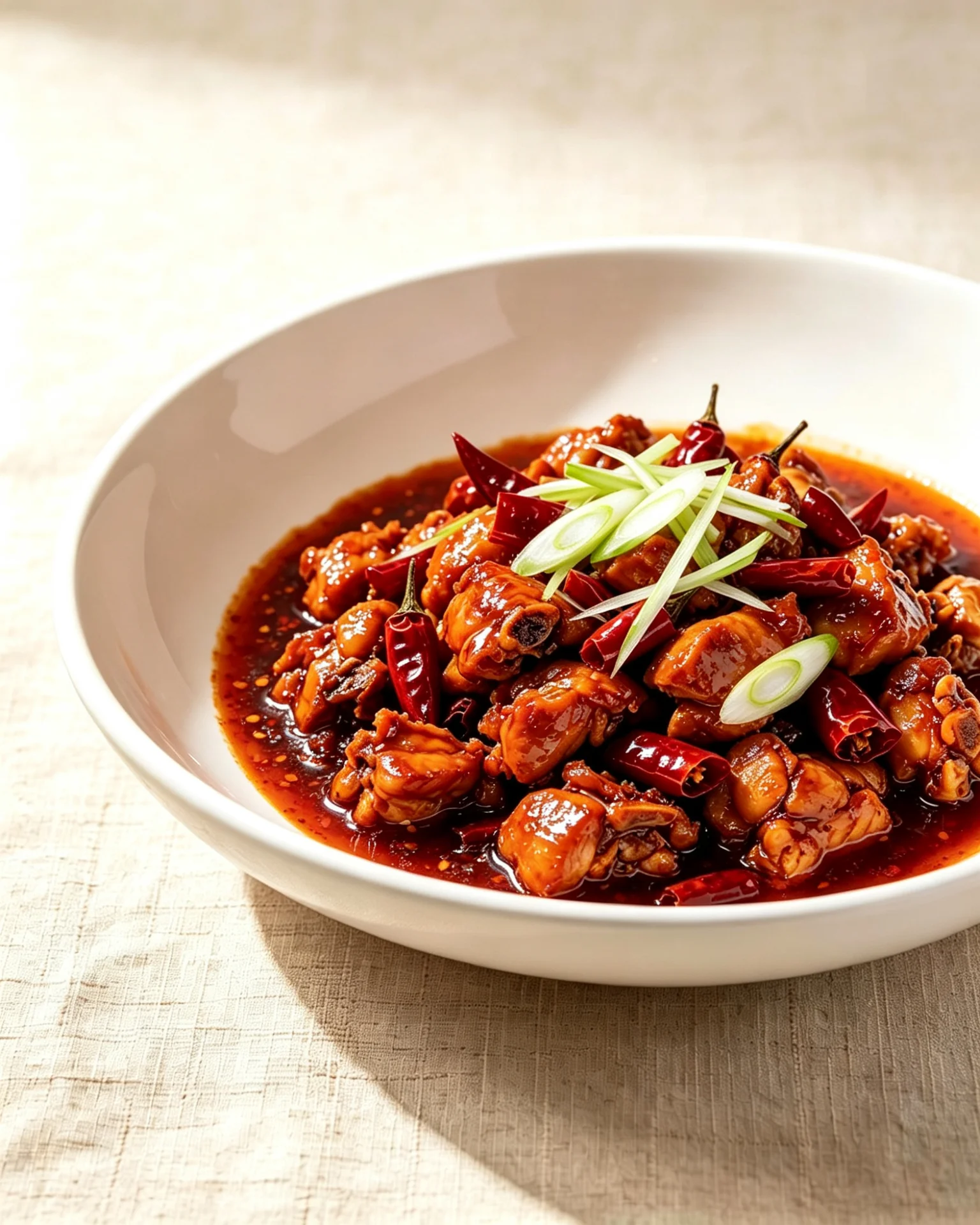
General Tso’s chicken is darker and more savoury. The sauce uses dried red chillies and has a more assertive heat level. There is no citrus component. The colour is dark mahogany from the soy sauce and sugar caramelisation. The dish tastes deeper and more complex.
Both are entirely Chinese-American in origin, neither has a direct Chinese equivalent despite various origin stories. If you enjoy one, the other is worth making: they share technique but produce completely different flavour profiles.
Why does orange chicken need fresh zest and not just juice?
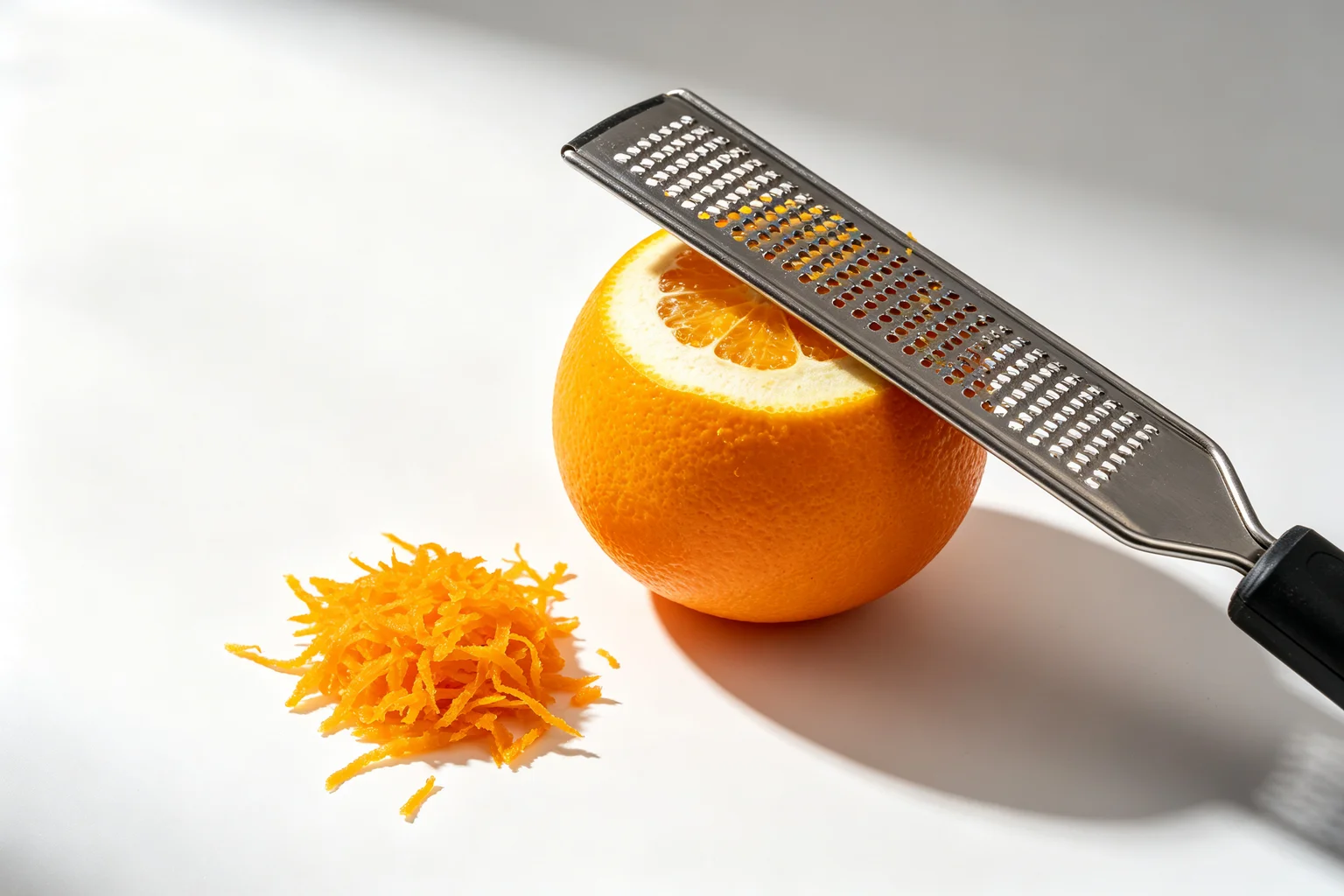
Covered in the opening, but the specific mechanism is worth understanding fully because it changes how you shop and cook.
Orange peel contains essential oils concentrated in the coloured outer layer. The primary compound in this oil is limonene, a terpene that accounts for approximately 90% of orange peel oil by composition. Limonene is the molecule responsible for the bright, vivid, immediately recognisable orange fragrance.
Orange juice contains citric acid, water, and natural sugars. It contains almost no limonene. During the pressing and commercial processing of orange juice, the heat and mechanical force involved drives off the volatile terpene compounds. What remains is the acid and sugar profile without the aromatic profile. This is why fresh-squeezed orange juice smells more strongly of orange than the juice itself: the act of squeezing releases terpenes from the peel into the juice.
When fresh zest is added to a hot sauce, the limonene and other terpenes bloom in the heat and deposit on everything they contact. The sauce smells intensely of orange. A sauce made with bottled juice alone smells of sweet acid, correct flavour direction, missing the fragrance.
Zest the outer coloured layer only. The white pith beneath contains limonene’s bitter precursor compounds. Too much pith in the zest produces a bitter sauce. A microplane or fine zester removes only the coloured layer cleanly.
Why does cornstarch produce crispier chicken than flour?
The difference is gluten, specifically its absence in cornstarch.
Cornstarch is approximately 99% pure starch with almost no protein. When chicken coated in cornstarch is fried, the starch gelatinises rapidly and crisps into a thin, hard shell. With no gluten network, there is nothing to produce chewiness. The crust shatters cleanly when bitten.
Wheat flour contains approximately 10-13% gluten-forming proteins. A flour-only coating produces a thicker crust with a gluten network running through it, the crust crisps but also has a slightly bready, chewy character that sits between the chicken and the sauce.
For orange chicken the correct ratio is approximately two parts cornstarch to one part flour. The cornstarch provides the shatter. The small amount of flour adds just enough structural cohesion that the crust does not explode off the chicken in pieces when bitten. The crust shatters at the contact point rather than all at once.
Potato starch is an alternative to cornstarch that produces an even crispier, slightly more translucent crust. Worth trying if you want maximum crispness.
What is the double fry technique and why does it matter?
A single fry produces good orange chicken. A double fry produces significantly crispier orange chicken that holds its texture longer after tossing in sauce.
The mechanism involves moisture migration. During the first fry at 160°C, the chicken cooks through and the coating partially crisps. When the chicken rests after the first fry, moisture from the interior of the chicken migrates outward through the meat and into the partially crisped starch coating, softening it slightly. This is the same process that makes any fried food less crispy as it sits.
The second fry at 180-190°C drives off this migrated moisture rapidly. The higher temperature dehydrates the outer starch layer more completely, setting it into a harder, drier crust with less residual moisture. This drier crust absorbs sauce moisture more slowly after tossing, it stays crispy for longer.
Rest time between fries: 5-10 minutes. Long enough for the moisture to migrate outward but not so long that the chicken cools completely. The second fry takes only 60-90 seconds, just long enough to drive off the surface moisture and reset the crust.
Why do you toss the chicken in sauce immediately before serving?
The crust on fried chicken is a desiccated starch shell. It maintains crispness by staying dry. Orange chicken sauce contains significant water content from the orange juice, vinegar, and chicken stock.
The moment the chicken contacts the sauce, water molecules begin migrating through the crust surface. This absorption is progressive, a crust that is crispy at tossing is noticeably softer after 2 minutes and significantly soft after 5 minutes.
This is why restaurant orange chicken from a takeout container is often soggy by the time it reaches you. It was tossed in sauce 15-30 minutes before you ate it and the crust has been absorbing moisture throughout that time. The same dish tossed 30 seconds before eating is an entirely different texture.
At home: make the sauce ahead of time. Fry the chicken and let it rest. Reheat the sauce until bubbling. Toss the chicken in the sauce and serve immediately. The sauce-to-chicken contact time before the first bite should be as short as possible.
Why does rice vinegar matter in the sauce?
The orange chicken sauce contains significant sugar, typically 3-4 tablespoons for four servings. Without an acid component to balance it, the sauce tastes one-dimensionally sweet. The orange character becomes muted because sweetness is dominating the palate.
Rice vinegar at 4-5% acetic acid lowers the effective sweetness of the sauce without making it taste sour. The acid provides contrast that makes the orange fragrance more distinct. Each element tastes more like itself when the acid-sugar ratio is balanced.
This is the same mechanism as the sugar in Chinese tomato egg stir fry, there it corrects the acid of the tomatoes, here the vinegar corrects the sweetness of the sugar. Both are pH corrections masquerading as seasoning decisions.
If the sauce tastes too sweet: add more vinegar one teaspoon at a time. If it tastes too sharp: add more sugar the same way. The correct balance is a sauce where no single flavour dominates.
Ingredients
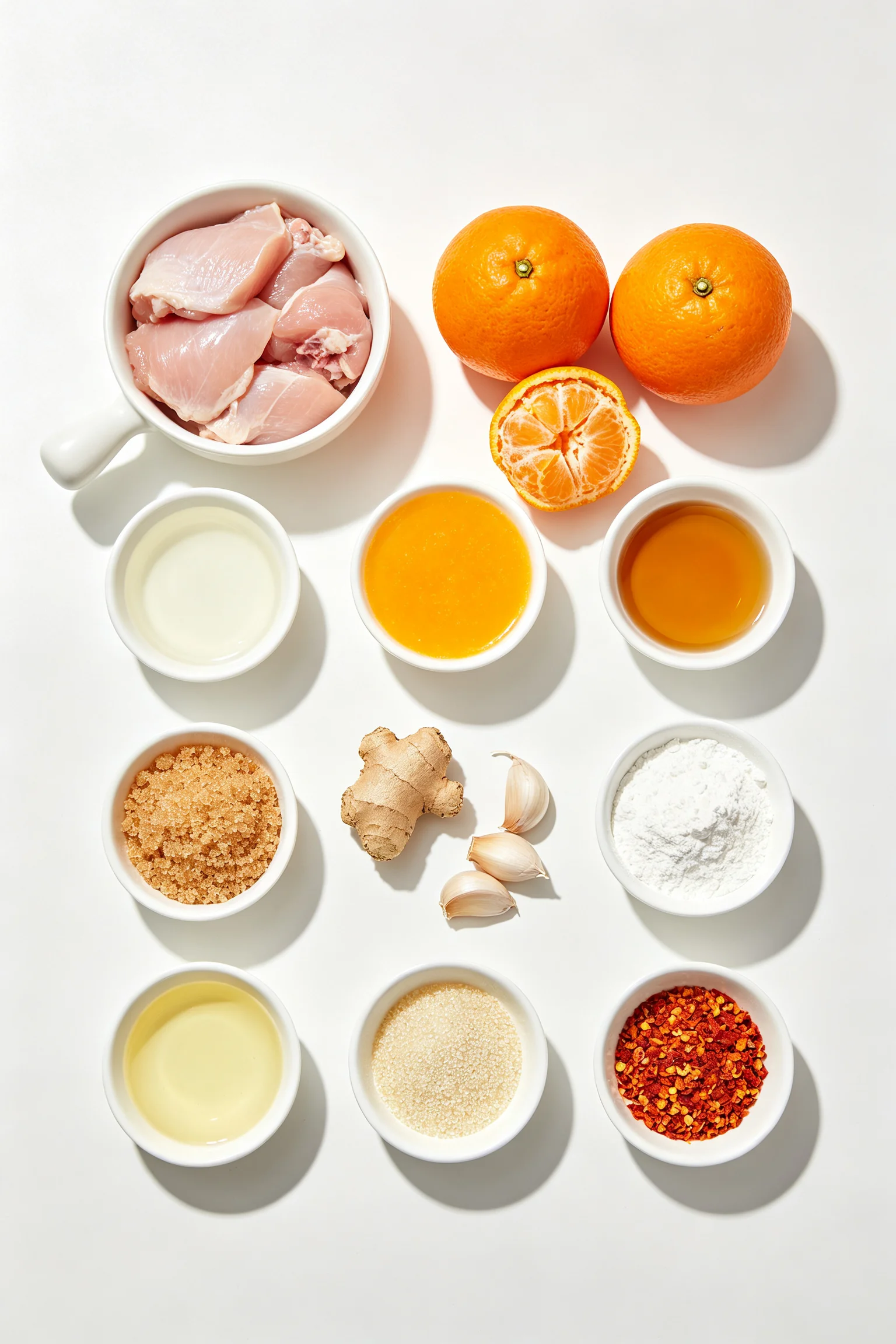
Serves 4
Chicken and coating:
- 700g (1lb 9oz) boneless chicken thighs, cut into 3-4cm pieces
- 1 egg, beaten
- 1 tbsp soy sauce
- 1 tbsp Shaoxing wine
- ½ tsp white pepper
- 80g (½ cup) cornstarch
- 40g (¼ cup) plain flour
- ½ tsp baking soda (adds lightness to the crust)
- ½ tsp salt
- Neutral oil for frying
Orange sauce:
- Zest of 2 oranges (coloured layer only, no pith)
- 120ml (½ cup) fresh orange juice (from the 2 zested oranges)
- 3 tbsp soy sauce
- 3 tbsp rice vinegar
- 3 tbsp brown sugar
- 1 tbsp honey
- 60ml (¼ cup) chicken stock
- 3 garlic cloves, finely minced
- 2cm fresh ginger, finely grated
- 1 tsp sesame oil (added off heat)
- 1 tbsp cornstarch mixed with 2 tbsp cold water (slurry)
- 1-2 tsp chilli flakes or dried red chilli (optional)
To serve:
- Steamed jasmine rice
- 2 spring onions, thinly sliced
- 1 tsp sesame seeds
- Orange zest to finish (optional)
Instructions
Make the sauce before frying. Everything moves fast once the oil is hot.
Step 1: Prepare Chicken
Cut chicken into bite-sized pieces. Toss with cornstarch, salt, and pepper until evenly coated.
Step 2: Make Sauce
Whisk orange juice, zest, soy sauce, garlic, ginger, and sugar in a bowl. Set aside for later.
Step 3: Fry Chicken
Heat oil in a large skillet. Fry chicken pieces until golden brown and crispy on all sides.
Step 4: Thicken & Coat
Pour sauce into the pan with the chicken. Simmer until the sauce thickens and glazes the chicken perfectly.
Step 5: Serve
Garnish with green onions and sesame seeds. Serve immediately over hot steamed rice.
How do you store and reheat orange chicken?
Keeps in the refrigerator for 2 days. The crust will have absorbed sauce moisture by the next day and the texture is noticeably softer. The flavour deepens.
To reheat and restore crispness: spread the chicken on a wire rack set on a baking tray. Bake at 200°C for 8-10 minutes until the exterior has dried and crisped again. Reheat the sauce separately and toss together just before serving. Do not microwave, it steams the crust and the texture is lost.
For make-ahead: double fry the chicken and freeze before saucing. Reheat from frozen in a 200°C oven for 12-15 minutes until crispy, then toss in freshly made sauce.
Love Chinese food?
Check out my complete guide to Chinese home cooking, pantry essentials, and techniques.
FAQ
Why is my orange chicken sauce not fragrant? The zest was omitted or bottled orange juice was used. The orange fragrance in the sauce comes from limonene and terpene compounds in the orange peel essential oil, not from the juice. Fresh zest is the only source of these compounds. Bottled juice is processed in ways that drive off the volatile aromatics. Zest two fresh oranges before juicing them. Add the zest to the sauce with the other liquids. The fragrance difference is immediate.
Can I make orange chicken without deep frying? Air fryer works reasonably well. Coat the chicken as directed, spray generously with neutral oil, air fry at 200°C for 12-14 minutes turning once. The crust will be crispier than baked but not as shatteringly crisp as deep fried, the air fryer cannot replicate the full oil immersion environment. Toss in sauce and serve immediately, the same timing rules apply. Baking produces an acceptable but noticeably softer result.
Why does my orange chicken coating fall off during frying? Two causes. First, the chicken was too wet when it went into the coating, the egg marinade needs to be shaken off lightly before dredging, and the coated pieces need to rest for 5 minutes before frying to allow the coating to set. Second, the oil was not hot enough, cold or insufficiently hot oil causes the coating to absorb fat before it crisps, loosening the bond with the chicken.
What is the best chicken cut for orange chicken? Thigh over breast for the same reason as every other Chinese stir fry and fried chicken dish, the higher fat content keeps the interior moist through the double fry process. Breast at 3-4cm pieces can dry out during the second fry, particularly at the higher temperature. Thigh stays juicy. If using breast, cut slightly larger pieces, 4-5cm, to provide more interior meat relative to the surface area being fried.
You might also like: Check out our complete Chinese cooking guide for more essential ingredients and techniques.
Orange Chicken Recipe
Chinese Recipes, Weeknight Meals, High‑Heat Wok Cooking
PT30M
PT20M
PT50M
Nutrition Facts
Ingredients
- 700g (1lb 9oz) boneless chicken thighs, cut into 3-4cm pieces
- 1 egg, beaten
- 1 tbsp soy sauce
- 1 tbsp Shaoxing wine
- ½ tsp white pepper
- 80g (½ cup) cornstarch
- 40g (¼ cup) plain flour
- ½ tsp baking soda (adds lightness to the crust)
- ½ tsp salt
- Neutral oil for frying
- Zest of 2 oranges (coloured layer only, no pith)
- 120ml (½ cup) fresh orange juice (from the 2 zested oranges)
- 3 tbsp soy sauce
- 3 tbsp rice vinegar
- 3 tbsp brown sugar
- 1 tbsp honey
- 60ml (¼ cup) chicken stock
- 3 garlic cloves, finely minced
- 2cm fresh ginger, finely grated
- 1 tsp sesame oil (added off heat)
- 1 tbsp cornstarch mixed with 2 tbsp cold water (slurry)
- 1-2 tsp chilli flakes or dried red chilli (optional)
- Steamed jasmine rice
- 2 spring onions, thinly sliced
- 1 tsp sesame seeds
- Orange zest to finish (optional)
Instructions
- *Make the sauce before frying. Everything moves fast once the oil is hot.*
- Cut chicken into bite-sized pieces. Toss with cornstarch, salt, and pepper until evenly coated.
- Whisk orange juice, zest, soy sauce, garlic, ginger, and sugar in a bowl. Set aside for later.
- Heat oil in a large skillet. Fry chicken pieces until golden brown and crispy on all sides.
- Pour sauce into the pan with the chicken. Simmer until the sauce thickens and glazes the chicken perfectly.
- Garnish with green onions and sesame seeds. Serve immediately over hot steamed rice. ## How do you store and reheat orange chicken? Keeps in the refrigerator for 2 days. The crust will have absorbed sauce moisture by the next day and the texture is noticeably softer. The flavour deepens. To reheat and restore crispness: spread the chicken on a wire rack set on a baking tray. Bake at 200°C for 8-10 minutes until the exterior has dried and crisped again. Reheat the sauce separately and toss together just before serving. Do not microwave, it steams the crust and the texture is lost. For make-ahead: double fry the chicken and freeze before saucing. Reheat from frozen in a 200°C oven for 12-15 minutes until crispy, then toss in freshly made sauce.
Did you make this recipe?
Tag @asianfoodsdaily on Instagram or leave a comment below!
Testing Notes
Tested in Asha's kitchen. Last reviewed May 17, 2025.
Ingredient Substitutions
Substitution notes coming soon.
About Asha
Half Asian, half African cook raised between two food-obsessed cultures. I've spent 10 years learning Asian cooking traditions through family, friends, and thousands of hours at the stove — testing every dish until it works in a standard home kitchen.
Read my full storyRelated Recipes
More delicious dishes you might enjoy



Loading comments...