Chinese Chicken Salad Recipe
Jump to Section
The first time I made this for guests, I dressed the salad 30 minutes before they arrived. By the time we sat down, the napa cabbage had released enough water to dilute the dressing to almost nothing. The wonton strips were soft. The whole thing had collapsed into a wet pile that tasted flat and looked nothing like what I had intended. It was not a timing problem. It was an osmosis problem.
Rice vinegar and soy sauce are both high in dissolved solutes. High solute concentration outside a cell creates osmotic pressure that draws water from inside the cell through the cell membrane. Dressed cabbage sitting for 30 minutes extracts enough water from the cabbage cells to pool visibly at the bottom of the bowl and dilute the dressing by roughly a third. The crunch is gone before anyone sits down. Dress at the table, immediately before eating, and none of that happens. The cabbage stays crisp, the dressing stays concentrated, and the wonton strips stay crunchy for the full meal.
What is Chinese chicken salad and where does it come from?
Chinese chicken salad is an American dish built on Chinese-inspired ingredients. It has no direct roots in Chinese cuisine. The salad was created in California in the 1960s by Chinese-American restaurateurs adapting Chinese pantry staples, sesame oil, rice vinegar, soy sauce, ginger, into the main-course salad format that American diners wanted at lunch.
Two separate origin stories are documented. Madame Wu’s in Santa Monica, run by Sylvia Wu, served a version with shredded chicken, fried rice vermicelli noodles, toasted almonds, and a light sesame dressing that became a luncheon institution in the 1960s and 1970s. Cecelia Chiang at The Mandarin in San Francisco developed a different but related version around the same period, exposing a new generation of American diners to Chinese-inflected salads at a time when Chinese restaurant food in the United States was still largely Cantonese-American takeout.
Both versions shared the same philosophy: use the flavour architecture of Chinese cooking, sesame, soy, ginger, rice vinegar, applied to a salad format that was recognisably American. The dish was neither Chinese nor a standard American salad. It became its own category.
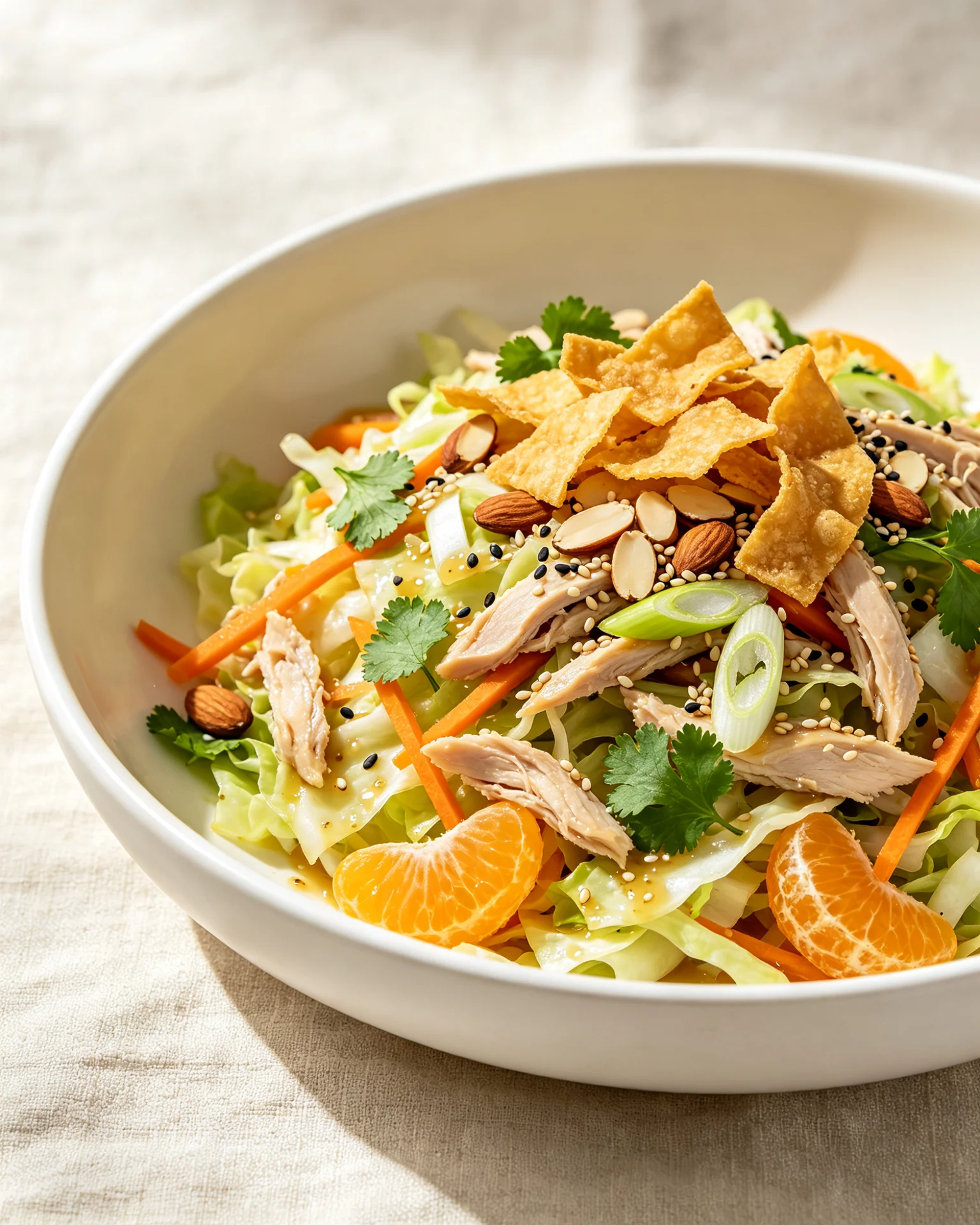
Today’s version typically includes shredded napa cabbage, poached shredded chicken, crispy wonton strips, toasted almonds or cashews, mandarin orange segments, and a sesame-ginger vinaigrette. Every element is negotiable except the dressing and the napa cabbage.
Why does the dressing use rice vinegar and sesame oil and why do they have to be added in a specific order?
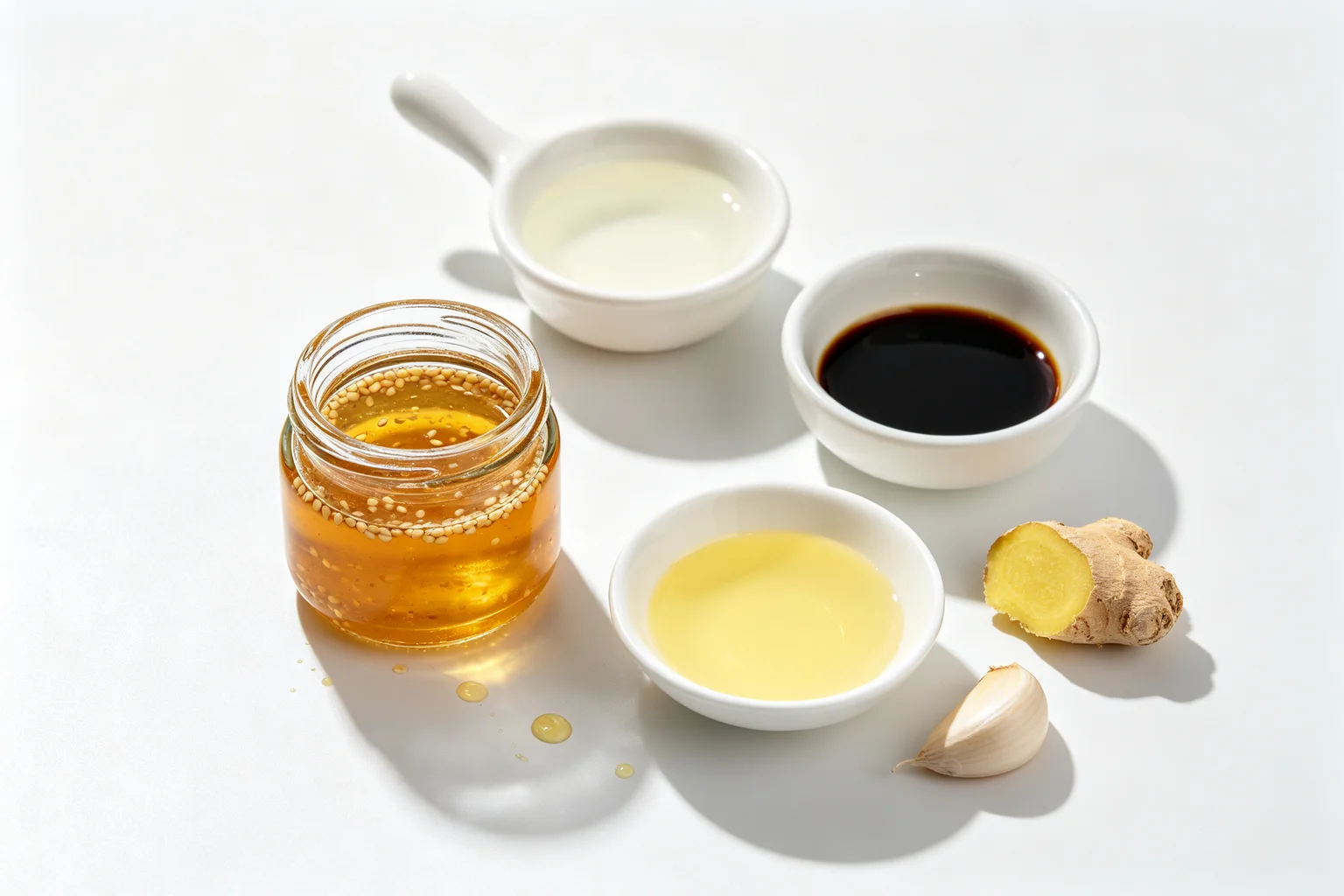
The sesame oil in this dressing cannot form a stable emulsion with the vinegar. This is not a failure of technique. It is a chemical property.
Rice vinegar is water-based, acidic, polar, low viscosity. Sesame oil is fat-based, non-polar, high viscosity, strongly aromatic. Oil and water do not mix stably without an emulsifier. Neutral oils like canola or vegetable oil can be forced into a temporary emulsion with vigorous whisking and will stay combined for long enough to dress a salad. Sesame oil, with its dense aromatic compound profile, resists even that temporary emulsification and separates within minutes regardless of how long it is whisked.
The correct approach is to not try to emulsify it at all. Whisk together all other dressing ingredients, rice vinegar, soy sauce, fresh ginger, garlic, neutral oil, a small amount of honey, until those combine into a stable dressing. Then add the sesame oil at the very end and stir once or twice, just enough to distribute it through the dressing without breaking the existing emulsion. The sesame oil sits as small droplets throughout the dressing rather than as a continuous phase, and when the dressing is poured over the salad, those droplets coat the leaves individually.
Dress the salad immediately after mixing the sesame oil in. Do not make the full dressing and let it sit, the sesame oil will have separated back out within 10 minutes and the dressing will pour unevenly.
Why does Chinese chicken salad use napa cabbage and not romaine or iceberg?
Every common salad green behaves differently under an acid-based dressing, and the differences are significant enough that the cabbage choice defines the dish.
Napa cabbage (Chinese cabbage, 白菜) has tightly packed, relatively thick cell walls containing approximately 94% water. The structure of these cell walls resists the osmotic pressure of the acid dressing for 10-15 minutes before significant moisture release begins. In a salad eaten promptly after dressing, napa retains its crunch and its texture throughout the meal. Shredded thinly into 1-2mm ribbons, it produces a light, slightly feathery texture that is the specific base the dish is built around.
Romaine has looser, thinner cell walls. Under acid dressing, romaine wilts in 5-10 minutes, the cells collapse faster and the leaves become limp before the salad is finished. Some recipes use romaine alongside napa for volume, which works if the salad is dressed and eaten immediately. Romaine alone produces a salad that wilts too fast.
Iceberg has similar water content to napa but a coarser, less regular cell structure. It releases moisture faster than napa under dressing and produces a heavier, less refined texture.
Coleslaw mix from a bag works as a shortcut, it is typically a blend of green and red cabbage that holds up under dressing better than romaine. The texture is slightly coarser than thinly shredded napa but the wilt resistance is acceptable.
Why do you dress the salad at the table and not in advance?
Already explained in the opening, the osmosis mechanism is the reason. But it helps to know exactly how much time you actually have.
Napa cabbage dressed with this vinaigrette: 10-12 minutes before measurable wilt begins. At 20 minutes: noticeable softening and pooling at the bowl bottom. At 30 minutes: fully wilted, dressing diluted, dish compromised.
Practically: toss the salad ingredients together undressed. Keep the dressing in a jar on the side. Add the wonton strips and toasted nuts at the last moment, they have no wilt resistance whatsoever. Pour the dressing over the salad at the table just before serving and toss once.
For a dinner party where table service is awkward: dress the salad in the kitchen, plate immediately, and serve within 5 minutes. The salad holds at that compressed timescale. Do not plate and leave it on a side table while waiting for guests to sit.
How do you make crispy wonton strips at home?
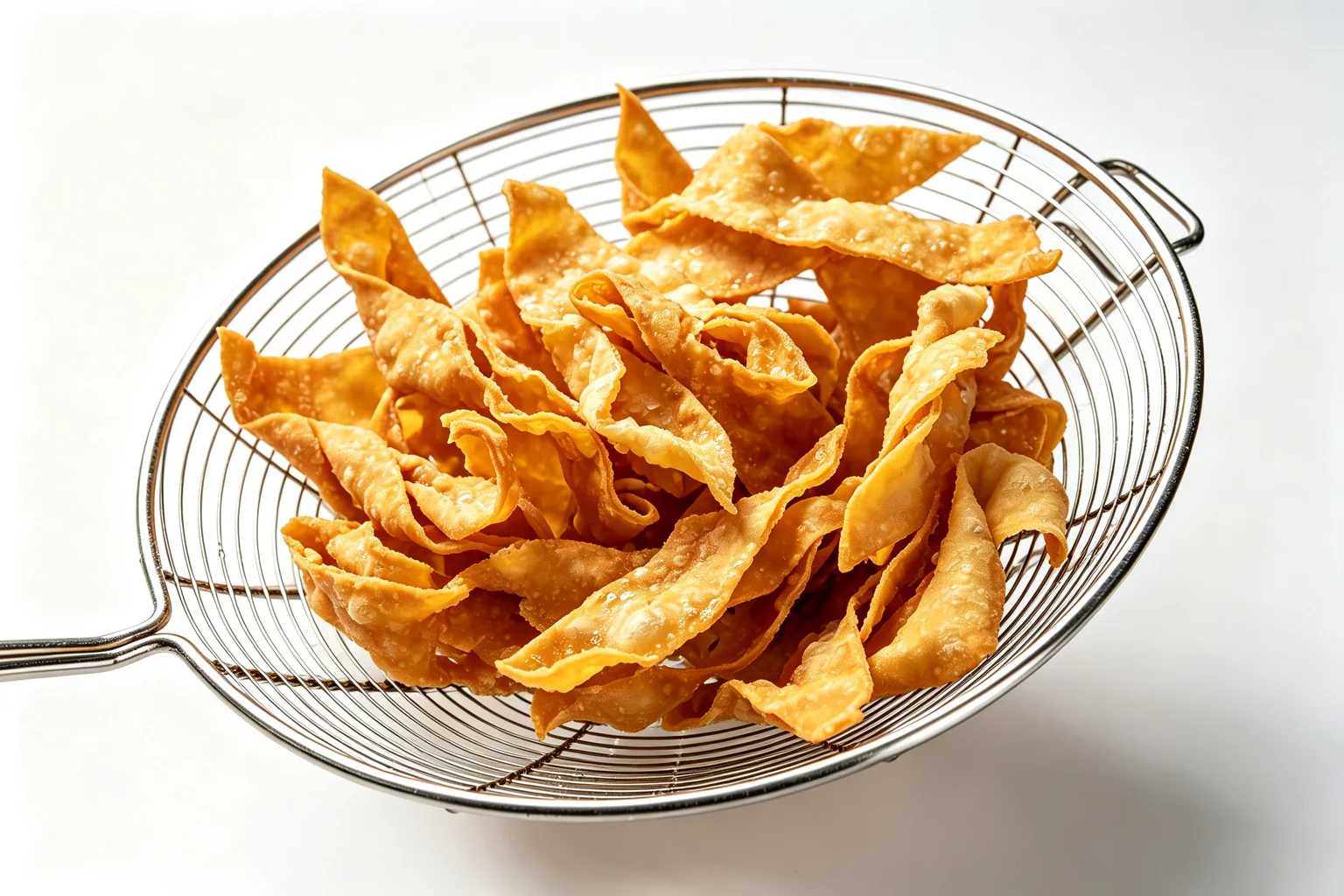
Store-bought wonton strips work. Homemade are noticeably better, lighter, thinner, crispier, without the stale oil taste that pre-packaged versions often have. The technique is straightforward and the only variable that matters is temperature.
Cut wonton wrappers into 5-6mm strips. Heat neutral oil to 175-180°C in a wok or small saucepan, deep enough that the strips can float freely. Test the temperature by dropping one strip in: it should sizzle immediately and rise to the surface within 2-3 seconds. If it sinks and sits on the bottom, the oil is too cold. If it browns within 10 seconds, it is too hot.
At 175-180°C, wonton strips take 45-60 seconds per batch. Turn once at 30 seconds. Remove at pale gold, they continue browning from residual heat and will reach the correct deep golden colour by the time they drain. At this temperature, the surface moisture evaporates rapidly while the starch crisps simultaneously. The result is a strip that shatters rather than bends.
Below 175°C: the oil penetrates the wrapper before crisping occurs. The strips emerge greasy and soft. Above 185°C: the exterior browns before the interior fully dehydrates, the strips look done but are soft inside and turn chewy as they cool.
Drain on kitchen paper. Do not cover or stack while warm, trapped steam makes them soft. Use within 2 hours of frying.
What does each component actually do?
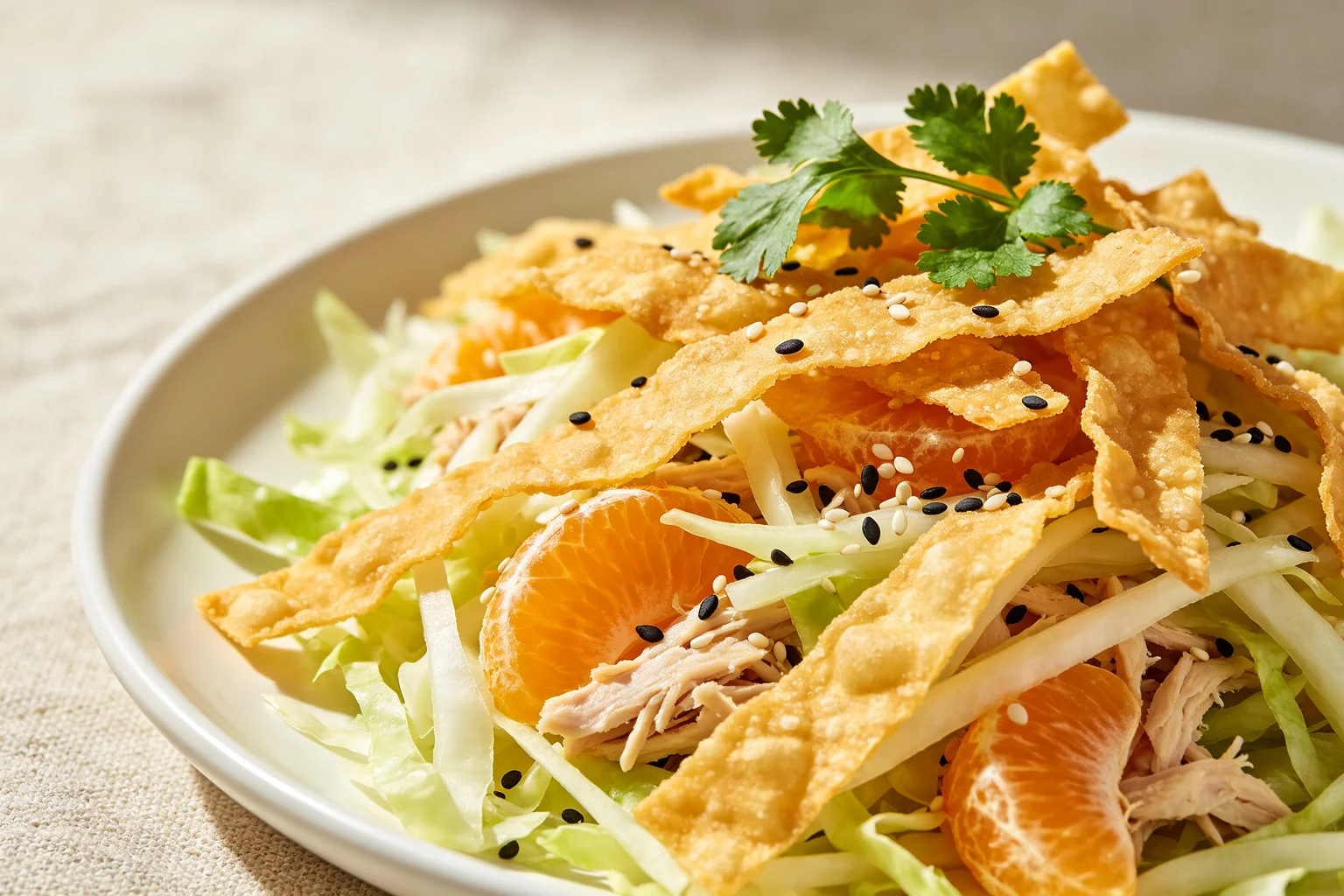
Napa cabbage is the base texture and the wilt-resistant structure. Everything else sits in and on it.
Shredded chicken distributes through the salad rather than sitting on top. Shredding along the muscle grain produces long fibres that integrate with the shredded cabbage, every forkful has chicken in it rather than a separate piece on the side. Poached breast shreds more cleanly than thigh.
Toasted almonds provide fat and warmth. Toasting converts the raw almond oil into more aromatic compounds and drives off surface moisture, producing a denser, crunchier nut. Untoasted almonds are soft by comparison and provide crunch without flavour.
Wonton strips provide the shatter crunch, the texture that breaks apart completely on first bite rather than compressing. Nothing else in the salad does this. They go on at the last moment and are not tossed into the salad, just scattered on top.
Mandarin oranges provide sweet acid that cuts through the sesame oil richness. Without them the dressing can feel slightly heavy after a few bites. With them the salad resets between forkfuls.
Sesame seeds provide small, quiet crunch and visual contrast. Black and white mixed gives better visual variation than white alone.
Ingredients
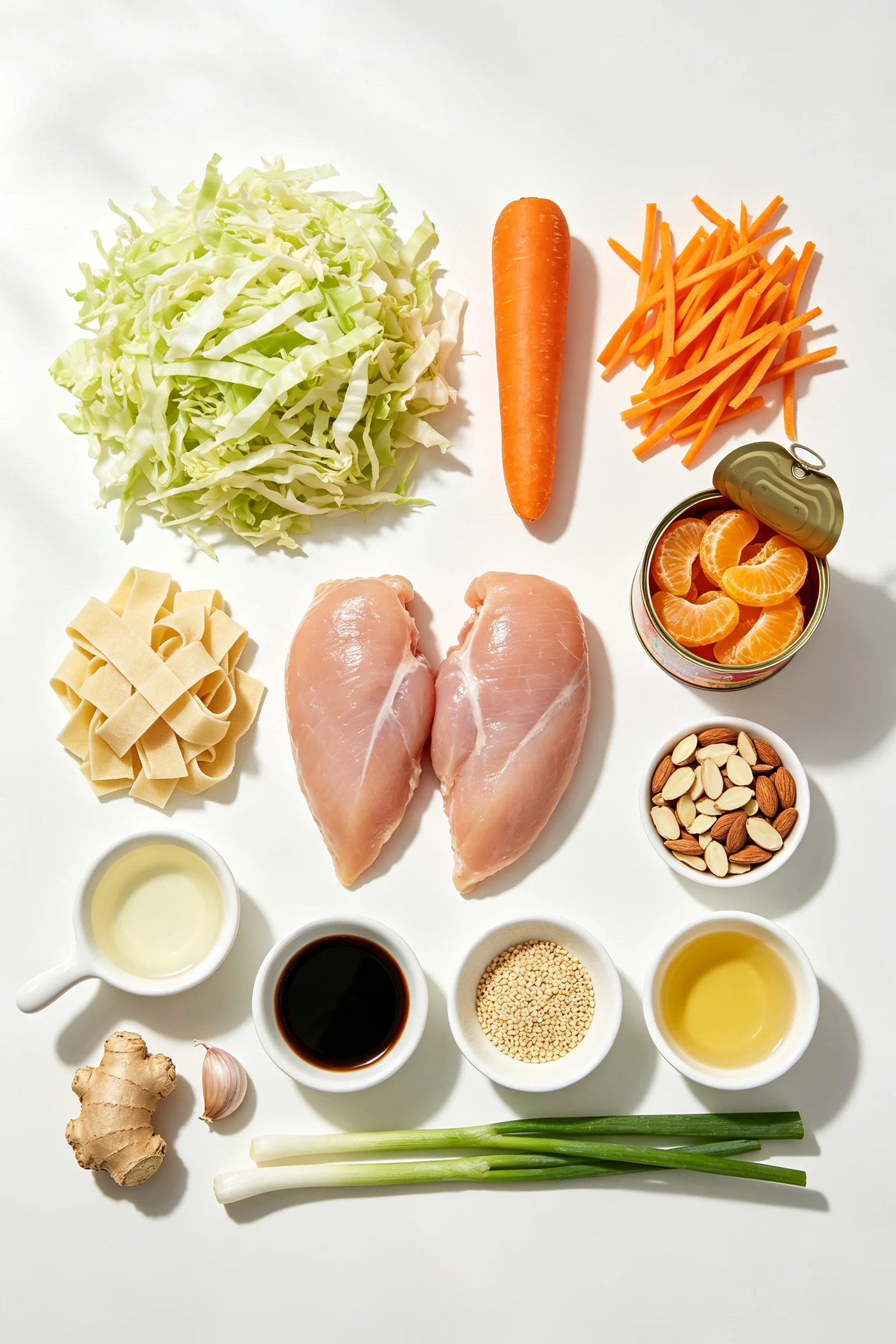
Serves 4 as a main course
Salad:
- ½ head napa cabbage, very thinly shredded (approximately 400g / 6 cups shredded)
- ¼ small head red cabbage, thinly shredded (optional, for colour)
- 2 poached chicken breasts (300-350g cooked weight), shredded along the grain
- 2 spring onions, thinly sliced on the diagonal
- 1 large carrot, julienned or coarsely grated
- 1 can (approx 300g) mandarin oranges in juice, drained
- 50g toasted sliced almonds or cashews
- 2 tbsp sesame seeds (black and white mixed)
- Small handful fresh cilantro leaves (optional)
Wonton strips (homemade):
- 8-10 wonton wrappers, cut into 5-6mm strips
- Neutral oil for frying, enough to submerge strips (approximately 500ml)
Sesame-ginger dressing:
- 3 tbsp rice vinegar
- 2 tbsp neutral oil (vegetable, canola, or light olive)
- 1 tbsp soy sauce
- 1 tbsp honey
- 1 tsp fresh ginger, finely grated
- 1 garlic clove, finely grated
- ½ tsp white pepper
- 1½ tbsp sesame oil (added last)
Instructions
Step 1: Poach the chicken
Place chicken breasts in a saucepan. Cover with cold water.
Step 2: Make the wonton strips
Heat neutral oil in a wok or small saucepan to 175-180°C. Fry wonton strips in small batches, turning once at 30 seconds.
Step 3: Make the dressing
Whisk together rice vinegar, neutral oil, soy sauce, honey, ginger, garlic, and white pepper in a small bowl until combined and slightly emulsified. Add sesame oil and stir once or twice to distribute.
Step 4: Assemble
In a large bowl, combine the shredded napa cabbage, red cabbage if using, carrot, spring onions, and chicken. Toss gently to distribute.
Dress at the table: pour the dressing over the salad and toss once to coat everything. Add mandarin oranges and toasted almonds and toss once more. Scatter wonton strips over the top, do not toss them in. Finish with sesame seeds and cilantro if using. Serve immediately.
How do you store Chinese chicken salad?
Store all components separately. Combined and dressed salad should be eaten within 15-20 minutes. Beyond that the osmotic process has progressed far enough that the texture and flavour are significantly compromised.
Individually stored:
- Shredded cabbage: refrigerate undressed in a sealed container for up to 2 days
- Poached chicken: refrigerate for up to 3 days
- Dressing (without sesame oil): refrigerate for up to 5 days. Add sesame oil when ready to use
- Wonton strips: store at room temperature in an open container or paper bag. Sealed containers trap moisture and make them soft within hours
For meal prep: prepare all components. Combine and dress only what will be eaten immediately.
Love Chinese food?
Check out my complete guide to Chinese home cooking, pantry essentials, and techniques.
FAQ
Can I use rotisserie chicken for Chinese chicken salad? Yes. Rotisserie chicken saves significant time and the result is excellent, the roasted flavour adds depth that poached chicken does not have. Use breast and thigh meat mixed together. Shred while still slightly warm, warm chicken shreds more cleanly than cold. Remove skin before shredding. The dressing will coat the chicken whether it is poached or roasted.
Why does my sesame dressing separate immediately? Sesame oil cannot form a stable emulsion with vinegar. This is expected. Add the sesame oil last, stir once or twice rather than whisking, and dress the salad immediately. A dressing that has been sitting for more than 5 minutes will have separated, shake or stir before using and accept that it will re-separate quickly. The flavour is not affected by the separation, only the visual consistency.
Can I make the wonton strips in advance? Yes, up to 4 hours before serving. Store at room temperature in an open bowl or loosely covered with a paper towel, sealed containers trap moisture and make them soft within 1-2 hours. Do not refrigerate. If they soften before serving, spread on a baking sheet and crisp in a 180°C oven for 3-4 minutes.
What is the best way to shred chicken for Chinese chicken salad? Poach the chicken breast, rest for 5 minutes, then use two forks to pull the meat apart along the grain of the muscle fibres. Shredding along the grain produces long, light strands. Shredding against the grain or chopping produces short, dense pieces that sit in clumps rather than distributing through the salad. The goal is chicken that integrates with the shredded cabbage so every forkful contains both.
You might also like: Check out our complete Chinese cooking guide for more essential ingredients and techniques.
Chinese Chicken Salad Recipe
American‑Chinese, Gluten‑Free Option (tamari + GF wonton strips), Weeknight Meals
PT20M
PT15M
PT35M
Nutrition Facts
Ingredients
- ½ head napa cabbage, very thinly shredded (approximately 400g / 6 cups shredded)
- ¼ small head red cabbage, thinly shredded (optional, for colour)
- 2 poached chicken breasts (300-350g cooked weight), shredded along the grain
- 2 spring onions, thinly sliced on the diagonal
- 1 large carrot, julienned or coarsely grated
- 1 can (approx 300g) mandarin oranges in juice, drained
- 50g toasted sliced almonds or cashews
- 2 tbsp sesame seeds (black and white mixed)
- Small handful fresh cilantro leaves (optional)
- 8-10 wonton wrappers, cut into 5-6mm strips
- Neutral oil for frying, enough to submerge strips (approximately 500ml)
- 3 tbsp rice vinegar
- 2 tbsp neutral oil (vegetable, canola, or light olive)
- 1 tbsp soy sauce
- 1 tbsp honey
- 1 tsp fresh ginger, finely grated
- 1 garlic clove, finely grated
- ½ tsp white pepper
- 1½ tbsp sesame oil (added last)
Instructions
- Place chicken breasts in a saucepan. Cover with cold water. Add a pinch of salt. Bring to a very gentle simmer over medium heat. Reduce to the lowest heat that maintains a gentle simmer, not boiling. Poach 12-15 minutes until cooked through with no pink in the centre. Remove and rest 5 minutes before shredding along the grain into long strands.
- Heat neutral oil in a wok or small saucepan to 175-180°C. Fry wonton strips in small batches, turning once at 30 seconds. Remove at pale gold after 45-60 seconds. Drain on kitchen paper. Do not cover. Set aside.
- Whisk together rice vinegar, neutral oil, soy sauce, honey, ginger, garlic, and white pepper in a small bowl until combined and slightly emulsified. Add sesame oil and stir once or twice to distribute. Do not whisk vigorously, the sesame oil will separate back out quickly regardless. Use the dressing immediately or within 5 minutes.
- In a large bowl, combine the shredded napa cabbage, red cabbage if using, carrot, spring onions, and chicken. Toss gently to distribute. Dress at the table: pour the dressing over the salad and toss once to coat everything. Add mandarin oranges and toasted almonds and toss once more. Scatter wonton strips over the top, do not toss them in. Finish with sesame seeds and cilantro if using. Serve immediately. ## How do you store Chinese chicken salad? Store all components separately. Combined and dressed salad should be eaten within 15-20 minutes. Beyond that the osmotic process has progressed far enough that the texture and flavour are significantly compromised. Individually stored: - Shredded cabbage: refrigerate undressed in a sealed container for up to 2 days - Poached chicken: refrigerate for up to 3 days - Dressing (without sesame oil): refrigerate for up to 5 days. Add sesame oil when ready to use - Wonton strips: store at room temperature in an open container or paper bag. Sealed containers trap moisture and make them soft within hours For meal prep: prepare all components. Combine and dress only what will be eaten immediately.
Did you make this recipe?
Tag @asianfoodsdaily on Instagram or leave a comment below!
Testing Notes
Tested in Asha's kitchen. Last reviewed August 26, 2025.
Ingredient Substitutions
Substitution notes coming soon.
About Asha
Half Asian, half African cook raised between two food-obsessed cultures. I've spent 10 years learning Asian cooking traditions through family, friends, and thousands of hours at the stove — testing every dish until it works in a standard home kitchen.
Read my full storyRelated Recipes
More delicious dishes you might enjoy


Loading comments...