Hunan Chicken Recipe (Chinese Style)
Jump to Section
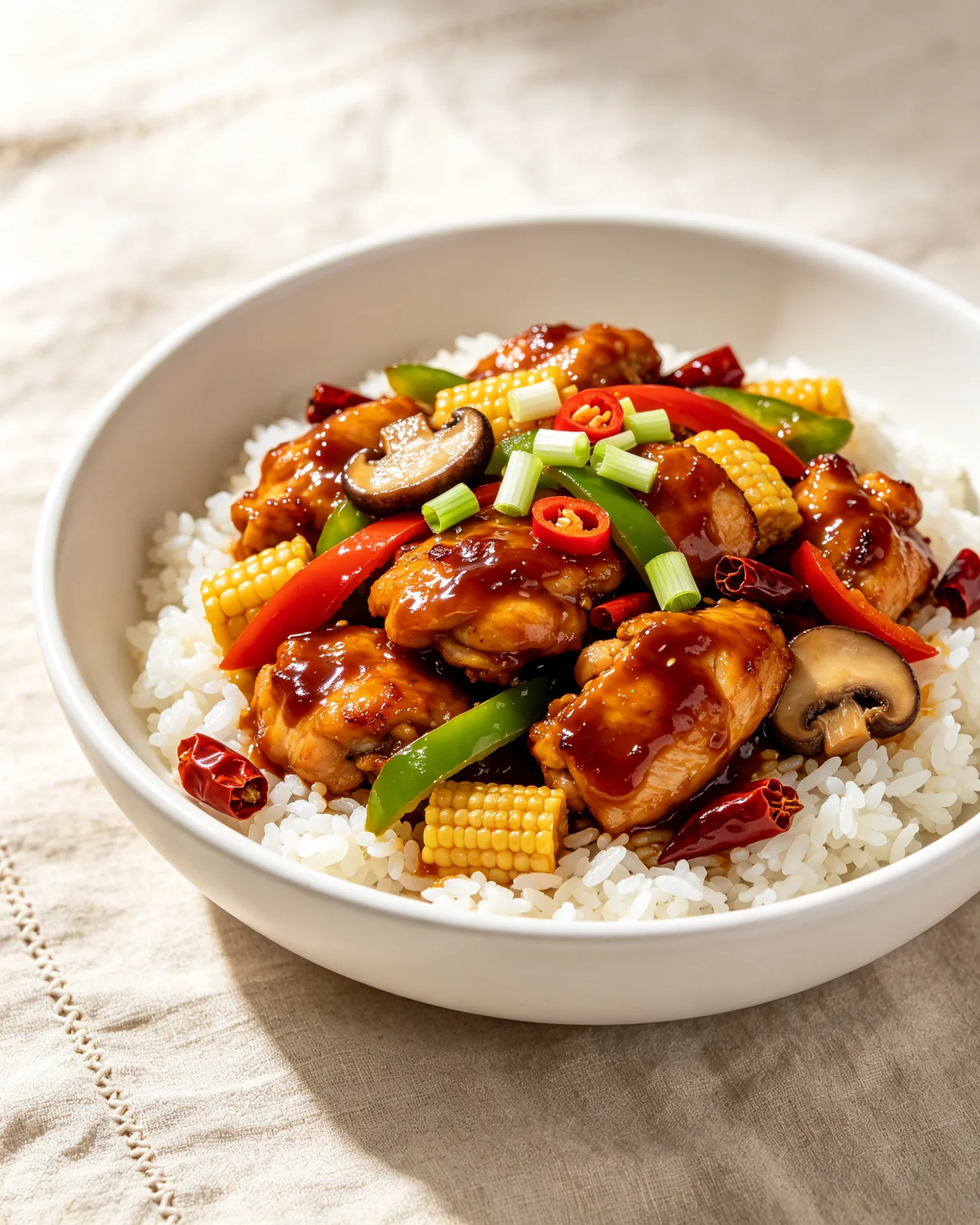
The first time I made Hunan chicken at home, I used sambal oelek instead of doubanjiang because it was what I had. The dish was spicy. It tasted like a generic stir fry with a lot of chilli in it. The second time I tracked down a jar of Pixian doubanjiang and used that instead. The dish was completely different, savoury in a way the sambal version was not, with a depth that sat underneath the heat rather than just being the heat. The difference between Hunan chicken and spicy chicken stir fry is almost entirely in that one ingredient. This recipe explains why, and everything else that matters.
What is Hunan chicken and where does it come from?
What you find on restaurant menus in the West is a Chinese-American dish. The character comes from Hunan Province (湖南省) in south-central China, one of the eight recognised great traditions of Chinese cooking, known as Xiang cuisine (湘菜) after the Xiang River. But the sauce format, the oyster sauce, the cornstarch glaze, those are adaptations for Western markets. Traditional Hunanese cooking is drier and more direct. The sauce is not the point. The chilli is.
Worth saying plainly: oyster sauce is Cantonese in origin and does not appear in traditional Hunan cooking. It is in this recipe because it works in the sauce format, not because it belongs there historically. If you want to go closer to the original, leave it out and replace it with an extra tablespoon of dark soy and a splash more chicken stock.
The traditional dishes this recipe draws from are Dry-Wok Chicken (干锅鸡, gān guō jī) and Stir-Fried Chicken with Black Bean and Chilli (豆豉辣椒炒鸡). Both are more intensely spiced and served without glaze. What survives from those originals in this recipe is the layered chilli approach, the assertive use of garlic and ginger, and the doubanjiang.
What is the difference between Hunan and Sichuan chicken?
Both are spicy Chinese dishes and that is roughly where the similarity ends.
Sichuan cooking uses two heat sources simultaneously. Capsaicin from chillies activates TRPV1 receptors, the pain-sensing nerve fibres that register burning and heat. Hydroxy-alpha-sanshool from Sichuan peppercorns activates a completely separate set of nerve fibres, the low-threshold mechanoreceptors that normally respond to light touch and vibration. The result is the mala (麻辣) sensation: spicy heat from the chilli and a tingling, numbing, almost electrical buzz from the peppercorn, both arriving at the same time. The numbing partially masks the burn and creates a distinctive layered effect.
Hunan cooking has no Sichuan peppercorns. No sanshool, no numbing, no mala. The heat is capsaicin only, and it arrives cleanly. People often find Hunan dishes feel hotter than Sichuan at the same chilli quantity for exactly this reason. Nothing is softening the burn.
If you’re looking for that signature numbing sensation, try our Authentic Sichuan Chicken Recipe.
What is doubanjiang and why does it matter so much?
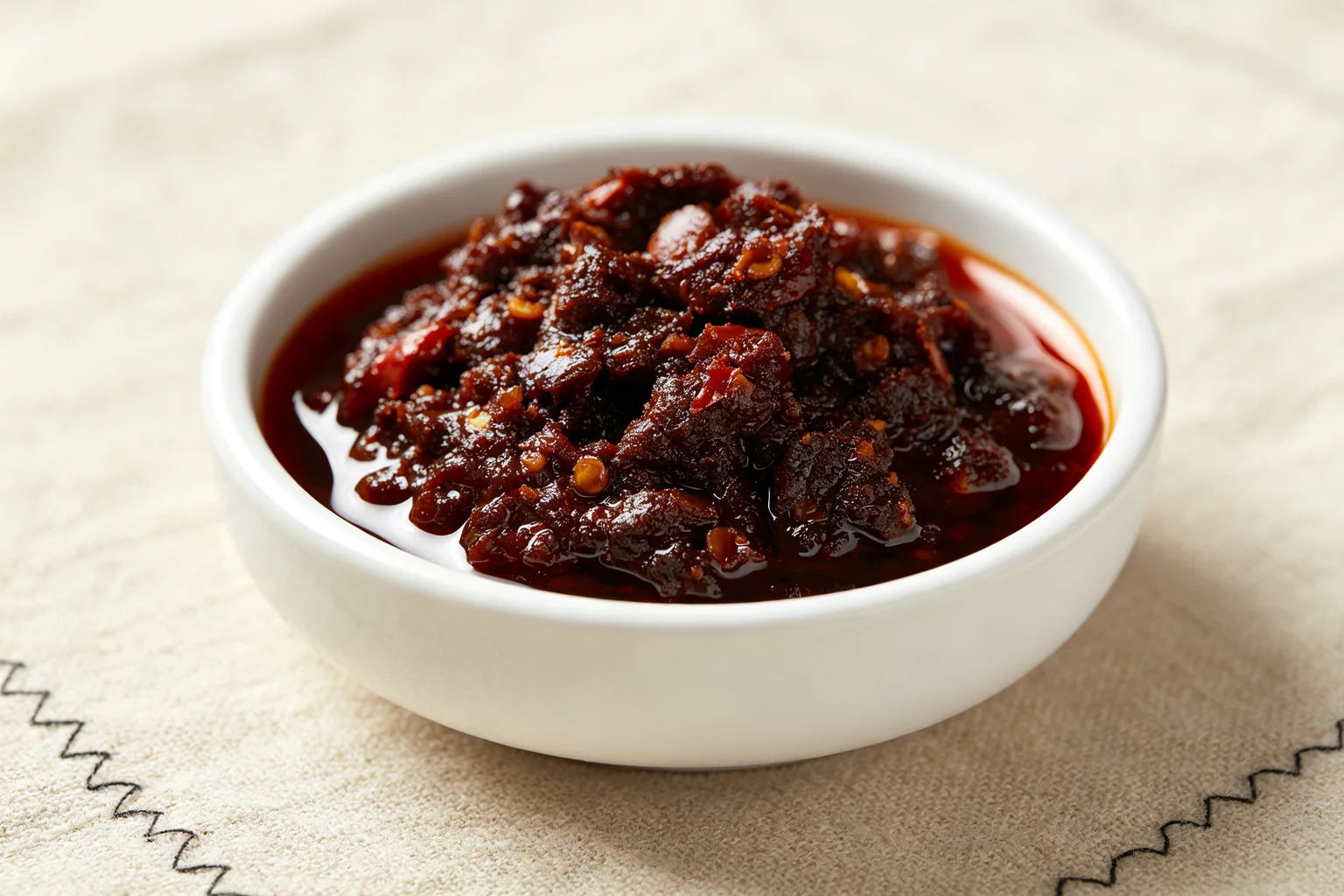
Doubanjiang (豆瓣酱) is fermented broad bean and chilli paste, and the fermentation is what separates it from every other chilli product in the recipe.
To make it, broad beans and chilli peppers are salted and packed with Aspergillus mould cultures, then left to ferment for months to years. The mould breaks down bean proteins into free amino acids, glutamate among them, at concentrations comparable to fish sauce. Lactic acid bacteria work alongside and contribute a slight tangy depth. What comes out is something that provides heat and umami and fermented complexity at the same time. You cannot get those three things from sambal oelek, which is fresh ground chilli with vinegar and nothing more. Sambal gives you heat. Doubanjiang gives you a foundation.
Pixian doubanjiang (郫县豆瓣酱) from Pixian County in Sichuan is the one worth finding. Aged three to five years rather than the standard six to twelve months, it is darker in colour, deeper in flavour, and integrates into the sauce rather than sitting on top of it. Available at most Asian grocery stores and online. Chop it finely before adding to the wok, whole fermented bean pieces change the texture of the finished sauce.
Why does Hunan cooking use fresh and dried chilli together?
They do different things, which is the whole point.
Fresh chilli has volatile aromatic terpenes in the flesh alongside the capsaicin. Those terpenes produce bright, slightly fruity immediate heat, what you notice in the first bite. They evaporate fast at high wok temperatures. Fresh chilli added early loses its brightness and becomes a deeper, slower burn. Added late, it keeps the brightness.
Dried chilli is concentrated capsaicin, with Maillard compounds from the drying process adding smokiness. When fried in oil at the start of cooking, the capsaicin dissolves into the fat and coats every ingredient that follows. That heat builds as you eat, slower to arrive, longer to stay.
The combination is intentional. Immediate brightness from the fresh, sustained depth from the dried, both present in every bite. The traditional dried chilli for Hunan cooking is Tien Tsin (天津辣椒), thin and elongated, rated at approximately 50,000-75,000 Scoville units. Significantly hotter than the standard dried red chillies in most supermarkets. Arbol chillies are the closest substitute. If using regular supermarket dried red chillies, double the quantity and add a small pinch of cayenne to compensate for the lower heat level.
What does the rice vinegar do in the sauce?
Acetic acid from the rice vinegar lowers the sauce pH slightly, which increases the perceived brightness of every other flavour in it. The doubanjiang depth and oyster sauce richness both become more distinct when there is a small acid component cutting through. Without the vinegar the sauce tastes correct but heavier, like the same dish with the volume turned down slightly.
There is a secondary effect on the chicken: the acetic acid briefly denatures the outermost protein layer during the final cook, adding a minor tenderising contribution on top of the velveting work done earlier.
Add it in the final 30 seconds of cooking, poured around the edge of the wok rather than directly onto the ingredients. Acetic acid aromatics are highly volatile and disappear within seconds at wok temperatures. Added early the brightness is gone before the dish reaches the table.
Why velvet the chicken and how?
Without velveting, chicken thigh cut into pieces and stir-fried at high heat for 90 seconds seizes up and turns rubbery. Baking soda prevents that.
Mix ¼ teaspoon of baking soda with 600g of chicken and 3 tablespoons cold water. Leave at room temperature for 25 minutes. The baking soda raises the surface pH from approximately 5.5 to 7-8, which breaks down the actomyosin bonds in the muscle protein before the heat can tighten them. The chicken stays tender through the cook.
The 25-minute mark is reliable. 30 minutes is the hard limit. Past 30 minutes the alkaline environment keeps degrading the protein and the chicken develops a slightly slimy texture that no amount of heat corrects.
Rinse thoroughly under cold running water for 60-90 seconds after. Baking soda left on produces a metallic taste and inhibits browning. Pat completely dry. Then add the cornstarch, oil, soy sauce, and Shaoxing wine as the secondary marinade and leave another 10 minutes before cooking.
Thigh over breast. Thigh at 15-20% fat stays moist when the wok temperature drops for a second. Breast does not forgive that.
Ingredients
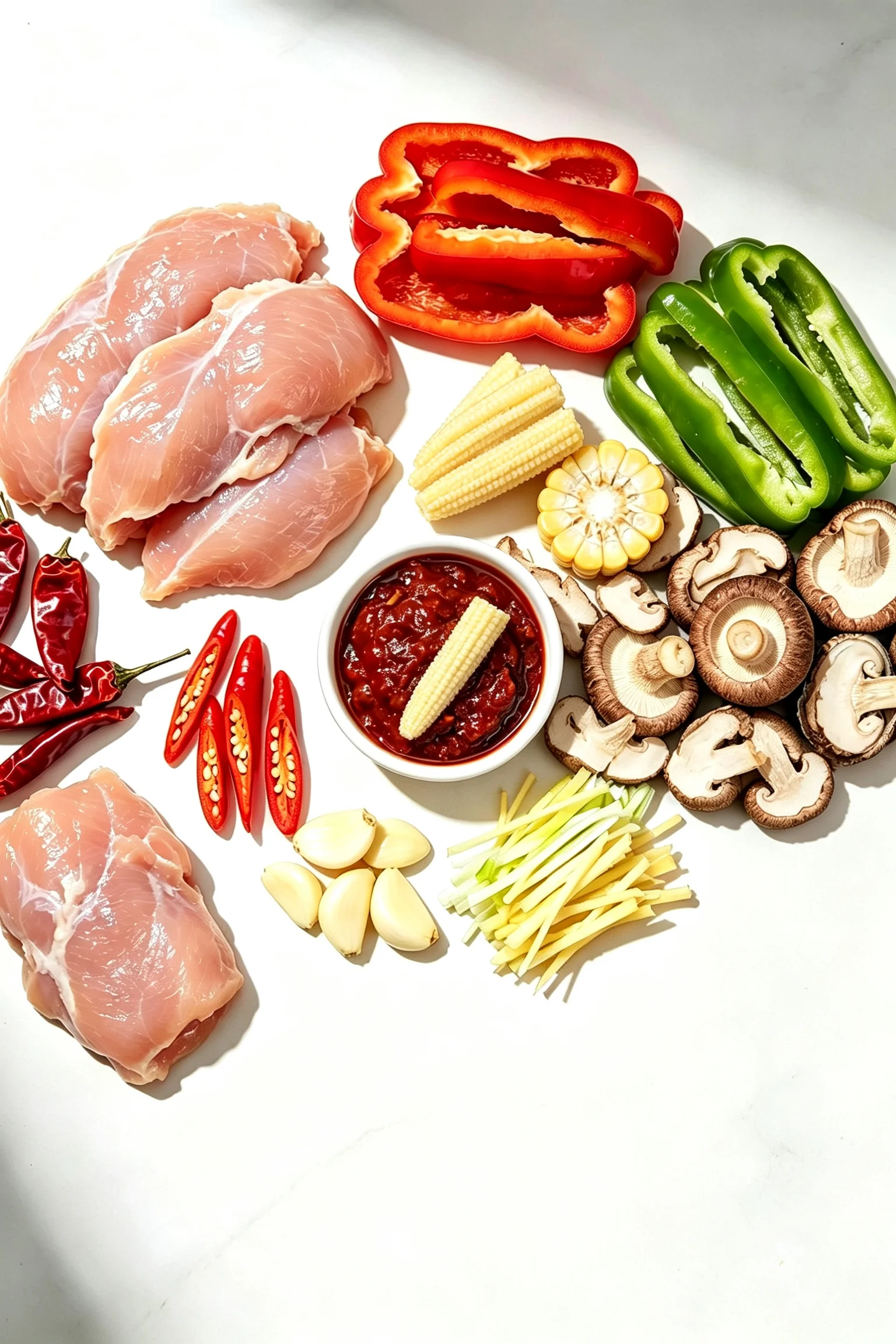
Serves 4
Chicken and velveting:
- 600g (1lb 5oz) boneless chicken thighs, cut into 3cm pieces
- ¼ tsp baking soda
- 3 tbsp cold water
- 1 tbsp cornstarch
- 1 tbsp neutral oil
- 1 tsp light soy sauce
- 1 tsp Shaoxing wine
Sauce (mix in advance):
- 2 tbsp Pixian doubanjiang, finely chopped
- 2 tbsp oyster sauce
- 1 tbsp light soy sauce
- 1 tsp dark soy sauce
- 1 tsp sugar
- ½ tsp cornstarch
- 4 tbsp chicken stock or water
- 1 tsp rice vinegar (added separately at end)
Aromatics and chilli:
- 4 tbsp neutral oil, divided
- 6-8 dried Tien Tsin chillies, whole
- 3 fresh red chillies, sliced diagonally
- 6 garlic cloves, thinly sliced
- 3cm fresh ginger, julienned
- 3 spring onions, cut into 3cm pieces
Vegetables:
- 1 red bell pepper, sliced
- 1 green bell pepper, sliced
- 100g baby corn, halved diagonally
- 100g shiitake mushrooms, sliced
Instructions
Prepare everything before lighting the wok.
Step 1: Velvet the chicken
Mix chicken with baking soda and cold water. Leave 25 minutes at room temperature.
Step 2: Mix the sauce
Combine all sauce ingredients except the rice vinegar in a small bowl. Stir until the cornstarch dissolves.
Step 3: Sear the chicken in batches
Heat the wok over maximum heat until smoking. Add 2 tablespoons oil.
Step 4: Bloom the chillies and doubanjiang
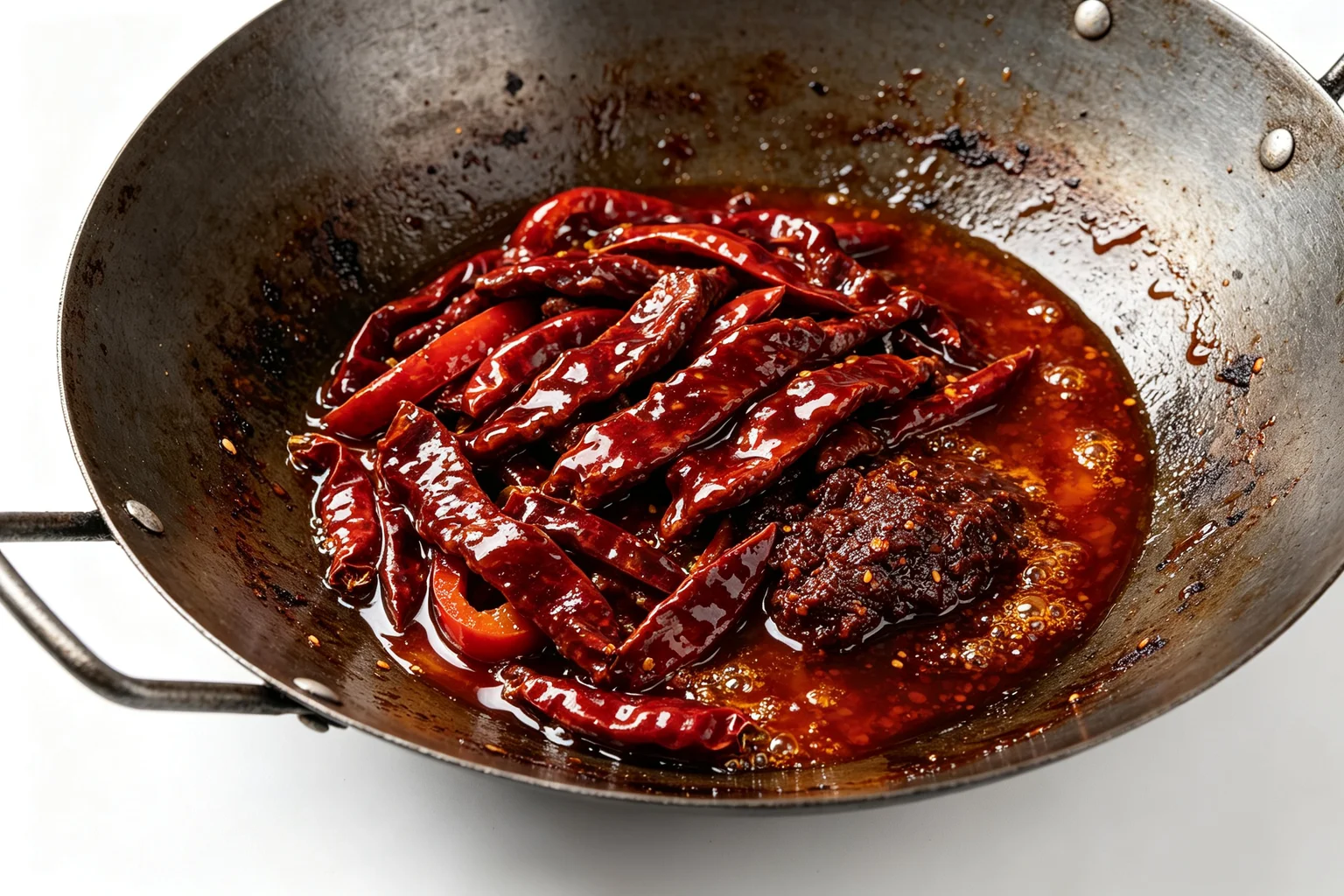
Add the remaining oil. Add the dried Tien Tsin chillies whole.
Step 5: Aromatics and vegetables
Add garlic, ginger, and fresh chillies. Stir for 20-30 seconds.
Step 6: Combine and finish
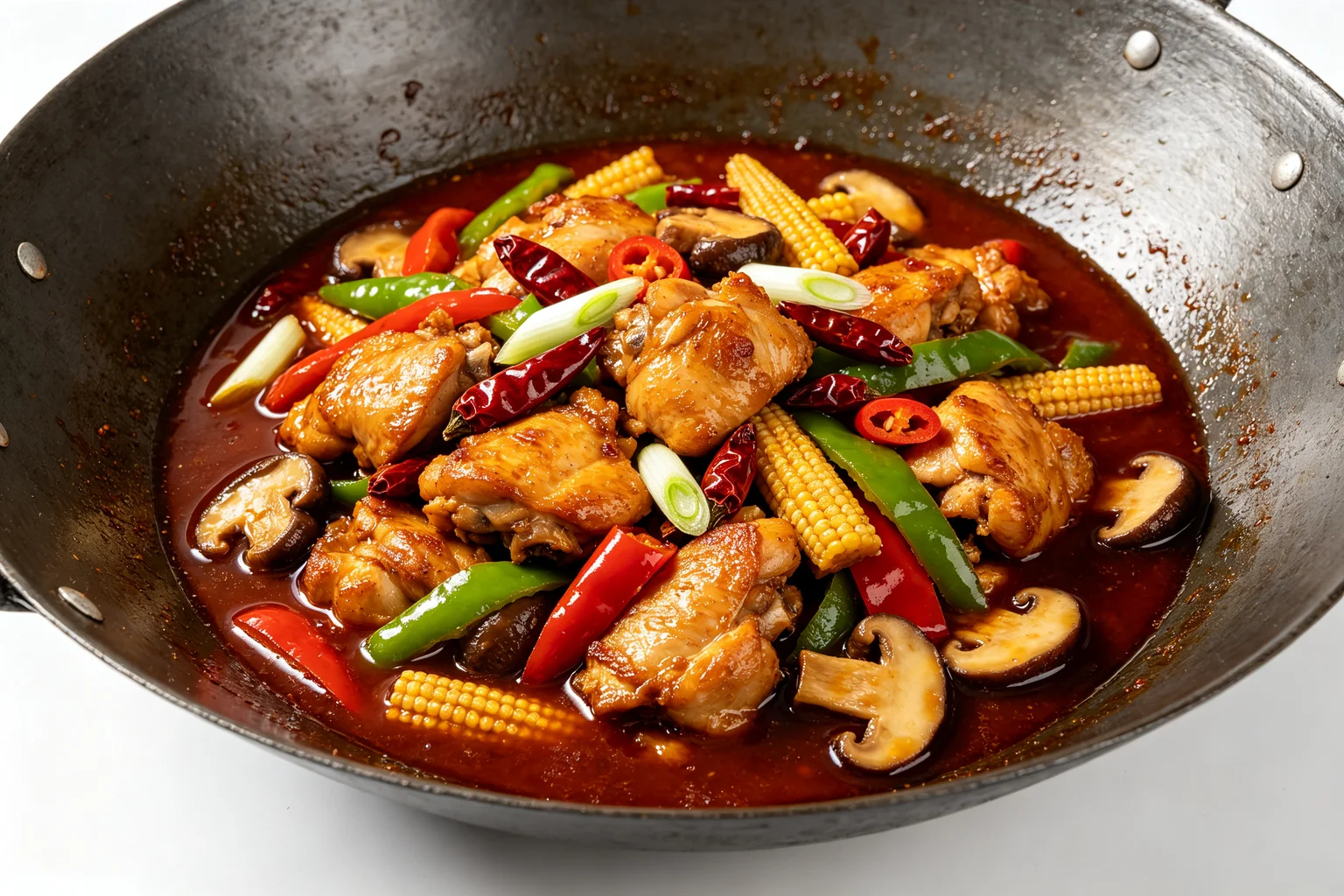
Return all the seared chicken to the wok. Pour the sauce over everything and toss to coat.
How is homemade Hunan chicken different from the restaurant version?
The biggest difference is heat control. Restaurants calibrate for the widest acceptable audience. At home you set the level yourself. The recipe above is medium-hot. Double the dried chillies and add another tablespoon of doubanjiang for the level traditional Hunan cooking reaches. Cut to 3-4 dried chillies and 1 tablespoon of doubanjiang for something milder that still has the dish’s character.
Freshness of the doubanjiang matters more at home. A freshly opened jar of Pixian tastes significantly different from one that has been used and resealed over weeks. The aromatics fade with each exposure to air. Store the jar tightly sealed in the refrigerator and use a clean spoon each time.
Sauce thickness is a preference. Restaurants use more cornstarch for a glossier result that holds through service. Half a teaspoon produces a lighter glaze that coats without being heavy.
Love Chinese food?
Check out my complete guide to Chinese home cooking, pantry essentials, and techniques.
FAQ
Is Hunan chicken spicier than Sichuan chicken? It feels more directly spicy. Sichuan cooking combines capsaicin heat from chillies with the numbing effect of hydroxy-alpha-sanshool from Sichuan peppercorns. The numbing partially counterbalances the burn. Hunan cooking has no Sichuan peppercorns, so the capsaicin arrives with nothing to dampen it. The heat feels sharper and more sustained even at similar chilli quantities.
What is Pixian doubanjiang and do I need it? Pixian doubanjiang is premium fermented chilli bean paste aged three to five years rather than the standard six to twelve months. The extended fermentation produces significantly deeper umami and more rounded heat. Worth finding at an Asian grocery store or online. Standard doubanjiang is an acceptable substitute. Sambal oelek is not, it has heat but lacks the fermented depth that makes the sauce what it is.
Can I make Hunan chicken without doubanjiang? Without it the dish becomes spicy chicken stir fry, which is fine but not Hunan chicken. If genuinely unavailable, combine 1 tablespoon of black bean paste with ½ tablespoon of chilli flakes. Different but meaningfully closer than sambal oelek alone.
What vegetables work best? Bell peppers, baby corn, shiitake mushrooms, broccoli, snap peas, and water chestnuts all work well. Add denser vegetables first and give them more time. Traditional Hunanese cooking uses minimal vegetables compared to the Chinese-American version, if you want to go closer to the original, reduce the vegetable quantity and increase the chilli and doubanjiang instead.
You might also like: Check out our complete Chinese cooking guide for more essential ingredients and techniques.
Hunan Chicken Recipe (Chinese Style)
Chinese, Main Dish, High-Heat Cooking
PT35M
PT15M
PT50M
Nutrition Facts
Ingredients
- 600g (1lb 5oz) boneless chicken thighs, cut into 3cm pieces
- ¼ tsp baking soda
- 3 tbsp cold water
- 1 tbsp cornstarch
- 1 tbsp neutral oil
- 1 tsp light soy sauce
- 1 tsp Shaoxing wine
- 2 tbsp Pixian doubanjiang, finely chopped
- 2 tbsp oyster sauce
- 1 tbsp light soy sauce
- 1 tsp dark soy sauce
- 1 tsp sugar
- ½ tsp cornstarch
- 4 tbsp chicken stock or water
- 1 tsp rice vinegar (added separately at end)
- 4 tbsp neutral oil, divided
- 6-8 dried Tien Tsin chillies, whole
- 3 fresh red chillies, sliced diagonally
- 6 garlic cloves, thinly sliced
- 3cm fresh ginger, julienned
- 3 spring onions, cut into 3cm pieces
- 1 red bell pepper, sliced
- 1 green bell pepper, sliced
- 100g baby corn, halved diagonally
- 100g shiitake mushrooms, sliced
Instructions
- *Prepare everything before lighting the wok.*
- Mix chicken with baking soda and cold water. Leave 25 minutes at room temperature. Rinse under cold running water 60-90 seconds until the water runs clear. Pat completely dry. Add cornstarch, oil, soy sauce, Shaoxing wine. Mix well. Leave 10 minutes.
- Combine all sauce ingredients except the rice vinegar in a small bowl. Stir until the cornstarch dissolves. Set aside.
- Heat the wok over maximum heat until smoking. Add 2 tablespoons oil. Add half the chicken in a single layer. Leave 45-60 seconds without touching until the bottom is golden. Flip each piece. 30 seconds more. Remove. Wipe the wok, reheat, repeat with the second batch. The chicken should be golden outside and slightly undercooked inside.
- Add the remaining oil. Add the dried Tien Tsin chillies whole. Fry 20-30 seconds until they darken and the oil turns red. Watch them closely. They go from right to burnt in a few seconds. Add the finely chopped Pixian doubanjiang. Fry 60-90 seconds, stirring constantly, until the paste darkens and oil begins to separate around the edges, the same see-byan moment you see in Burmese curry cooking, oil returning as the water cooks off. It should smell deeply fragrant by this point.
- Add garlic, ginger, and fresh chillies. Stir for 20-30 seconds. Add bell peppers, baby corn, and mushrooms. Stir fry over high heat for 2 minutes until crisp-tender.
- Return all the seared chicken to the wok. Pour the sauce over everything and toss to coat. The sauce thickens in 20-30 seconds. Add spring onions. Pour the rice vinegar around the edge of the wok. It sizzles briefly and a sharp aromatic bloom rises across the dish. Toss once. Off heat immediately. Serve over jasmine rice. ## How is homemade Hunan chicken different from the restaurant version? The biggest difference is heat control. Restaurants calibrate for the widest acceptable audience. At home you set the level yourself. The recipe above is medium-hot. Double the dried chillies and add another tablespoon of doubanjiang for the level traditional Hunan cooking reaches. Cut to 3-4 dried chillies and 1 tablespoon of doubanjiang for something milder that still has the dish's character. Freshness of the doubanjiang matters more at home. A freshly opened jar of Pixian tastes significantly different from one that has been used and resealed over weeks. The aromatics fade with each exposure to air. Store the jar tightly sealed in the refrigerator and use a clean spoon each time. Sauce thickness is a preference. Restaurants use more cornstarch for a glossier result that holds through service. Half a teaspoon produces a lighter glaze that coats without being heavy.
Did you make this recipe?
Tag @asianfoodsdaily on Instagram or leave a comment below!
Testing Notes
Tested in Asha's kitchen. Last reviewed June 15, 2025.
Ingredient Substitutions
Substitution notes coming soon.
About Asha
Half Asian, half African cook raised between two food-obsessed cultures. I've spent 10 years learning Asian cooking traditions through family, friends, and thousands of hours at the stove — testing every dish until it works in a standard home kitchen.
Read my full storyRelated Recipes
More delicious dishes you might enjoy


Loading comments...