Sichuan Chicken Recipe (Spicy Stir Fry)
Jump to Section
The first time I used freshly toasted and ground Sichuan peppercorn instead of the pre-ground powder I had been using, the difference in the finished dish was immediate. Not in the heat level. In the numbing. The pre-ground version produced a faint tingle. The freshly toasted version produced the full buzzing, slightly electric sensation across the lips that I had only experienced at Sichuan restaurants. Same dish, same technique, same quantity of peppercorn. The difference was entirely in how the peppercorn was prepared.
Toast them yourself. Two to three minutes in a dry pan over medium heat until they smell citrusy and fragrant. Grind while still warm. The volatile compounds that produce the numbing sensation dissipate as the peppercorns cool. Pre-ground peppercorn has already lost most of them.
What is Sichuan chicken and which version is this recipe?
Two completely different dishes go by the name Szechuan chicken in most Western recipe searches.
La zi ji (辣子鸡) is the Chongqing version: chicken cut small, deep fried until crispy, then tossed in a wok with dramatically more dried chillies than chicken. The chillies are not the garnish. In restaurant portions of la zi ji, you dig through a mountain of dried chillies to find the chicken pieces underneath. The visual effect is part of the dish.
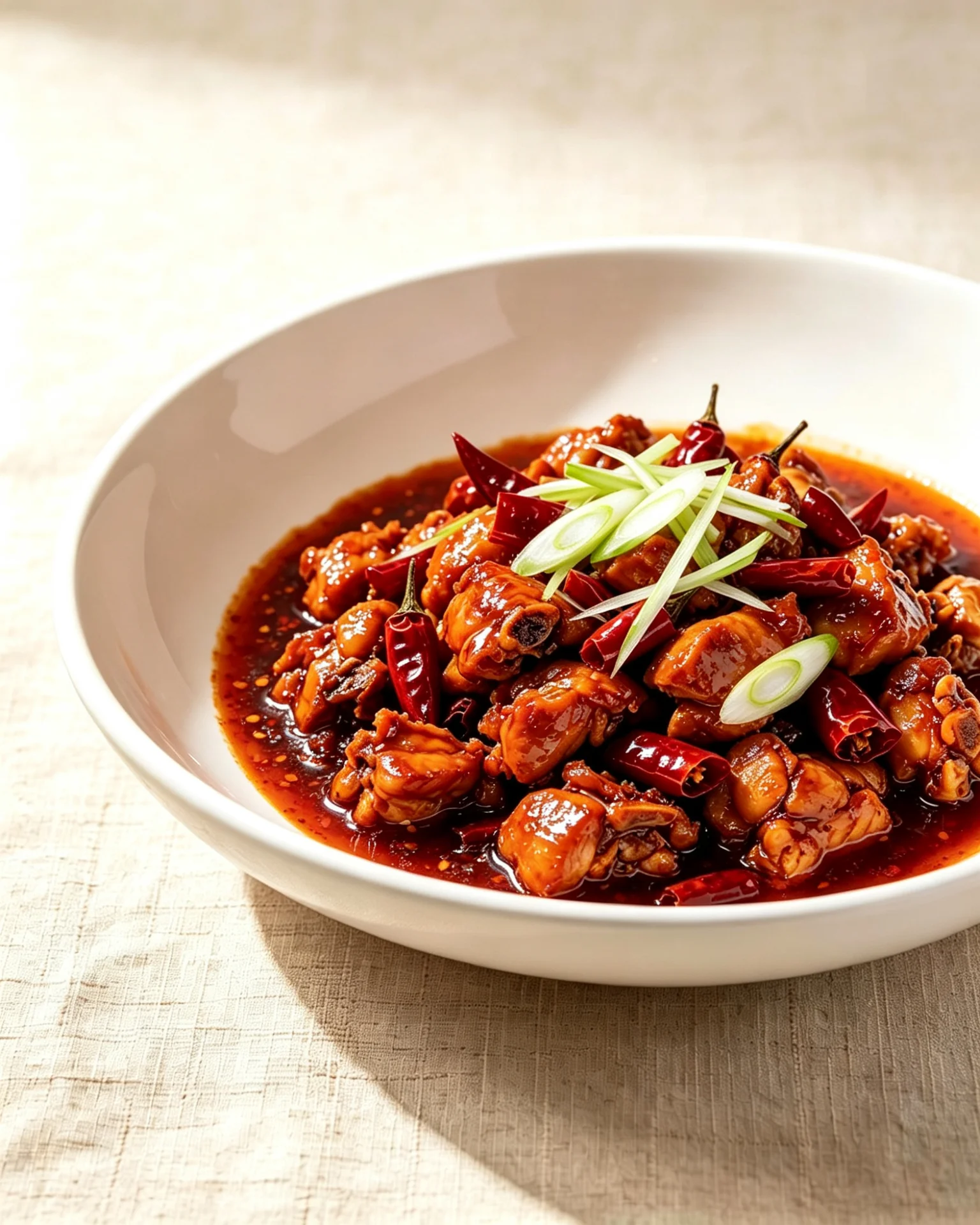
This recipe is the stir-fried doubanjiang version, closer to what Chinese restaurants outside China serve as Szechuan chicken. Velveted chicken thigh, fermented bean paste, a measured quantity of dried chillies, Sichuan peppercorns, and a glossy sauce. More accessible than la zi ji, with the same mala foundation.
Both are worth making. They are not the same dish.
What is má-là and what actually causes the numbing sensation?
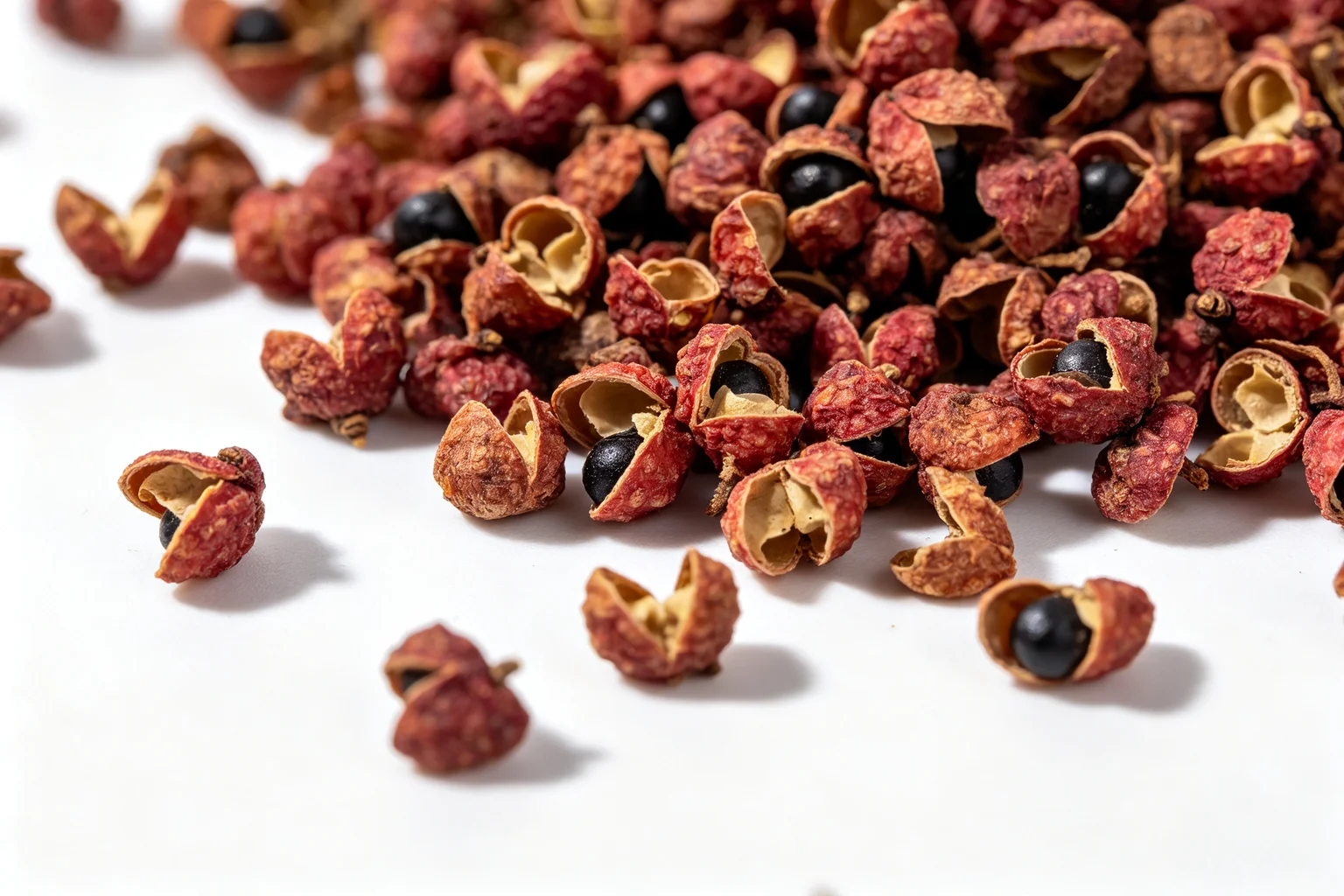
Má-là (麻辣) means numbing-spicy: má for numbing, là for spicy hot. The sensation is the defining characteristic of Sichuan cooking and it comes from two separate biological mechanisms happening simultaneously.
The là comes from capsaicin in the chilli peppers. Capsaicin activates TRPV1 receptors, the pain-sensing nerve fibres that register burning and heat. This is the familiar spicy sensation found in any hot food.
The má comes from hydroxy-alpha-sanshool in the Sichuan peppercorn. Sanshool does not activate heat receptors. It activates low-threshold mechanoreceptors, the nerve fibres that normally respond to light touch, vibration, and pressure. The result is a tactile sensation rather than a thermal one: tingling, buzzing, a slight numbness that spreads across the lips and tongue and partially masks the capsaicin burn arriving alongside it.
This is why mala feels different from simply eating very hot chilli. The numbness arrives first or simultaneously, and it changes how the heat lands on the palate. More heat without the numbing would just be painful. With the numbing, the heat feels manageable and, for most people who like this style of cooking, addictive.
Why do you toast Sichuan peppercorns before using them?
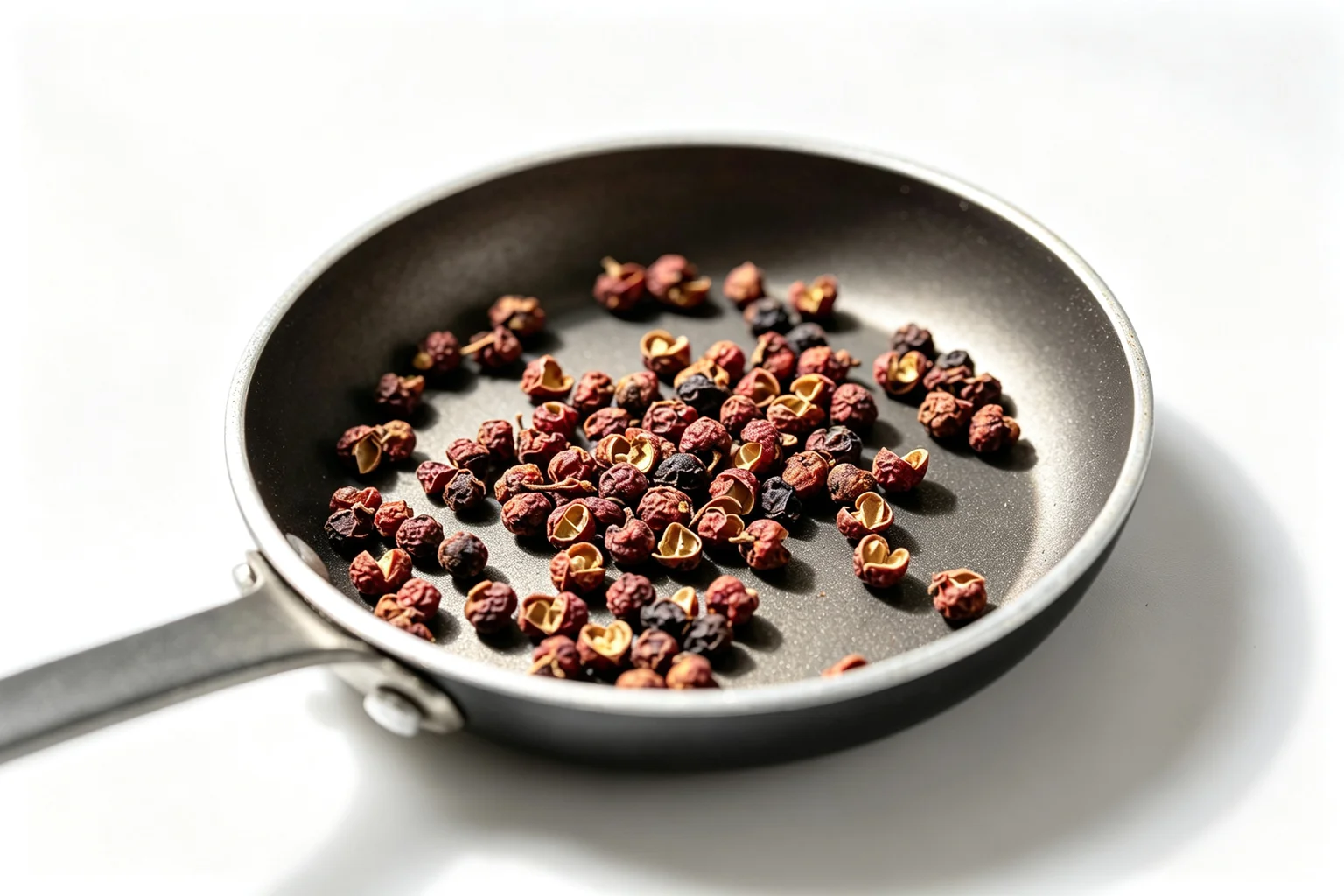
Sichuan peppercorns contain hydroxy-alpha-sanshool in a partially bound form in the husk. Toasting at 160-180°C drives off surface moisture and breaks some of the bonds holding sanshool to the husk structure, releasing it in a more volatile, bioavailable form. The aromatic terpene compounds that give Sichuan peppercorns their distinctive citrusy fragrance also require heat to fully express.
The practical difference is noticeable. Toasted peppercorns ground while still warm produce a powder with an intensely citrusy, floral aroma and a strong numbing effect. Untoasted peppercorns ground cold produce a duller powder with less fragrance and significantly weaker numbing.
Toast in a dry pan over medium heat for 2-3 minutes, stirring occasionally, until the peppercorns smell fragrant and citrusy. They should darken slightly but not blacken. Transfer immediately to a mortar or spice grinder and grind while still warm. Use within a few minutes for maximum effect. If grinding in advance, store in a sealed container and use within a week.
Why do you fry peppercorns before adding the dried chillies?
In traditional Sichuan cooking, the Sichuan peppercorns go into the hot oil first, before the dried chillies. This is not just a timing convention. It changes how the finished dish feels.
Sanshool from the peppercorns infuses the oil and begins its tactile effect on the palate from the first bite. By the time the capsaicin from the chillies arrives, a degree of numbing is already present. The heat encounters a palate that has been partially pre-numbed. The mala sensation is experienced as simultaneous rather than sequential.
If you fry the chillies first and add the peppercorns later, the capsaicin heat arrives first and the numbing arrives too late to modify it. The dish is spicier in a more straightforward, less interesting way. The sequence produces the experience.
How do you control the heat level using dried chillies?
Most home cooks assume more dried chillies means more heat. The variable that actually controls heat level is whether the seeds are in or out.
Dried chilli seeds contain approximately 80-90% of a chilli’s capsaicin. Whole dried chillies in hot oil release primarily colour, the red carotenoid pigments that turn the oil red-orange, and subtle background flavour. The heat contribution from whole chillies is surprisingly low. Split dried chillies expose the seeds directly to the oil and release significantly more capsaicin. Finely chopped dried chillies with seeds produce maximum heat.
This is why authentic la zi ji and many Sichuan dishes use far more dried chillies than the heat level would suggest. The visual effect requires volume. The heat level is controlled by how the chillies are prepared, not how many go in.
For this recipe, use whole dried chillies for moderate heat with full visual and flavour impact. Split them for more heat. Remove the seeds entirely and use the flesh only for the mildest version that still has full Sichuan flavour character.
What is doubanjiang and which version should you use?
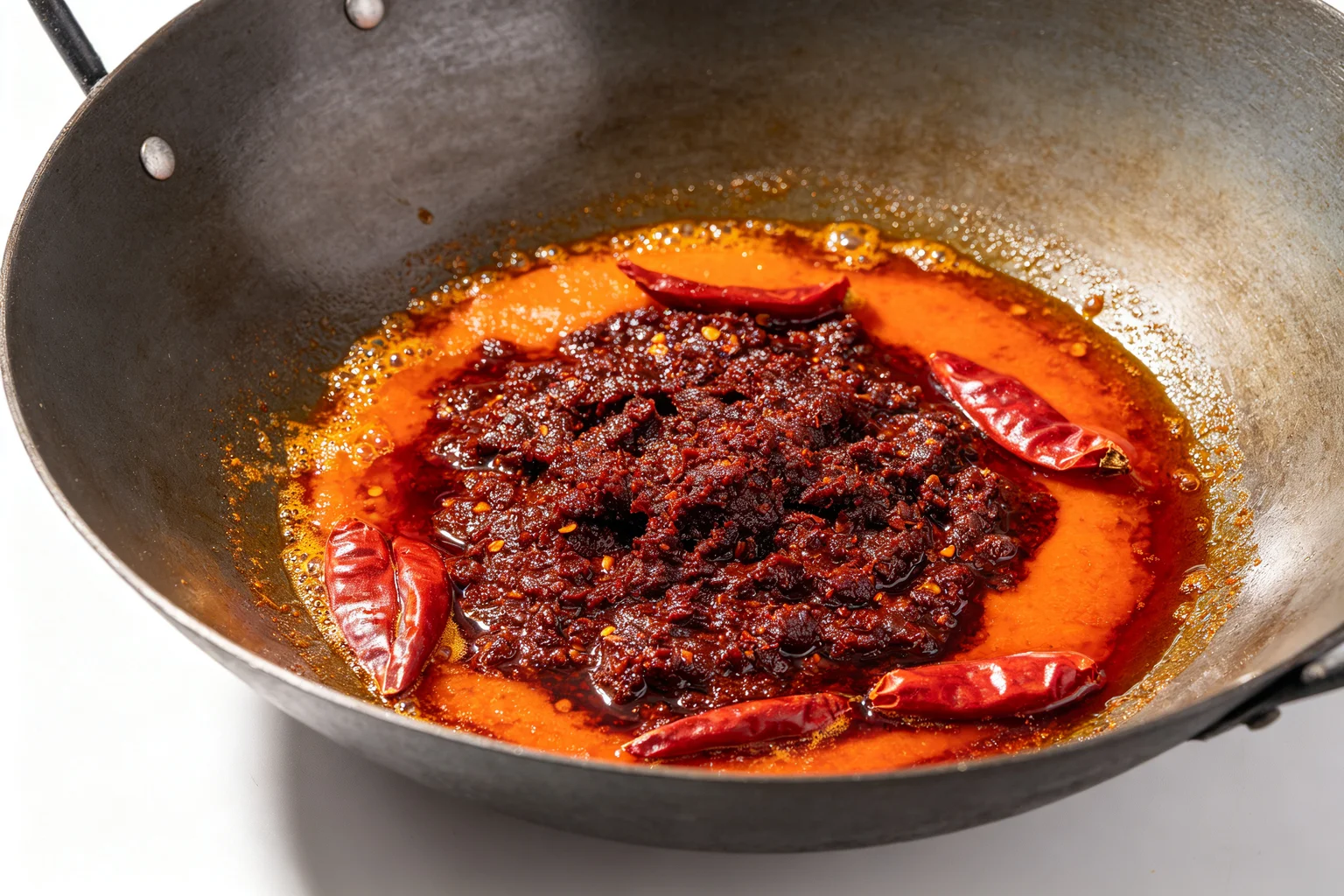
Covered in the Hunan chicken recipe in detail, but the key points for this dish: doubanjiang (豆瓣酱) is fermented broad bean and chilli paste that provides heat, umami, and fermented depth simultaneously. Pixian doubanjiang (郫县豆瓣酱), aged 3-5 years, is the version worth finding for any Sichuan dish.
Chop it finely before adding to the wok. Whole fermented bean pieces produce an uneven texture in the finished sauce. Finely chopped doubanjiang distributes evenly and blooms into the oil more completely during the frying stage.
The blooming step for doubanjiang follows the same see-byan logic as in Burmese curry cooking: fry in oil over medium heat, stirring constantly, until the paste darkens and oil begins to separate around the edges. The paste should smell deeply fragrant and the oil should be a deep red-orange from the chilli compounds. This takes 60-90 seconds at the right temperature. Rush it and the doubanjiang stays raw and sharp.
Why velvet the chicken?
Chicken thigh cooked for 90 seconds in a screaming hot wok without velveting seizes. The outside chars before the inside is cooked and the protein contracts into tough, slightly rubbery pieces. Baking soda velveting prevents that.
Mix ¼ teaspoon baking soda with 600g chicken pieces and 3 tablespoons cold water. Leave 25 minutes at room temperature. The baking soda raises the surface pH, breaking the actomyosin bonds in the muscle protein before the heat can tighten them. The chicken stays tender through the brief stir fry.
25 minutes is reliable. 30 is the hard limit. Beyond 30 minutes the protein degrades to a slightly slimy texture. Rinse thoroughly under cold water for 60-90 seconds. Baking soda left on produces a metallic taste and inhibits browning. Pat dry. Secondary marinade: cornstarch, oil, soy sauce, Shaoxing wine.
Thigh over breast. At 15-20% fat, thigh stays moist at high heat. Breast dries out if the wok temperature drops for even a second.
Ingredients
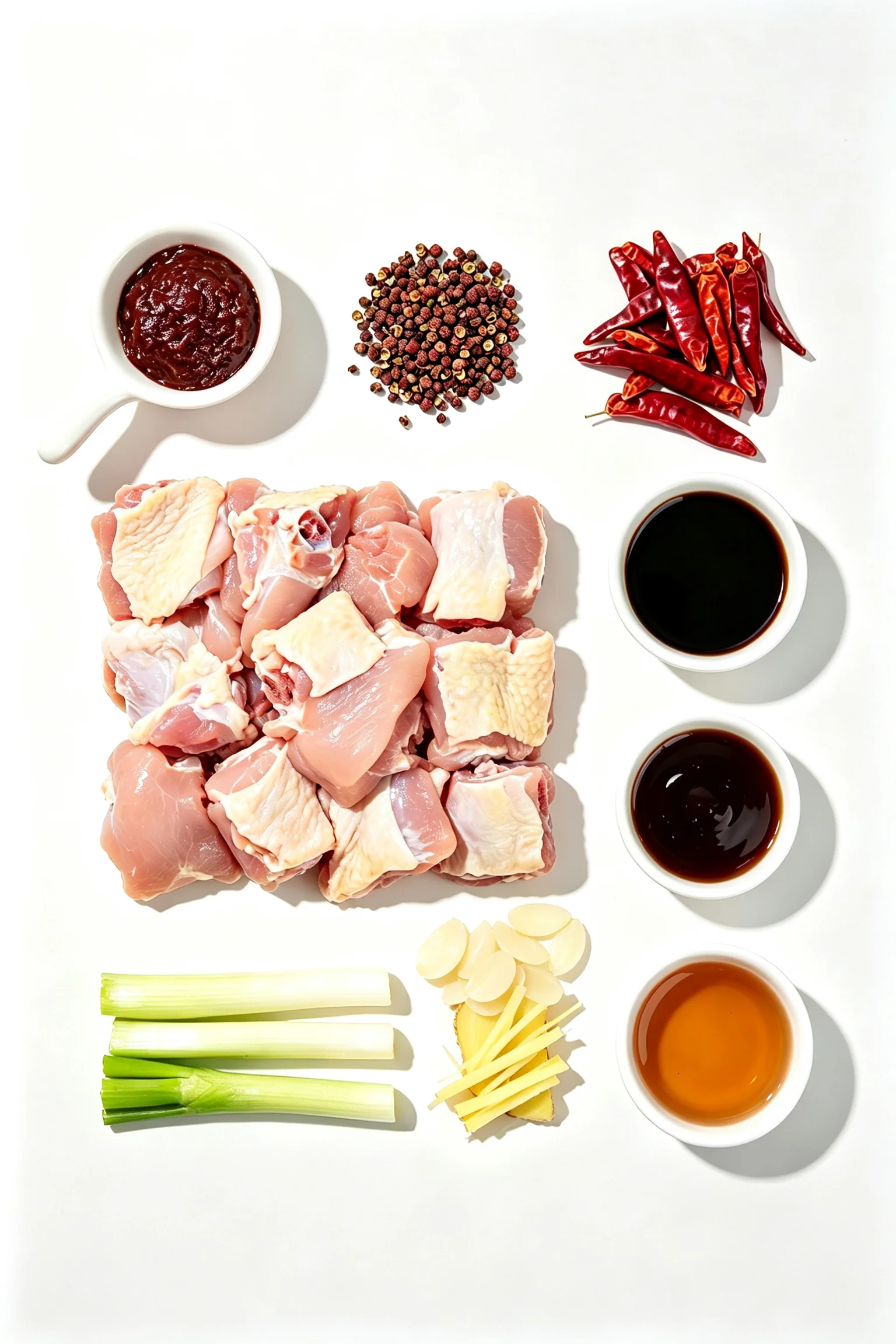
Serves 4
Chicken and velveting:
- 600g (1lb 5oz) boneless chicken thighs, cut into 3cm pieces
- ¼ tsp baking soda
- 3 tbsp cold water
- 1 tbsp cornstarch
- 1 tbsp neutral oil
- 1 tsp light soy sauce
- 1 tsp Shaoxing wine
Spice preparation:
- 1 tbsp Sichuan peppercorns, toasted and ground (see note above)
- 15-20 dried red chillies, whole or split depending on heat preference
- 2 tbsp Pixian doubanjiang, finely chopped
Sauce (mix in advance):
- 2 tbsp oyster sauce
- 1 tbsp light soy sauce
- 1 tsp dark soy sauce
- 1 tsp sugar
- ½ tsp cornstarch
- 4 tbsp chicken stock or water
Aromatics:
- 4 tbsp neutral oil, divided
- 6 garlic cloves, thinly sliced
- 3cm fresh ginger, julienned
- 3 spring onions, cut into 3cm pieces
To finish:
- ½ tsp freshly ground Sichuan peppercorn (reserved, added off heat)
- 1 tbsp chilli oil (optional)
- 1 tsp sesame oil
Instructions
Everything prepared before the wok is lit. Toast and grind the peppercorns first.
Step 1: Velvet the chicken
Mix chicken with baking soda and cold water. Leave 25 minutes.
Step 2: Toast and grind the Sichuan peppercorns
Place a dry pan over medium heat. Add the Sichuan peppercorns.
Step 3: Mix the sauce
Combine oyster sauce, light soy, dark soy, sugar, cornstarch, and stock in a small bowl. Stir until cornstarch dissolves.
Step 4: Sear the chicken in batches
Heat wok over maximum heat until smoking. Add 2 tablespoons oil.
Step 5: Bloom the peppercorns, then the chillies
Add remaining oil to the wok over medium heat. Add the ground Sichuan peppercorn first.
Step 6: Bloom the doubanjiang
Add the finely chopped Pixian doubanjiang. Fry 60-90 seconds, stirring constantly, until the paste darkens and oil separates around the edges.
Step 7: Aromatics
Add garlic and ginger. Stir 20-30 seconds until fragrant.
Step 8: Combine and sauce
Return all the seared chicken to the wok. Pour the sauce over everything.
Remove from heat. Add the reserved ground Sichuan peppercorn and sesame oil. Toss once. The peppercorn added off heat provides the most direct numbing sensation, it hits the palate without having cooked off any of its volatile compounds. Serve immediately over jasmine rice.
How do you store and reheat Sichuan chicken?
Keeps in the refrigerator for 2 days. The heat from the dried chillies intensifies overnight as the capsaicin continues to infuse the sauce. Day two is noticeably hotter.
To reheat: add a small amount of oil to a very hot wok. Toss over high heat for 60-90 seconds. Add a splash of water if the sauce has thickened too much. The Sichuan peppercorn numbing effect fades on reheating as the volatile sanshool compounds dissipate. Add a small pinch of freshly ground peppercorn off heat when serving leftovers to restore the mala character.
Love Chinese food?
Check out my complete guide to Chinese home cooking, pantry essentials, and techniques.
FAQ
What is the difference between Sichuan chicken and Hunan chicken? Both are spicy Chinese chicken dishes but the heat profiles are completely different. Sichuan chicken has mala: simultaneous numbing from hydroxy-alpha-sanshool in Sichuan peppercorns and burning heat from capsaicin in chillies. Hunan chicken has no Sichuan peppercorns, no sanshool, no numbing. The capsaicin heat arrives without any tactile counterbalance and feels more direct and more sustained. Sichuan chicken tastes complex and layered. Hunan chicken tastes sharper and more relentless. If you prefer direct heat without the numbing, try our Authentic Hunan Chicken Recipe.
Can I use pre-ground Sichuan peppercorn? Yes, but the numbing effect will be noticeably weaker. Pre-ground peppercorn has lost most of its volatile sanshool compounds during storage. If using pre-ground, increase the quantity by 50% and add all of it off heat rather than splitting between cooking and finishing. Freshly toasted and ground produces the full mala experience. Pre-ground produces a tamer version.
Why does my Sichuan chicken taste bitter? The dried chillies burnt. They go from fragrant to bitter very quickly above 160°C. Fry them at medium rather than high heat, the oil should be hot enough to sizzle immediately when a chilli goes in, but not so hot that they darken in under 10 seconds. If you smell bitterness, the batch is lost. Wipe the wok, start the chilli step again with fresh oil at lower temperature.
Is Sichuan peppercorn actually a pepper? No. Sichuan peppercorn is the dried berry husk of the prickly ash tree (Zanthoxylum genus), not related to black pepper or chilli. The name “peppercorn” refers to its appearance. It contains no capsaicin and produces no heat in the conventional sense. The active compound is hydroxy-alpha-sanshool, which produces a completely different sensation: tingling and numbing rather than burning.
You might also like: Check out our complete Chinese cooking guide for more essential ingredients and techniques.
Sichuan Chicken Recipe (Spicy Stir Fry)
szechuan chicken, chinese recipes, stir fry
PT35M (30 min velveting + 5 min prep)
PT15M
PT50M
Nutrition Facts
Ingredients
- 600g (1lb 5oz) boneless chicken thighs, cut into 3cm pieces
- ¼ tsp baking soda
- 3 tbsp cold water
- 1 tbsp cornstarch
- 1 tbsp neutral oil
- 1 tsp light soy sauce
- 1 tsp Shaoxing wine
- 1 tbsp Sichuan peppercorns, toasted and ground (see note above)
- 15-20 dried red chillies, whole or split depending on heat preference
- 2 tbsp Pixian doubanjiang, finely chopped
- 2 tbsp oyster sauce
- 1 tbsp light soy sauce
- 1 tsp dark soy sauce
- 1 tsp sugar
- ½ tsp cornstarch
- 4 tbsp chicken stock or water
- 4 tbsp neutral oil, divided
- 6 garlic cloves, thinly sliced
- 3cm fresh ginger, julienned
- 3 spring onions, cut into 3cm pieces
- ½ tsp freshly ground Sichuan peppercorn (reserved, added off heat)
- 1 tbsp chilli oil (optional)
- 1 tsp sesame oil
Instructions
- *Everything prepared before the wok is lit. Toast and grind the peppercorns first.*
- Mix chicken with baking soda and cold water. Leave 25 minutes. Rinse under cold running water 60-90 seconds until clear. Pat completely dry. Add cornstarch, oil, soy sauce, Shaoxing wine. Mix well. Leave 10 minutes.
- Place a dry pan over medium heat. Add the Sichuan peppercorns. Toast 2-3 minutes, stirring occasionally, until fragrant and citrusy smelling. Remove immediately. Grind while still warm in a mortar or spice grinder. Reserve half for cooking, half for finishing off heat.
- Combine oyster sauce, light soy, dark soy, sugar, cornstarch, and stock in a small bowl. Stir until cornstarch dissolves. Set aside.
- Heat wok over maximum heat until smoking. Add 2 tablespoons oil. Add half the chicken in a single layer. Leave 45-60 seconds until golden on the contact side. Flip. 30 seconds more. Remove. Wipe wok, reheat, repeat with second batch.
- Add remaining oil to the wok over medium heat. Add the ground Sichuan peppercorn first. Fry for 20-30 seconds until fragrant. Add the dried chillies. Fry 20-30 seconds at 120-150°C until the oil turns red-orange and the chillies deepen in colour. Watch carefully. They burn in seconds above 160°C and turn bitter. The smell should be fragrant, not acrid.
- Add the finely chopped Pixian doubanjiang. Fry 60-90 seconds, stirring constantly, until the paste darkens and oil separates around the edges.
- Add garlic and ginger. Stir 20-30 seconds until fragrant.
- Return all the seared chicken to the wok. Pour the sauce over everything. Toss quickly to coat. The sauce thickens in 20-30 seconds. Add spring onions and chilli oil if using. Remove from heat. Add the reserved ground Sichuan peppercorn and sesame oil. Toss once. The peppercorn added off heat provides the most direct numbing sensation, it hits the palate without having cooked off any of its volatile compounds. Serve immediately over jasmine rice. ## How do you store and reheat Sichuan chicken? Keeps in the refrigerator for 2 days. The heat from the dried chillies intensifies overnight as the capsaicin continues to infuse the sauce. Day two is noticeably hotter. To reheat: add a small amount of oil to a very hot wok. Toss over high heat for 60-90 seconds. Add a splash of water if the sauce has thickened too much. The Sichuan peppercorn numbing effect fades on reheating as the volatile sanshool compounds dissipate. Add a small pinch of freshly ground peppercorn off heat when serving leftovers to restore the mala character.
Did you make this recipe?
Tag @asianfoodsdaily on Instagram or leave a comment below!
Testing Notes
Tested in Asha's kitchen. Last reviewed June 4, 2025.
Ingredient Substitutions
Substitution notes coming soon.
About Asha
Half Asian, half African cook raised between two food-obsessed cultures. I've spent 10 years learning Asian cooking traditions through family, friends, and thousands of hours at the stove — testing every dish until it works in a standard home kitchen.
Read my full storyTechnique & Pantry Guides
Related Recipes
More delicious dishes you might enjoy


Loading comments...