Chinese Cabbage Stir-Fry – Quick 15-Minute Side Dish

Jump to Section
Easy Chinese Cabbage Stir-Fry (手撕包菜, shǒu sī bāo cài) is a classic Chinese home-cooked dish made by hand-tearing green cabbage into rough pieces, then wok-frying them over high heat with garlic, dried chili, and a savory sauce of soy sauce, rice vinegar, and oyster sauce. Ready in under 15 minutes, it delivers blistered, smoky edges with a tender-crisp texture that defines good wok cooking.
What Is Chinese Cabbage Stir-Fry?
手撕包菜 (shǒu sī bāo cài) literally translates to “hand-torn cabbage” — a name that tells you exactly what makes this dish different from every other cabbage stir-fry you’ve tried. Rather than cutting the cabbage with a knife, you tear it by hand into irregular, rustic pieces. Those jagged edges char beautifully against a screaming-hot wok, creating blistered, smoky bites alongside sections that stay tender and juicy.
This dish is deeply rooted in Chinese home cooking and features prominently across Sichuan and Hunan regional cuisines, where bold aromatics like dried red chili and garlic anchor the flavor. It’s the kind of side dish that appears on nearly every family table in China, yet rarely shows up at Western Chinese restaurants — which is exactly why making it at home feels so rewarding.
Why This Recipe Works
Recipe Testing Notes
Getting this recipe right took five dedicated test batches. Here’s what each one revealed:
Getting this recipe right took five dedicated test batches.
Batch 1 — Knife-cut cabbage, medium heat: The cabbage steamed rather than seared — limp, watery, flat flavor.
Batch 2 — Hand-torn, medium-high heat: Better texture and some blistering, but adding the cabbage all at once dropped wok temperature. Result: uneven cooking, wet patches alongside char.
Batch 3 — Hand-torn, high heat, two-stage addition: Consistent blistering achieved. The sauce (soy + vinegar only) tasted sharp and one-dimensional.
Batch 4 — Full sauce formula with oyster sauce: Oyster sauce rounded out the acidity and added umami depth. A small amount of sugar balanced the vinegar. Closest to restaurant quality so far.
Batch 5 — Optimal result: Hand-torn cabbage, screaming-hot wok, two-stage addition, full sauce with sesame oil added off heat. Garlic and chili bloomed in oil first. Firm stems in first, leafy parts 30 seconds later. Total cook time: 4–5 minutes. Result: blistered edges, crisp-tender texture, balanced savory-tangy-umami flavor.
Key failure documented: A non-stick pan at any heat level produced steamed, mushy cabbage with zero wok hei. A carbon steel wok or well-seasoned cast iron is non-negotiable.
Key failure documented: A non-stick pan at any heat level produced steamed, mushy cabbage with zero wok hei. A carbon steel wok or well-seasoned cast iron is non-negotiable.
Chinese Cabbage Stir-Fry Ingredients
Serves 2–3 as a side dish
- 1 small green cabbage (about 500g / 1.1 lbs)
- 3–4 garlic cloves, thinly sliced
- 3–4 dried red chilies, roughly broken
- 2 tablespoons neutral oil (vegetable or peanut)
Sauce:
- 1½ tablespoons soy sauce
- 1 tablespoon rice vinegar
- 1 tablespoon oyster sauce
- ½ teaspoon sugar
- 1 teaspoon sesame oil (added off heat)
Optional aromatics:
- ½ teaspoon Sichuan peppercorns (numbing-spicy version)
- 1 teaspoon doubanjiang (for deeper heat)
Equipment
- Carbon steel wok (14-inch recommended): The single most important tool. Carbon steel heats rapidly, sustains extreme temperatures, and develops seasoning that prevents sticking without suppressing sear. Both Lodge and Yosukata carbon steel woks performed well in testing. The 14-inch gave better cabbage dispersion than the 12-inch.
- High-BTU or outdoor wok burner: A standard home burner works if you preheat the wok for a full 3–4 minutes. A high-output burner makes this significantly easier.
- Wok spatula (chuan): The flat edge lets you press cabbage against the hot surface for maximum contact. A silicone spatula cannot replicate this.
- Avoid: Non-stick pans (can’t handle the heat), stainless steel (cabbage sticks), small skillets (overcrowding causes steaming).
How to Make Chinese Cabbage Stir-Fry (Step-by-Step)
⚠️ Safety Note: This recipe creates significant smoke at high heat (wok temperatures can exceed 230°C / 450°F). Turn your exhaust fan to maximum or open a window before you start.
Step 1: Pull apart by hand
Tear the cabbage. Pull apart by hand into rough 2–3 inch pieces — irregular shapes are the goal. Rinse, then dry completely. If your cabbage is even slightly damp, you are boiling it, not frying it. Use a salad spinner or air-dry for 30 minutes if possible.
Step 2: Combine soy sauce, rice
Mix the sauce. Combine soy sauce, rice vinegar, oyster sauce, and sugar in a small bowl. Stir until sugar dissolves. Set aside.
Step 3: Place carbon steel wok
Heat the wok. Place carbon steel wok over the highest heat available. Preheat 3–4 minutes until it just begins to smoke. Add oil and swirl to coat — it should shimmer and move instantly.
Step 4: Add garlic slices and
Bloom the aromatics. Add garlic slices and broken dried chilies. Stir constantly for 20–30 seconds until fragrant. Do not let the garlic brown — it turns bitter in seconds at this heat.
Step 5: Add thicker stem pieces
Add the cabbage in stages. Add thicker stem pieces first. Press flat against the wok and sear undisturbed for 30–40 seconds. Toss briefly, then add the leafy pieces and toss everything together.
Step 6: Push the cabbage to
Pour in the sauce. Push the cabbage to the sides and pour the sauce mixture around the scorching-hot perimeter of the wok — not directly onto the food. The instant evaporation against the hot metal mellows the vinegar’s harsh edge and creates a fragrance explosion that coats every piece of cabbage. Toss everything together. Total cook time: 3–4 minutes.
Step 7: Remove from heat
Finish and serve. Remove from heat. Drizzle sesame oil over the top and toss once. Serve immediately.
Common Substitutions
- Green cabbage → Napa cabbage: Softer texture; reduce cook time by 1 minute.
- Oyster sauce → hoisin sauce: Slightly sweeter. Works well in a pinch.
- Rice vinegar → apple cider vinegar: Nearly identical acidity profile.
- Dried chili → chili flakes: Use ½ teaspoon; slightly less smoky but effective.
- Soy sauce → tamari: Makes the dish gluten-free without losing depth.
Pro Tips
- Dry is non-negotiable. A single drop of water on the cabbage will cause the wok temperature to plummet and turn your sear into soup. Salad spinner, then a 10-minute air-dry minimum.
- Don’t crowd the wok. Doubling the recipe? Cook in two batches. Overcrowding kills the temperature and you’ll steam instead of sear.
- Tear, don’t cut. Torn edges char. Knife-cut edges just cook. The textural contrast is the whole point of the dish.
- Sesame oil goes on last. Heating it destroys the flavor entirely. Off heat, then drizzle.
For another fast Chinese side dish using the same high-heat wok technique, try this Chinese Eggplant with Garlic Sauce — silky, savory, and ready in under 30 minutes.
Common Mistakes to Avoid
- Cold or under-heated wok. If the oil doesn’t shimmer the instant it hits the surface, keep heating.
- Cutting instead of tearing. Uniform slices cook evenly but produce none of the char that defines this dish.
- Burning the garlic. It scorches in seconds at this heat. Add the cabbage almost immediately once the garlic is fragrant.
- Sauce added too early. Sear first, sauce last. Sauce before sear equals steam.
- Letting it sit. This dish is at its peak the moment it leaves the wok. Serve immediately.
Easy Variations
- Spicy Sichuan version: Add ½ teaspoon Sichuan peppercorns to the oil with the chili. Finish with a teaspoon of chili oil for the full 麻辣 (málà) numbing-spicy effect.
- Pork belly version: Render thin-sliced pork belly in the wok first, remove, stir-fry the cabbage, return the pork at the end.
- Vegan version: Swap oyster sauce for mushroom-based vegetarian oyster sauce. No other changes needed.
- Cabbage with egg: After adding the sauce, push cabbage to the sides, scramble two beaten eggs in the center, then fold everything together.
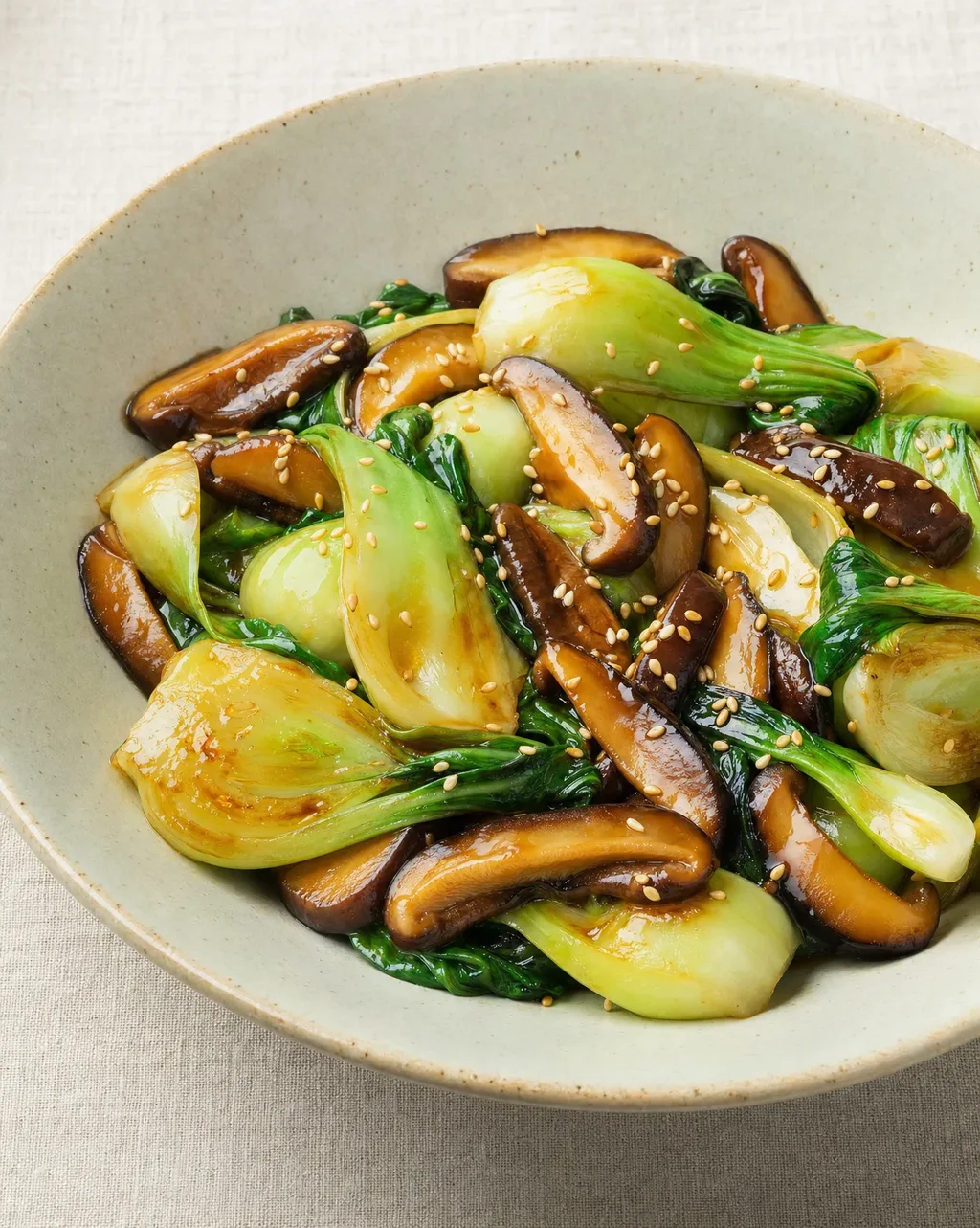
If you enjoy quick Asian vegetable dishes with bold flavors, this Bok Choy and Mushroom Stir-Fry is another weeknight winner ready in under 20 minutes.
Serving Suggestions
Serve alongside steamed white rice as the classic pairing — the sauce soaks in perfectly. It also works beautifully next to Chinese Tomato Egg Stir-Fry for a complete two-dish Chinese home meal, or alongside Kung Pao Chicken for a full Sichuan-style spread. The vinegar in the dish cuts through rich proteins like braised pork or pan-fried fish especially well.
Storage and Reheating
Best eaten immediately. If storing: refrigerate in an airtight container for up to 2 days. Reheat in a hot wok or skillet for 2–3 minutes — avoid the microwave, which steams the cabbage and makes it watery. Freezing is not recommended; cabbage turns mushy after thawing.
Nutrition Information
Per serving (based on 3 servings, approximate)
NutrientAmountCalories120 kcalCarbohydrates10gProtein2gFat8gFiber3gSodium580mgSugar4g
Green cabbage is an excellent source of vitamin C and vitamin K, and is naturally low in calories. According to Wikipedia’s overview of stir frying, the high-heat, short-duration nature of stir-frying preserves more nutrients in vegetables than longer methods like boiling — another reason this cooking technique has remained central to Chinese cuisine for centuries.
Love Chinese food?
Check out my complete guide to Chinese home cooking, pantry essentials, and techniques.
Frequently Asked Questions
1. Why tear instead of cut? Torn edges create irregular surface area that presses directly against the hot wok, producing charred, blistered patches. Knife-cut pieces cook evenly — but evenly and boringly. The contrast between charred edges and tender centers is what makes this dish memorable.
2. Can I make this without a wok? Yes. A large cast iron skillet over maximum heat is the best alternative. Results will be good but won’t fully replicate the wok hei — the smoky, slightly charred quality a proper wok delivers. Non-stick pans won’t work at all.
3. How spicy is it? At 3–4 dried chilies, the heat is mild background warmth. The chilies contribute more aroma than fire. For genuine heat, use 6–8 chilies or add a teaspoon of chili oil or doubanjiang to the sauce.
4. How do I know the wok is hot enough? Flick a few drops of water onto the surface — they should evaporate almost instantly with a sharp sizzle. When oil goes in, it should shimmer and spread within one or two seconds. If it pools slowly, keep heating.
5. Can I use red cabbage? Technically yes, but red cabbage is denser, takes longer to soften, and turns an unappetizing blue-gray when it contacts acidic ingredients like rice vinegar (an anthocyanin reaction). Green cabbage is strongly preferred; napa cabbage is the best substitute.
Final Note
Hand-torn cabbage stir-fry rewards care in direct proportion to the effort you give it. Dry the cabbage completely. Heat the wok seriously. Pour the sauce around the perimeter, not straight on. Get those details right and you’ll produce a dish that tastes like it came out of a Chinese home kitchen — blistered, fragrant, and gone within minutes. Once you’ve made it a few times, it becomes second nature: a genuine 15-minute vegetable dish that earns its place on any table.
You Might Also Like
Chinese Eggplant with Garlic Sauce — https://www.asianfoodsdaily.com/recipes/chinese-eggplant-with-garlic-sauce/ Quick and Healthy Bok Choy Mushroom Stir Fry — https://www.asianfoodsdaily.com/recipes/quick-and-healthy-bok-choy-mushroom-stir-fry-recipe/ Chinese Tomato Egg Stir Fry — https://www.asianfoodsdaily.com/recipes/chinese-tomato-egg-stir-fry/ Kung Pao Chicken Recipe — https://www.asianfoodsdaily.com/recipes/kung-pao-chicken-recipe/
You might also like: Check out our complete Chinese cooking guide for more essential ingredients and techniques.
Chinese Cabbage Stir-Fry – Quick 15-Minute Side Dish
Chinese, Side Dish, High-Heat Cooking
10 minutes
5 minutes
15 minutes
Ingredients
- 1 small green cabbage (about 500g / 1.1 lbs)
- 3–4 garlic cloves, thinly sliced
- 3–4 dried red chilies, roughly broken
- 2 tablespoons neutral oil (vegetable or peanut)
- 1½ tablespoons soy sauce
- 1 tablespoon rice vinegar
- 1 tablespoon oyster sauce
- 1 tablespoon oyster sauce
Instructions
- > ⚠️ Safety Note: This recipe creates significant smoke at high heat (wok temperatures can exceed 230°C / 450°F). Turn your exhaust fan to maximum or open a window before you start.
- Tear the cabbage. Pull apart by hand into rough 2–3 inch pieces — irregular shapes are the goal. Rinse, then dry completely. *If your cabbage is even slightly damp, you are boiling it, not frying it. Use a salad spinner or air-dry for 30 minutes if possible.*
- Mix the sauce. Combine soy sauce, rice vinegar, oyster sauce, and sugar in a small bowl. Stir until sugar dissolves. Set aside.
- Heat the wok. Place carbon steel wok over the highest heat available. Preheat 3–4 minutes until it just begins to smoke. Add oil and swirl to coat — it should shimmer and move instantly.
- Bloom the aromatics. Add garlic slices and broken dried chilies. Stir constantly for 20–30 seconds until fragrant. Do not let the garlic brown — it turns bitter in seconds at this heat.
- Add the cabbage in stages. Add thicker stem pieces first. Press flat against the wok and sear undisturbed for 30–40 seconds. Toss briefly, then add the leafy pieces and toss everything together.
- Pour in the sauce. Push the cabbage to the sides and pour the sauce mixture around the scorching-hot perimeter of the wok — not directly onto the food. The instant evaporation against the hot metal mellows the vinegar's harsh edge and creates a fragrance explosion that coats every piece of cabbage. Toss everything together. Total cook time: 3–4 minutes.
- Finish and serve. Remove from heat. Drizzle sesame oil over the top and toss once. Serve immediately. ## Common Substitutions - Green cabbage → Napa cabbage: Softer texture; reduce cook time by 1 minute. - Oyster sauce → hoisin sauce: Slightly sweeter. Works well in a pinch. - Rice vinegar → apple cider vinegar: Nearly identical acidity profile. - Dried chili → chili flakes: Use ½ teaspoon; slightly less smoky but effective. - Soy sauce → tamari: Makes the dish gluten-free without losing depth.
Did you make this recipe?
Tag @asianfoodsdaily on Instagram or leave a comment below!
Testing Notes
Tested in Asha's kitchen. Last reviewed December 1, 2025.
Ingredient Substitutions
Substitution notes coming soon.
About Asha
Half Asian, half African cook raised between two food-obsessed cultures. I've spent 10 years learning Asian cooking traditions through family, friends, and thousands of hours at the stove — testing every dish until it works in a standard home kitchen.
Read my full storyTechnique & Pantry Guides
Related Recipes
More delicious dishes you might enjoy



Loading comments...