Bok Choy Mushroom Stir Fry Recipe
Jump to Section
The first time I made bok choy stir fry, the leaves turned yellow and limp while the stems were still raw and crunchy. The second time I overcorrected, cooked the stems until tender and ended up with mush. The issue was not heat or timing. It was that I was treating bok choy as a single ingredient when it is structurally two different vegetables attached to the same plant. The stems are dense, cellulose-heavy, and need 2-3 minutes of direct wok heat. The leaves are thin-walled, mostly water, and wilt in 30-45 seconds. Once you cook them separately, stems first, leaves when the stems are almost done, the dish works every time.
What is bok choy mushroom stir fry and what makes it different from other vegetable stir fries?
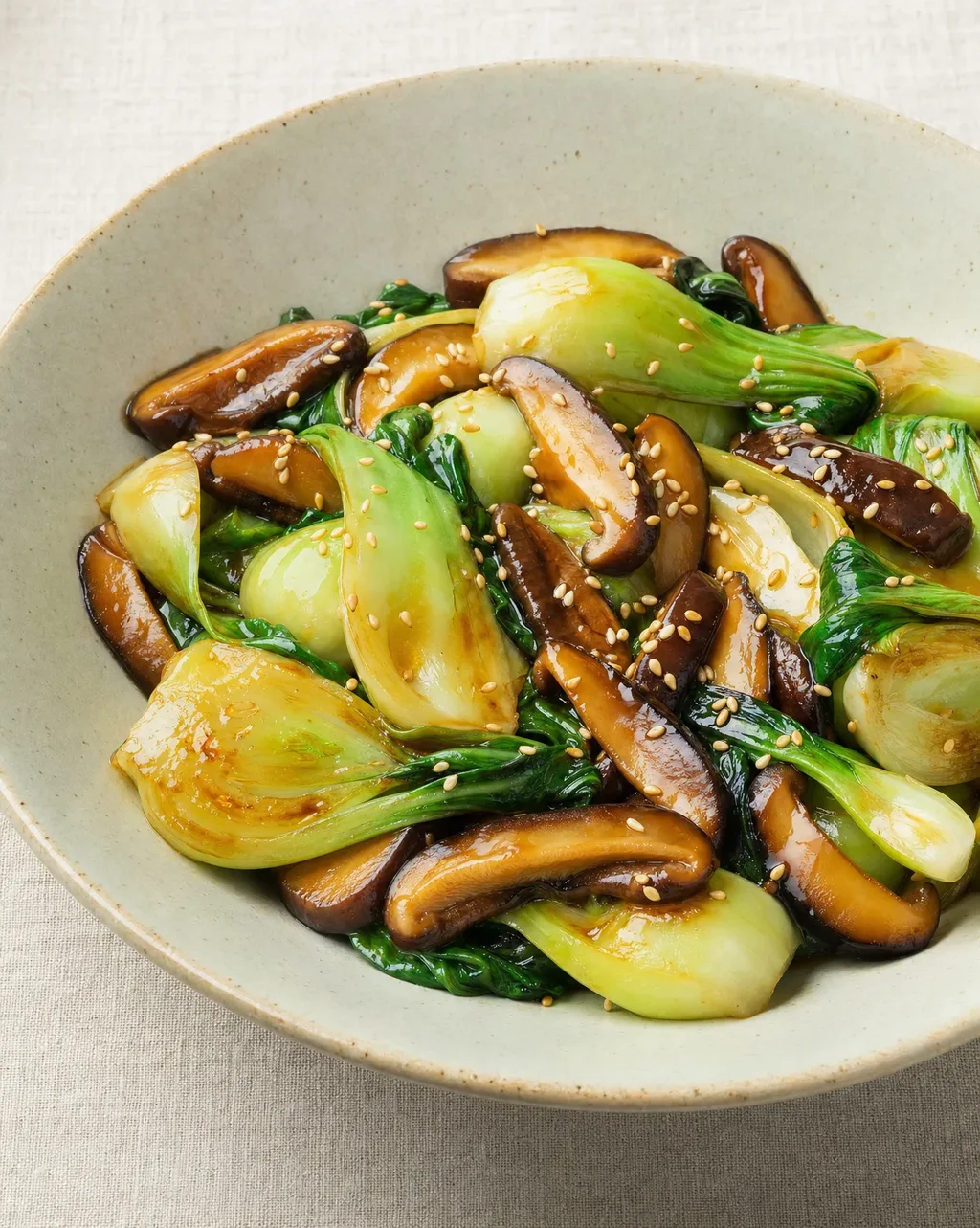
Bok choy mushroom stir fry (香菇菜心 in Cantonese, roughly “mushroom vegetable heart”) is a Chinese side dish built on two ingredients that complement each other specifically: bok choy’s crisp stems and delicate leaves against the meatier, more intensely savoury character of mushrooms, usually shiitake. The dish is seasoned with oyster sauce and finished with a light cornstarch slurry that produces the glossy coating that distinguishes a Chinese restaurant vegetable dish from a home pan of stir-fried greens.
What makes it different from a Western vegetable stir fry is the technique and the sauce. Most Western vegetable stir fries season throughout cooking, salt, pepper, oil added at various stages. Chinese vegetable stir fry keeps all seasoning liquid out of the wok until the final 60 seconds. The reason is osmotic pressure: soy sauce and oyster sauce are high in sodium, and sodium draws water out of vegetable cells through osmosis the moment they make contact. Sauce added to raw or mid-cook bok choy immediately begins softening the cell walls and releasing moisture into the wok, turning the dish from a stir fry into a braise. Sauce in the final 60 seconds gives insufficient time for osmosis to significantly affect texture, the vegetables stay crisp and the sauce turns glossy rather than watery.
Why do you cook bok choy stems and leaves separately?
Bok choy consists of two structurally different parts that have almost nothing in common except that they come from the same plant.
The stem is dense, with thick cellulose cell walls and approximately 93% water tightly bound in that structure. It requires 2-3 minutes of direct heat in a hot wok to become properly tender while retaining bite. Undercook it and it is raw and unpleasant. Overcook it and it collapses and turns watery.
The leaf is thin-walled, with approximately 95% water in very fragile cells. It wilts and cooks in 30-45 seconds. Left in the wok for 2-3 minutes it turns yellow, loses its bright green colour, and becomes texturally indistinct from overcooked spinach.
Cooking them together means one will always be wrong. Adding them simultaneously and cooking for 2 minutes produces tender stems and overcooked leaves. Adding them simultaneously and cooking for 45 seconds produces bright green leaves and raw stems.
The correct technique is staging. Stems go into the wok first and cook for 90 seconds to 2 minutes. Leaves go in when the stems are approximately 80% done, still slightly firm but with no raw crunch. Everything finishes together in the final 30-45 seconds with the sauce. Both parts arrive at the correct texture simultaneously.
For baby bok choy: halve or quarter them and add cut-side down first for 60-90 seconds to sear the stem face, then toss and add the leaves stage by pushing to the sides.
For regular bok choy: separate leaves from stems completely. Cut stems into 3-4cm pieces. Leaves can be kept whole or roughly torn. Stems go in first, leaves follow 90 seconds later.
Why do mushrooms need to be seared in a dry wok first?
Mushrooms contain approximately 90% water by weight. More water than most vegetables, contained in a spongy cellular structure that collapses and releases that water rapidly when exposed to heat.
When mushrooms are added to a wok that already contains oil, the released water emulsifies with the oil instead of evaporating cleanly. The mushrooms sit in a hot, oily liquid and steam rather than sear. The surface never develops colour. The texture becomes soft and slightly slippery rather than golden and slightly chewy.
The solution is to add mushrooms to a completely dry, very hot wok first, before any oil. The dry heat drives off the surface moisture rapidly, you will see steam rising from the mushrooms in the first 30-45 seconds. As the surface dries, the Maillard reaction begins and the mushrooms start to develop golden colour and a slightly nutty aroma. At this point, after approximately 60-90 seconds, add the oil. The mushrooms now fry in the oil rather than steam.
This technique produces mushrooms with a caramelised, slightly chewy exterior and a fully cooked interior, significantly more flavourful than mushrooms added to a wet or oil-filled wok.
Different mushrooms behave slightly differently. Shiitake takes 90 seconds to 2 minutes of dry searing before the surface is ready for oil. Oyster mushrooms release moisture faster and are ready in 45-60 seconds. King oyster mushrooms are denser and take 2-3 minutes. Enoki mushrooms are so delicate they should not be dry-seared at all, add them in the final 30 seconds of cooking with the sauce.
Why does the sauce go in last?
Two reasons, osmotic pressure and temperature.
The osmotic pressure reason: oyster sauce and soy sauce are both high in dissolved sodium. High salt concentration outside a cell creates a concentration gradient that drives water out of the cell through osmosis. When sauce makes contact with raw or partially cooked bok choy, it begins drawing moisture out of the cells immediately. This moisture releases into the wok as liquid, which drops the wok temperature, dilutes the sauce, and softens the vegetable texture before cooking is complete. Sauce in the final 60 seconds gives insufficient time for this process to significantly alter the texture.
The temperature reason: oyster sauce contains sugars that caramelise at approximately 140-150°C. Added in the final 60 seconds to a very hot wok, the sugars have just enough time to caramelise lightly against the hot wok surface before the liquid from the sauce drops the temperature. This produces a glaze. Added at the beginning of cooking, the sauce reduces and concentrates before the vegetables are cooked, producing a sticky residue rather than a glaze.
Both reasons point to the same instruction: mix the sauce in advance, have it ready, and add it only when everything else in the wok is 90% cooked.
What mushrooms work best and what is the difference?
Shiitake is the classic pairing with bok choy. Fresh shiitake has a slightly chewy texture and an earthy, savoury flavour that intensifies during dry searing. Dried shiitake rehydrated in warm water is more intensely flavoured than fresh, the drying process concentrates the glutamates. If using dried, save the soaking liquid and add 2-3 tablespoons to the sauce, it adds significant depth. Slice fresh shiitake 3-4mm thick. Remove the stems from dried shiitake (they remain tough even after rehydration) and slice the caps.
Oyster mushrooms are more delicate than shiitake, thinner, more tender, and milder in flavour. They absorb sauce well and produce a silkier texture in the finished dish. Tear into pieces along their natural grain rather than slicing, tearing produces more surface area and better browning. Dry sear for 45-60 seconds.
King oyster mushrooms (trumpet mushrooms) are the meatiest option. Dense, firm, with a texture closer to scallop than to mushroom when properly seared. Slice into coins 5-6mm thick and sear in a dry wok for 2-3 minutes per side until golden. They add significant substance to the dish and work well if serving the stir fry as a main rather than a side.
Enoki mushrooms are too delicate for dry searing. Add them in the final 30 seconds with the sauce. They wilt almost immediately and add a noodle-like texture and mild flavour.
Mixed mushrooms work well, a combination of shiitake and oyster mushroom produces the best balance of flavour depth and texture variety.
Ingredients
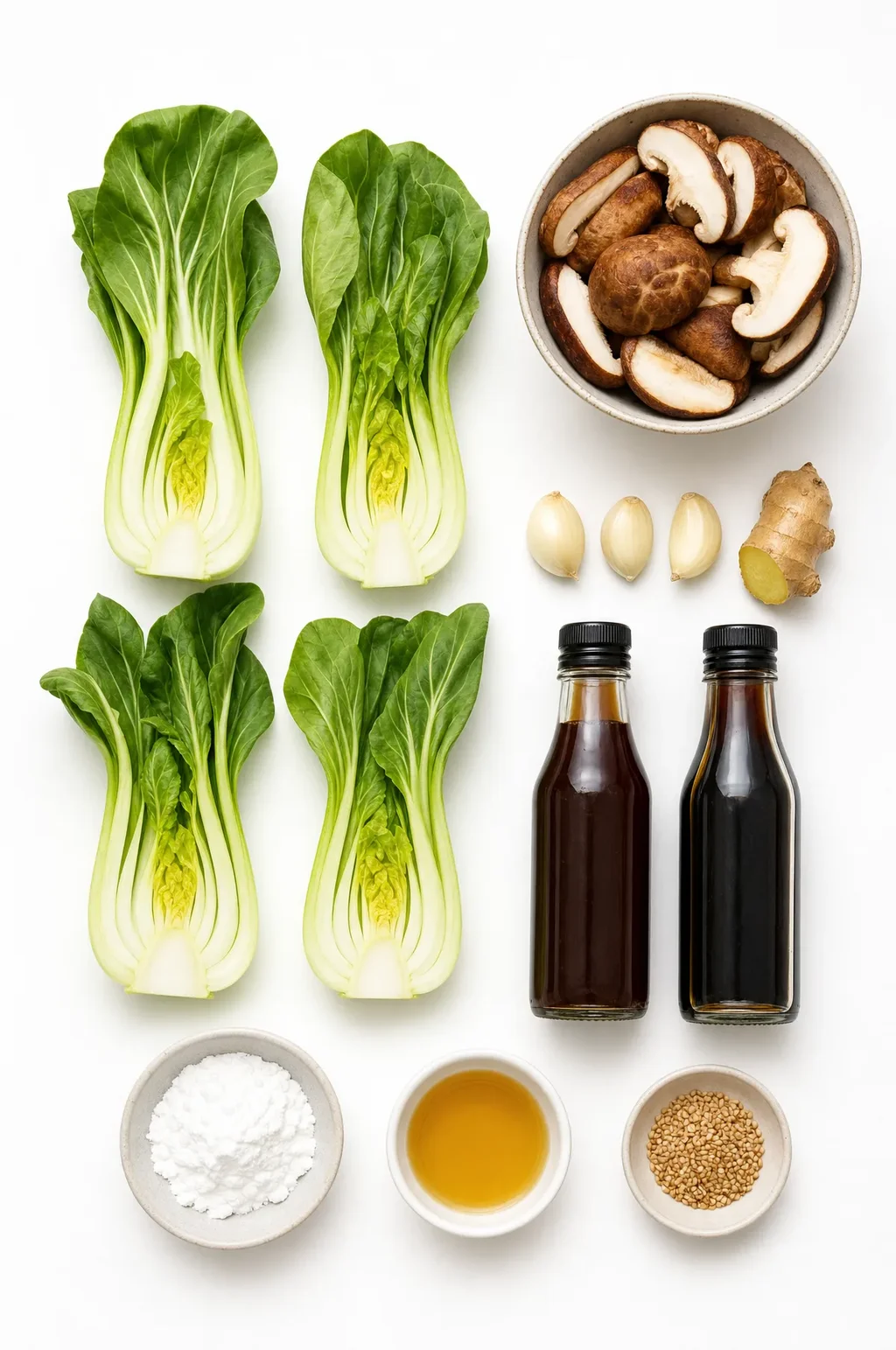
Serves 4 as a side dish
- 400g bok choy (4-5 heads baby bok choy, or 2 heads regular bok choy)
- 200g shiitake mushrooms, stems removed, caps sliced 3-4mm
- 3 tbsp neutral oil (divided)
- 4 garlic cloves, minced
- 2cm fresh ginger, grated
- 1 tsp sesame oil (added off heat at the end)
Sauce (mix in advance):
- 2 tbsp oyster sauce
- 1 tbsp light soy sauce
- 1 tsp Shaoxing wine or dry sherry
- ½ tsp sugar
- ½ tsp cornstarch
- 3 tbsp cold water or mushroom soaking liquidInstructions
Read through all steps before starting. The cook time is 8-10 minutes. Have everything prepared and within arm’s reach before the wok is lit.
Step 1: Prepare the bok choy
For baby bok choy: trim the base, halve or quarter lengthways depending on size. Wash well and shake off excess water.
For regular bok choy: separate the leaves from the stems. Cut stems into 3-4cm pieces diagonally. Leaves can be kept whole or roughly torn. Keep in two separate piles, they go into the wok at different times.
Step 2: Mix the sauce
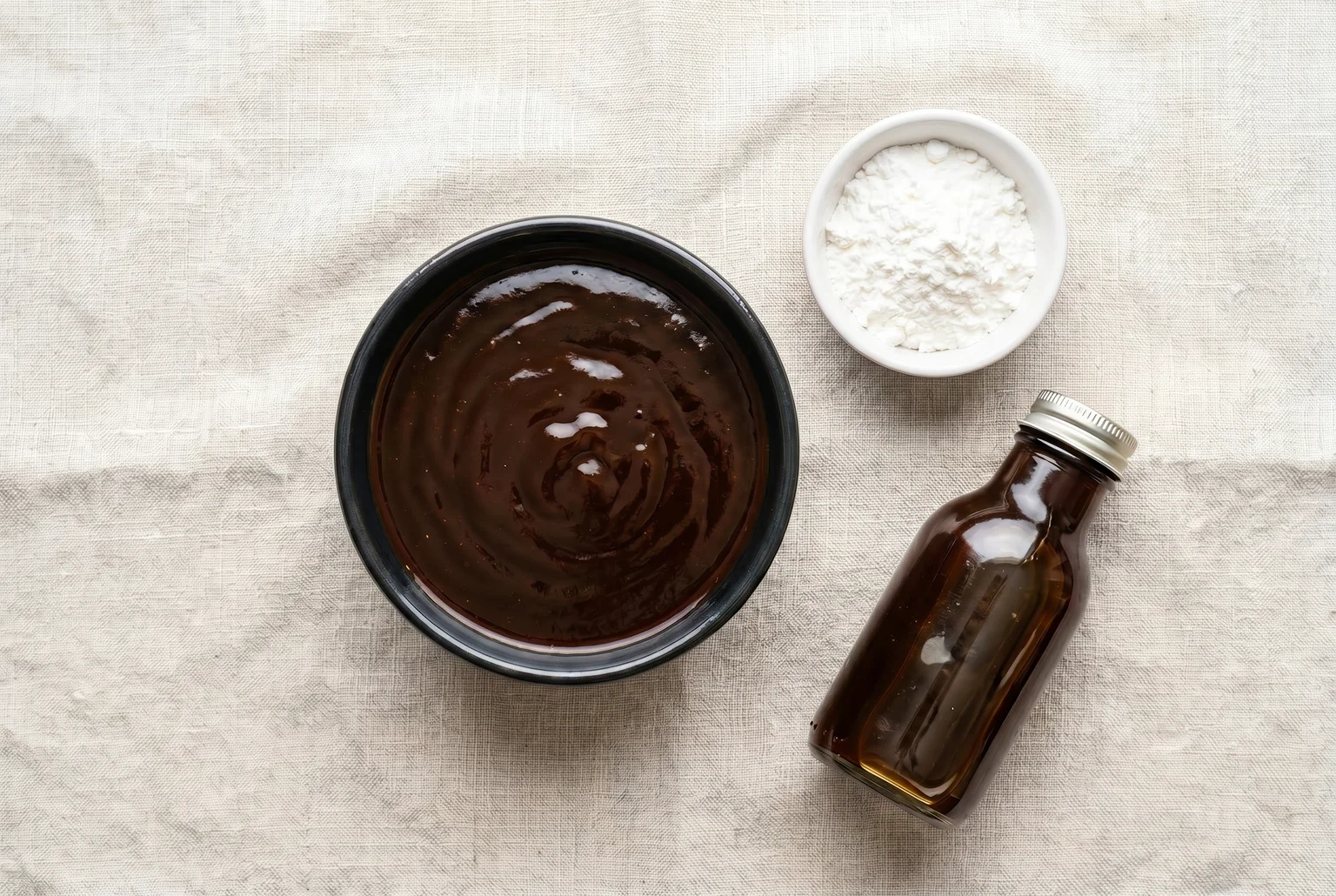
Combine all sauce ingredients in a small bowl. Stir until the cornstarch and sugar are dissolved.
Step 3: Dry-sear the mushrooms
Place a wok over maximum heat. Heat empty for 2 minutes until beginning to smoke.
Step 4: Bloom the garlic and ginger
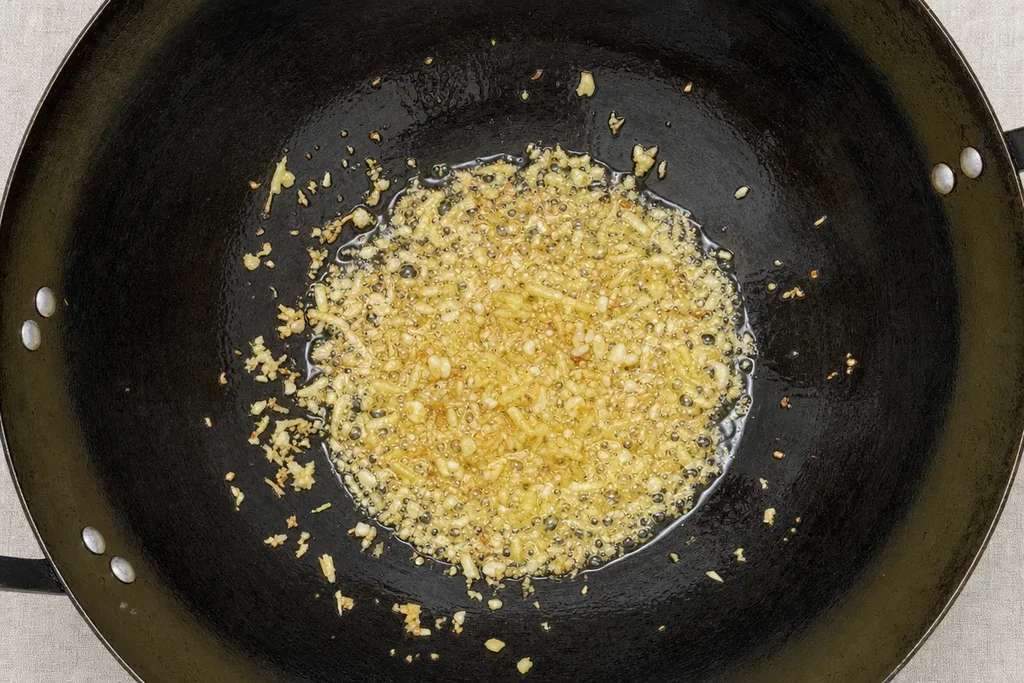
Add 1.5 tablespoons of neutral oil to the wok. Heat until shimmering, approximately 120-140°C, hot enough that a small piece of garlic dropped in sizzles immediately but does not brown within 5 seconds.
Step 5: Add the bok choy stems first
Add the bok choy stems (or the cut base of the baby bok choy) to the wok. Toss to coat in the garlic-ginger oil.
Step 6: Add the leaves and mushrooms
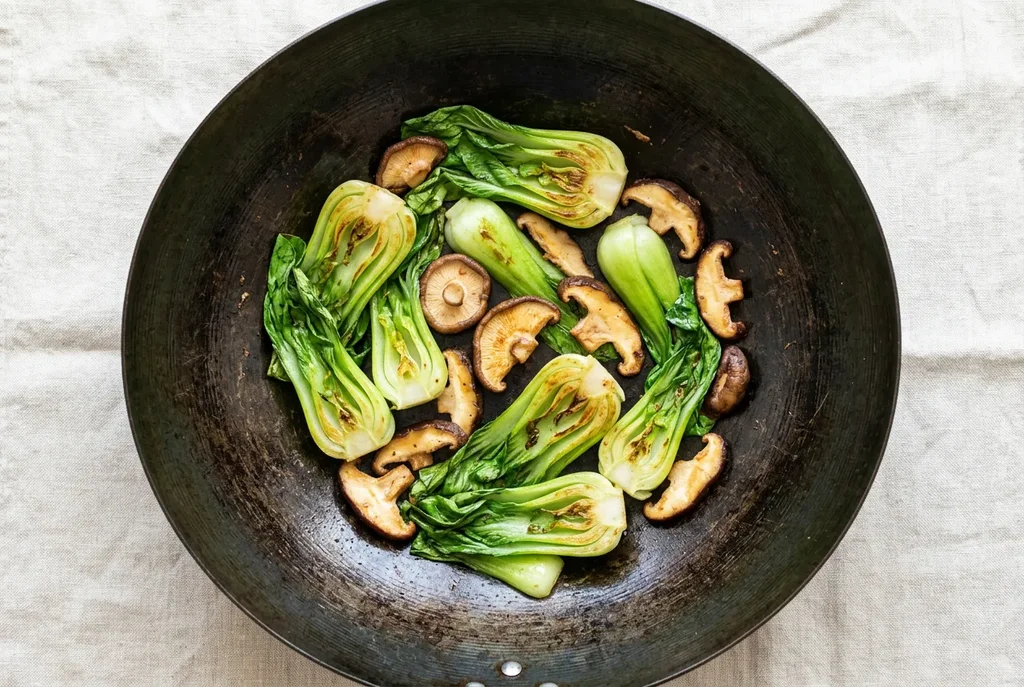
Add the bok choy leaves and the seared mushrooms to the wok simultaneously. Toss everything together for 30-45 seconds.
Step 7: Add the sauce
Pour the sauce over the vegetables. Toss quickly to coat everything.
Remove from heat. Add sesame oil. Toss once. Plate immediately. The bok choy continues cooking from residual heat, serve within 2 minutes of leaving the wok for the best texture.
What type of bok choy should you use?
Baby bok choy is the most widely available and easiest to work with. The stems and leaves are more proportionally balanced in size than regular bok choy, and the flavour is mild and slightly sweet. Halve or quarter and cook cut-side down first for a brief sear. Cook time: approximately 2-3 minutes total.
Regular bok choy has longer stems and larger leaves. The flavour is slightly stronger and more mineral than baby bok choy. Requires separating stems and leaves and staging. Cook time: stems 2-3 minutes, leaves 30-45 seconds.
Shanghai bok choy (also called Shanghai green or spoon cabbage) has a spoon-shaped stem that is lighter green than regular bok choy. Slightly sweeter and more tender than regular bok choy. Treat the same as baby bok choy, halve or quarter and add cut-side down first.
Choy sum is not technically bok choy but is often used interchangeably. It has longer, thinner stems and smaller leaves, with a slightly more bitter flavour. The stems and leaves cook at more similar speeds than regular bok choy, add stems 30-40 seconds before leaves rather than 90 seconds.
All varieties should be bright green, crisp, and heavy for their size when purchased. Any yellowing or wilting indicates age, the leaves will turn mushy in the wok before the stems are cooked.
How do you store and reheat bok choy stir fry?
Bok choy stir fry is best eaten immediately. The bok choy continues releasing moisture as it cools, and the cornstarch glaze absorbs that moisture and becomes a thin sauce rather than a coating. The texture softens significantly within 20 minutes of cooking.
If storing, refrigerate in a sealed container for up to 1 day. The bok choy will be softer and the sauce more watery when reheated, acceptable but noticeably different from fresh.
To reheat: add a small amount of oil to a very hot wok. Add the stir fry and toss over high heat for 60-90 seconds until hot through. Do not microwave, it steams the bok choy and makes it limp and yellow.
The mushrooms reheat better than the bok choy. If making ahead, consider storing the mushrooms and bok choy separately and combining only when reheating.
FAQ
Can you make bok choy mushroom stir fry vegan? Yes. Replace the oyster sauce with vegan oyster sauce (made from mushroom extract) or with a combination of hoisin sauce and soy sauce in equal parts. Both produce a similar savoury-sweet glaze without the shellfish. The Shaoxing wine is already vegan. Everything else in the recipe is plant-based.
Why does my bok choy turn yellow in the stir fry? Yellow bok choy is overcooked. The chlorophyll in the leaves breaks down at sustained high temperatures, converting from bright green chlorophyll to yellow-green pheophytin. This happens within 2-3 minutes of cooking for the leaves. Add the leaves only when the stems are almost done, and remove the dish from the wok within 30-45 seconds of adding them. Serve immediately, bok choy continues cooking from residual heat on the plate.
What mushrooms can I substitute for shiitake? Cremini (brown) mushrooms work well, similar density to shiitake, slightly milder flavour. Oyster mushrooms produce a more delicate texture and absorb the sauce beautifully. King oyster mushrooms are meatier and hold their shape better. Enoki mushrooms should be added in the final 30 seconds only, they are too delicate for longer cooking. Avoid button mushrooms for this dish, they have the highest moisture content and require the longest dry searing time to develop flavour.
Can you make this without a wok? A large, heavy-based frying pan or cast iron skillet works as a substitute. The key constraints are: maximum heat, enough surface area that the vegetables are not crowded, and a flat surface that allows the bok choy cut-side to sear. A non-stick pan cannot be heated high enough for proper searing and will produce a softer, less caramelised result. If your pan is not large enough, cook the mushrooms and bok choy in separate batches and combine with the sauce at the end.
You might also like: Check out our complete Chinese cooking guide for more essential ingredients and techniques.
Bok Choy Mushroom Stir Fry Recipe
Chinese Recipes, High‑Heat Wok Cooking, Bok Choy
PT10M
PT10M
PT20M
Nutrition Facts
Ingredients
- 400g bok choy (4-5 heads baby bok choy, or 2 heads regular bok choy)
- 200g shiitake mushrooms, stems removed, caps sliced 3-4mm
- 3 tbsp neutral oil (divided)
- 4 garlic cloves, minced
- 2cm fresh ginger, grated
- 1 tsp sesame oil (added off heat at the end)
- 2 tbsp oyster sauce
- 1 tbsp light soy sauce
- 1 tsp Shaoxing wine or dry sherry
- ½ tsp sugar
- ½ tsp cornstarch
- 3 tbsp cold water or mushroom soaking liquidInstructions
Instructions
Did you make this recipe?
Tag @asianfoodsdaily on Instagram or leave a comment below!
Testing Notes
Tested in Asha's kitchen. Last reviewed June 10, 2025.
Ingredient Substitutions
Substitution notes coming soon.
About Asha
Half Asian, half African cook raised between two food-obsessed cultures. I've spent 10 years learning Asian cooking traditions through family, friends, and thousands of hours at the stove — testing every dish until it works in a standard home kitchen.
Read my full storyTechnique & Pantry Guides
Related Recipes
More delicious dishes you might enjoy


Loading comments...