Traditional Kimchi Jjigae Recipe with Pork Belly and Soft Tofu

Jump to Section
A bubbling stone pot glowing with fiery brick red broth. Tender ribbons of rich pork belly rendering sweet fat into the soup. Pungent aged kimchi softened to a melt in your mouth tenderness. Velvety blocks of silken tofu absorbing deep garlic chili juices. That is the comforting soul of Korean kimchi jjigae. Sizzling and steaming straight off the burner, this iconic stew anchors everyday dining across Korea. It sits proudly in the center of the table alongside bowls of steaming short grain rice, filling the room with the mouthwatering aroma of toasted sesame oil and fermented chilies.
My first attempt at making kimchi jjigae was a total failure. I bought fresh, crunchy kimchi from the market. Dumped it straight into boiling water. Added raw pork and cold tofu. Big mistake. The soup tasted watery, thin, and aggressively sour. The meat tasted boiled. Flat broth. Zero body. The breakthrough came from learning food chemistry. Kimchi stew requires sour, well aged kimchi whose sugars have fermented into complex lactic acid. Frying that aged cabbage in hot rendered pork fat and blooming the chili flakes in sesame oil changed everything. If you want to explore the foundational fermented pastes, side dishes, and barbecue traditions that define Korean home cooking, explore our ++complete Korean culinary guide++ before you fire your stone pot.
Well Aged Pungent Kimchi Provides Essential Lactic Acid Depth
The single most critical ingredient in kimchi jjigae is the kimchi itself. Using young, freshly made kimchi guarantees a thin, uninspired soup.
Freshly prepared kimchi contains high levels of unfermented cabbage water, sharp raw garlic, and crisp vegetable textures designed for eating raw as banchan. When submerged in boiling broth, it fails to release savory body, leaving the soup tasting sharp and hollow.
Authentic jjigae requires aged kimchi that has fermented in the refrigerator for at least three to six weeks. During this extended cold maturation, beneficial lactic acid bacteria consume natural vegetable sugars, converting them into sharp lactic acid, acetic acid, and rich amino acids.
The cabbage leaves turn translucent, supple, and saturated with concentrated brine. When fried in hot pork fat, these fermented acids caramelize against the pot bottom, creating an intensely savory, tangy backbone that cannot be faked with vinegar or lemon juice. If you find yourself with young kimchi, leave the sealed jar on your kitchen counter for forty eight hours to kickstart bacterial fermentation. Always pour three tablespoons of the sour jar brine straight into your stew pot.
Blooming Gochugaru in Sesame Oil Unlocks Fat Soluble Pigments
Dumping Korean red chili flakes directly into water based broth wastes the vast majority of their flavor potential.
Gochugaru gets its vibrant scarlet hue and mild, fruity warmth from natural carotenoid compounds, predominantly capsanthin and capsorubin. According to ++carotenoid extraction research in PMC13059118++, these lipophilic compounds dissolve and mobilize efficiently in lipid mediums at sixty degrees Celsius rather than in plain water.
Stirring gochugaru and gochujang paste into warm toasted sesame oil over medium heat for seventy seconds causes the oil to shift from pale amber to a rich, glowing brick red. This blooming process dissolves the hydrophobic flavor compounds into the oil droplets. When anchovy stock is introduced later, this spiced lipid layer disperses uniformly throughout the pot, giving the stew its velvety red sheen and deep, lingering warmth. Watch your stove heat carefully during this stage, as scorched chili powder turns bitter and acrid in seconds.
Searing Pork Belly Renders Flavor Carrying Intramuscular Fats
Pork belly provides both substance and structural lubrication to authentic kimchi jjigae.
Lean pork cuts like loin or tenderloin contract into dry, chalky nuggets during prolonged simmering. Pork belly features alternating layers of succulent muscle and rich pork fat.
Dropping sliced pork belly into the bloomed chili oil allows the surface to sear lightly while rendering sweet, savory pork fat across the bottom of the pot. Capsaicin and roasted sesame aromatics bind readily to liquid animal fats.
Frying the chopped aged kimchi directly in this rendered pork fat for three minutes before adding any liquid glazes the cabbage leaves in rich umami. The pork fat coats the palate with each spoonful, softening the sharp edges of the fermented lactic acid and lending a luxurious, lip smacking texture to the broth.
Dried Anchovy and Kelp Stock Establishes Deep Marine Umami
Water alone cannot build an award winning Korean stew. Restaurant grade kimchi jjigae relies on myeolchi dashima yuksu, the foundational stock of Korean soup culture.
Simmering large dried soup anchovies with dried kelp, known as dashima, creates a profound synergistic umami reaction. Dried kelp releases natural free glutamic acid, while dried anchovies contribute rich inosinic acid.
When these two natural compounds merge in warm water, they multiply perceived savory flavor on the tongue by up to eight times. This oceanic backbone supports the pungent fermented cabbage, grounding the fiery chili heat with savory balance. If dried anchovies are unavailable, simmering quality chicken bone broth or vegetable stock enriched with dried shiitake mushrooms provides a delicious alternative.
Gentle Simmering Protects Custard Like Silken Tofu Texture
Tofu introduces a cool, creamy textural contrast to the spicy, bubbling stew. Handling it roughly ruins its delicate charm.
Traditional cooks prefer soft or silken tofu, known as sundubu, which contains high water content and a custard like consistency. Firm pressed tofu holds its geometric shape well, but it lacks the velvety tenderness that melts on the tongue alongside tender pork.
Cut your soft tofu into thick slabs and slide them gently into the bubbling stew during the final three minutes of cooking. Use the back of a wide spoon to press the blocks gently beneath the broth surface rather than stirring with a wooden spoon. This allows the tofu to warm through and absorb the spicy broth without shattering into tiny curds.
Finish the pot by pulling it off the flame and stirring in one teaspoon of quality fish sauce. Adding fish sauce off the heat preserves its bright amino acids without boiling away delicate aromatics, an essential seasoning method celebrated across our ++Korean recipe collection++.
Serving in Heavy Stoneware Retains Table Bubbling Heat
The traditional vessels for kimchi jjigae are Korean dolsot stone bowls or glazed earthenware pots called ttukbaegi.
Thick earthenware acts as a powerful heat sink, absorbing intense thermal energy from the burner and releasing it slowly. When carried to the dining table, the stew continues to boil and bubble vigorously for several minutes, keeping every spoonful steaming hot right through the end of the meal.
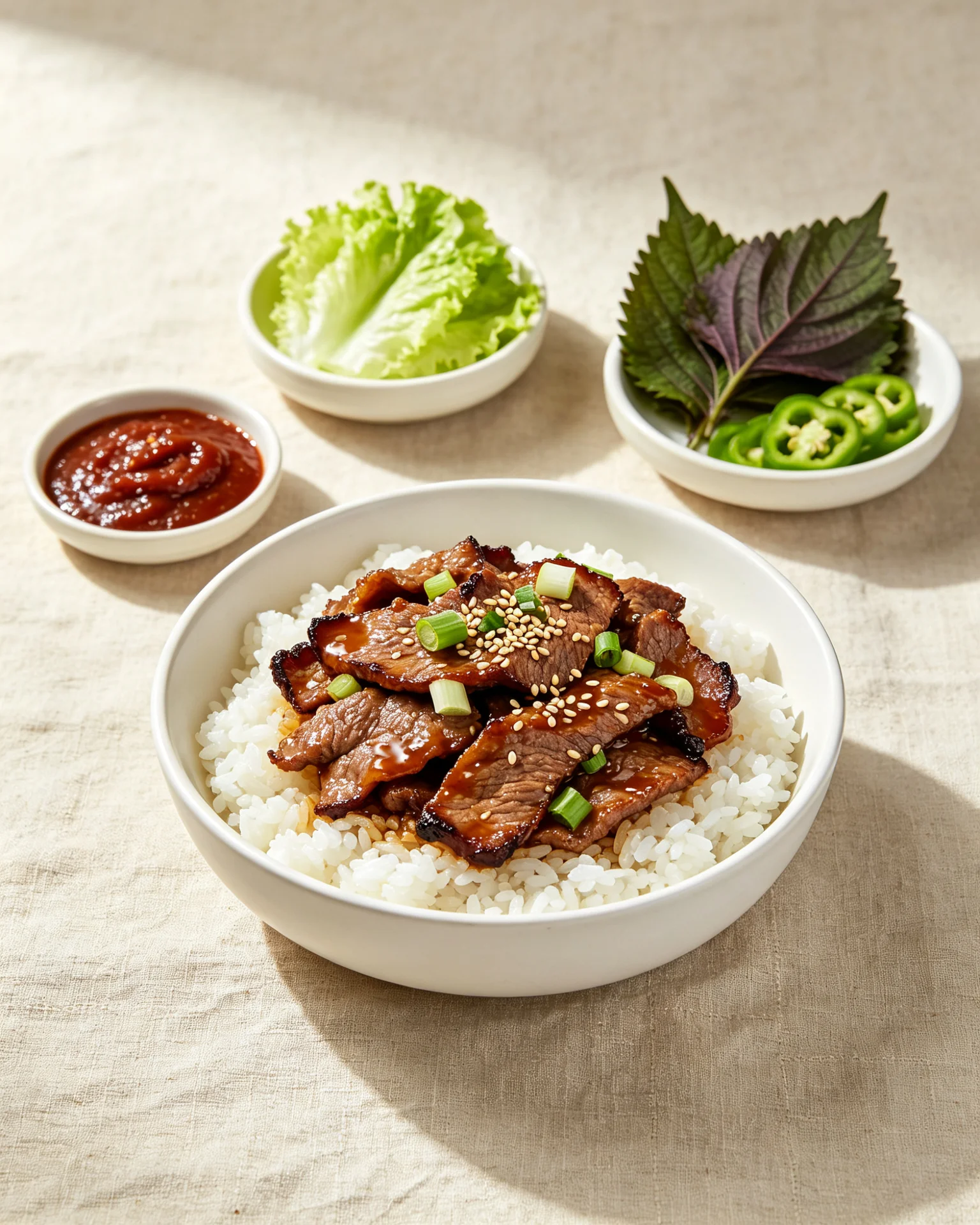
Enjoy kimchi jjigae the traditional Korean way by alternating spoonfuls of spicy broth with mouthfuls of sticky, sweet short grain white rice. Drizzle spoonfuls of the brick red soup directly over your rice bowl, letting the grains soak up the rich, fatty broth. You can expand your Korean table spread with complementary side dishes like ++crispy Korean fried chicken++, ++savory beef bulgogi++, ++sweet potato glass noodles japchae++, and ++spicy kimchi fried rice++ featured on our ++Korean cuisine hub++.
Ingredients for Authentic Korean Kimchi Jjigae
Stew foundation (serves 4)
- 300 g well aged fermented kimchi (chopped into bite sized ribbons)
- 3 tbsp sour kimchi brine (scooped straight from the jar)
- 200 g fresh pork belly (chilled and sliced into thin one inch pieces)
- 300 g soft or silken tofu (sliced into thick bite sized slabs)
- 1 medium yellow onion (peeled and sliced into half moons)
- 3 cloves fresh garlic (finely minced)
- 2 stalks scallions (washed and sliced diagonally into fine batons)
- 1 tsp toasted sesame seeds (for finishing garnish)
Aromatic chili bloom and broth
- 1 tbsp pure toasted sesame oil
- 1 tbsp Korean red pepper flakes (gochugaru)
- 1 tsp Korean fermented chili paste (gochujang)
- 500 ml rich anchovy and kelp stock (myeolchi dashima yuksu)
- 1 tbsp regular soy sauce
- 1 tsp premium fish sauce (reserved for off heat finish)
Step by Step Method for Korean Kimchi Jjigae
- Place a medium heavy bottomed Dutch oven or Korean earthenware pot over medium heat. Add the toasted sesame oil. Toss in the gochugaru chili flakes and gochujang paste. Stir continuously with a wooden spoon for seventy seconds until the oil shifts into a deep, glowing brick red color and smells toasted. Keep the heat moderate so the spices do not burn.
- Add the sliced pork belly into the seasoned oil. Cook for three minutes, stirring occasionally, until the pork edges turn golden and savory fat begins rendering into the bottom of the pot.
- Add the chopped aged kimchi and three tablespoons of sour kimchi brine directly into the sizzling pork fat. Cook for three minutes, stirring frequently, until the cabbage leaves turn glossy, translucent, and slightly limp.
- Add the sliced yellow onions and minced garlic. Stir fry for sixty seconds until the onions soften and turn fragrant.
- Pour in the prepared anchovy kelp stock and soy sauce. Stir gently to incorporate the pan drippings. Bring the broth to a rolling boil over high heat, then reduce the flame to medium low and simmer uncovered for twelve minutes. The broth will deepen in color while the cabbage turns fork tender.
- Gently slide the thick slabs of soft tofu into the bubbling stew. Using the back of a spoon, press the tofu gently beneath the liquid so the pieces warm through without breaking. Simmer gently for three minutes.
- Shut off the stovetop heat completely. Drizzle the fish sauce over the surface, swirling the pot gently to integrate. Taste the broth and adjust seasoning if needed.
- Scatter the sliced scallions and toasted sesame seeds across the center. Transfer the bubbling pot to a heatproof trivet at the table and serve immediately alongside bowls of hot steamed white rice.
Love Korean food?
Check out my complete guide to Korean home cooking, pantry essentials, and techniques.
Frequently Asked Questions
Q: Can I make kimchi jjigae using fresh kimchi from the grocery store?
A: Fresh kimchi lacks the sharp lactic acid and concentrated amino acids required to give the broth depth. Fresh kimchi yields a thin, watery soup that tastes sharp rather than rich. If your kimchi is young, leave the jar on your counter with the lid loose for two days to accelerate fermentation before cooking.
Q: What can I substitute for pork belly if I do not eat pork?
A: Canned tuna packed in oil makes a beloved Korean home variation known as chamchi jjigae. Sliced beef brisket, boneless chicken thighs, or firm rehydrated shiitake mushrooms combined with king oyster mushrooms also produce deeply satisfying, rich broths.
Q: Why do you add fish sauce off the heat at the very end?
A: Fish sauce contains delicate volatile glutamates and savory amino acids. Boiling fish sauce aggressively for long periods can evaporate its fragrant top notes and produce a harsh, salty finish. Stirring it in off the flame preserves its clean, rich umami seasoning.
Q: How should I store and reheat leftover kimchi stew?
A: Kimchi jjigae keeps wonderfully in an airtight container inside the refrigerator for up to four days. The flavors meld and deepen overnight, making next day leftovers even tastier. Reheat gently in a small pot over medium low heat with a splash of water, taking care not to stir vigorously so the remaining tofu stays intact.
You might also like: Check out our complete Korean cooking guide for more essential ingredients and techniques.
Traditional Kimchi Jjigae Recipe with Pork Belly and Soft Tofu
jjigae, Korean comfort food, gochugaru
PT10M
PT20M
PT30M
Nutrition Facts
Ingredients
- 300 g well aged fermented kimchi (chopped into bite sized ribbons)
- 3 tbsp sour kimchi brine (scooped straight from the jar)
- 200 g fresh pork belly (chilled and sliced into thin one inch pieces)
- 300 g soft or silken tofu (sliced into thick bite sized slabs)
- 1 medium yellow onion (peeled and sliced into half moons)
- 3 cloves fresh garlic (finely minced)
- 2 stalks scallions (washed and sliced diagonally into fine batons)
- 1 tsp toasted sesame seeds (for finishing garnish)
- 1 tbsp pure toasted sesame oil
- 1 tbsp Korean red pepper flakes (gochugaru)
- 1 tsp Korean fermented chili paste (gochujang)
- 500 ml rich anchovy and kelp stock (myeolchi dashima yuksu)
- 1 tbsp regular soy sauce
- 1 tsp premium fish sauce (reserved for off heat finish)
Instructions
Did you make this recipe?
Tag @asianfoodsdaily on Instagram or leave a comment below!
Testing Notes
Tested in Asha's kitchen. Last reviewed June 23, 2025.
Ingredient Substitutions
Substitution notes coming soon.
About Asha
Half Asian, half African cook raised between two food-obsessed cultures. I've spent 10 years learning Asian cooking traditions through family, friends, and thousands of hours at the stove — testing every dish until it works in a standard home kitchen.
Read my full storyTechnique & Pantry Guides
Related Recipes
More delicious dishes you might enjoy


Loading comments...