How to Make Delicious Korean Glass Noodles (Japchae)

Jump to Section
Let me tell you about the first time japchae showed up at a Korean gathering I attended. Someone set it on the table and it was gone in about four minutes. Translucent, chewy noodles. Slivers of spinach and carrot. A little beef. That dark, slightly sweet, sesame-forward sauce coating everything. I didn’t know what I was eating. I just knew I wanted more.
That was the beginning of a long obsession. Japchae — written 잡채 in Korean — literally means “mixed vegetables.” Ironic, because the real star is the noodle. These are dangmyeon (당면), sweet potato glass noodles. They’re what give the dish its signature chew. They’re what makes japchae impossible to replicate with any other noodle.
This recipe is built for your home kitchen. No commercial wok. No 20-burner stove. Just reliable technique and a realistic ingredient list. It’s part of my broader Korean cooking collection — dishes that respect the tradition without demanding a culinary school degree.
What Is Japchae?
Japchae is one of Korea’s most beloved noodle dishes. It appears at every major occasion — New Year’s (Seollal), Chuseok (the harvest festival), birthday tables, celebratory spreads. It also shows up on a regular Tuesday when someone wants something satisfying and a little special.
The dish has been around since the 17th century, though it originally contained no noodles at all — just the vegetables implied by the name. Sweet potato starch noodles entered the picture later, and now they’re the whole point.
The flavor profile: savory, slightly sweet, deeply umami. Soy sauce and sesame oil are the backbone. The vegetables stay bright and slightly crisp. The beef (when used) is tender and marinated. The noodles tie it all together.
It’s also naturally gluten-free if you use tamari instead of soy sauce. And it’s easy to make vegetarian by swapping beef for extra mushrooms — more on that below.
The Noodle: Why Dangmyeon Is Non-Negotiable
I’ll say this once clearly: you cannot substitute the noodle and still call it japchae. Rice vermicelli, mung bean noodles, regular pasta — none of them behave the same way. Dangmyeon has a specific bounciness, a specific way of absorbing sauce without falling apart. It’s not interchangeable.
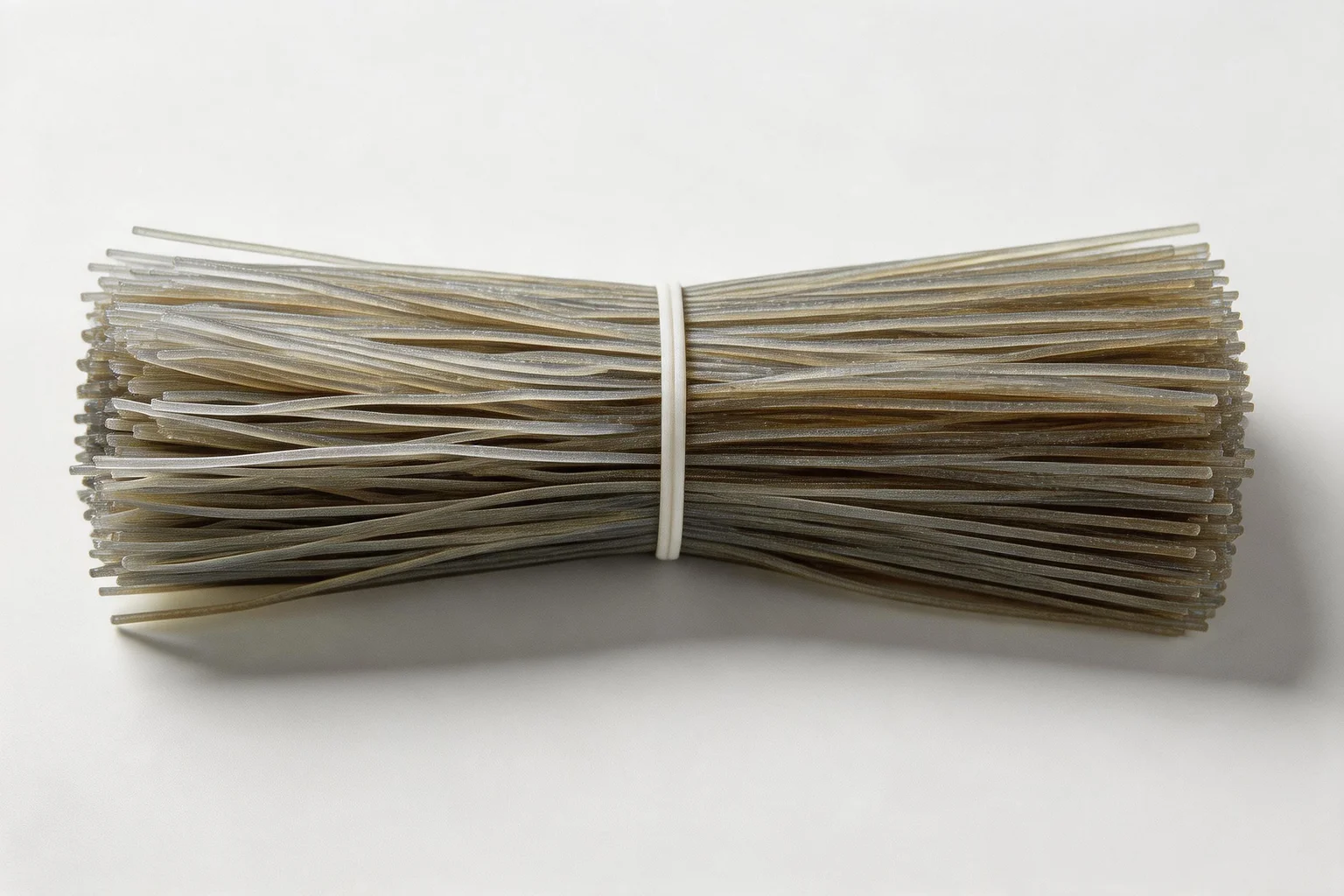
Find it at any Korean grocery store (H Mart is reliable), most large Asian grocery stores, or online. I’ve linked my go-to options in the Shop This Recipe box below.
One important note: dangmyeon comes in different lengths. Pre-cut versions exist and make your life easier. If yours is long, just cut it with kitchen scissors after soaking — otherwise the noodles are a tangle you’ll be fighting the whole time.
Asha’s Note: Soaking vs. Boiling Most brands say soak in hot water for 20–30 minutes, then briefly stir-fry. Others say boil for 6–8 minutes. Always check your specific package. Under-soaked dangmyeon is chewy in the wrong way — stiff, not springy. Over-boiled is gummy. Your package instruction is the starting point; your texture check is the final call.
Japchae Ingredients
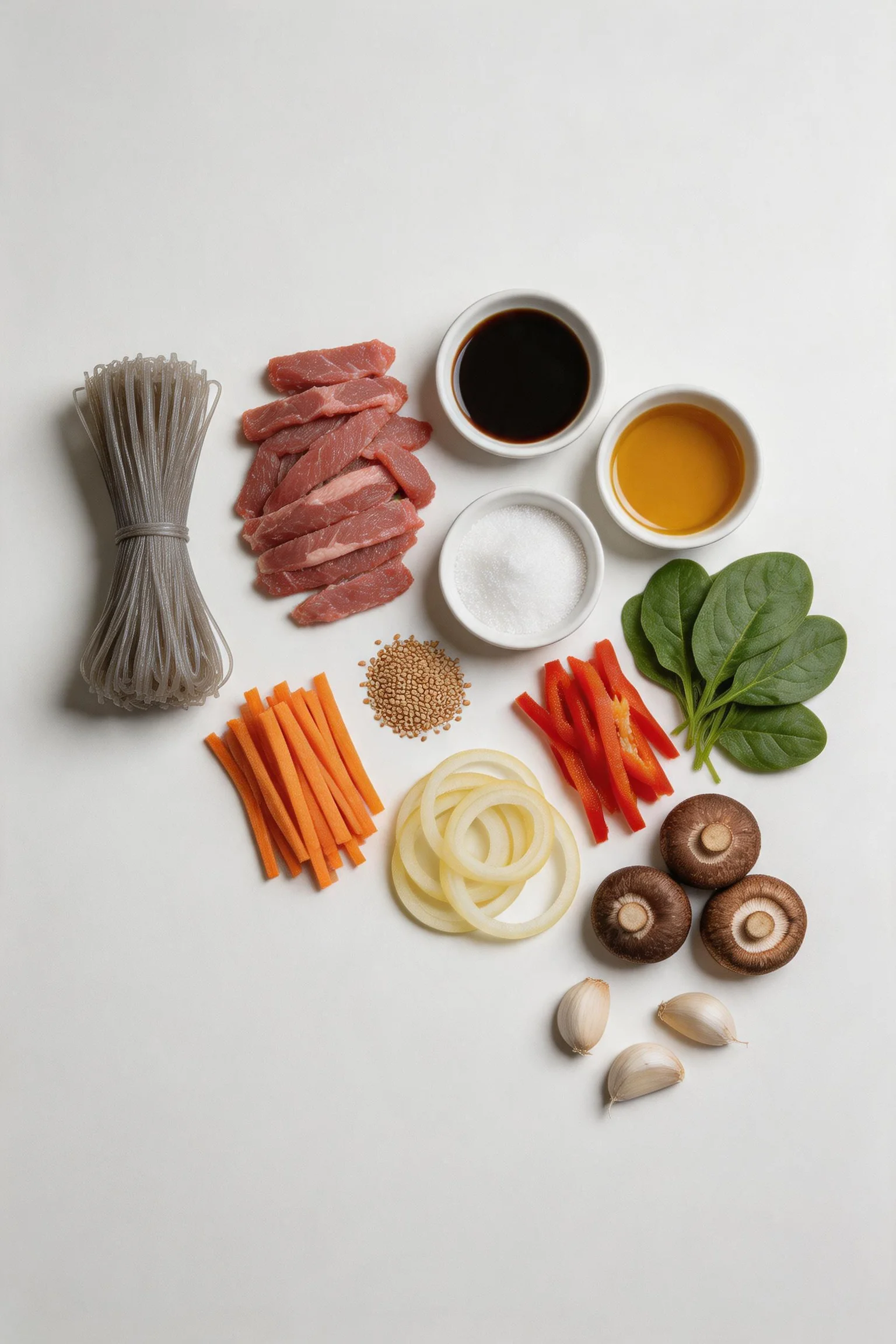
This is the full list for a traditional version with beef. Vegetarian swap is noted after.
FOR THE NOODLES
- 200g (7 oz) dangmyeon — Korean sweet potato glass noodles
- 1 tbsp soy sauce
- 1 tsp sesame oil
- 1 tsp sugar
FOR THE BEEF
- 150g (5 oz) ribeye or sirloin, sliced thin against the grain
- 1 tbsp soy sauce
- 1 tsp sesame oil
- 1 tsp sugar
- 1 clove garlic, minced
- Black pepper
VEGETABLES
- 1 medium carrot, julienned
- 1 medium yellow onion, thinly sliced
- 1 red bell pepper, thinly sliced
- 3 oz (85g) baby spinach
- 4–5 dried shiitake mushrooms, rehydrated and sliced (or 100g fresh shiitake)
- 3 cloves garlic, minced (divided use)
- Salt and neutral oil for cooking
THE SAUCE
- 3 tbsp soy sauce
- 2 tbsp sesame oil
- 1.5 tbsp sugar (or to taste)
- 1 tbsp toasted sesame seeds
- Black pepper to taste
OPTIONAL GARNISH
- Egg jidan (thin egg strips) — 2 eggs, separated and cooked into thin crepes
- Extra toasted sesame seeds
Vegetarian/vegan: Skip the beef. Double the shiitake. Add oyster mushrooms if you can find them — they’re meaty and satisfying. Omit the egg strips for fully vegan.
Equipment
No wok required. A large skillet or nonstick pan works fine. You do need a big bowl — this is a high-volume dish once everything comes together. Tongs or cooking chopsticks help when tossing the noodles.
If you’re new to Korean cooking tools, I cover the basics in my Korean cuisine guide.
How to Make Japchae: Step by Step
Here’s the part where I need you to embrace the process. Japchae involves cooking each component separately. It’s not difficult. It just requires organization. Get everything prepped before you turn on the stove, and it goes smoothly.
Why cook everything separately? Each vegetable releases different amounts of water and has a different ideal cook time. If you throw them all in at once, they steam instead of sear, you lose the color, and the flavors blend into mush. Separate cooking keeps everything distinct — which is what makes good japchae visually beautiful and texturally interesting.
Step 1: Make the Sauce First
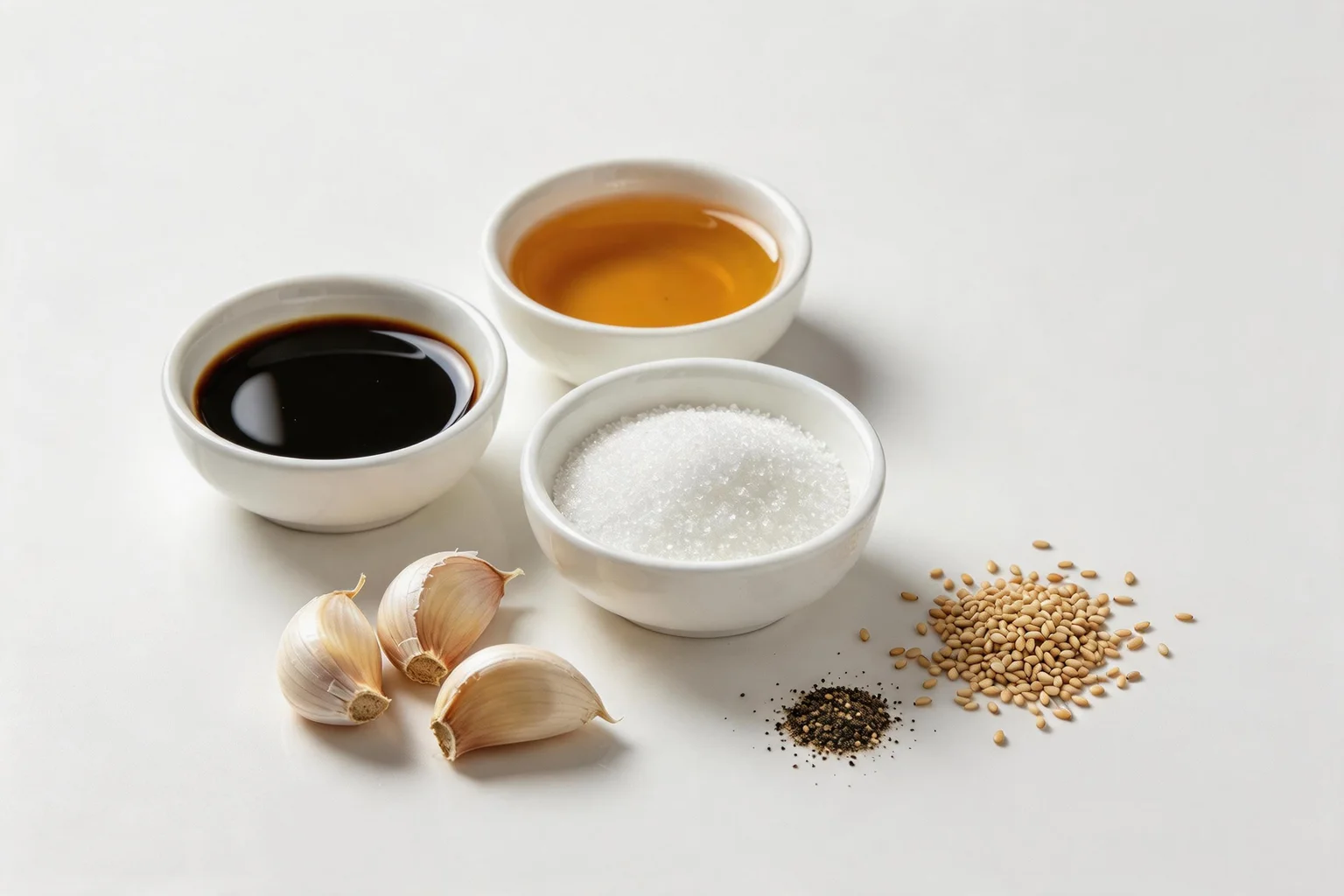
Mix the sauce and set it aside. Combine 3 tbsp soy sauce, 2 tbsp sesame oil, 1.5 tbsp sugar, a pinch of black pepper, and sesame seeds in a small bowl.
Step 2: Marinate and Cook the Beef
Marinate the beef for at least 10 minutes. Combine sliced beef with soy sauce, sesame oil, sugar, garlic, and black pepper.
Step 3: Cook the Vegetables
Cook each vegetable separately in the same pan. Wipe the pan between batches or just leave the residual oil — your call.
Carrots: 2 minutes over medium-high. You want tender but still with bite. Onion: 3–4 minutes until soft and starting to turn golden. Bell pepper: 2 minutes — you want the color to stay vivid. Mushrooms: 3–4 minutes with a little garlic. They’ll shrink significantly. Spinach: 1 minute with a tiny bit of garlic and sesame oil. Immediately transfer to a plate — it overcooks in seconds.
Set everything in separate piles on a large plate or sheet pan. Visual organization here saves you from confusion later.
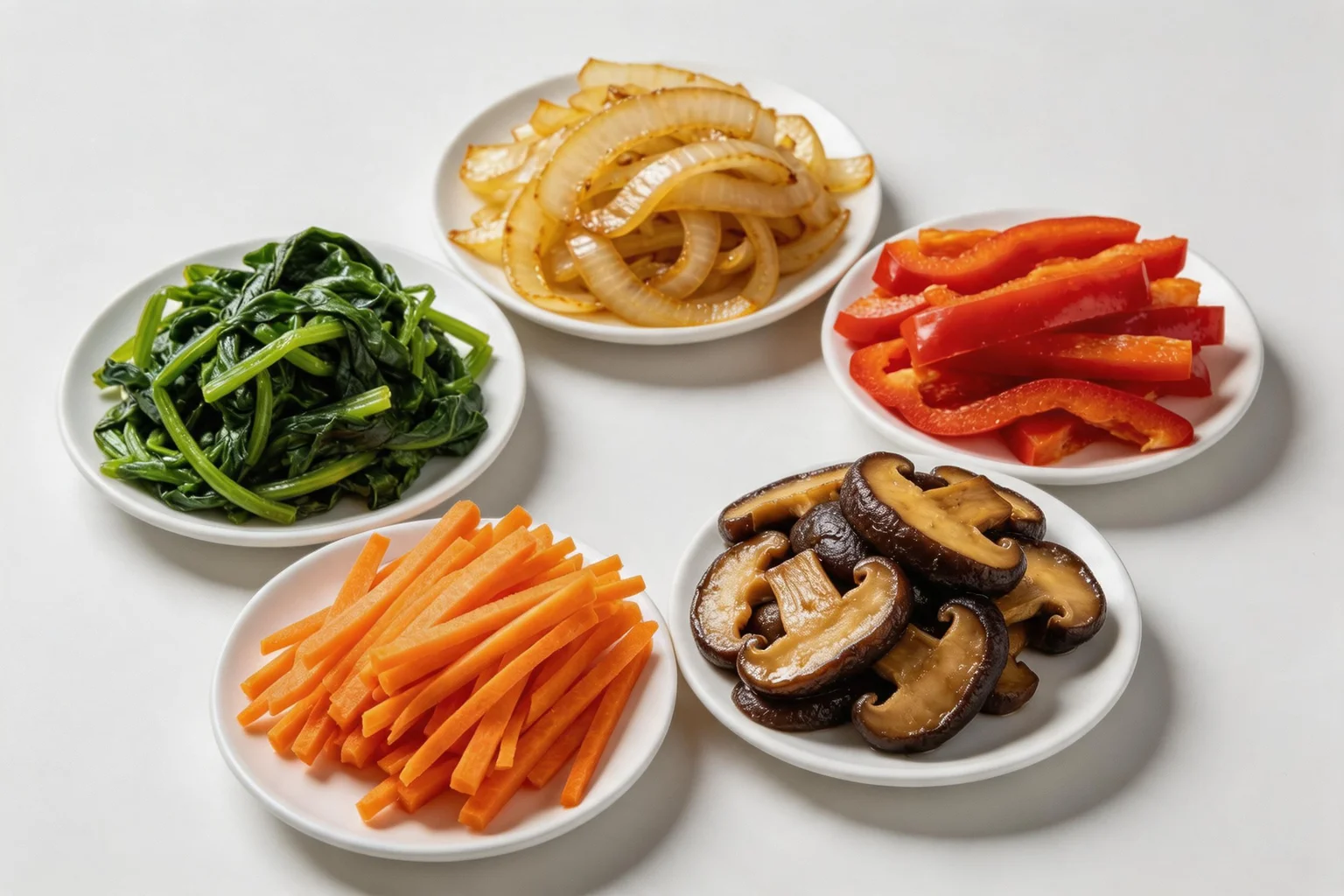
The Mushroom Tip I Wish Someone Had Told Me If using dried shiitake, save the soaking liquid. It’s incredibly flavorful — add a splash to the mushrooms as they cook. Deep, savory, almost broth-like. Don’t waste it.
Step 4: Cook the Noodles
Soak or boil per your package instructions. Once cooked, drain immediately and rinse with cold water to stop the cooking.
Step 5: Bring Everything Together
Combine in a large bowl or back in the pan. Add noodles first.
Step 6: Garnish and Serve
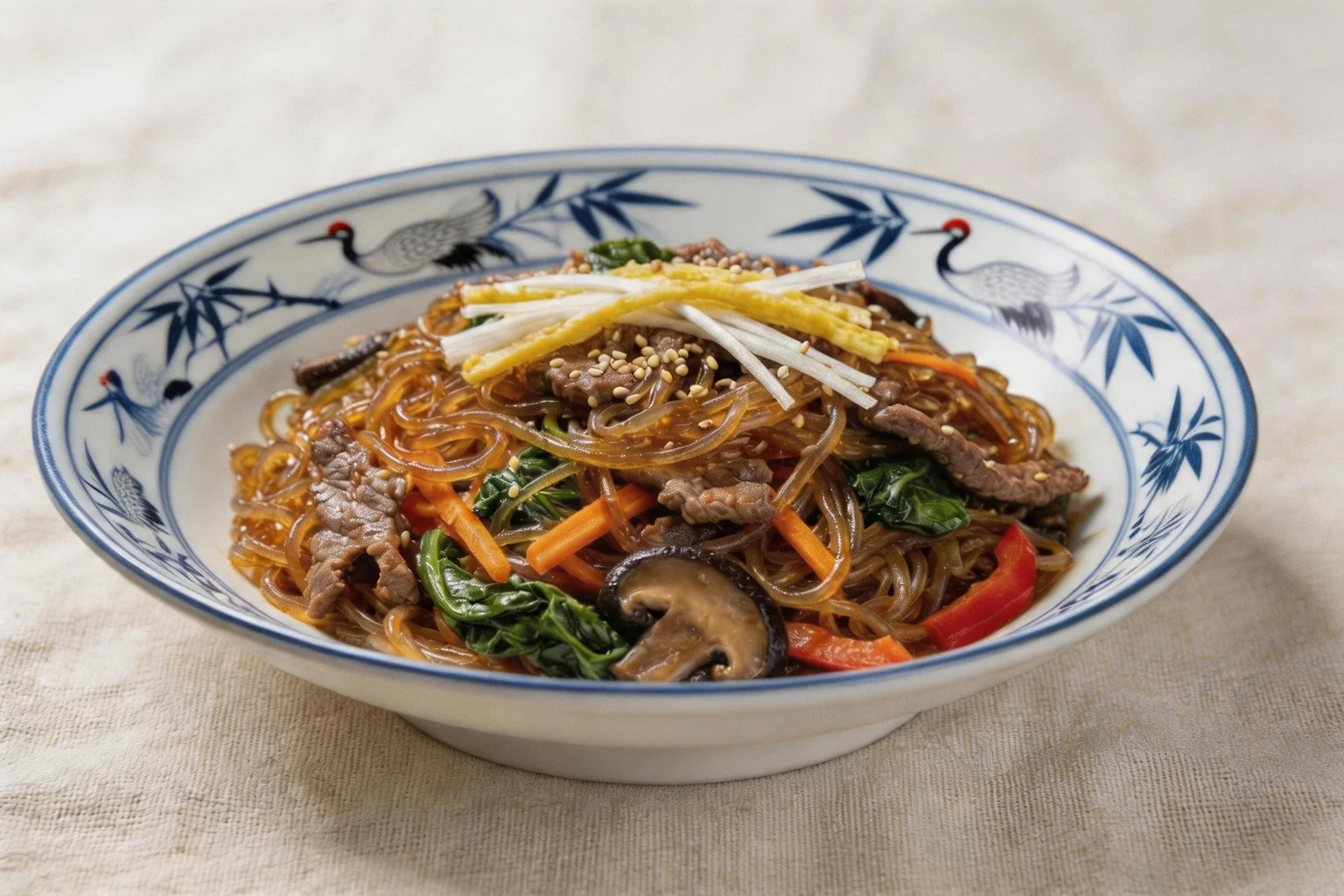
Plate and finish. Transfer to a large serving platter.
🛒 Shop This Recipe
- Ottogi Dangmyeon — Korean Glass Noodles — 100% sweet potato starch · No alum · My go-to brand
- Ottogi Wide Dangmyeon (14.1 oz) — Wider cut · Great texture for japchae · Gluten-free
- Kadoya Toasted Sesame Oil — Pure roasted sesame oil — the flavor difference is real
- Dried Shiitake Mushrooms — Rehydrate and save the soaking liquid for extra umami
- Kikkoman Tamari (Gluten-Free Soy Sauce) — For a certified gluten-free version of this recipe
Tips for Getting Japchae Right
I’ve made japchae a lot. Here’s what actually matters:
Pre-season the noodles while they’re warm. Cold noodles don’t absorb sauce well. The moment they’re drained, toss them with a little soy, sesame oil, and sugar. They’ll hold that flavor through the final toss.
Don’t skip the sauce-first step. Having your sauce pre-mixed means you’re not measuring ingredients while everything is in the pan cooling down. Mix it in advance. This is the move.
Taste and balance at the end. Japchae sauce lives in a sweet-savory balance. Taste after tossing. If it tastes a little flat, add a pinch of sugar. If it tastes one-dimensional, a few more drops of sesame oil deepen it immediately.
Do not overcook the vegetables. Especially spinach. One minute, then immediately out of the pan. Bright green is what you’re after. Dull olive-grey means it sat too long.
Make it ahead. Japchae is one of those rare dishes that actually holds well. Cook everything, toss, refrigerate. Reheat in a skillet with a splash of water. This is why it shows up at every Korean celebration — it can be made the night before.
Japchae Variations Worth Knowing
The traditional version is the one I’ve written above. But japchae is flexible once you understand the base.
Vegetarian Japchae: Double the mushrooms. Shiitake plus oyster mushrooms is a good combination for texture and depth. The dish doesn’t feel like it’s missing anything.
Spicy Japchae: Add a tablespoon of gochujang to the sauce, or toss in some thinly sliced fresh chili with the onion. Not traditional, but genuinely good.
Seafood Japchae: Shrimp works well here. Marinate briefly, cook last (they go fast), and fold in gently.
If you want to understand the marinade logic behind the beef, my Korean Beef Bulgogi covers it in full — same soy-sesame-sugar foundation, just applied differently. And once you’ve made japchae, Tteokbokki is a natural next step — it shares that same chewy-starchy satisfaction, just in a completely different direction (spicy, saucy, addictive). For fermentation context that makes Korean flavors click, the 7-Day Kimchi Guide is where to go.
Storage and Reheating
Refrigerator: Store in an airtight container for up to 3 days. The noodles will firm up slightly as they cool — that’s normal.
Reheating: Skillet over medium-low heat with a splash of water (about 1–2 tablespoons). Toss gently until warm. The water prevents sticking and re-loosens the noodles. Avoid microwaving if you can — it makes the noodles rubbery and uneven.
Freezing: Not recommended. Dangmyeon doesn’t freeze well — the texture turns mushy on thaw.
What to Serve with Japchae
Japchae can be a main dish or a side. At Korean celebrations, it typically plays a side dish role alongside rice, soup, and banchan (small plates). But for a weeknight, a generous portion with steamed rice is a complete meal.
If you’re building a full Korean table, Kimchi Fried Rice alongside japchae covers all the bases — one is the showpiece, one is the comfort. If you want soup in the mix, Kimchi Jjigae is the move: the hot, spicy broth against chewy glass noodles is a genuinely great contrast. Hosting a bigger spread? Korean Fried Chicken turns it into a proper feast. And a small bowl of Mayak Eggs on the side is the kind of banchan that makes everyone ask what they are.
Nutrition Information (Per Serving)
Calories: 420 kcal | Carbohydrates: 52g | Protein: 18g | Total Fat: 15g | Saturated Fat: 3g | Sodium: 820mg | Fiber: 3g | Sugar: 9g | Iron: 2.4mg | Vitamin A: 45% DV
Estimates based on 4 servings with beef. Values are approximate and will vary with substitutions. Not a substitute for professional dietary advice.
Love Korean food?
Check out my complete guide to Korean home cooking, pantry essentials, and techniques.
Frequently Asked Questions
What noodles do I use for japchae? Dangmyeon — Korean sweet potato glass noodles. Find them at H Mart, most Asian grocery stores, or online (see Shop This Recipe above). Do not substitute with mung bean vermicelli or rice noodles — the texture is completely different.
Can I make japchae ahead of time? Yes. Cook everything, toss with sauce, cool, then refrigerate. Reheat in a skillet with a splash of water to loosen the noodles. Avoid microwaving — it makes the noodles gummy. Japchae is actually one of the best make-ahead Korean dishes precisely because of this.
Is japchae gluten-free? The dangmyeon noodles are naturally gluten-free. To make the full dish GF, swap regular soy sauce for tamari or a certified GF soy sauce. Everything else in the recipe is naturally gluten-free.
Can I make japchae vegetarian or vegan? Yes. Skip the beef and add extra mushrooms — shiitake and oyster mushrooms together give you plenty of savory depth. For fully vegan, omit the egg strip garnish.
Why do Korean recipes cook each vegetable separately? Every vegetable has a different cook time and releases different amounts of water. Cooking them together makes everything soggy and grey. Separate cooking keeps the colors vivid and the textures distinct — which is what makes japchae beautiful and interesting to eat.
My sauce tastes off. How do I fix it? Japchae sauce lives in a salty-sweet balance. If it tastes flat: add a pinch of sugar. If it tastes salty: a few extra drops of sesame oil and a tiny bit more sugar will round it out. If it lacks depth: a few more drops of sesame oil and an extra pinch of black pepper usually sorts it.
You might also like: Check out our complete Korean cooking guide for more essential ingredients and techniques.
How to Make Delicious Korean Glass Noodles (Japchae)
Ingredients
- 200g (7 oz) dangmyeon — Korean sweet potato glass noodles
- 1 tbsp soy sauce
- 1 tsp sesame oil
- 1 tsp sugar
- 150g (5 oz) ribeye or sirloin, sliced thin against the grain
- 1 tbsp soy sauce
- 1 tsp sesame oil
- 1 tsp sugar
- 1 clove garlic, minced
- Black pepper
- 1 medium carrot, julienned
- 1 medium yellow onion, thinly sliced
- 1 red bell pepper, thinly sliced
- 3 oz (85g) baby spinach
- 4–5 dried shiitake mushrooms, rehydrated and sliced (or 100g fresh shiitake)
- 3 cloves garlic, minced (divided use)
- Salt and neutral oil for cooking
- 3 tbsp soy sauce
- 2 tbsp sesame oil
- 1.5 tbsp sugar (or to taste)
- 1 tbsp toasted sesame seeds
- Black pepper to taste
- Egg jidan (thin egg strips) — 2 eggs, separated and cooked into thin crepes
- Extra toasted sesame seeds
Instructions
- Here's the part where I need you to embrace the process. Japchae involves cooking each component separately. It's not difficult. It just requires organization. Get everything prepped before you turn on the stove, and it goes smoothly.
- Why cook everything separately? Each vegetable releases different amounts of water and has a different ideal cook time. If you throw them all in at once, they steam instead of sear, you lose the color, and the flavors blend into mush. Separate cooking keeps everything distinct — which is what makes good japchae visually beautiful and texturally interesting.
- Mix the sauce and set it aside. Combine 3 tbsp soy sauce, 2 tbsp sesame oil, 1.5 tbsp sugar, a pinch of black pepper, and sesame seeds in a small bowl. This is your master sauce. You'll use parts of it throughout and the rest at the final toss. Having it pre-mixed saves you from scrambling mid-cook.
- Marinate the beef for at least 10 minutes. Combine sliced beef with soy sauce, sesame oil, sugar, garlic, and black pepper. While it marinates, you can prep your vegetables. Cook the beef in a hot pan with a little oil for 2–3 minutes. Don't crowd the pan — you want a sear, not a steam. Set aside.
- Cook each vegetable separately in the same pan. Wipe the pan between batches or just leave the residual oil — your call. Season each lightly with salt. Carrots: 2 minutes over medium-high. You want tender but still with bite. Onion: 3–4 minutes until soft and starting to turn golden. Bell pepper: 2 minutes — you want the color to stay vivid. Mushrooms: 3–4 minutes with a little garlic. They'll shrink significantly. Spinach: 1 minute with a tiny bit of garlic and sesame oil. Immediately transfer to a plate — it overcooks in seconds. Set everything in separate piles on a large plate or sheet pan. Visual organization here saves you from confusion later. The Mushroom Tip I Wish Someone Had Told Me If using dried shiitake, save the soaking liquid. It's incredibly flavorful — add a splash to the mushrooms as they cook. Deep, savory, almost broth-like. Don't waste it.
- Soak or boil per your package instructions. Once cooked, drain immediately and rinse with cold water to stop the cooking. While the noodles are still warm, toss them with 1 tbsp soy sauce, 1 tsp sesame oil, and 1 tsp sugar directly in the pot. This pre-seasons them so they're not bland when everything comes together. Use scissors to cut any noodles that are extremely long.
- Combine in a large bowl or back in the pan. Add noodles first. Then beef. Then all the vegetables. Pour the remaining sauce over everything. Toss gently but thoroughly — use tongs or your (clean) hands. Taste and adjust: more soy if it needs salt, more sugar if it tastes flat, more sesame oil for richness.
- Plate and finish. Transfer to a large serving platter. Top with egg strips if using — add them in parallel slices across the top. Scatter extra sesame seeds. Japchae can be served hot, warm, or at room temperature. All three versions are excellent. ## 🛒 Shop This Recipe - Ottogi Dangmyeon — Korean Glass Noodles — 100% sweet potato starch · No alum · My go-to brand - Ottogi Wide Dangmyeon (14.1 oz) — Wider cut · Great texture for japchae · Gluten-free - Kadoya Toasted Sesame Oil — Pure roasted sesame oil — the flavor difference is real - Dried Shiitake Mushrooms — Rehydrate and save the soaking liquid for extra umami - Kikkoman Tamari (Gluten-Free Soy Sauce) — For a certified gluten-free version of this recipe ## Tips for Getting Japchae Right I've made japchae a lot. Here's what actually matters: Pre-season the noodles while they're warm. Cold noodles don't absorb sauce well. The moment they're drained, toss them with a little soy, sesame oil, and sugar. They'll hold that flavor through the final toss. Don't skip the sauce-first step. Having your sauce pre-mixed means you're not measuring ingredients while everything is in the pan cooling down. Mix it in advance. This is the move. Taste and balance at the end. Japchae sauce lives in a sweet-savory balance. Taste after tossing. If it tastes a little flat, add a pinch of sugar. If it tastes one-dimensional, a few more drops of sesame oil deepen it immediately. Do not overcook the vegetables. Especially spinach. One minute, then immediately out of the pan. Bright green is what you're after. Dull olive-grey means it sat too long. Make it ahead. Japchae is one of those rare dishes that actually holds well. Cook everything, toss, refrigerate. Reheat in a skillet with a splash of water. This is why it shows up at every Korean celebration — it can be made the night before. ## Japchae Variations Worth Knowing The traditional version is the one I've written above. But japchae is flexible once you understand the base. Vegetarian Japchae: Double the mushrooms. Shiitake plus oyster mushrooms is a good combination for texture and depth. The dish doesn't feel like it's missing anything. Spicy Japchae: Add a tablespoon of gochujang to the sauce, or toss in some thinly sliced fresh chili with the onion. Not traditional, but genuinely good. Seafood Japchae: Shrimp works well here. Marinate briefly, cook last (they go fast), and fold in gently. If you want to understand the marinade logic behind the beef, my Korean Beef Bulgogi covers it in full — same soy-sesame-sugar foundation, just applied differently. And once you've made japchae, Tteokbokki is a natural next step — it shares that same chewy-starchy satisfaction, just in a completely different direction (spicy, saucy, addictive). For fermentation context that makes Korean flavors click, the 7-Day Kimchi Guide is where to go.
Did you make this recipe?
Tag @asianfoodsdaily on Instagram or leave a comment below!
Testing Notes
Tested in Asha's kitchen. Last reviewed April 29, 2025.
Ingredient Substitutions
Substitution notes coming soon.
About Asha
Half Asian, half African cook raised between two food-obsessed cultures. I've spent 10 years learning Asian cooking traditions through family, friends, and thousands of hours at the stove — testing every dish until it works in a standard home kitchen.
Read my full storyTechnique & Pantry Guides
Related Recipes
More delicious dishes you might enjoy


Loading comments...