How to Make Tender Apple Braised Pork Chops

Jump to Section
Pork chops and apples were always going to end up in the same pan. There’s a reason people have been pairing them for hundreds of years — the fruit’s acidity cuts through the richness of the pork, the natural sweetness builds the sauce, and the whole thing just makes sense together. But most recipes stop there.
This one doesn’t.
I’ve been making some version of these apple braised pork chops for years, and the version that landed — the one I’ve made a dozen times since and haven’t touched since — brings in soy sauce, fresh ginger, and a splash of apple cider to build a braising liquid that’s sweet, savory, and just a little funky in the best way. It’s not a fusion thing for the sake of it. Soy and ginger are natural partners to pork across half of Asia. Adding apples and cider just completes the circuit.
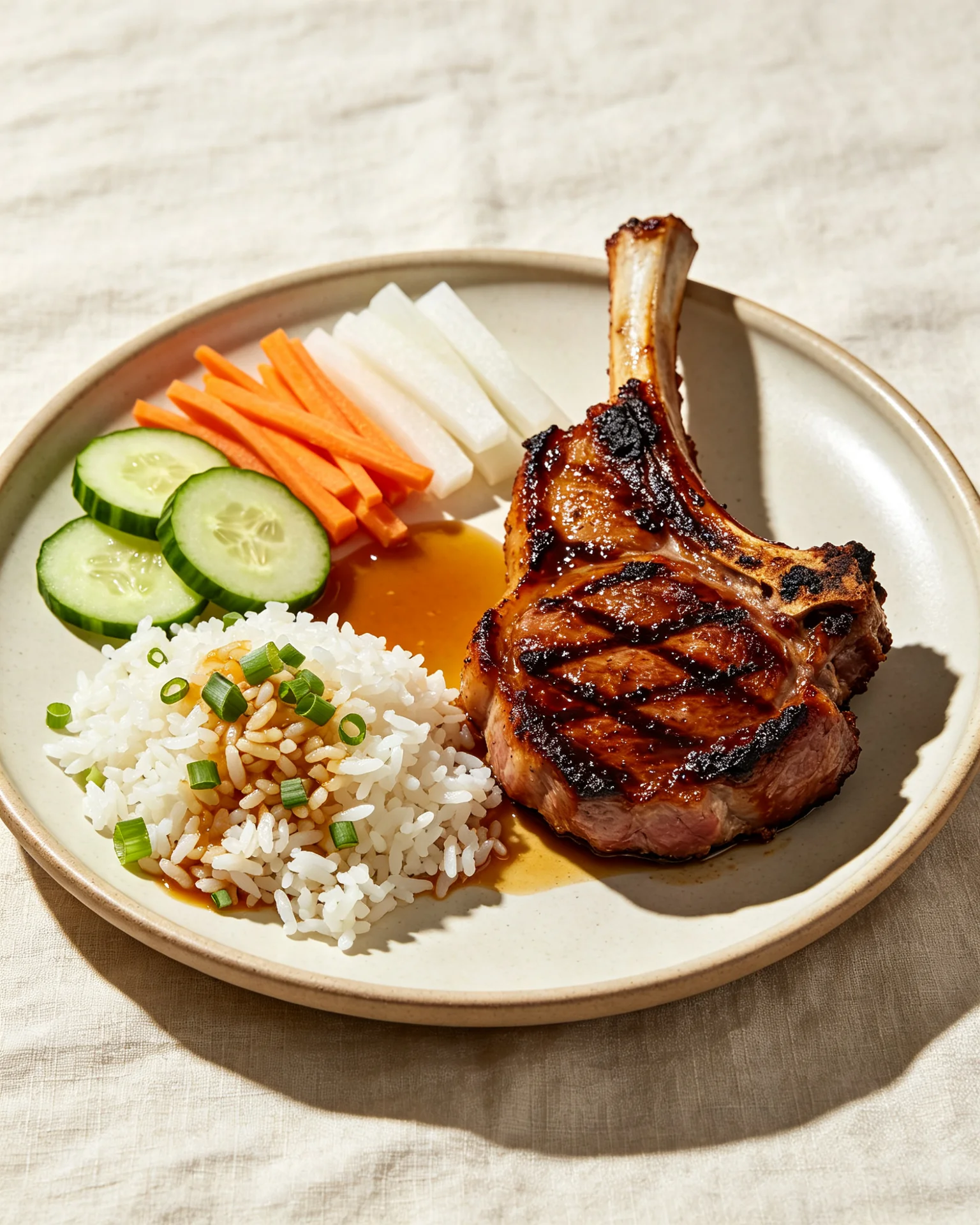
The technique here is classic braise: hard sear, build your sauce in the same pan, add liquid, and let the pork finish low and slow until it’s tender all the way through and the sauce has reduced to something glossy and worth spooning over rice. One pan, straightforward steps, results that taste like you actually tried.
Why This Recipe Work
The biggest problem with pork chops is that they go dry. There’s very little fat in the muscle, so if you cook them too fast or too hot, you lose the window quickly. Braising solves that problem by surrounding the meat in liquid while it finishes cooking, which keeps the internal temp rising slowly and evenly.
The second thing that matters: the sear. Don’t skip it. A hard sear on dry, properly-seasoned chops builds the fond (the brown bits stuck to the pan), and that fond is what your sauce is built on. Pour the liquid in before you’ve got a proper sear and your sauce tastes flat.
The apple-soy-ginger combination might sound like a lot of moving parts, but it isn’t. The apple and cider bring sweetness and acidity. The soy brings salt and depth. The ginger cuts through all of it with heat and brightness. Together they make a braising liquid that doesn’t need much else.
Ingredients

(Serves 4 — scale as needed)
For the pork:
- 4 bone-in pork loin chops, 1 to 1½ inches thick
- 1½ tsp kosher salt
- 1 tsp black pepper
- 2 tbsp neutral oil (vegetable, avocado, or grapeseed)
For the braise:
- 1 tbsp butter
- 1 large yellow onion, thinly sliced
- 4 garlic cloves, minced
- 1 tbsp fresh ginger, grated (don’t substitute ground — the flavor is completely different)
- 2 apples, cored and cut into ½-inch wedges (Honeycrisp, Fuji, or Gala — firm, sweet varieties that hold their shape)
- 3 tbsp soy sauce (low-sodium works; regular soy sauce makes it salty, so go lighter)
- 1 cup apple cider (not apple juice, not apple cider vinegar — unfiltered apple cider)
- ½ cup chicken stock
- 1 tbsp Dijon mustard
- 1 tsp rice vinegar
- 2 sprigs fresh thyme (or ½ tsp dried)
- Optional garnish: sliced scallions, toasted sesame seeds
The Sear Is Non-Negotiable
Before anything else: dry your pork chops completely with paper towels. Pat both sides and the edges. Moisture is the enemy of a good sear — wet meat steams instead of browns, and you’ll lose the crust you need.
Season generously on both sides with salt and pepper. Let the chops sit at room temperature for 15–20 minutes while your pan heats up.
Use a 12-inch cast iron or stainless steel skillet. Heat it over medium-high until it’s properly hot — you should see the oil shimmer and move easily. Add the oil, then lay the chops in without moving them. Don’t crowd the pan. If you have to, cook in two batches.
Sear 3–4 minutes per side until deep golden brown. Then, before you lay them flat, hold each chop on its fatty edge for 30 seconds to render that fat strip down. Set the chops aside on a plate — they’re not fully cooked yet, and that’s fine.

Building the Braise
Turn the heat down to medium. Add the butter to the same pan (all those brown bits stay right where they are — that’s flavor).
Add the sliced onions and a pinch of salt. Cook 6–7 minutes, stirring occasionally, until they’re soft and starting to caramelize at the edges. Then add the garlic and ginger. Cook another 60–90 seconds until fragrant.
Add the apple wedges and let them sit undisturbed for 2–3 minutes so they pick up some color. Then stir in the soy sauce, Dijon, and rice vinegar — this is where the pan deglazes and all that fond lifts off the bottom.

Pour in the apple cider and chicken stock. Add the thyme. Bring to a gentle simmer.
Nestle the pork chops back into the pan, bone side up if possible. They should be partially submerged — if not, add a splash more stock. Cover the pan partially (not fully — you want some evaporation) and cook on low-medium heat for 18–22 minutes, until the pork registers 145°F at the thickest point away from the bone.

Finishing the Sauce
Pull the pork chops out and let them rest on a plate, loosely tented with foil. They’ll stay warm for 5–8 minutes.
While they rest, crank the heat on the sauce to medium-high and let it reduce for 3–5 minutes until it coats the back of a spoon. Taste it here — if it needs brightness, add a little more rice vinegar. If it needs salt, add a small splash of soy. If it tastes flat, a pinch of sugar rounds it out.
Spoon the apples, onions, and sauce over the chops. Garnish with scallions and sesame seeds if you want, but honestly the dish doesn’t need them.

What to Serve With This
This braise is asking for something starchy to catch the sauce. My top picks:
- Steamed jasmine or short-grain rice — straightforward, classic, works perfectly
- Garlic mashed potatoes — if you want something more Western-leaning
- Egg noodles or udon — toss them right in the sauce
- Crusty bread if you’re making it casual
For a vegetable, a simple stir-fried bok choy or roasted Brussels sprouts alongside keeps the whole plate balanced without adding complexity.
Ingredient Notes and Substitutions
Bone-in vs. boneless: Bone-in chops stay juicier in a braise because the bone conducts heat slowly and the surrounding collagen adds body to the sauce. Boneless work fine but reduce the cook time by 5–8 minutes and check the temp earlier.
Apple variety: Honeycrisp and Fuji hold their shape best. Granny Smith gives you more tartness if you want to dial down the sweetness. Avoid Red Delicious — they turn to mush.
Apple cider: This means the unfiltered, cloudy stuff in the refrigerated section, not the shelf-stable apple juice or the vinegar. Cider has more concentrated apple flavor and a natural tartness that juice lacks.
Soy sauce: I prefer low-sodium here because the sauce reduces and concentrates. If using regular soy sauce, start with 2 tbsp and taste before adding more.
No fresh ginger? Ground ginger is a very different thing — warmer and less bright. If you don’t have fresh, leave it out rather than substitute. The dish is still good without it.
Common Mistakes (and How to Avoid Them)
The pork came out tough. You either cooked it too hot or too long. Braising is low and slow — keep the liquid at a gentle simmer, not a boil. And use a thermometer. 145°F is your target; going past 160°F is when chops start to tighten up.
The sauce is watery. You didn’t reduce it enough at the end, or you used too much liquid. Let it go uncovered for a few extra minutes at higher heat until it visibly coats the spoon.
The sear wasn’t brown — it was pale and gray. The pan wasn’t hot enough, or the chops were wet. Dry them completely, wait until the oil is properly shimmering, and don’t move them once they’re in the pan.
The apples turned to mush. You either added them too early or cut them too small. Half-inch wedges added when specified should hold their shape through the braise. Smaller pieces or softer apple varieties (like McIntosh) will break down faster.
Make-Ahead and Storage
This reheats exceptionally well — arguably better the next day, once the flavors have had time to develop overnight.
Store leftovers in an airtight container in the refrigerator for up to 3 days. Reheat gently on the stovetop over medium-low heat with a splash of water or stock to loosen the sauce.
Freeze for up to 1 month. Thaw overnight in the fridge and reheat low and slow.
The Braising Technique, Briefly
If you’re not already comfortable with braising, here’s the short version: braise means sear at high heat first, then finish in liquid at low heat. The sear builds flavor. The liquid keeps the meat moist as internal temperature rises slowly. The result is tenderness you can’t get from roasting or grilling alone.
It’s one of the most forgiving techniques in cooking because the liquid acts as a temperature buffer — even if you leave it a few minutes longer than planned, you’ve got more margin than you would with a dry-heat method. Serious Eats has a good deep-dive on braising mechanics if you want to go deeper on the science.
Frequently Asked Questions
Can I make apple braised pork chops in the oven?
Yes. After adding the liquid and nestling the chops back in, cover the pan with a tight-fitting lid or foil and transfer to a 325°F oven for 20–25 minutes. The stovetop method is more hands-on and lets you monitor the simmer, but the oven is more hands-off once it’s in.
What’s the internal temperature for done pork chops?
The USDA recommends 145°F with a 3-minute rest for pork. At this temperature, bone-in chops will have a slight blush of pink at the center — that’s fine, and they’re safe to eat. Cooking past 160°F is when they start to dry out.
Can I use pork tenderloin instead of pork chops?
You can, but the cook time changes significantly. Tenderloin is much thinner and cooks faster. Sear it whole, braise for 10–12 minutes, then slice and serve. The texture will be different — softer, less chewy — but the flavor combination works.
Can I make this dairy-free?
Yes. Replace the butter with a neutral oil when building the sauce. The result will be slightly less rich but otherwise very similar.
Why apple cider and not apple juice?
Cider is more concentrated and has natural tartness from fermentation. Apple juice is sweeter and thinner, which makes the sauce one-dimensional. If you’re in a pinch, use ¾ cup apple juice and add an extra teaspoon of rice vinegar to compensate for the missing acidity.
How do I know if my pan is hot enough to sear?
Hold your hand 3–4 inches above the pan — you should feel strong radiant heat immediately. Or drop a small bead of water in: it should sizzle and evaporate instantly, not pool. The oil should shimmer and move easily when you tilt the pan.
Can I add other vegetables to the braise?
Sliced fennel works beautifully here and doubles down on the anise note from the thyme. Leeks are another great addition in place of (or alongside) the onion. Root vegetables like parsnip or sweet potato would need to go in earlier since they take longer to cook.
Recipe tested and refined by Asha at Asian Foods Daily. Have a question or tried the recipe? Get in touch — I read everything.
How to Make Tender Apple Braised Pork Chops
Western, American Comfort Food, Oven-Braising
PT10M
PT45M
PT
Ingredients
- 2–2.5 lbs bone-in pork shoulder (or boneless, tied)
- 1½ cups dry hard apple cider (not sweet cider or apple juice)
- 2 medium apples, cored and roughly chopped — Granny Smith or Honeycrisp work best. Avoid Red Delicious: it turns mealy and flavourless when heated, contributing nothing to the braise.
- 1 medium yellow onion, sliced
- 4 garlic cloves, smashed
- 1 tbsp Dijon mustard
- 1 tbsp low-sodium soy sauce
- 2 sprigs fresh thyme (or ½ tsp dried)
- 1 bay leaf
- 1 tbsp olive oil or neutral oil
- Salt and black pepper — season the pork generously.
- 1 tsp apple cider vinegar to finish the sauce
Instructions
- Preheat your oven to 325°F (165°C
- Sear the pork.
- Sauté the aromatics.
- Deglaze and build the braising liquid.
- Return the pork.
- Braise in the oven.
- Rest the pork.
- Reduce the sauce.
- Serve
Did you make this recipe?
Tag @asianfoodsdaily on Instagram or leave a comment below!
Testing Notes
Tested in Asha's kitchen. Last reviewed April 9, 2025.
Ingredient Substitutions
Substitution notes coming soon.
About Asha
Half Asian, half African cook raised between two food-obsessed cultures. I've spent 10 years learning Asian cooking traditions through family, friends, and thousands of hours at the stove — testing every dish until it works in a standard home kitchen.
Read my full storyRelated Recipes
More delicious dishes you might enjoy


Loading comments...