How to Make Pork Dumplings at Home

Jump to Section
I’m going to be honest with you: the first time I tried to make pork dumplings, I overfilled every single one. They burst in the pan. My kitchen smelled amazing and looked like a crime scene.
That was ten years ago. Now I make a batch every few weeks, freeze half, and pull them out on nights when I can’t face cooking anything from scratch. They’re in my regular rotation right alongside my go-to Chinese beef stir-fry and easy Korean japchae — dishes that feel like a treat but don’t require a culinary degree to pull off.
This recipe will walk you through everything: the filling, the folding, and all three cooking methods (pan-fry, steam, or boil). By the end, you’ll have 40–50 dumplings and a skill you’ll use for the rest of your life.
What Makes a Good Pork Dumpling
Before we start, let’s talk about what we’re going for. A great pork dumpling has:
- A juicy filling — not dry, not waterlogged
- A wrapper that holds its shape — no blowouts, no gummy spots
- Balanced seasoning — savory, slightly aromatic, with a hint of ginger heat
The biggest issues most people run into are watery filling (because they skipped draining the cabbage) and blown-out wrappers (because they overfilled). I’ll walk you through both fixes.
Ingredients

For the Filling
- 1 lb (450g) ground pork — do not use extra-lean. You want at least 20% fat. This is the non-negotiable part.
- 2 cups napa cabbage, finely chopped (about ¼ small head)
- 1 tsp kosher salt (for the cabbage)
- 3 cloves garlic, minced
- 1 tbsp fresh ginger, grated
- 3 scallions, thinly sliced
- 2 tbsp soy sauce
- 1 tbsp Shaoxing wine (or dry sherry as a substitute — see what to use when you don’t have Shaoxing wine)
- 1 tsp sesame oil
- ½ tsp white pepper
- 1 tsp cornstarch
For Wrapping
- 40–50 store-bought round dumpling wrappers (gyoza wrappers work too)
- Small bowl of water
For the Dipping Sauce
- 2 tbsp soy sauce
- 1 tbsp rice vinegar
- 1 tsp chili oil (optional — I always add it)
- ½ tsp sesame oil
- Pinch of sugar
Equipment
You don’t need anything special. I make these in a regular non-stick skillet with a lid. Here’s what I use:
- Large mixing bowl
- A non-stick or carbon steel skillet with a lid — this one from Lodge has been in my kitchen for years
- Parchment paper for resting the dumplings
- A baking sheet if you’re freezing a batch
Step 1: Salt and Drain the Cabbage

This step is boring. Do it anyway.
Chop your napa cabbage finely, toss it with 1 tsp kosher salt in a bowl, and let it sit for 10 minutes. Then grab handfuls and squeeze out the water like you’re wringing out a sponge. Do it twice. You’ll be shocked by how much liquid comes out — that’s exactly the liquid that would have made your filling wet and your wrappers soggy.
Transfer the dry cabbage to a fresh bowl. The cabbage should feel nearly dry to the touch.
Step 2: Mix the Filling
Add the ground pork, garlic, ginger, scallions, soy sauce, Shaoxing wine, sesame oil, white pepper, and cornstarch to the bowl with the cabbage. Mix until everything is thoroughly combined.
Here’s the part most recipes skip: mix it long enough that it starts to look like a paste. About 2 minutes of vigorous stirring. This develops the proteins and gives you a filling that stays together instead of crumbling apart when you bite in.
Taste test: cook a tiny piece in the microwave for 30 seconds and taste it. Adjust salt or soy sauce if needed. Do this before wrapping 40 dumplings.

Pro tip: Don’t combine the pork and cabbage until you’re actually ready to wrap. The salt will draw more moisture from the cabbage as it sits. If you’re prepping ahead, keep them separate and mix just before assembly.
Step 3: Fold the Dumplings
This is the part that looks intimidating and isn’t.
Set up your station: Wrappers (covered with a damp paper towel so they don’t dry out), filling, bowl of water, and a parchment-lined baking sheet.
The basic fold:
- Place one wrapper on your palm
- Add 1 heaped teaspoon of filling to the center — not more. Overfilling is the #1 reason dumplings blow out.
- Dip your finger in water and wet the entire edge of the wrapper
- Fold the wrapper in half over the filling, bringing the edges together at the top
- Pinch the center point to seal
- From the center, pleat the front edge toward one side, pressing each pleat firmly against the flat back edge
- Repeat from center toward the other side
- Make sure everything is sealed — press the entire edge firmly
If pleating feels like too much, a simple half-moon seal works fine. The dumplings will taste exactly the same.
Set each finished dumpling on the parchment-lined baking sheet, standing it up on its flat bottom. They should look like little crescent moons.

Step 4: Cook Your Dumplings
Option A: Pan-Fried (Potsticker-Style) — My Favorite Method
This is the classic restaurant method. Crispy bottom, steamed top.
- Heat 1 tbsp neutral oil in a non-stick skillet over medium-high heat
- Add dumplings flat-side down, not touching each other
- Cook undisturbed for 2–3 minutes until the bottoms are deeply golden — I mean properly brown, not just pale
- Add ¼ cup of water to the pan (it will spit — have a lid ready)
- Immediately cover with the lid and steam for 4–5 minutes until the water evaporates and the wrappers look translucent
- Remove the lid and let any remaining moisture evaporate — another 30–60 seconds
- Slide onto a plate. The bottoms should be crispy and the wrappers should have a slight chew.
Option B: Boiled (Jiaozi-Style)
Bring a large pot of water to a boil. Add dumplings in batches — don’t crowd them or they’ll stick together. Stir gently right after adding them.
Here’s a trick from The Woks of Life that actually works: when the water comes back to a boil, add ½ cup of cold water to drop the temperature slightly. Bring to a boil again. Repeat once more. This gentler approach gives you dumplings that are cooked through without the wrappers getting waterlogged or splitting.
Total time: about 6–8 minutes.
Option C: Steamed
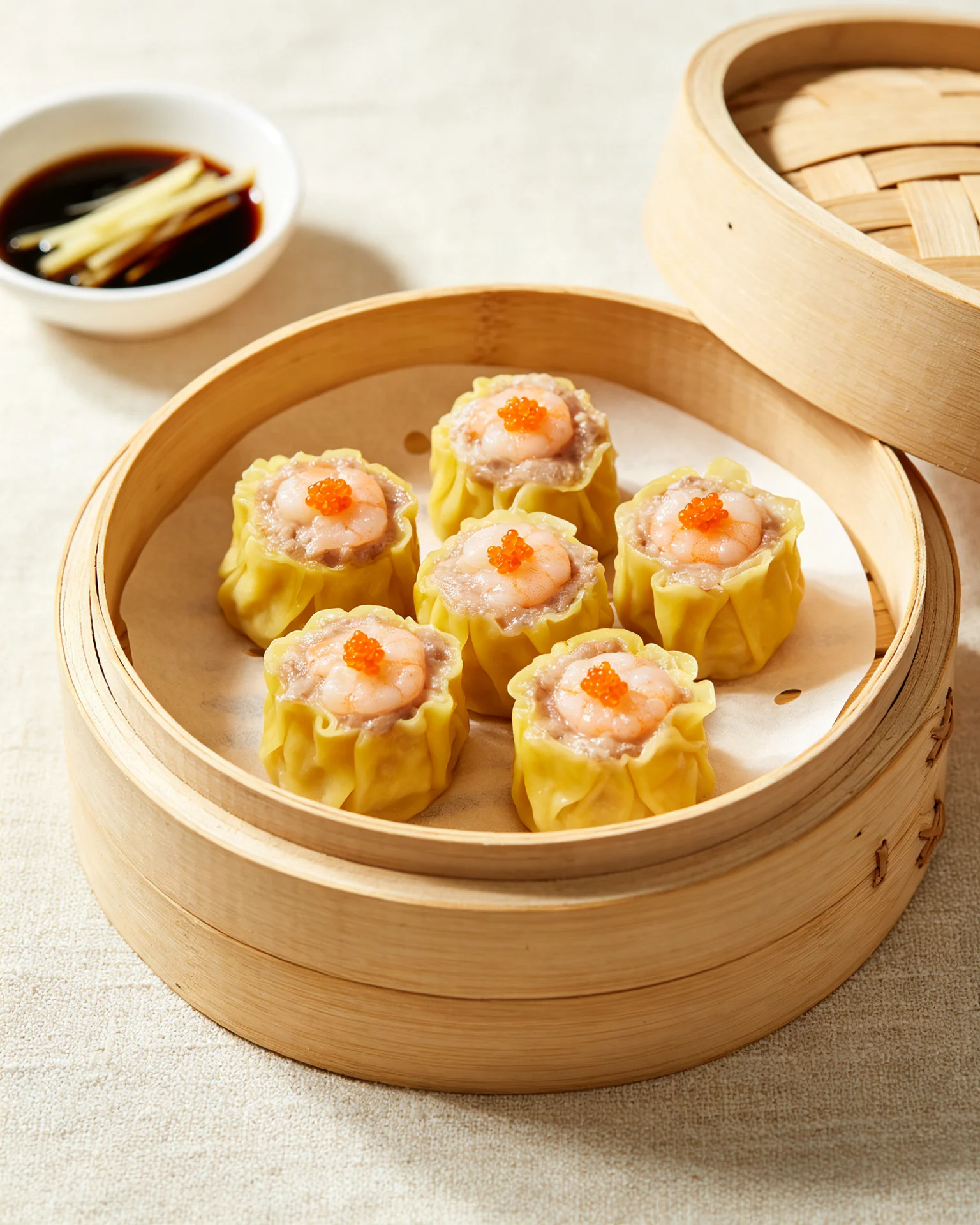
Line a bamboo steamer basket with parchment paper or cabbage leaves so the dumplings don’t stick. Steam over simmering water for 6 minutes if fresh, 8 minutes if cooking from frozen.
How to Freeze Pork Dumplings
Freeze them before cooking, not after.
Place the uncooked dumplings on a parchment-lined baking sheet in a single layer, making sure they’re not touching. Freeze for at least 1 hour until solid. Then transfer to a freezer bag. Once individually frozen first, they won’t stick together and you can pull out however many you need.
Frozen dumplings cook from frozen — no thawing required. Just add an extra 2 minutes to whatever cooking method you’re using.
They keep in the freezer for up to 3 months, though they never last that long in my house.
Troubleshooting: Why Did My Dumplings Fall Apart?
Filling falls out when I try to fold: You overfilled. 1 heaped teaspoon is the max. It feels like nothing, but it’s the right amount.
Wrappers tear when I fold: They’re too dry. Keep them covered with a damp paper towel. If they’re already cracking, lightly dampen them before use.
Filling is watery: You didn’t drain the cabbage well enough. Next time, squeeze it twice and press it in a clean kitchen towel.
Bottom burned before the top steamed through: Your heat was too high when you added the water. Drop to medium before adding the water and putting on the lid.
Dumplings stick to the pan: Either not enough oil, or you tried to move them before they were properly set. Let them cook undisturbed for at least 2 minutes before you touch them.
What to Serve With Pork Dumplings

The dipping sauce I gave above is everything you need. If you want to go further:
- Chili crisp or chili oil on the side — this is the one I use and go through a jar a week
- A simple cucumber salad — quick pickled with rice vinegar and sesame oil
- Kimchi Soup — ready in under 30 minutes, makes this feel like a proper meal
- Bok Choy Mushroom Stir Fry — the fastest vegetable side I know
Variations Worth Trying
Once you’ve made the basic version a couple of times, the formula is easy to riff on:
- Pork and shrimp: Replace ¼ of the pork with finely chopped raw shrimp. The texture is incredible.
- Pork and chive: Swap the scallions for a large handful of Chinese chives (garlic chives). Totally different flavor profile.
- Spicy version: Add 1 tbsp of gochujang or doubanjiang to the filling. This is the version I make when I want something with more heat.
If you want to go deeper on dumplings, Red House Spice’s ultimate dumpling guide is genuinely one of the best resources out there — Wei grew up making these in Northern China and the detail she goes into on wrappers and technique is unmatched.
Nutrition Information
Serving size: 5 dumplings (filling + wrappers) | Servings per recipe: 9
| Per Serving | |
|---|---|
| Calories | 292 |
| Total Fat | 11.7g |
| Saturated Fat | 3.7g |
| Carbohydrates | 30.2g |
| Fiber | 0.3g |
| Sugar | 0.2g |
| Protein | 13.8g |
| Sodium | 284mg |
Nutritional information is calculated using online tools and is an estimate only. Values will vary depending on the fat content of your ground pork, the brand of dumpling wrappers used, and how much dipping sauce you consume. Do not use this information for medical or dietary decisions.
Love Chinese food?
Check out my complete guide to Chinese home cooking, pantry essentials, and techniques.
FAQ
Can I use regular cabbage instead of napa cabbage?
Yes. Regular green cabbage works, but it has a stronger flavor and less water content. You’ll still want to salt and squeeze it, but you won’t get as much liquid out. Napa cabbage is milder and gives a more delicate texture, which is why it’s the standard. In a pinch, a bag of pre-shredded coleslaw mix also works.
Can I make dumpling wrappers from scratch?
You can, and they taste better than store-bought — chewier, with more character. The basic ratio is 2 parts all-purpose flour to 1 part water by weight. But for a Tuesday night batch? Store-bought wrappers are completely fine. I use them routinely. Look for round wrappers labeled “dumpling wrappers” or “gyoza wrappers” — they’re usually in the refrigerated section at Asian grocery stores or sometimes in the produce section of larger supermarkets.
What’s the best fat percentage for ground pork?
Aim for 20–25% fat. In the US, this is usually labeled as “regular” ground pork. Extra-lean pork will give you a dry, crumbly filling no matter how good your technique is. If your store only carries lean pork, a small addition of finely chopped pork belly mixed in will fix the fat content.
How do I know when the dumplings are cooked through?
For pan-fried dumplings, the wrapper should look fully translucent after the steam phase — no white, opaque spots. If you’re unsure, cut one open. The filling should be cooked through with no pink remaining. For boiled dumplings, they’ll float when done, but I still do the cold-water trick for even cooking.
Can I make the filling ahead of time?
Yes — up to 24 hours in the fridge. Just keep the seasoned pork and the drained cabbage separate and mix them together right before you start wrapping. Combined, the filling gets watery as it sits.
Do I need a bamboo steamer?
No. A metal steamer basket set over a pot of simmering water works just as well. If you do want one, this bamboo steamer is what I use and recommend. You can also steam them in a skillet by following the pan-fry method above — the lid-and-water technique is essentially steaming the tops while the bottoms crisp up.
You might also like: Check out our complete Chinese cooking guide for more essential ingredients and techniques.
How to Make Pork Dumplings at Home
pork dumpling, Chinese recipes, beginner friendly
PT45M
PT15M
PT60M
Ingredients
- 1 lb (450g) ground pork — do not use extra-lean. You want at least 20% fat. This is the non-negotiable part.
- 2 cups napa cabbage, finely chopped (about ¼ small head)
- 1 tsp kosher salt (for the cabbage)
- 3 cloves garlic, minced
- 1 tbsp fresh ginger, grated
- 3 scallions, thinly sliced
- 2 tbsp soy sauce
- 1 tbsp Shaoxing wine (or dry sherry as a substitute — see what to use when you don’t have Shaoxing wine)
- 1 tsp sesame oil
- ½ tsp white pepper
- 1 tsp cornstarch
- 40–50 store-bought round dumpling wrappers (gyoza wrappers work too)
- Small bowl of water
- 2 tbsp soy sauce
- 1 tbsp rice vinegar
- 1 tsp chili oil (optional — I always add it)
- ½ tsp sesame oil
- Pinch of sugar
Instructions
- Step 1: Salt and Drain the Cabbage
- Step 2: Mix the Filling
- Step 3: Fold the Dumplings
- Step 4: Cook Your Dumplings
Did you make this recipe?
Tag @asianfoodsdaily on Instagram or leave a comment below!
Testing Notes
Tested in Asha's kitchen. Last reviewed June 25, 2025.
Ingredient Substitutions
Substitution notes coming soon.
About Asha
Half Asian, half African cook raised between two food-obsessed cultures. I've spent 10 years learning Asian cooking traditions through family, friends, and thousands of hours at the stove — testing every dish until it works in a standard home kitchen.
Read my full storyTechnique & Pantry Guides
Related Recipes
More delicious dishes you might enjoy


Loading comments...