Gyudon Recipe (Japanese Beef Bowl)
Jump to Section
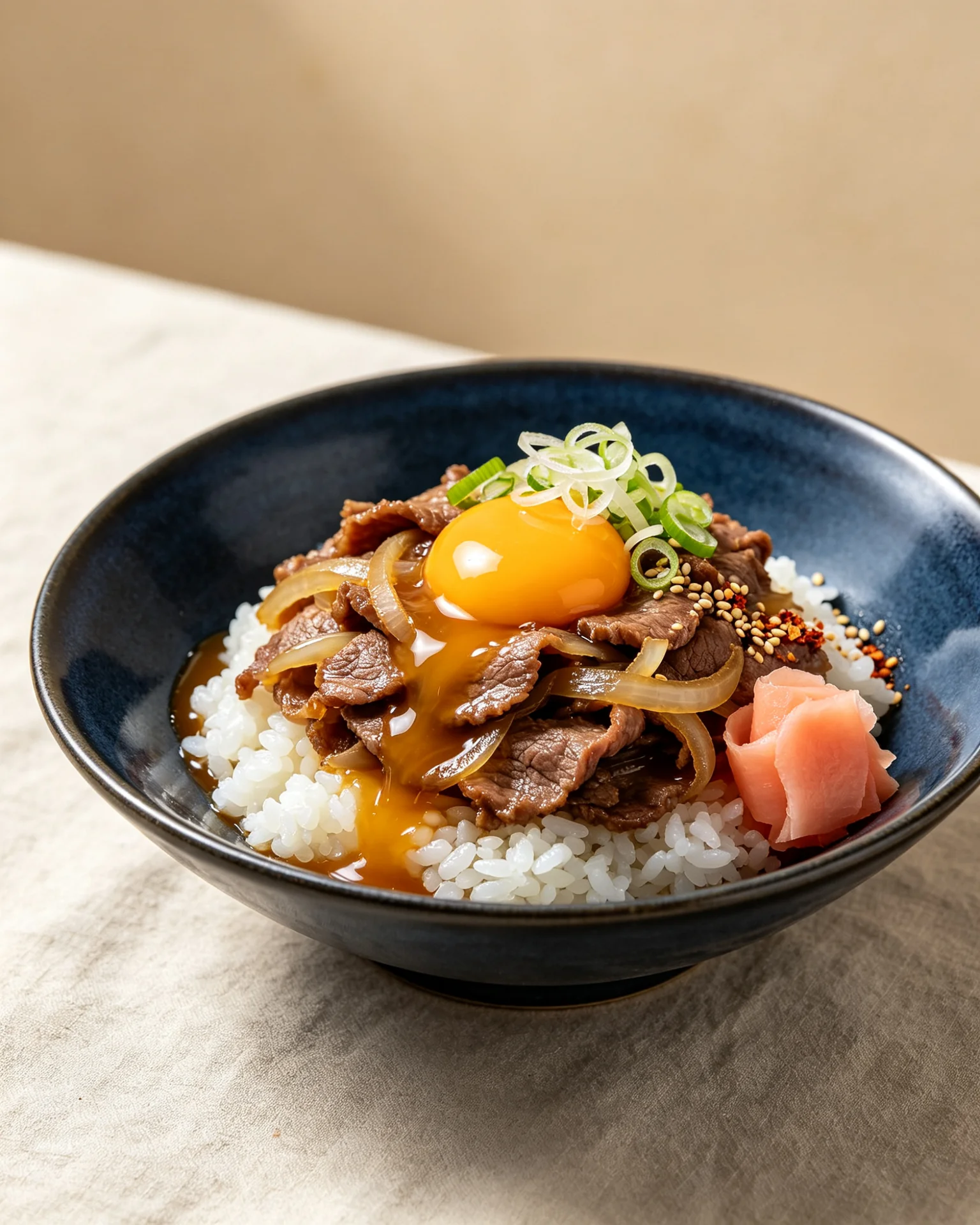
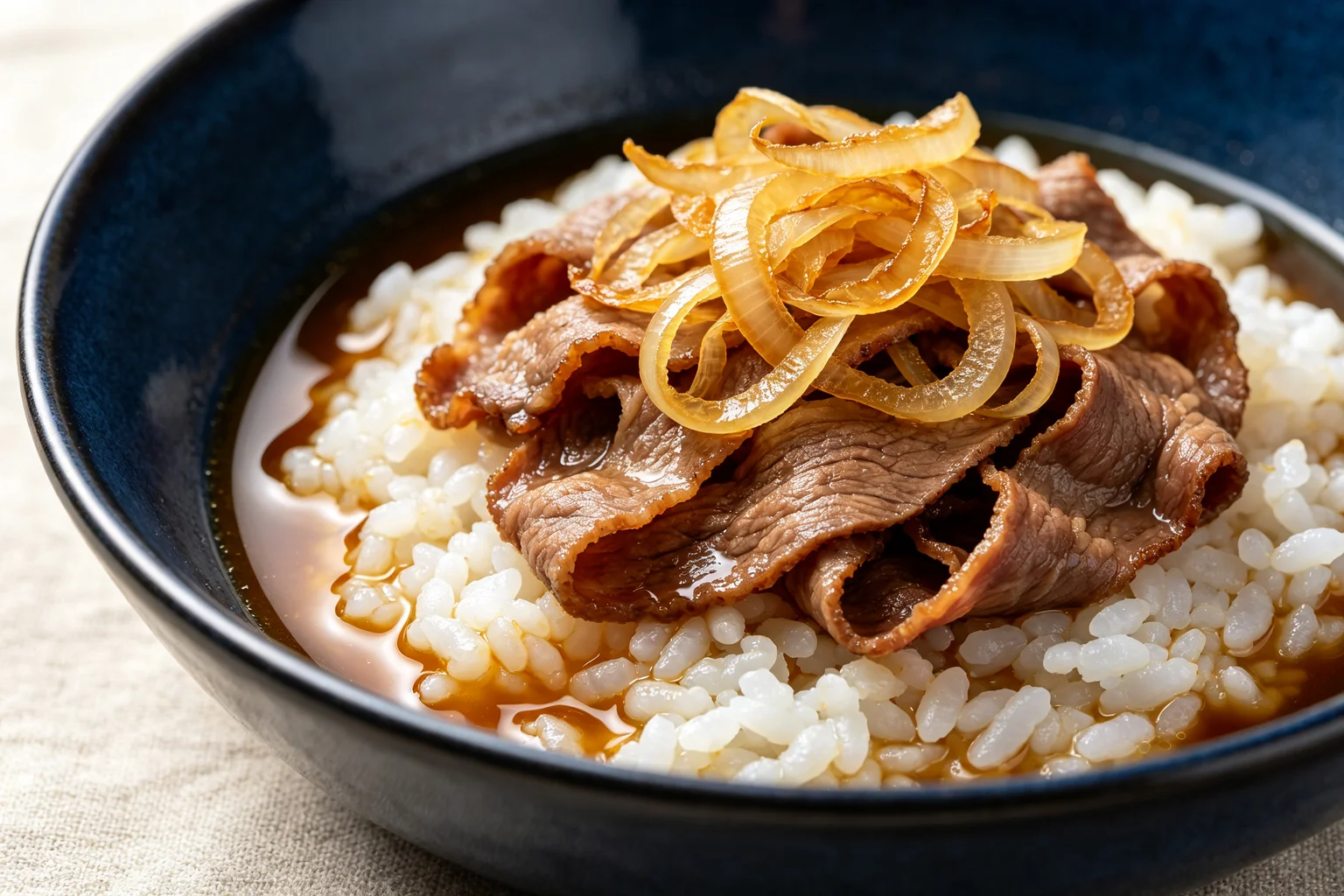
There are a handful of dishes I go back to on nights when I am tired and do not want to think too hard. Gyudon is one of them. Thinly sliced beef and sweet, softened onions simmered in a dashi-soy broth, piled over a bowl of hot rice. Twenty minutes from cold pan to table. The kind of meal that feels like more than it is.
The thing that changed this dish for me was learning to start the onions in cold broth rather than adding them after the broth had come to temperature. A small adjustment that produces noticeably sweeter, more integrated onions. Raw onion contains sulphur compounds that give it its sharp, slightly harsh flavour. Added to already-boiling liquid, those compounds denature quickly and some are retained in the dish. Started in cold liquid and brought up gradually, they degrade as the temperature rises and the onions arrive at the finish point sweeter and more fully absorbed into the broth. This recipe explains that and everything else that makes a 20-minute weeknight dish taste like it took longer.
What is gyudon and what makes it different from other donburi?
Gyudon (牛丼) means beef bowl, gyu is beef, don is the shortened form of donburi, the broad category of Japanese rice bowl dishes. Donburi covers a range of preparations: oyakodon (chicken and egg), katsudon (breaded pork cutlet), tendon (tempura). What distinguishes gyudon is the broth. The beef and onions are not just cooked and placed over rice, they are simmered in a specific dashi-soy-mirin broth that becomes part of the topping, pooling into the rice as you eat.
The dish is inseparable from Yoshinoya (吉野家), the chain founded in Tokyo’s Nihonbashi fish market in 1899 to serve market workers who needed a quick, filling, affordable meal. Yoshinoya industrialised gyudon, standardised broth ratios, proprietary thinly sliced beef specifications, consistent cooking times. The chain spread globally and introduced gyudon to markets outside Japan. The broth ratio that most gyudon recipes use, including this one, is essentially Yoshinoya’s: 5 parts dashi to 1.5 parts soy sauce to 1.5 parts mirin. This ratio produces the specific balance where the broth is savoury but not salty, sweet but not cloying, with the dashi depth present in every spoonful.
Why does gyudon taste better with dashi than with water?
This is the most important ingredient decision in the recipe and it comes down to umami synergy.
Dashi made from katsuobushi (dried bonito flakes) contains inosinate, inosine monophosphate, a nucleotide-based umami compound. Soy sauce contains glutamate, an amino acid-based umami compound. When inosinate and glutamate are present in the same dish simultaneously, the perceived umami is not additive. It is multiplicative. Both compounds activate the same umami receptors on the tongue, but they activate different binding sites, the combined activation produces an intensity significantly greater than either produces alone.
This is the same synergy that makes Chinese tomato egg stir fry taste more complex than its two ingredients suggest. Tomato glutamate plus egg yolk inosinate. Here it is dashi inosinate plus soy sauce glutamate. The broth tastes deeply savoury and rounded in a way that water-based broth with the same soy quantity cannot produce.
Chicken stock contains glutamate from its collagen breakdown. It improves the dish over water. But it does not contain significant inosinate, the multiplicative synergy is absent. Dashi is the correct ingredient and it is not interchangeable. Dashi powder or packets from an Asian grocery store take less than 5 minutes to prepare and are entirely acceptable for a weeknight version.
Why do the onions start in cold broth?
Covered in the opening, but the full picture is worth understanding.
Onion contains several sulphur-containing compounds, primarily propanethial S-oxide and various thiosulfinates, that give raw onion its sharp, eye-watering intensity. When heat is applied, these compounds break down. The rate at which they break down depends on the rate of temperature increase.
Added to already-boiling broth at 100°C, the outer surface of each onion slice hits maximum temperature almost immediately. Some sulphur compounds denature and lock in before they can degrade fully. The onion cooks quickly but retains more of its raw character.
Started in cold broth and brought up to temperature gradually over 8-10 minutes, the sulphur compounds degrade progressively as the temperature rises through 40°C, 60°C, 80°C. By the time the broth reaches a simmer the compounds have had sufficient time at each temperature range to break down more completely. The onion arrives at the finish point sweet, soft, and fully integrated, the way softened onion tastes in a slow-cooked dish, achieved in a fraction of the time.
Why must the beef be sliced so thin?
Gyudon beef should be 1-2mm thin. This is not a preference. It is a physics requirement.
At 1-2mm thickness, a slice of beef has a very high surface-area-to-interior ratio. In simmering broth at approximately 90-95°C, a 1-2mm slice reaches its target internal temperature in 30-60 seconds. The surface and interior heat through almost simultaneously, the slice cooks evenly without the surface overexposing to heat while the centre catches up.
A 5mm slice takes 3-5 minutes in the same broth temperature. During that time the surface proteins are exposed to near-boiling liquid for far longer than necessary. They denature and grey. The exterior becomes slightly tough and the colour turns dull before the centre is cooked. The slice looks and tastes overcooked on the outside even when the interior is just done.
If buying pre-sliced beef, look for shabu-shabu cut beef at Japanese or Asian grocery stores, already at the correct thickness. If slicing your own ribeye or sirloin: freeze the beef for 20-30 minutes until firm enough to hold its shape under the knife, then slice against the grain at 1-2mm. The frozen-firm texture makes thin, consistent slices significantly easier without specialist equipment.
What is the correct broth ratio?
The Yoshinoya standard is 5 parts dashi to 1.5 parts soy sauce to 1.5 parts mirin, with sake added for aromatic depth.
Each component does something specific. Dashi provides the umami base and gives the broth its characteristic depth without adding salt. Soy sauce provides salt, colour, and additional glutamate. Mirin provides sweetness and the slight gloss that makes the sauce cling to the beef. Sake adds fermented rice aromatics that evaporate during cooking, leaving their flavour compounds behind while removing the raw alcoholic notes.
For mirin: the same distinction that applies to the teriyaki chicken recipe applies here. Hon-mirin (本みりん) is made from glutinous rice with natural complex sugars. Aji-mirin (味醂) is a synthetic substitute made from corn syrup. The difference in the finished broth is real. Hon-mirin’s complex sugars produce a more rounded sweetness and a better gloss. It is worth buying the correct product.
Adjusting the ratio: more soy makes the broth saltier and darker. More mirin makes it sweeter. Less dashi produces a flatter, thinner broth. The 5:1.5:1.5 baseline is a starting point, taste and adjust.
What is onsen tamago and why does it make gyudon better?
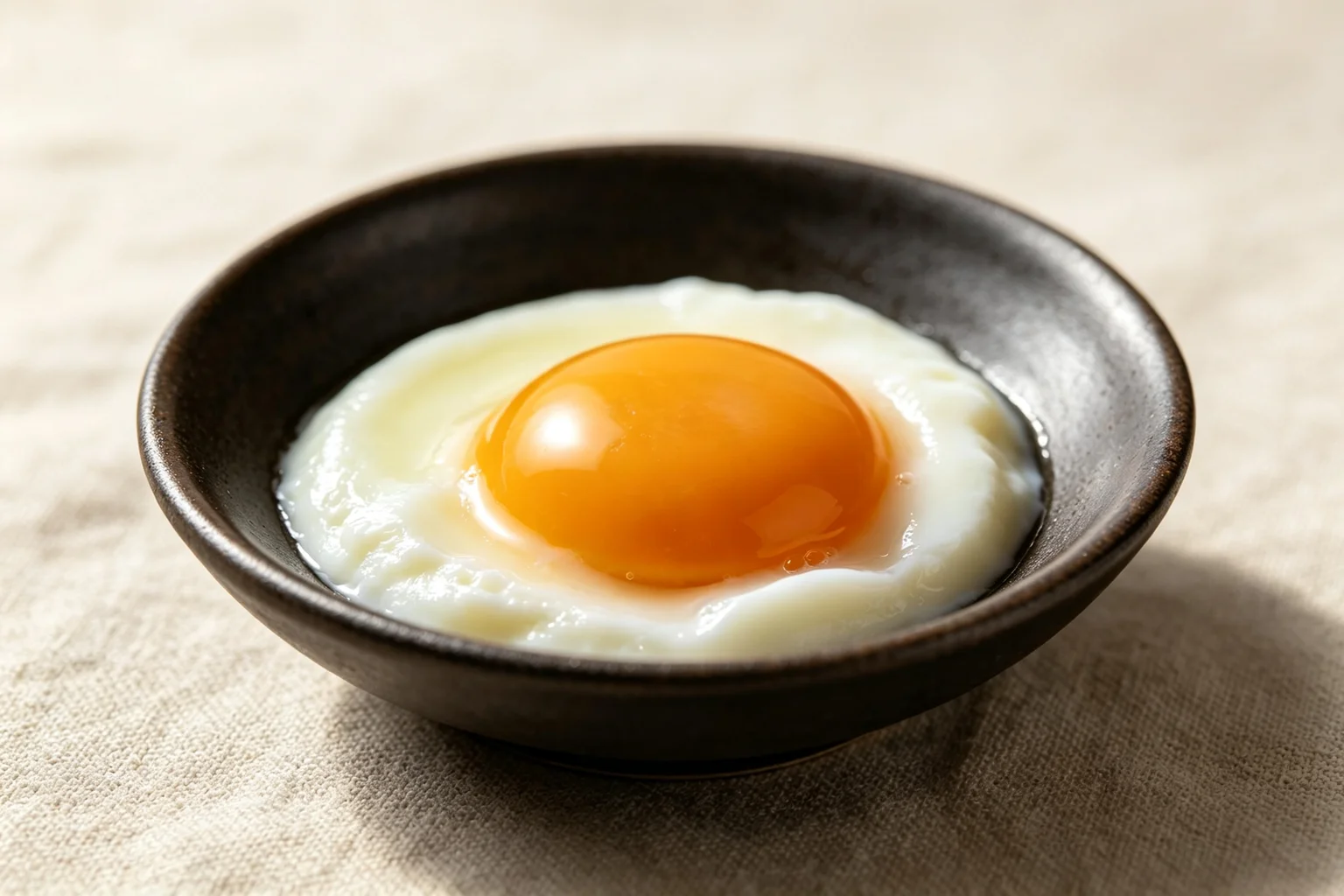
A raw egg cracked directly over hot gyudon is common and acceptable. An onsen tamago is significantly better.
Onsen tamago (温泉卵) means hot spring egg, traditionally cooked in Japanese hot spring water at approximately 65-70°C. The egg’s two proteins set at different temperatures: egg white proteins (albumin) begin to set at 60-65°C and are fully solid at 80°C. Egg yolk proteins begin to set at 65-70°C.
Cooking at 63-68°C for 45-60 minutes sets the yolk proteins to a warm, runny, custard-like state while keeping the white proteins barely coagulated, soft and almost liquid. The result is a white that flows like very soft tofu and a yolk that is warm and running but not cold and raw.
When this egg is placed over hot gyudon and the yolk breaks, it flows through the beef and onions and mixes with the broth. Every bite contains both the egg and the broth components rather than the egg sitting as an unintegrated pool on top. The custard-soft white has a delicate, barely-there texture that does not overwhelm the beef.
To make at home: bring a pot of water to 70°C (a kitchen thermometer makes this easy). Add the eggs gently. Maintain 65-68°C for 45 minutes. Remove and use immediately. Alternatively, cook the eggs at 90°C for exactly 6-7 minutes for a half-cooked version that is quicker and still better than a raw egg.
Ingredients
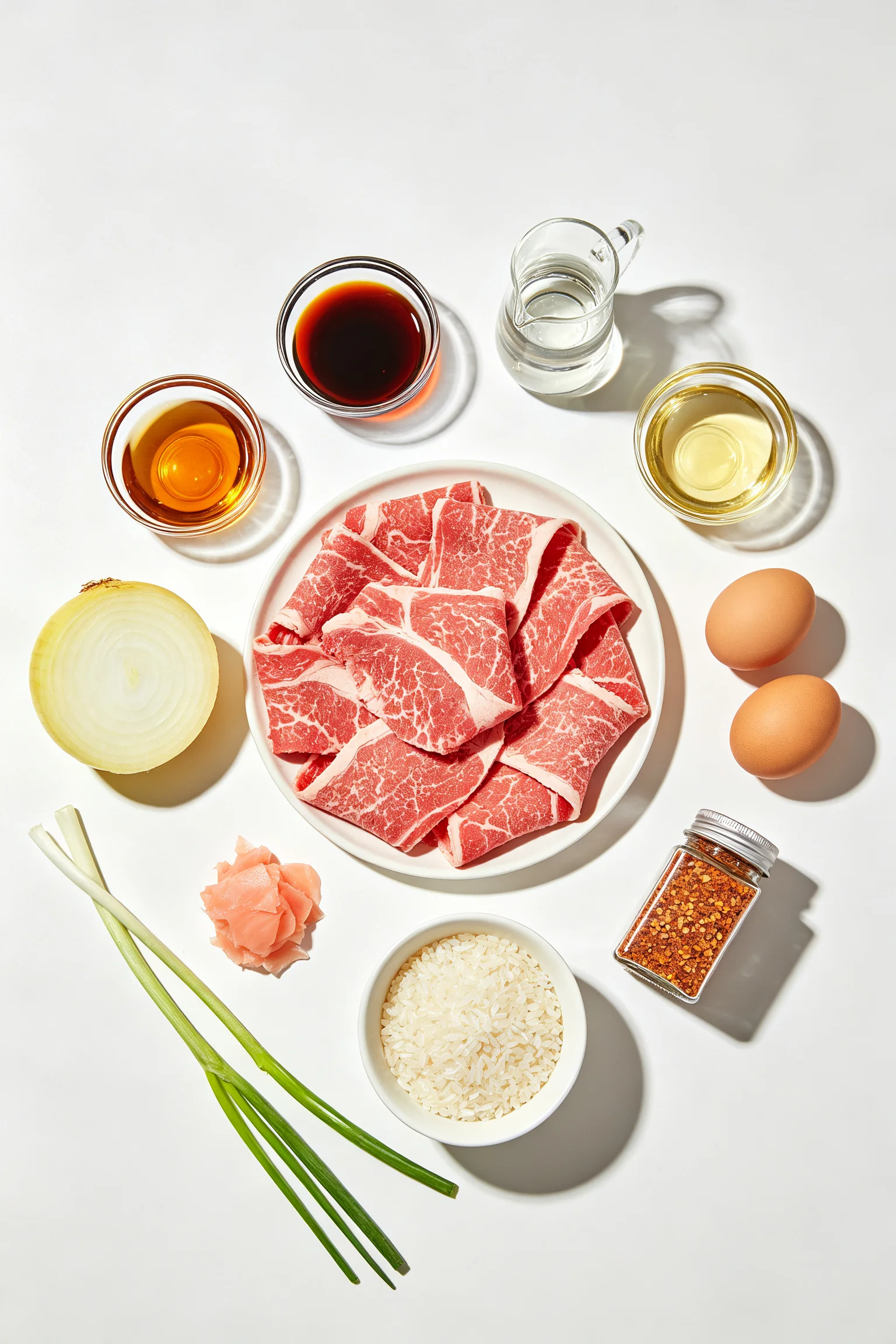
Serves 2
Broth:
- 240ml (1 cup) dashi (from powder, packet, or scratch)
- 3 tbsp soy sauce
- 3 tbsp hon-mirin
- 2 tbsp sake
- 1 tsp sugar (optional, adjust to taste)
Protein and vegetables:
- 300g (10.5oz) thinly sliced beef ribeye or sirloin, 1-2mm, shabu-shabu cut
- 1 medium yellow onion, halved and thinly sliced
Rice:
- 300g (1.5 cups uncooked) Japanese short-grain rice, cooked
Toppings:
- 2 onsen tamago or soft-boiled eggs
- 2 tbsp pickled ginger (beni shoga)
- 2 spring onions, thinly sliced
- Shichimi togarashi (Japanese seven-spice) for serving
- Sesame seeds (optional)
Instructions
Everything moves quickly once the broth is on. Have the rice cooked and waiting before you start.
Step 1: Cold-start the onions in broth
Combine dashi, soy sauce, hon-mirin, sake, and sugar in a wide, shallow pan or skillet. Do not turn on the heat yet.
Bring the broth and onions up to temperature together. As the broth warms, stir occasionally. Simmer for 8-10 minutes until the onions are completely soft, translucent, and sweet-smelling. The broth will reduce slightly and deepen in colour.
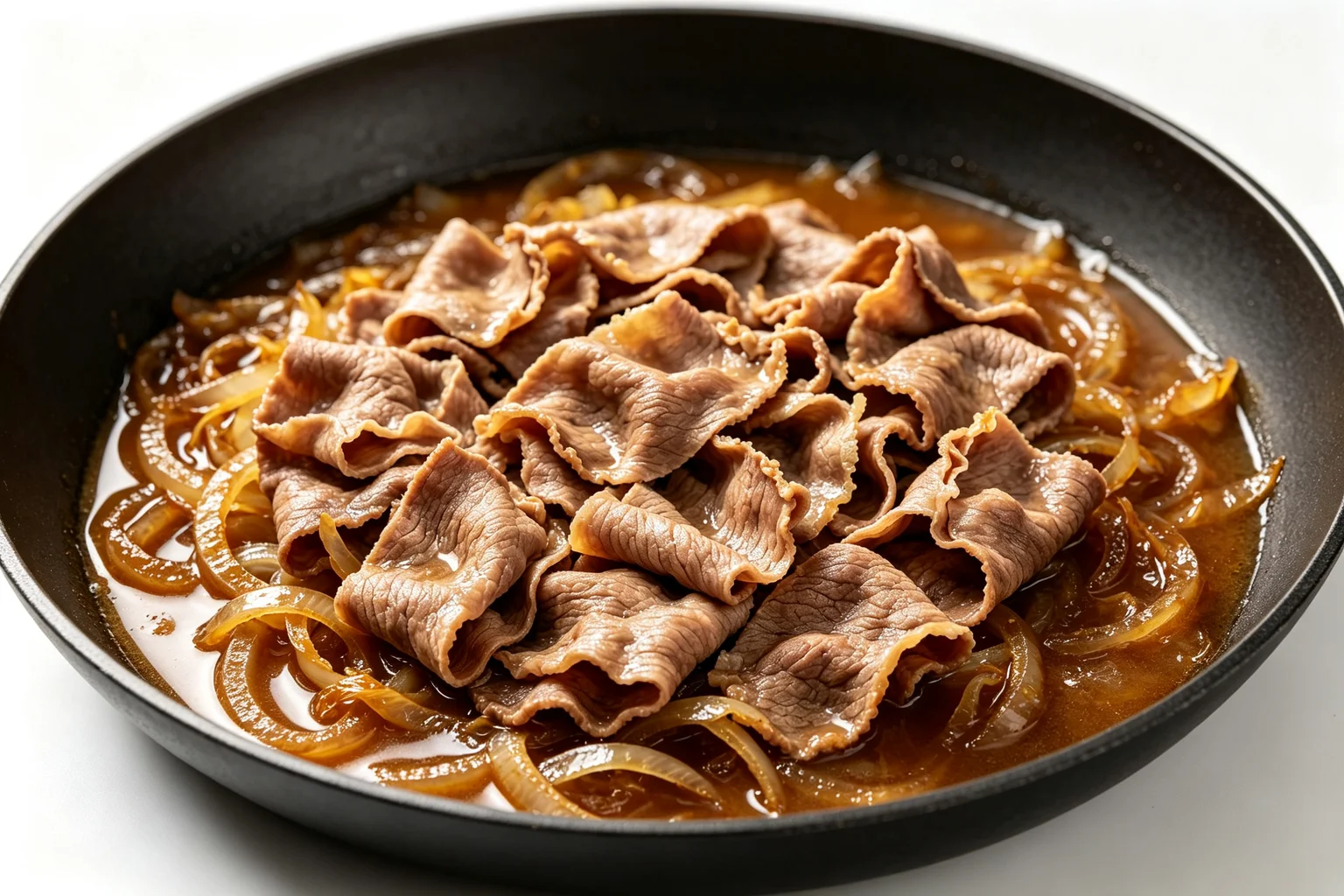
Step 2: Add the beef
Separate the beef slices individually and lay them in a single layer across the simmering broth and onions. Do not pile them, each slice needs contact with the broth.
Step 3: Assemble
Divide the hot cooked rice between two deep bowls. Ladle the beef, onions, and broth generously over the rice.
How do you store and reheat gyudon?
The beef and broth keep in the refrigerator for 2 days in a sealed container. Store separately from the rice, rice stored in broth absorbs it completely and becomes stodgy.
To reheat: warm the beef and broth gently in a small pan over low heat. Do not boil, the beef will toughen. The broth will have concentrated slightly overnight; add a small splash of dashi or water if it tastes too salty after refrigeration.
The onsen tamago cannot be stored once broken. Make fresh eggs for each serving. Hard or soft-boiled eggs keep refrigerated for 3 days and can be reheated briefly in the warm broth before serving.
Love Japanese food?
Check out my complete guide to Japanese home cooking, pantry essentials, and techniques.
FAQ
Can I use chicken stock instead of dashi? Chicken stock improves the dish over water but does not replicate dashi. Chicken stock contains glutamate from collagen breakdown, it adds umami but not inosinate. Dashi from katsuobushi contains inosinate, which produces a multiplicative umami effect when combined with the soy sauce glutamate. The flavour difference is real. Dashi powder from an Asian grocery store takes 2 minutes to make and is worth using.
What is the best cut of beef for gyudon? Ribeye produces the richest result due to its intramuscular fat content, which melts into the broth during the brief simmer. Sirloin is leaner and produces a cleaner flavour. Chuck roll works well and is more economical, it requires a slightly longer simmer time (90 seconds rather than 30-60). The critical factor is thinness regardless of cut, 1-2mm is required for the cooking physics to work correctly.
Why does my gyudon broth taste flat? Usually the dashi. If using dashi powder, ensure the ratio is correct, most packages recommend 1 teaspoon per 250ml of water, and under-dosing produces a weak base that soy and mirin cannot compensate for. If using water with no dashi at all, the inosinate-glutamate umami synergy is absent entirely. The second cause is insufficient mirin, the sweetness that rounds the broth and prevents the soy from tasting one-dimensionally salty. Taste the broth before adding the beef and adjust from there.
What rice should I use for gyudon? Japanese short-grain rice, koshihikari is the standard variety. Short-grain rice has higher amylopectin content than long-grain varieties, producing grains that are slightly sticky and cohesive. When the gyudon broth pools over the rice, the sticky surface of short-grain rice holds the broth rather than letting it run off. Long-grain rice (jasmine, basmati) produces separate, drier grains that do not integrate with the broth the same way. The rice is not an afterthought in gyudon, it is half the dish.
You might also like: Check out our complete Japanese cooking guide for more essential ingredients and techniques.
Gyudon Recipe (Japanese Beef Bowl)
Japanese Recipes, Main Dish, Beef
PT10M
PT20M
PT30M
Nutrition Facts
Ingredients
- 240ml (1 cup) dashi (from powder, packet, or scratch)
- 3 tbsp soy sauce
- 3 tbsp hon-mirin
- 2 tbsp sake
- 1 tsp sugar (optional, adjust to taste)
- 300g (10.5oz) thinly sliced beef ribeye or sirloin, 1-2mm, shabu-shabu cut
- 1 medium yellow onion, halved and thinly sliced
- 300g (1.5 cups uncooked) Japanese short-grain rice, cooked
- 2 onsen tamago or soft-boiled eggs
- 2 tbsp pickled ginger (beni shoga)
- 2 spring onions, thinly sliced
- Shichimi togarashi (Japanese seven-spice) for serving
- Sesame seeds (optional)
Instructions
- *Everything moves quickly once the broth is on. Have the rice cooked and waiting before you start.*
- Combine dashi, soy sauce, hon-mirin, sake, and sugar in a wide, shallow pan or skillet. Do not turn on the heat yet. Add the sliced onions to the cold broth and spread them out. Now turn the heat to medium. Bring the broth and onions up to temperature together. As the broth warms, stir occasionally. Simmer for 8-10 minutes until the onions are completely soft, translucent, and sweet-smelling. The broth will reduce slightly and deepen in colour.
- Separate the beef slices individually and lay them in a single layer across the simmering broth and onions. Do not pile them, each slice needs contact with the broth. They will cook through in 30-60 seconds. Watch for the colour change from pink to just-cooked. Do not overcook, the moment the pink is gone, remove from heat or serve immediately.
- Divide the hot cooked rice between two deep bowls. Ladle the beef, onions, and broth generously over the rice. The broth should pool around and into the rice, not sit on top. Place the onsen tamago or soft-boiled egg on top. Add pickled ginger, sliced spring onion, and a shake of shichimi togarashi. Serve immediately. ## How do you store and reheat gyudon? The beef and broth keep in the refrigerator for 2 days in a sealed container. Store separately from the rice, rice stored in broth absorbs it completely and becomes stodgy. To reheat: warm the beef and broth gently in a small pan over low heat. Do not boil, the beef will toughen. The broth will have concentrated slightly overnight; add a small splash of dashi or water if it tastes too salty after refrigeration. The onsen tamago cannot be stored once broken. Make fresh eggs for each serving. Hard or soft-boiled eggs keep refrigerated for 3 days and can be reheated briefly in the warm broth before serving.
Did you make this recipe?
Tag @asianfoodsdaily on Instagram or leave a comment below!
Testing Notes
Tested in Asha's kitchen. Last reviewed September 18, 2025.
Ingredient Substitutions
Substitution notes coming soon.
About Asha
Half Asian, half African cook raised between two food-obsessed cultures. I've spent 10 years learning Asian cooking traditions through family, friends, and thousands of hours at the stove — testing every dish until it works in a standard home kitchen.
Read my full storyRelated Recipes
More delicious dishes you might enjoy


Loading comments...