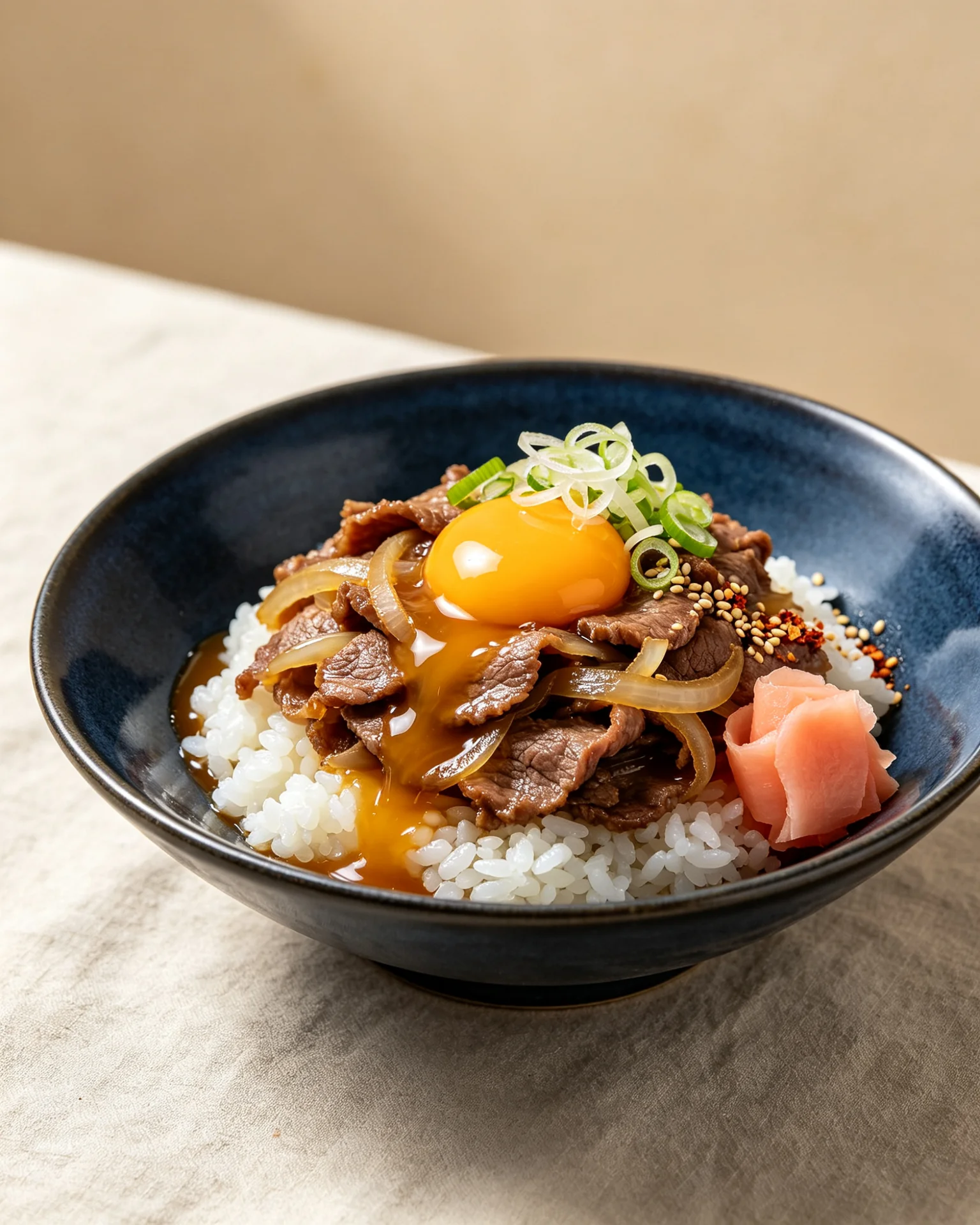
Japanese-Style Teriyaki Beef Bowl

Jump to Section
Most “teriyaki beef bowls” you find online are not teriyaki. They’re beef sautéed in a brown sugar and soy sauce mixture with some cornstarch thrown in. That’s not teriyaki. That’s American-Chinese sauce on top of rice and it’ll taste fine, but it won’t taste like what you get in a Japanese restaurant.
Real teriyaki is four ingredients — soy sauce, sake, mirin, and sugar — cooked together until they reduce into a glossy, nuanced glaze. The sake and mirin do something that no substitution fully replicates: they add depth, sweetness, and that unmistakable umami backbone that makes the sauce stick to the beef properly and smell like something worth eating.
I’ve made this bowl probably fifty times over the years. It’s the kind of dinner I go back to when I’ve had a long day and want something that feels like effort but takes 35 minutes. This guide explains exactly what makes it work — and what will ruin it if you’re not paying
attention.
🔑 The Key Insight: The teriyaki sauce gets made separately and added to the beef at the end — not used as a marinade. This is how you get a real glaze instead of steamed meat sitting in liquid.
What “Teriyaki” Actually Means
Before we cook, it’s worth knowing what the word means — because it explains exactly how this recipe works.
Teriyaki (照り焼き) is a Japanese cooking method, not just a sauce. Teri (照り) means luster or glaze. Yaki (焼き) means grilled, broiled, or pan-fried. So teriyaki literally describes food that is cooked in a way that gives it a shiny, glazed surface. The “tare” — the sauce — is brushed or poured over the protein during or after cooking to create that gloss.
This is why you sear the beef first and add the sauce at the very end. If you cook the beef in the sauce from the start, it braises instead of sears, and you lose the caramelization that defines the dish. Get the sear first. Glaze second.
For more on Japanese cooking techniques, Just One Cookbook has a thorough breakdown of the authentic teriyaki method that’s worth reading if you want to go deeper.
Ingredients

For the Teriyaki Sauce
- 4 tablespoons soy sauce (Kikkoman — reliable, widely available)
- 4 tablespoons sake (cooking sake works fine)
- 4 tablespoons mirin (hon mirin if you can find it)
- 2 tablespoons white sugar
For the Beef
- 300g (10.5 oz) beef sirloin or ribeye, thinly sliced against the grain
- 1 teaspoon neutral oil (vegetable or avocado)
- Light pinch of black pepper
To Serve
- 2 cups short-grain Japanese rice, cooked
- 2 spring onions (scallions), thinly sliced
- 1 teaspoon toasted sesame seeds
- Pickled ginger (beni shoga) — optional but recommended
- Shichimi togarashi — optional, for heat
🍚 On the Rice: Short-grain Japanese rice is non-negotiable for the texture here. It clings and holds up under the sauce without turning mushy. Long-grain varieties will work, but the bowl won’t feel the same.
👉 Authentic Yangzhou Fried Rice — full breakdown of rice variety selection and wok technique
What You Need
Nothing special required. A 10-inch or 12-inch skillet — stainless steel or carbon steel preferred, not non-stick. You want the beef to actually sear, and non-stick pans can’t handle the heat level needed. A small saucepan for the teriyaki sauce. That’s it.
If you want to pick up a carbon steel pan that genuinely works on a home stove, the Lodge Carbon Steel Skillet is the one I use and recommend without hesitation.
How to Make the Teriyaki Beef Bowl
Step 1: Cook the Rice First Start here so it’s ready when the beef is done. Wash short-grain rice until the water runs clear, then cook according to package instructions or your rice cooker. Keep it covered and warm. If you’re looking to invest in a Japanese rice cooker — the Zojirushi Neuro Fuzzy is worth every penny if you make rice regularly.

Step 2: Make the Teriyaki Sauce Combine soy sauce, sake, mirin, and sugar in a small saucepan. Bring to a boil over medium heat, stirring until sugar dissolves. Reduce to medium-low and simmer for 8–10 minutes until slightly thickened. The sauce will not be as thick as American store-bought teriyaki — it’ll be glossy and coat a spoon but still pourable. That’s correct. Remove from heat and set aside. You’re making more sauce than you need for this recipe — that’s intentional. Store the extra in a sealed jar in the fridge for up to 2 weeks.
Step 3: Slice the Beef Slice the sirloin or ribeye very thin — about 3–4mm — against the grain. Thin slices cook in under two minutes and stay tender. Thick slices tighten up. If the beef is hard to slice thin, put it in the freezer for 20 minutes first; it firms up and cuts cleanly.
👉 Korean Glass Noodles (Japchae) — same thin-slice beef technique, brief-cooked stays tender every time
Step 4: Sear the Beef Get your skillet hot over medium-high heat — genuinely hot. Add the oil and swirl to coat. Add the beef in a single layer, working in batches if needed (don’t crowd the pan). Sear 60–90 seconds per side. You want browning on the surface, not grey steamed meat. This is where the flavor is built. If the pan isn’t hot enough or you’ve packed too much beef in, it’ll steam instead of sear and you’ll lose everything.
Step 5: Glaze with the Teriyaki Sauce Once all the beef is seared and back in the pan, pour 4–5 tablespoons of the teriyaki sauce over it. Toss to coat and cook for 30–45 seconds on high heat until the sauce reduces and clings to the beef. You’ll see it get visibly shinier. That’s the teri. Pull it off the heat immediately — 10 more seconds and it’ll burn and turn bitter.
Step 6: Assemble and Serve Scoop rice into bowls. Lay the glazed beef on top. Spoon over any remaining sauce from the pan. Garnish with spring onion, sesame seeds, and pickled ginger. Serve immediately — this is a dish that’s best eaten the minute it’s plated.
Where This Goes Wrong (And How to Fix It)
I’ve made mistakes with this recipe so you don’t have to. These are the ones that actually matter:
The beef steams instead of sears This happens when the pan isn’t hot enough, or you’ve added too much beef at once. The meat releases moisture and the temperature drops before browning can happen. Solution: hotter pan, smaller batches. Be patient. The sear is the whole point.
The sauce is too thin You didn’t reduce it long enough. Eight to ten minutes is the minimum. It should coat the back of a spoon. If it’s still watery, keep simmering. It won’t hurt anything to go a minute or two longer.
The glaze burns in the pan The sugar in the teriyaki sauce burns fast at high heat. The moment the sauce has coated the beef and turned glossy — get it off the heat. 30–45 seconds, no more. If you smell something acrid, it’s gone too far. Start with a fresh batch.
The beef is chewy and tough Two reasons: you used too lean a cut, or you sliced with the grain instead of against it. Go against the grain, always. Stick to sirloin or ribeye for this recipe.
⚠ Don’t Use Rice Vinegar in Your Teriyaki Sauce: I see this in a lot of Western teriyaki recipes and it’s wrong. Rice vinegar is not a substitute for sake or mirin. It adds sour notes that completely change the flavor profile. If you don’t have sake, use dry sherry.
Substitutions and Variations
| Ingredient | Best Substitute | Notes |
|---|---|---|
| Sake | Dry sherry or dry white wine | Don’t use rice vinegar. Dry sherry is the closest in flavor profile. |
| Mirin | 1 tbsp sake + 1 tsp sugar | Not identical, but workable. Avoid “aji-mirin” — it’s mostly corn syrup. |
| Sirloin / Ribeye | Flank steak, thinly sliced | Slice extra thin and against the grain. Works well if properly prepared. |
| Short-grain rice | Medium-grain rice | Jasmine works in a pinch but gives a very different texture. |
| Sugar (white) | Caster sugar or honey (1.5 tbsp) | Honey adds slight floral notes. Not traditional, but not bad. |
Protein Variations The teriyaki sauce works just as well with salmon, chicken thighs, and tofu. Chicken thighs need about 4 minutes per side before glazing. Salmon needs the skin crisped first. Tofu needs to be pressed dry and pan-fried until golden before the sauce goes in — otherwise it’s just wet tofu.
👉 How to Make Gyoza — another great Japanese weeknight dinner, crispy bottoms, juicy filling, step-by-step
What to Serve Alongside It
This bowl is a complete meal on its own, but if you’re building a bigger spread:
Miso soup is the classic pairing. Instant dashi packets make this a 5-minute job — pick up a bag of Hikari or Maruman miso from any Asian grocery store and you’re set. Pickled cucumber (tsukemono) — just thinly sliced cucumber in rice vinegar, sugar, and salt for 20 minutes — cuts through the richness of the beef perfectly. Steamed edamame with sea salt is the easiest side dish on earth and works every time.
If you want to explore other bold Asian sauces built on the same sear-then-glaze principle, these are worth your time:
👉 Spicy Szechuan Chicken (Lázǐ Jī) — numbing heat, crispy chicken, built-from-scratch sauce
👉 Quick & Easy Mongolian Beef — sweet, savory, ready in under 30 minutes
👉 Kimchi Soup (Kimchi Jjigae) — rich, deeply layered, the perfect weeknight Korean soup
Make Ahead and Storage
The teriyaki sauce keeps in a sealed jar in the fridge for up to 2 weeks. Making a double batch is worth it — you’ll use it on everything.
Leftovers — store beef and rice separately. Beef reheat tip: put it in a hot skillet with a tiny splash of water and cover for 60 seconds. The steam revives the glaze without drying the meat. Don’t microwave the beef if you care about texture.
For meal prep: cook a large batch of rice and store the teriyaki sauce ahead. The actual beef takes 5 minutes to sear and glaze — so this is genuinely a 15-minute dinner once the components are prepped.
Nutrition (Per Serving, Approximate)
| Calories | Protein | Carbs | Fat |
|---|---|---|---|
| 560 kcal | 32g | 62g | 16g |
Values are estimates based on recipe as written. Sodium will vary by soy sauce brand.
Love Japanese food?
Check out my complete guide to Japanese home cooking, pantry essentials, and techniques.
Frequently Asked Questions
What cut of beef works best for a teriyaki beef bowl? Sirloin and ribeye are ideal — both have enough marbling to stay tender when seared quickly at high heat. Slice them thin, against the grain. Avoid lean cuts like eye of round; they turn tough and dry under the same conditions.
Can I make teriyaki sauce without sake? Yes. Dry sherry is the closest substitute and most people already have it. You can also use dry white wine. In a real pinch: 3 tablespoons of water plus 1 extra teaspoon of sugar. Not identical, but functional. Whatever you do — don’t use rice vinegar.
What’s the difference between this and gyudon? Gyudon (牛丼) is beef simmered in a dashi broth with onions — you get a more brothy, delicate bowl. This recipe is teriyaki-style donburi: seared beef with a reduced glaze. Both are Japanese rice bowls, but completely different in technique and flavor. If you want gyudon, you need dashi. If you want the glaze and caramelization — this is the recipe.
Can I use store-bought teriyaki sauce? Yes, it’ll still taste good. Most store-bought versions are too sweet and lack depth, but Kikkoman’s teriyaki marinade is reliable if you’re short on time. Making it from scratch takes 12 minutes and tastes significantly better — so try it once before defaulting to the bottle.
What rice should I use? Short-grain Japanese rice — sometimes sold as sushi rice. It has the stickiness and density that holds up under a glossy sauce without going mushy. Long-grain rice will work but the bowl won’t feel quite right.
How do I store and reheat leftovers? Store beef and rice separately. Reheat beef in a hot skillet with a splash of water — cover for 60 seconds. This revives the glaze without drying the meat. Rice: microwave with a damp paper towel over the bowl. Keeps well in the fridge for up to 3 days.See disclaimer for more information.
You might also like: Check out our complete Japanese cooking guide for more essential ingredients and techniques.
Japanese-Style Teriyaki Beef Bowl
10 minutes
10 minutes
20 minutes
Ingredients
- 4 tablespoons soy sauce (I use Kikkoman — reliable, widely available)
- 4 tablespoons sake (cooking sake works fine; no need for expensive drinking sake)
- 4 tablespoons mirin (use hon mirin if you can find it — it's the real thing)
- 2 tablespoons white sugar
- 300g (10.5 oz) beef sirloin or ribeye, thinly sliced against the grain
- 1 teaspoon neutral oil (vegetable or avocado
- Light pinch of black pepper
- 2 cups short-grain Japanese rice, cooked
- 2 spring onions (scallions), thinly sliced
- 1 teaspoon toasted sesame seeds
- Pickled ginger (beni shoga) — optional but it cuts through the richness perfectly
- Shichimi togarashi — optional, for heat
Instructions
- Step 1 — Cook the Rice First Start here so it's ready when the beef is done. Wash short-grain rice until the water runs clear, then cook according to package instructions or your rice cooker. Keep it covered and warm. If you're looking to invest in a Japanese rice cooker — the Zojirushi Neuro Fuzzy is worth every penny if you make rice regularly.
- Step 2 — Make the Teriyaki Sauce Combine soy sauce, sake, mirin, and sugar in a small saucepan. Bring to a boil over medium heat, stirring until sugar dissolves. Reduce to medium-low and simmer for 8–10 minutes until slightly thickened. The sauce will not be as thick as American store-bought teriyaki — it'll be glossy and coat a spoon but still pourable. That's correct. Remove from heat and set aside. You're making more sauce than you need for this recipe — that's intentional. Store the extra in a sealed jar in the fridge for up to 2 weeks.
- Step 3 — Slice the Beef Slice the sirloin or ribeye very thin — about 3–4mm — against the grain. Thin slices cook in under two minutes and stay tender. Thick slices tighten up. If the beef is hard to slice thin, put it in the freezer for 20 minutes first; it firms up and cuts cleanly.
- 👉 Korean Glass Noodles (Japchae) — same thin-slice beef technique, brief-cooked stays tender every time
- Step 4 — Sear the Beef Get your skillet hot over medium-high heat — genuinely hot. Add the oil and swirl to coat. Add the beef in a single layer, working in batches if needed (don't crowd the pan). Sear 60–90 seconds per side. You want browning on the surface, not grey steamed meat. This is where the flavor is built. If the pan isn't hot enough or you've packed too much beef in, it'll steam instead of sear and you'll lose everything.
- Step 5 — Glaze with the Teriyaki Sauce Once all the beef is seared and back in the pan, pour 4–5 tablespoons of the teriyaki sauce over it. Toss to coat and cook for 30–45 seconds on high heat until the sauce reduces and clings to the beef. You'll see it get visibly shinier. That's the teri. Pull it off the heat immediately — 10 more seconds and it'll burn and turn bitter.
- Step 6 — Assemble and Serve Scoop rice into bowls. Lay the glazed beef on top. Spoon over any remaining sauce from the pan. Garnish with spring onion, sesame seeds, and pickled ginger. Serve immediately — this is a dish that's best eaten the minute it's plated.
- ## Where This Goes Wrong (And How to Fix It)
- I've made mistakes with this recipe so you don't have to. These are the ones that actually matter:
- The beef steams instead of sears This happens when the pan isn't hot enough, or you've added too much beef at once. The meat releases moisture and the temperature drops before browning can happen. Solution: hotter pan, smaller batches. Be patient. The sear is the whole point.
- The sauce is too thin You didn't reduce it long enough. Eight to ten minutes is the minimum. It should coat the back of a spoon. If it's still watery, keep simmering. It won't hurt anything to go a minute or two longer.
- The glaze burns in the pan The sugar in the teriyaki sauce burns fast at high heat. The moment the sauce has coated the beef and turned glossy — get it off the heat. 30–45 seconds, no more. If you smell something acrid, it's gone too far. Start with a fresh batch.
- The beef is chewy and tough Two reasons: you used too lean a cut, or you sliced with the grain instead of against it. Go against the grain, always. Stick to sirloin or ribeye for this recipe.
- > ⚠ Don't Use Rice Vinegar in Your Teriyaki Sauce: I see this in a lot of Western teriyaki recipes and it's wrong. Rice vinegar is not a substitute for sake or mirin. It adds sour notes that completely change the flavor profile. If you don't have sake, use dry sherry.
- ## Substitutions and Variations
- | Ingredient | Best Substitute | Notes |
- | ---------------- | -------------------------------- | ------------------------------------------------------------------------ |
- | Sake | Dry sherry or dry white wine | Don't use rice vinegar. Dry sherry is the closest in flavor profile. |
- | Mirin | 1 tbsp sake + 1 tsp sugar | Not identical, but workable. Avoid "aji-mirin" — it's mostly corn syrup. |
- | Sirloin / Ribeye | Flank steak, thinly sliced | Slice extra thin and against the grain. Works well if properly prepared. |
- | Short-grain rice | Medium-grain rice | Jasmine works in a pinch but gives a very different texture. |
- | Sugar (white) | Caster sugar or honey (1.5 tbsp) | Honey adds slight floral notes. Not traditional, but not bad. |
- Protein Variations The teriyaki sauce works just as well with salmon, chicken thighs, and tofu. Chicken thighs need about 4 minutes per side before glazing. Salmon needs the skin crisped first. Tofu needs to be pressed dry and pan-fried until golden before the sauce goes in — otherwise it's just wet tofu.
- 👉 How to Make Gyoza — another great Japanese weeknight dinner, crispy bottoms, juicy filling, step-by-step
- ## What to Serve Alongside It
- This bowl is a complete meal on its own, but if you're building a bigger spread:
- Miso soup is the classic pairing. Instant dashi packets make this a 5-minute job — pick up a bag of Hikari or Maruman miso from any Asian grocery store and you're set. Pickled cucumber (tsukemono) — just thinly sliced cucumber in rice vinegar, sugar, and salt for 20 minutes — cuts through the richness of the beef perfectly. Steamed edamame with sea salt is the easiest side dish on earth and works every time.
- If you want to explore other bold Asian sauces built on the same sear-then-glaze principle, these are worth your time:
- 👉 Spicy Szechuan Chicken (Lázǐ Jī) — numbing heat, crispy chicken, built-from-scratch sauce
- 👉 Quick & Easy Mongolian Beef — sweet, savory, ready in under 30 minutes
- 👉 Kimchi Soup (Kimchi Jjigae) — rich, deeply layered, the perfect weeknight Korean soup
- ## Make Ahead and Storage
- The teriyaki sauce keeps in a sealed jar in the fridge for up to 2 weeks. Making a double batch is worth it — you'll use it on everything.
- Leftovers — store beef and rice separately. Beef reheat tip: put it in a hot skillet with a tiny splash of water and cover for 60 seconds. The steam revives the glaze without drying the meat. Don't microwave the beef if you care about texture.
- For meal prep: cook a large batch of rice and store the teriyaki sauce ahead. The actual beef takes 5 minutes to sear and glaze — so this is genuinely a 15-minute dinner once the components are prepped.
Did you make this recipe?
Tag @asianfoodsdaily on Instagram or leave a comment below!
Testing Notes
Tested in Asha's kitchen. Last reviewed January 25, 2026.
Ingredient Substitutions
Substitution notes coming soon.
About Asha
Half Asian, half African cook raised between two food-obsessed cultures. I've spent 10 years learning Asian cooking traditions through family, friends, and thousands of hours at the stove — testing every dish until it works in a standard home kitchen.
Read my full storyRelated Recipes
More delicious dishes you might enjoy


Loading comments...