Char Kway Teow Recipe (Penang Style)
Jump to Section
The first time I cooked char kway teow for more than two people at once, I cooked it for four. What came out of the wok was pale, slightly wet, vaguely smoky noodles that tasted fine and looked nothing like what I had at the hawker stall on Jalan Siam. The noodle lady at that stall never made more than one plate at a time. She turned away groups and made them wait while she cooked portion by portion by portion. I thought it was about customer experience. It was about physics. This recipe explains why, and every other decision that separates char kway teow from good noodles in a wok.
What is char kway teow and what makes Penang’s version different?
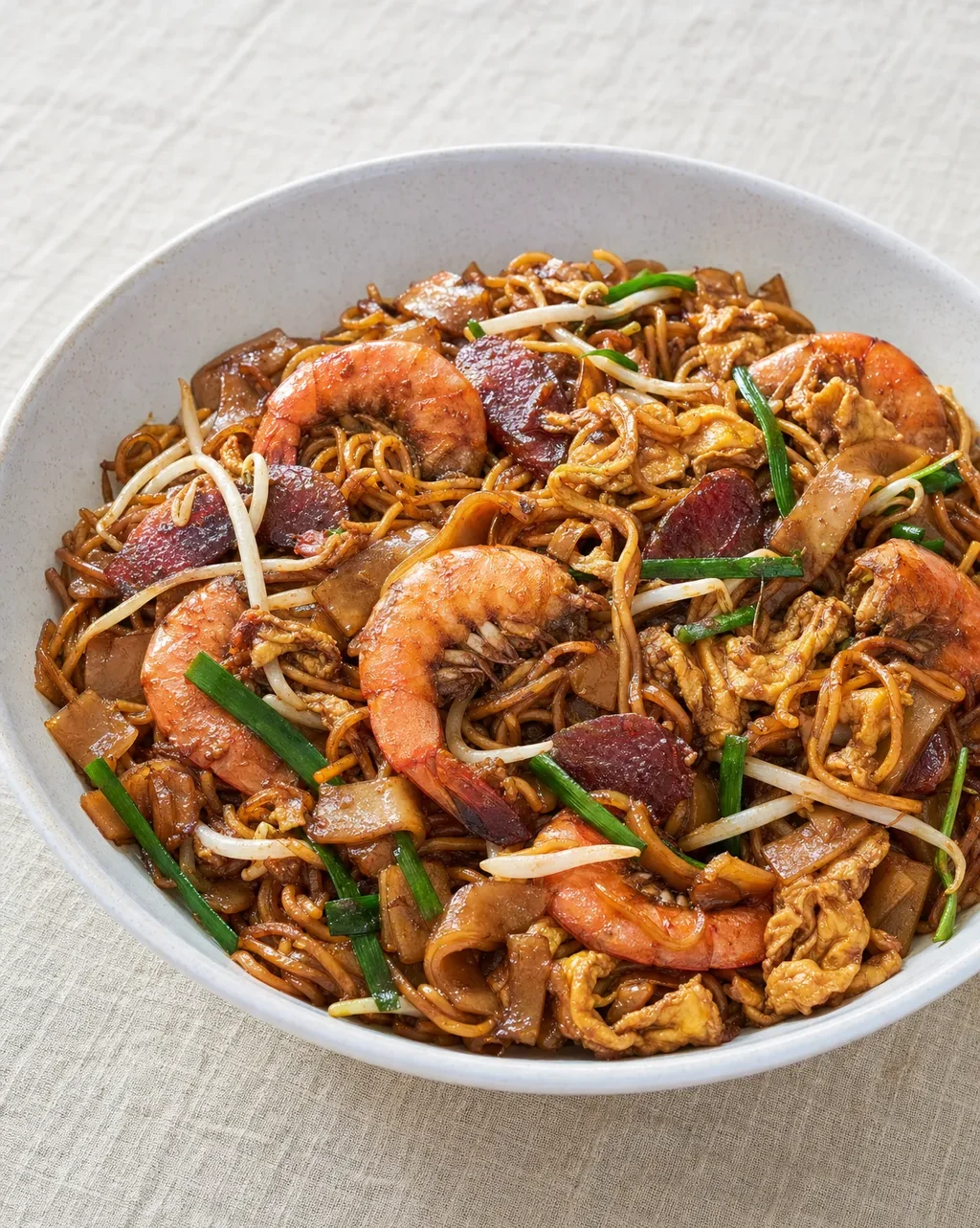
Char kway teow, written 炒粿条 in Chinese and pronounced in Hokkien, is Malaysian and Singaporean stir-fried flat rice noodles cooked over extreme high heat with lard, dark soy sauce, lap cheong (Chinese sausage), cockles, prawns, egg, bean sprouts, and Chinese chives. Char means to fry until charred. Kway teow means flat rice noodles. The dish is one of the most well-known street foods in Southeast Asia, eaten from hawker stalls across Penang, Kuala Lumpur, Singapore, and Brunei.
Penang’s version is the benchmark. What separates Penang CKT from every other version is lard, cockles, and the one-portion technique. Penang hawkers use lard rendered from pork fat, not vegetable oil, which produces a specific flavour at extreme heat that vegetable oil cannot replicate. Cockles (hum) appear in the final 30 seconds of cooking, barely warmed through rather than cooked. And every plate is made separately, one portion at a time, in a wok that has been fully superheated between each batch.
Singapore CKT differs in two specific ways: it typically includes yellow wheat noodles alongside the flat rice noodles, and cockles are less common, some hawkers omit them entirely. The flavour profile is slightly wetter and less charred than Penang style. Sarawak CKT uses a different soy sauce base and sometimes includes pork lard that is not rendered but added as crispy pieces at the end.
Why does authentic char kway teow use lard instead of oil?
Lard is not a flavour preference in char kway teow. It is a functional requirement that produces a specific result that vegetable oil cannot.
Lard is approximately 39% saturated fat. Saturated fat at extreme heat produces different Maillard reaction compounds than the unsaturated fats that dominate most vegetable oils. The specific aromatic compounds produced when lard chars against a 400°C wok surface, aldehydes, furans, pyrazines, are part of what creates the flavour signature of authentic Penang CKT. They are present in the smoke that comes off the wok. They absorb into the noodles during the brief, violent cook time.
Vegetable oil at the same temperature produces a different set of compounds. The dish will be good. It will not taste like what comes off the hawker’s wok.
The practical lard in this recipe is rendered lard, bought ready-made from a Chinese butcher or Asian grocery store. If you cannot find it, the closest functional substitute is a 50/50 combination of vegetable oil and schmaltz (chicken fat). Pure vegetable oil produces the thinnest result. Bacon fat works but adds a smoked pork flavour that changes the dish’s character.
The traditional Penang CKT uses lard with the crispy lard pieces, the rendered-out pork fat solids, scattered over the finished noodles. If you render your own lard from pork belly fat, save the crispy pieces and add them at the end. They add texture and intensify the pork flavour.
What type of noodles does char kway teow use?
Char kway teow uses fresh flat rice noodles, kway teow, sold in sheets or pre-cut strips in the refrigerated section of Asian grocery stores. The noodle width is approximately 1-1.5cm. This is not negotiable for the texture the dish requires: thinner rice noodles (like vermicelli) break apart in the wok and turn to mush; thicker ones do not absorb the sauce or char properly.
Fresh kway teow contains approximately 60-70% moisture. That moisture is what allows the noodle surface to char against the wok, the water at the noodle surface creates a brief steam flash at extreme heat that produces the slightly chewy exterior and soft interior that defines a properly cooked CKT noodle. It also means fresh kway teow must be handled carefully: cold noodles from the refrigerator are rigid and will break if added to the wok cold. Leave them at room temperature for 20-30 minutes before cooking, or microwave briefly for 20-30 seconds to soften. Separate them completely by hand before they go anywhere near the wok. A clump of kway teow hitting a hot wok cooks on the outside and stays raw in the centre.
Dried flat rice noodles soaked in water are a last resort. They have a different starch structure from fresh noodles and the surface texture after cooking is noticeably inferior, slightly gummy rather than chewy. If using dried, soak in cold water (not hot) for 20-25 minutes until pliable but not soft. They will continue cooking in the wok.
Why is char kway teow cooked one portion at a time?
This is the most important technique in the entire dish and the one most home recipes skip over.
A domestic gas hob produces 3.5-6 kilowatts of heat. A Penang hawker’s wok burner produces 15-25 kilowatts. That gap is real and it cannot be fully bridged at home. But understanding why it matters changes how you cook.
When you add ingredients to a hot wok, the wok temperature drops. Cold noodles, wet prawns, and cockles from the fridge all carry thermal mass that absorbs heat from the wok the moment they make contact. A restaurant burner recovers that temperature in seconds. A domestic hob takes 30-60 seconds or longer.
During those 30-60 seconds, the temperature in the wok is below the Maillard threshold, approximately 140-165°C, and the noodles are not frying. They are steaming in the moisture released by the proteins and vegetables. Steamed noodles are not char kway teow.
A single portion (one serving, about 200g of noodles) is small enough that a domestic hob can recover temperature quickly enough for the Maillard reaction to happen. Two portions pushed the thermal mass beyond what most domestic hobs can recover from quickly enough.
Cook one portion at a time. Wipe the wok between batches. Reheat it to smoking before the next batch. This takes longer than cooking everything at once. The result is completely different.
What does each ingredient do in char kway teow?
Lap cheong (Chinese sausage). Lap cheong contains approximately 30-40% fat by weight. That fat must render fully into the wok before the noodles go in. Slice the sausage diagonally into 3-4mm pieces, thin enough to render in 60-90 seconds of frying. You will see the fat pool in the wok around the slices as it renders. That rendered fat becomes part of the cooking medium for everything that follows. Unrendered lap cheong keeps its fat locked inside and the noodles do not absorb it.
Cockles (hum). Cockles cook in 30-45 seconds at high heat. They continue cooking from residual heat for another 15-20 seconds after leaving the wok. Overcooked cockles shrink to half their original size and turn rubbery with a slightly sulphurous taste. Cockles go in the wok in the final 30 seconds of cooking, after the egg is folded in, after the chives are added, right before the dish comes off the heat. They need to be just warmed through, not cooked.
Chinese chives (kuchai). Chinese chives are not spring onions. They have a flat leaf rather than a hollow stem and a stronger, more garlicky flavour that does not cook away as quickly. Spring onions substituted for Chinese chives produce a noticeably milder, sweeter result. Chinese chives are sold in Asian grocery stores, usually in bundles next to the spring onions. Cut into 4-5cm lengths and add in the final 30-45 seconds of cooking, they wilt almost instantly.
Bean sprouts. Bean sprouts release significant moisture when heated. Add them in two batches, half when the noodles go in, half in the final 30 seconds. The first batch provides moisture to loosen the noodles in the wok without flooding it. The second batch stays slightly crunchy. All at once and the wok floods with water and the temperature crashes.
Dark soy sauce. Dark soy sauce is for colour. It is thick, slightly sweet, and low in sodium relative to its volume. It produces the mahogany colour that defines properly made CKT. It does not season the dish, it colours it.
Light soy sauce. Light soy sauce is for salt. Thin, high sodium, almost no colour contribution. It seasons the dish without darkening it further. Both are required. Dark soy alone makes the dish too sweet and viscous. Light soy alone makes it pale and flat. Ratio: 1 tablespoon dark soy to 1 tablespoon light soy for one portion.
Ingredients
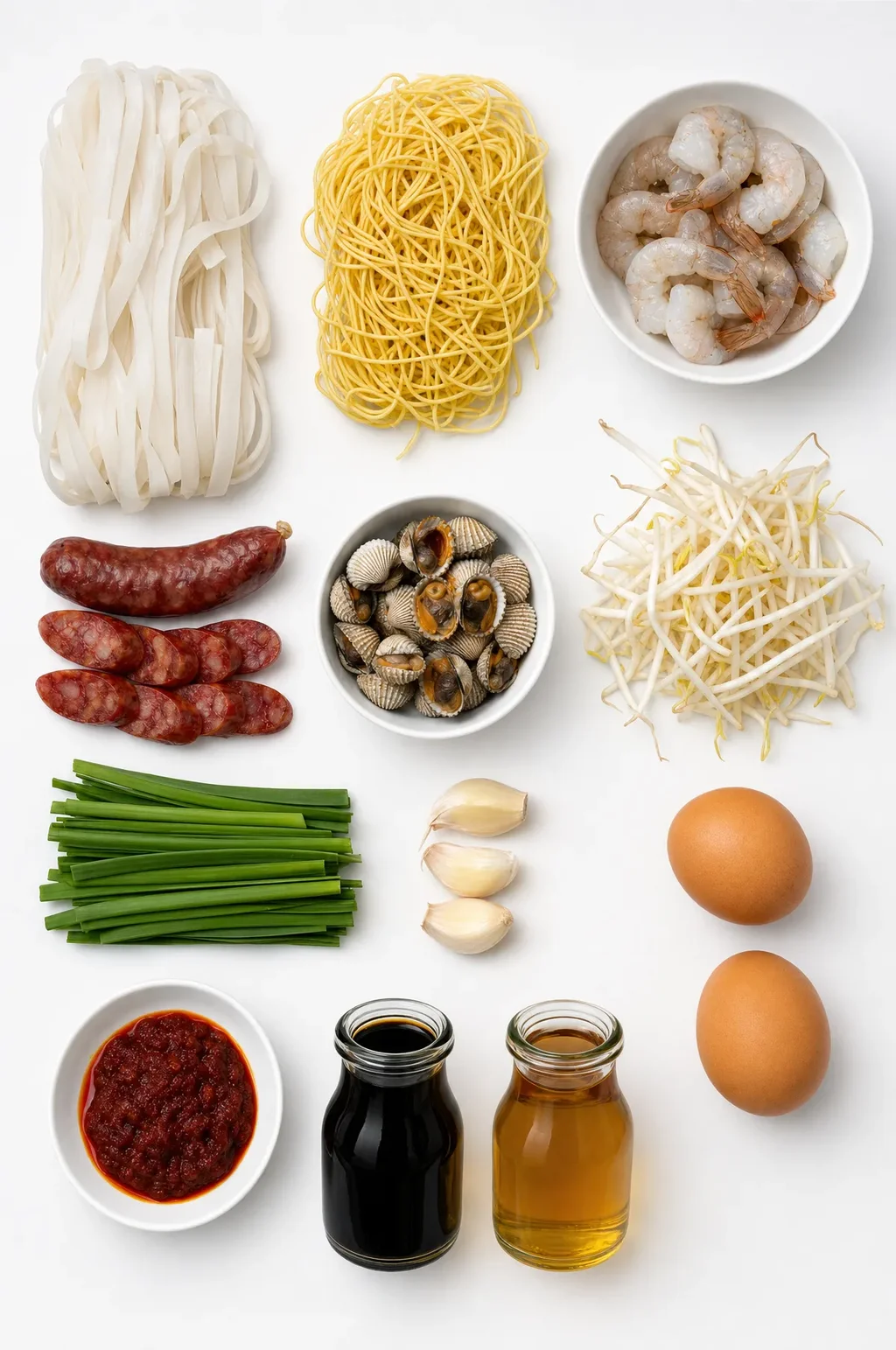
Makes 2 portions, cook one at a time
Per portion (double for 2 people, cook separately):
- 200g fresh flat rice noodles (kway teow), room temperature, separated
- 2 tbsp rendered lard, or 1 tbsp vegetable oil plus 1 tbsp schmaltz
- 1 lap cheong (Chinese sausage), sliced diagonally 3-4mm thick
- 6-8 medium prawns, shelled and deveined
- 50g cockles, fresh or jarred (rinsed well)
- 1 egg (duck egg preferred, chicken egg works)
- 75g bean sprouts, divided into 2 portions
- 4-5 stalks Chinese chives (kuchai), cut into 4cm lengths
- 2 garlic cloves, minced
- 1 tsp sambal belacan or chilli paste, adjust to taste
Sauce (per portion):
- 1 tbsp dark soy sauce
- 1 tbsp light soy sauce
- ½ tsp white sugar
- ¼ tsp white pepper
Instructions
Read through all steps before starting. The cook time is 3-4 minutes per portion. Everything must be within arm’s reach before the wok is lit.
Step 1: Prepare everything before lighting the wok
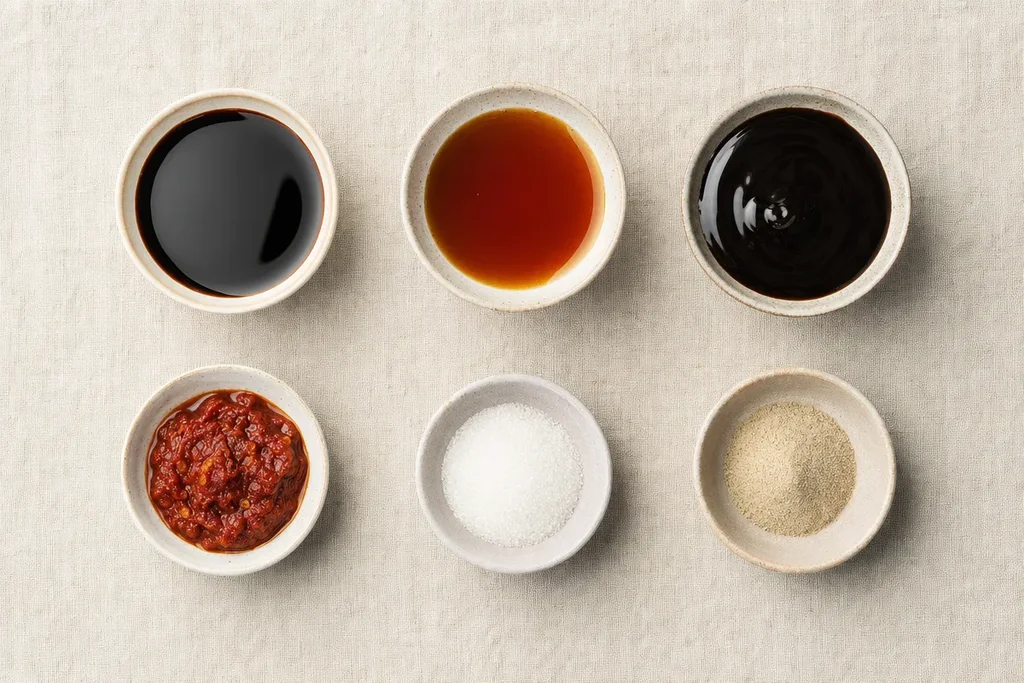
Mix the sauce in a small bowl. Separate the noodles by hand.
Step 2: Superheat the wok
Place a carbon steel wok over maximum heat. Heat empty for 2 full minutes.
Step 3: Render the lap cheong
Add the lap cheong slices. Spread them across the wok surface.
Step 4: Fry the garlic and prawns
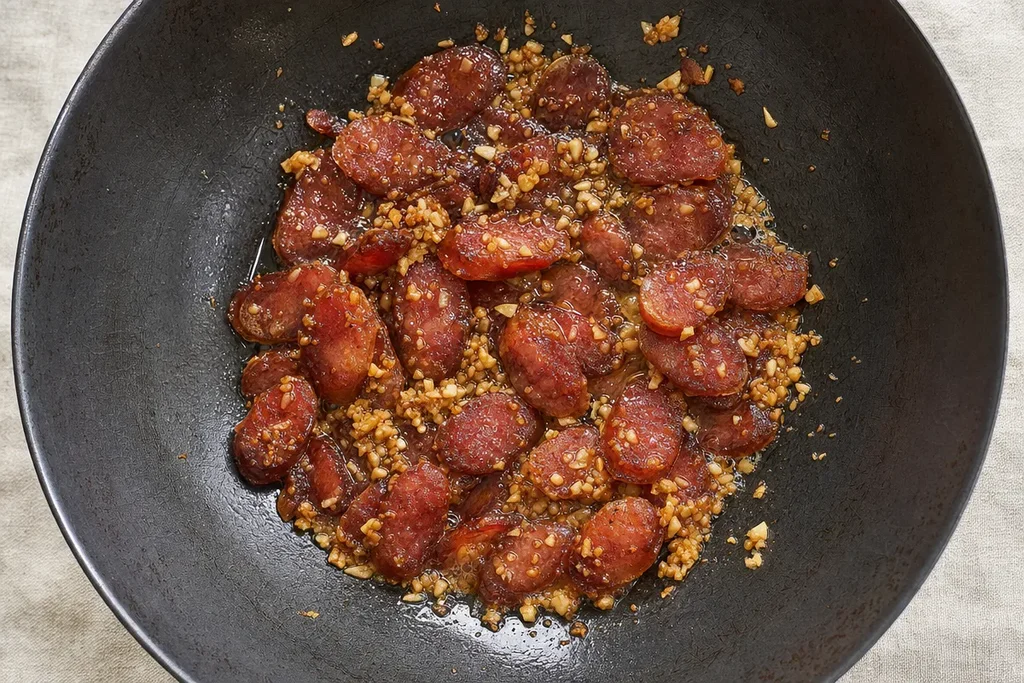
Add the minced garlic to the rendered fat. Stir once.
Step 5: Add chilli paste
Add the sambal belacan or chilli paste. Toss quickly for 15 seconds until fragrant.
Step 6: Add noodles and first batch of bean sprouts
Add the separated noodles and half the bean sprouts together. Pour the sauce over the top immediately.
Step 7: Fold in the egg
Push the noodles to one side of the wok. Crack the egg into the empty space.
Step 8: Final 30 seconds
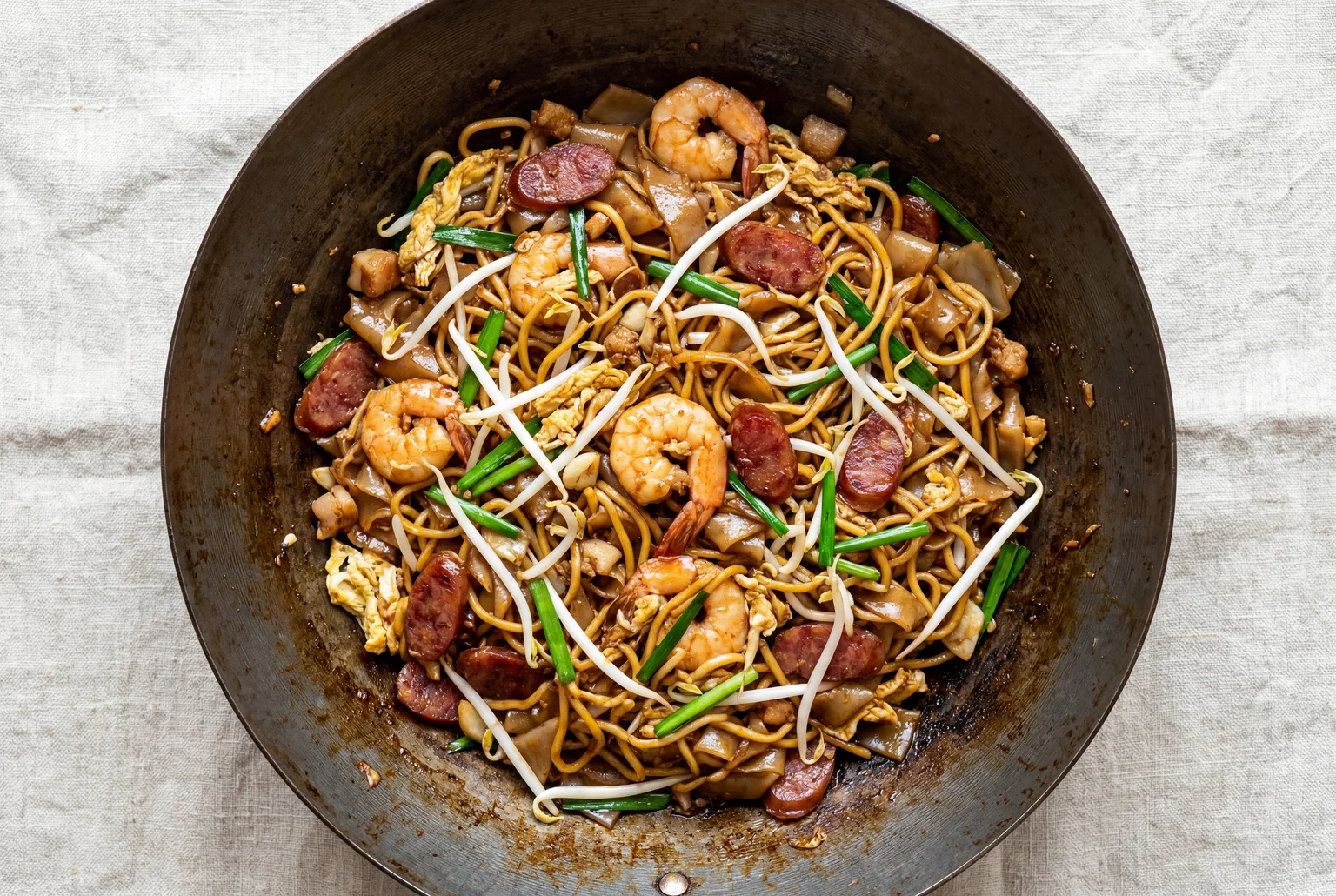
Add the cockles, the remaining bean sprouts, and the Chinese chives. Toss 3-4 times quickly.
Step 9: Plate and serve
Plate immediately. Top with crispy lard pieces if you have them.
How do you get wok hei in char kway teow at home?
The press-and-char method described in Step 6 is the primary technique for developing wok hei on a domestic hob. Spread the noodles flat, press firmly, hold for 20-25 seconds, toss, repeat. Do not stir continuously, movement prevents sustained contact between noodle and wok surface, and sustained contact is what produces the Maillard reaction that creates wok hei.
Three additional factors that improve wok hei at home:
Cook outside if possible. A domestic outdoor gas burner produces significantly more BTUs than a kitchen hob and produces better wok hei than most indoor setups.
Use a carbon steel wok, not stainless steel or non-stick. Carbon steel retains heat better and develops a seasoning layer over time that contributes to flavour.
Cook smaller batches. One portion in a large wok produces better wok hei than two portions. The single most effective change you can make is reducing the batch size.
The gap between a hawker’s wok hei and a home cook’s wok hei is real and cannot be fully closed. What you can produce at home is genuinely good, charred in places, smoky, properly textured, and significantly better than most restaurant versions served outside Malaysia and Singapore.
What is the difference between Penang and Singapore char kway teow?
Penang CKT and Singapore CKT share the same dish name and the same base ingredients but taste noticeably different.
Penang CKT uses only flat rice noodles, is cooked with lard as the primary fat, almost always includes cockles, and is drier in texture, the noodles have more direct contact with the wok surface and develop more char. The flavour is more intensely smoky and more distinctly pork-forward from the lard and lap cheong.
Singapore CKT typically mixes flat rice noodles with yellow wheat noodles (mee). It is generally wetter, more sauce, less char. Cockles appear in some versions but are increasingly omitted. Lard is used less consistently than in Penang. The flavour is slightly lighter and less smoky.
Neither version is more authentic than the other, they are regional variants of the same dish that evolved separately. If you prefer the dry, intensely charred version, cook Penang style. If you prefer a wetter, more noodle-forward result, add a small handful of yellow wheat noodles to the recipe and reduce the press-and-char time slightly.
How do you store and reheat char kway teow?
Char kway teow is best eaten immediately off the wok. The noodles continue absorbing the sauce as they cool and the texture softens significantly within 20 minutes of cooking.
If you must store it, refrigerate in a sealed container for up to 1 day. Reheat in a very hot wok with a small amount of lard or oil, press flat for 30-60 seconds to re-develop some char, toss once, and serve. Do not microwave. Microwaving steams the noodles and turns them soft and rubbery.
Cockles should not be stored and reheated. Remove them before storing and add freshly warmed cockles when reheating.
Love Chinese food?
Check out my complete guide to Chinese home cooking, pantry essentials, and techniques.
FAQ
What noodles do you use for char kway teow? Char kway teow uses fresh flat rice noodles (kway teow) approximately 1-1.5cm wide, sold in sheets or pre-cut strips in the refrigerated section of Asian grocery stores. Leave them at room temperature for 20-30 minutes before cooking and separate them completely by hand before adding to the wok. Dried flat rice noodles soaked in cold water are an inferior substitute, the texture is noticeably different.
Can I make char kway teow without lard? Yes, but the flavour will be different. Lard produces specific Maillard compounds at extreme heat that vegetable oil does not. The closest substitute is a 50/50 combination of vegetable oil and schmaltz (chicken fat). Bacon fat works but adds a smoked flavour that changes the dish’s character. Pure vegetable oil produces the least authentic result but still makes a good noodle dish.
Why are my char kway teow noodles soggy? Three causes. First, too many portions cooked at once, the wok temperature drops below the frying threshold and the noodles steam instead of char. Cook one portion at a time. Second, the noodles were cold from the refrigerator, cold noodles drop the wok temperature faster than room temperature noodles. Rest them at room temperature for 20-30 minutes before cooking. Third, the bean sprouts were all added at once, they release significant moisture that floods the wok. Add them in two batches as described in the recipe.
What can I substitute for cockles? Small clams or mussels are the closest substitute, briefly steam them open in a separate pan and add the opened shellfish in the final 30 seconds. Canned cockles are acceptable but require thorough rinsing to remove the brine. If no shellfish is available, simply omit them. The dish is complete without cockles, they are traditional in Penang CKT but the flavour logic of the dish does not depend on them.
Char Kway Teow Recipe (Penang Style)
PT20M
PT10M
PT30M
Nutrition Facts
Ingredients
- 200g fresh flat rice noodles (kway teow), room temperature, separated
- 2 tbsp rendered lard, or 1 tbsp vegetable oil plus 1 tbsp schmaltz
- 1 lap cheong (Chinese sausage), sliced diagonally 3-4mm thick
- 6-8 medium prawns, shelled and deveined
- 50g cockles, fresh or jarred (rinsed well)
- 1 egg (duck egg preferred, chicken egg works)
- 75g bean sprouts, divided into 2 portions
- 4-5 stalks Chinese chives (kuchai), cut into 4cm lengths
- 2 garlic cloves, minced
- 1 tsp sambal belacan or chilli paste, adjust to taste
- 1 tbsp dark soy sauce
- 1 tbsp light soy sauce
- ½ tsp white sugar
- ¼ tsp white pepper
Instructions
- *Read through all steps before starting. The cook time is 3-4 minutes per portion. Everything must be within arm's reach before the wok is lit.*
- Mix the sauce in a small bowl. Separate the noodles by hand. Slice the lap cheong. Shell the prawns. Rinse the cockles. Have the bean sprouts, chives, garlic, and egg ready in individual bowls. Once the wok is hot, there is no time to prepare anything.
- Place a carbon steel wok over maximum heat. Heat empty for 2 full minutes. The wok should be beginning to smoke. Add the lard. It will melt and shimmer immediately. Swirl to coat the wok surface.
- Add the lap cheong slices. Spread them across the wok surface. Fry without stirring for 60-90 seconds until the fat renders out around the slices and they develop colour at the edges. You will see the lard pool increase as the sausage fat renders. This rendered fat is the flavour base for everything else.
- Add the minced garlic to the rendered fat. Stir once. Add the prawns immediately after. The garlic should not sit in the wok for more than 5-10 seconds before the prawns go in, it burns. Stir-fry the prawns for 45-60 seconds until they are just pink and beginning to curl. They will finish cooking with the noodles.
- Add the sambal belacan or chilli paste. Toss quickly for 15 seconds until fragrant.
- Add the separated noodles and half the bean sprouts together. Pour the sauce over the top immediately. Using a wok spatula, spread the noodles flat across the wok surface and press firmly for 20-25 seconds without stirring. This is the press-and-char step that develops wok hei. After 25 seconds, toss, spread flat, and press again for another 15-20 seconds. Repeat once more. The noodles should develop some colour and a slight smokiness.
- Push the noodles to one side of the wok. Crack the egg into the empty space. Let it set for 10-15 seconds until the white is beginning to firm. With the spatula, fold the noodles back over the egg and press down. The egg should be partially scrambled and distributed through the noodles rather than fully cooked and separate. Work quickly, the egg continues cooking from the heat of the noodles.
- Add the cockles, the remaining bean sprouts, and the Chinese chives. Toss 3-4 times quickly. Remove from heat immediately. The cockles should be just warmed through. The chives should be wilted but still green. The bean sprouts should retain some crunch.
- Plate immediately. Top with crispy lard pieces if you have them. Serve with a wedge of lime and sambal belacan on the side. Wipe the wok clean. Reheat it to smoking before cooking the second portion. ## How do you get wok hei in char kway teow at home? The press-and-char method described in Step 6 is the primary technique for developing wok hei on a domestic hob. Spread the noodles flat, press firmly, hold for 20-25 seconds, toss, repeat. Do not stir continuously, movement prevents sustained contact between noodle and wok surface, and sustained contact is what produces the Maillard reaction that creates wok hei. Three additional factors that improve wok hei at home: Cook outside if possible. A domestic outdoor gas burner produces significantly more BTUs than a kitchen hob and produces better wok hei than most indoor setups. Use a carbon steel wok, not stainless steel or non-stick. Carbon steel retains heat better and develops a seasoning layer over time that contributes to flavour. Cook smaller batches. One portion in a large wok produces better wok hei than two portions. The single most effective change you can make is reducing the batch size. The gap between a hawker's wok hei and a home cook's wok hei is real and cannot be fully closed. What you can produce at home is genuinely good, charred in places, smoky, properly textured, and significantly better than most restaurant versions served outside Malaysia and Singapore.
Did you make this recipe?
Tag @asianfoodsdaily on Instagram or leave a comment below!
Testing Notes
Tested in Asha's kitchen. Last reviewed July 14, 2025.
Ingredient Substitutions
Substitution notes coming soon.
About Asha
Half Asian, half African cook raised between two food-obsessed cultures. I've spent 10 years learning Asian cooking traditions through family, friends, and thousands of hours at the stove — testing every dish until it works in a standard home kitchen.
Read my full storyRelated Recipes
More delicious dishes you might enjoy


Loading comments...