Stinky Tofu Recipe (臭豆腐 / Chou Doufu)
Jump to Section
On day two of the first fermentation batch, the smell coming from the jar in the corner of my kitchen was alarming enough that I considered abandoning the whole project. It smelled like something had gone wrong rather than right. I left it anyway, fried the tofu at the end of 36 hours, and the smell dropped to a fraction of itself within the first minute in the oil. The finished tofu smelled deeply fermented and earthy rather than aggressively sulphurous. What I had not understood was that most of the volatile smell compounds evaporate at frying temperatures. The smell during fermentation is not the smell of the finished dish.
The volatile sulphur compounds that produce the characteristic stinky tofu aroma, hydrogen sulphide, methanethiol, dimethyl sulphide, have low boiling points. They evaporate rapidly when the tofu hits 190°C oil. What remains after frying is the deeper, earthier fermented character underneath those volatiles. It is the difference between the raw smell of blue cheese and the flavour of blue cheese in a sauce, the most aggressive components drive off and what remains is more complex and less confrontational than the raw state suggested.
What is stinky tofu and why does it smell the way it does?
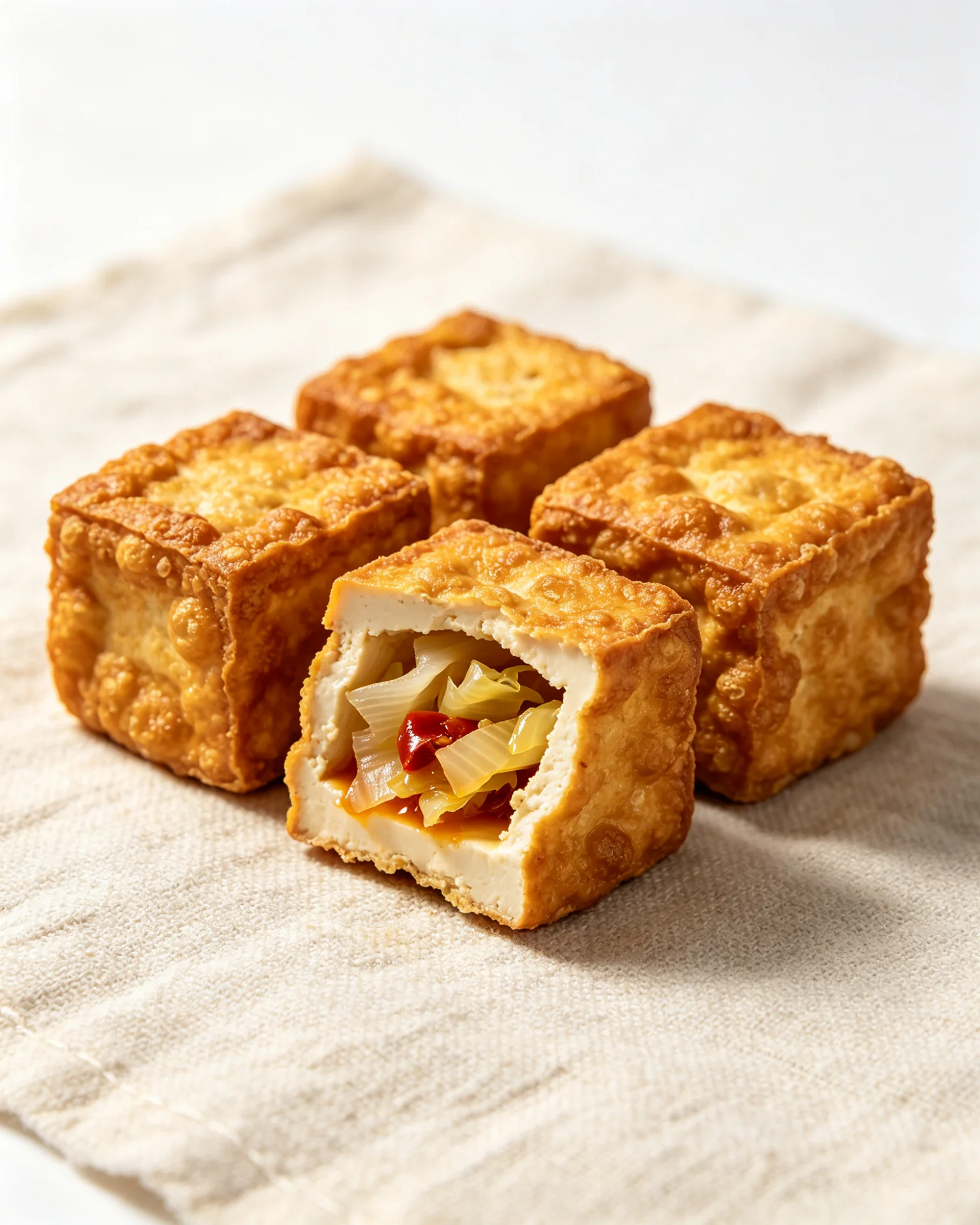
Stinky tofu (臭豆腐, chòu dòufu) is fermented firm tofu, a defining street food of Taiwan and a common night market presence across Hong Kong, Hunan, and parts of mainland China. The smell is not an accident or a sign of spoilage. It is the product of a controlled fermentation process that produces specific volatile compounds through the breakdown of the tofu’s soy proteins.
The mechanism is proteolysis. When firm tofu is submerged in the fermentation brine, the microorganisms present in the brine, primarily Bacillus species and lactic acid bacteria, begin secreting extracellular protease enzymes. These enzymes break the peptide bonds in the tofu’s soy proteins (primarily glycinin and beta-conglycinin), releasing free amino acids. The sulphur-containing amino acids released in this way, cysteine and methionine, are particularly important. Further enzymatic and chemical degradation of these amino acids produces volatile sulphur compounds in three main forms: hydrogen sulphide (the rotten egg character), methanethiol (cooked cabbage, slightly sweeter), and dimethyl sulphide (a slightly oceanic note). These three compounds together, at the concentrations produced during stinky tofu fermentation, create the characteristic smell.
The same proteolysis process is what happens during the making of aged cheese, miso, and fish sauce. Stinky tofu is in the same fermented protein family, the smell is distinctive and intense, but the underlying process is not fundamentally different from other fermented foods that appear on fine dining menus.
Why the smell reduces dramatically during frying: all three volatile sulphur compounds have low boiling points and evaporate rapidly at 190°C. Most of the aggressive volatiles are gone within the first minute of frying. What remains in the finished dish is the deeper, earthier fermented character, the amino acids and their non-volatile breakdown products, which produces the complex, savoury flavour that makes stinky tofu worth eating.
Why does stinky tofu use firm tofu and not soft or silken?
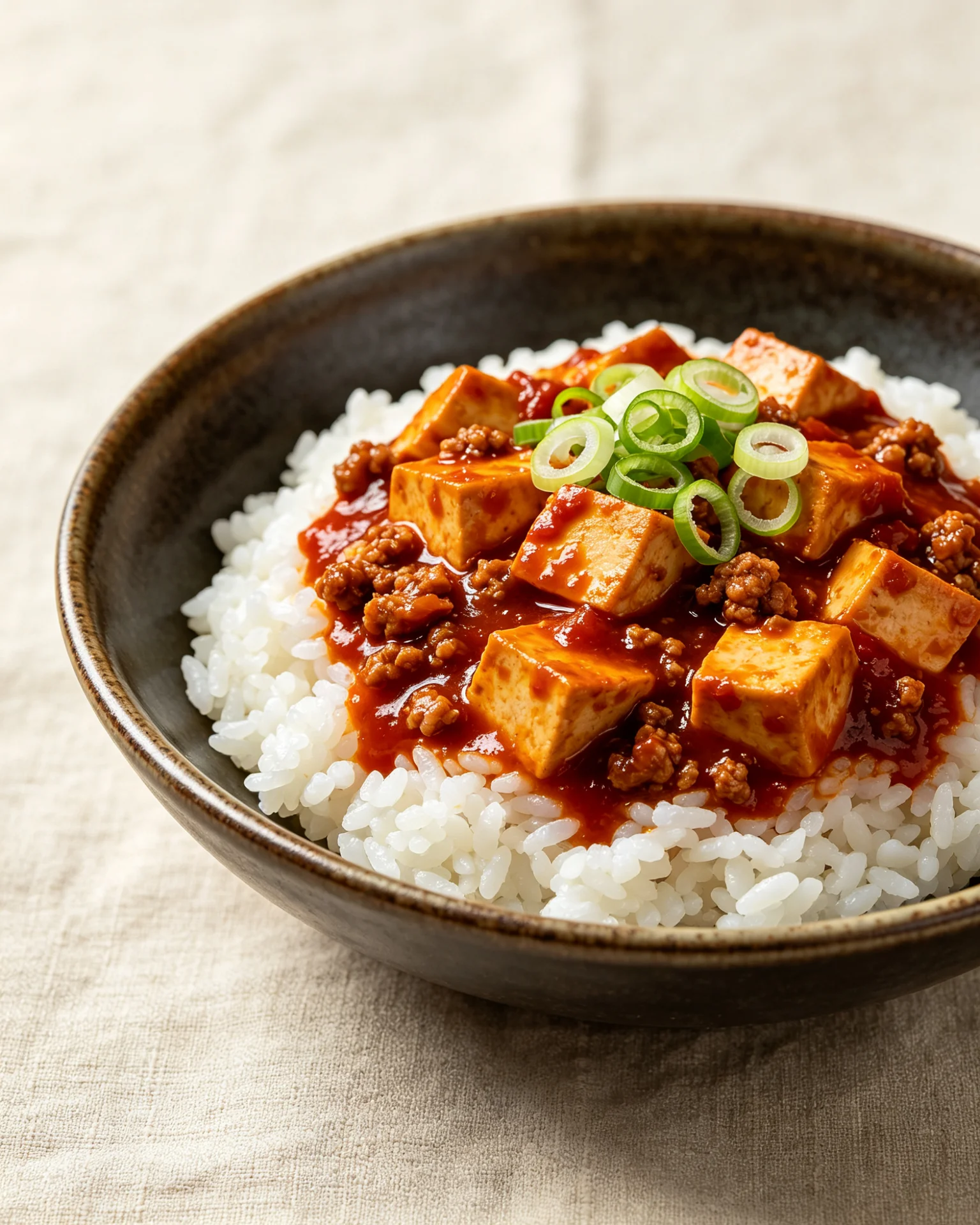
This is the opposite of mapo tofu, which requires silken tofu for its water release properties. For stinky tofu, the protein matrix structure is what matters.
Firm tofu is produced by coagulating soy milk more aggressively than silken tofu, more coagulant added, more water pressed out. The result is a denser overall structure with a more open, porous network at the micro level. Under a microscope, firm tofu looks like a sponge, a matrix of protein strands with open channels running throughout. This porosity is what allows the fermentation brine to penetrate from the surface into the interior of the tofu block over the 24-48 hour fermentation period.
The microbes and their protease enzymes follow the brine as it penetrates inward, producing proteolysis and therefore flavour development throughout the entire cube, not just at the surface.
Silken tofu has a smoother, denser protein gel with much finer pores. The brine penetrates only a few millimetres into the surface layer. The fermentation is limited to the exterior. The result is a tofu with a fermented exterior and an unfermented, standard-tasting interior, the flavour development that defines the dish does not happen throughout the cube.
Firm tofu also holds its shape during deep frying without the brine soak that silken tofu requires for mapo tofu. The already-firmer protein structure survives the transition to the hot oil without crumbling.
How does the brine work and how long should you ferment?
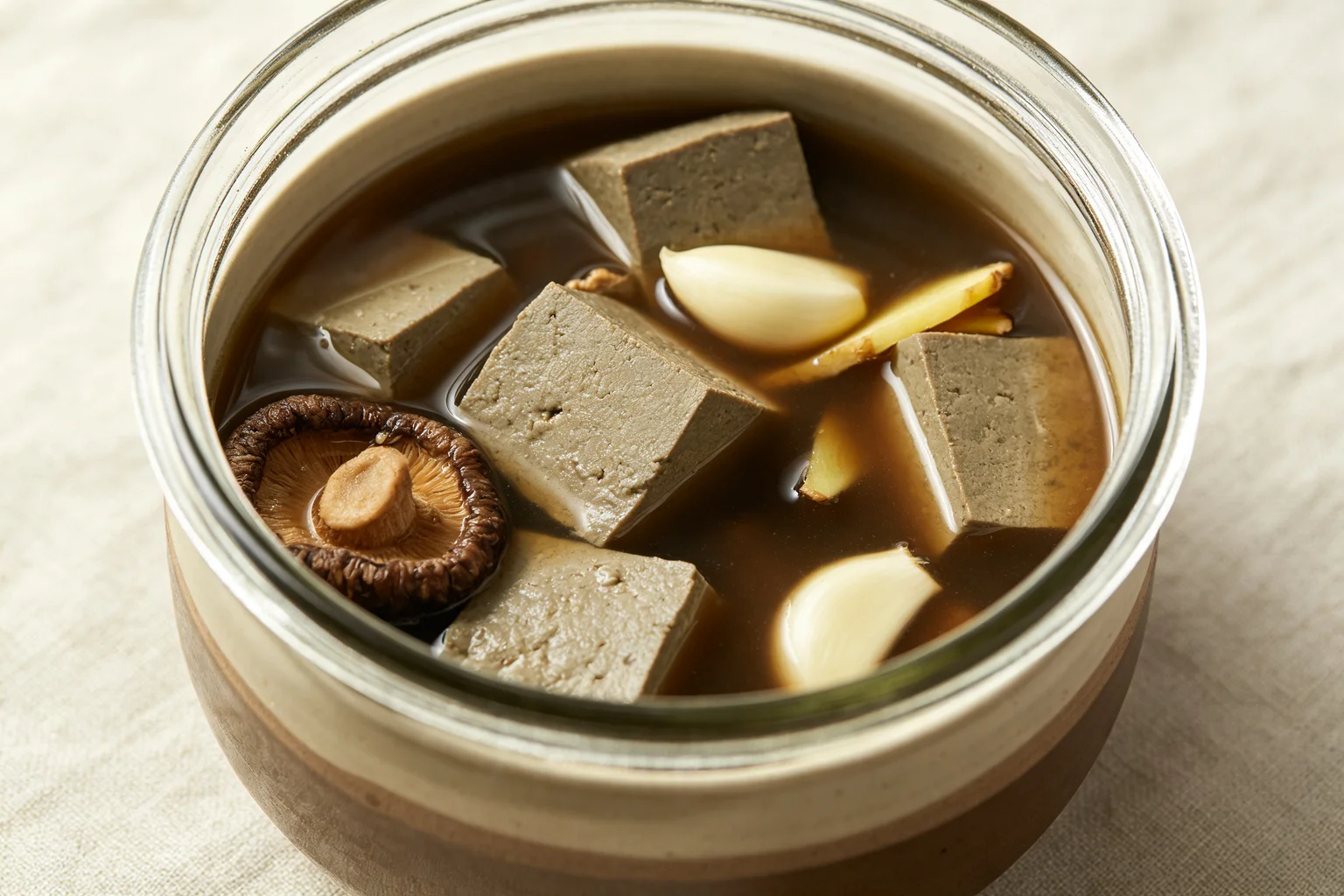
The brine in this recipe uses fermented bean curd (南乳, nán rǔ, the soft, salty white or red cubes sold in jars at Asian grocery stores) as the starter culture. This is the shortcut that makes home stinky tofu achievable without sourcing traditional brine starters or waiting months. Fermented bean curd already contains active microbial cultures from its own fermentation process. When dissolved in water with garlic, ginger, dried shiitake, and Shaoxing wine, it creates a brine with the right microbial population to begin proteolysis on the tofu within 24 hours.
The fermentation timeline and result:
24 hours: mild fermentation. The tofu has a light fermented character and a subtle smell. The flavour is noticeable but not assertive. Good for first-timers who want to calibrate.
36 hours: moderate fermentation. The Batch 4 result from testing this recipe at home, deeply golden crust with a custardy, steaming interior. The smell during fermentation is significant but the finished fried tofu is earthy and complex rather than aggressively sulphurous. This is the Taiwanese night market standard.
48 hours: strong fermentation. The smell during fermentation is intense. The finished tofu has a more assertive, deeply funky character. For experienced stinky tofu eaters who want the full version.
Temperature affects the rate. Room temperature fermentation (20-25°C) is faster, 24 hours at room temperature produces results similar to 36-48 hours in the refrigerator. Refrigerator fermentation is slower and more controlled, which is useful for managing the timeline precisely.
Reusing the brine: the spent brine from a completed fermentation contains a rich population of active microbes. Saved and refrigerated, it can be used as the starter for the next batch, add fresh water, garlic, ginger, and a small amount of new fermented bean curd. Each successive batch deepens in character as the microbial population matures and diversifies. The fourth or fifth batch of brine produces significantly more complex stinky tofu than the first.
Why does the frying temperature matter and what happens at 190°C?
The Taiwanese style of stinky tofu, airy, hollow interior with a shatteringly crispy exterior, depends on the specific physics of what happens when the tofu cube hits very hot oil.
At 190°C, the outer surface of the tofu cube makes contact with oil hot enough to immediately denature the outer protein layer and seal it. This rapid sealing happens within the first few seconds of frying. A firm, sealed exterior shell forms around the still-cold interior of the tofu.
The water inside the cube, still at room temperature, begins converting to steam as the heat penetrates inward. Steam occupies approximately 1,600 times the volume of liquid water at atmospheric pressure. This expanding steam cannot escape through the rapidly sealed outer shell instantaneously, it pushes outward through the porous protein matrix, progressively expanding the interior space as it escapes through the slightly porous crust.
As the interior water progressively converts to steam and escapes, the tofu cube hollows out from the inside. The exterior shell remains intact. The result is a thin, crispy exterior shell with a hollow, air-filled interior, the characteristic Taiwanese stinky tofu structure.
At lower temperatures (160-170°C), surface denaturation is slower. The moisture escapes gradually from the beginning of frying without building the steam pressure needed to hollow the interior. The tofu cooks through and crisps but remains denser inside. The result is still good but lacks the specific airy, puffed character of Taiwanese style.
What is the hollow sound test and what does it mean?
The hollow sound test is physics confirmation that the frying is complete.
When all the interior water has converted to steam and escaped through the exterior shell, the tofu cube is fully hollow. Tapping this hollow cube produces a distinctly different acoustic resonance from a solid or partially-solid cube, similar to the difference between tapping a hollow wooden box and a solid block of wood. The hollow cube resonates with a light, slightly drumlike sound. The still-solid cube produces a dull thud.
The test confirms two things simultaneously: that the interior water has fully escaped (meaning the frying is complete) and that the hollow interior space has formed (meaning the Taiwanese-style structure is present). Both conditions must be met for the dish to be correct.
Visual check alongside the sound test: the exterior should be deep golden, significantly darker than a standard fried food at this stage, with a slightly irregular, blistered surface rather than a smooth even crust. Both the visual and the sound together confirm doneness. Neither alone is sufficient, a cube can be deep golden but still dense inside if the temperature was too low.
What is the Taiwanese sauce pocket technique?
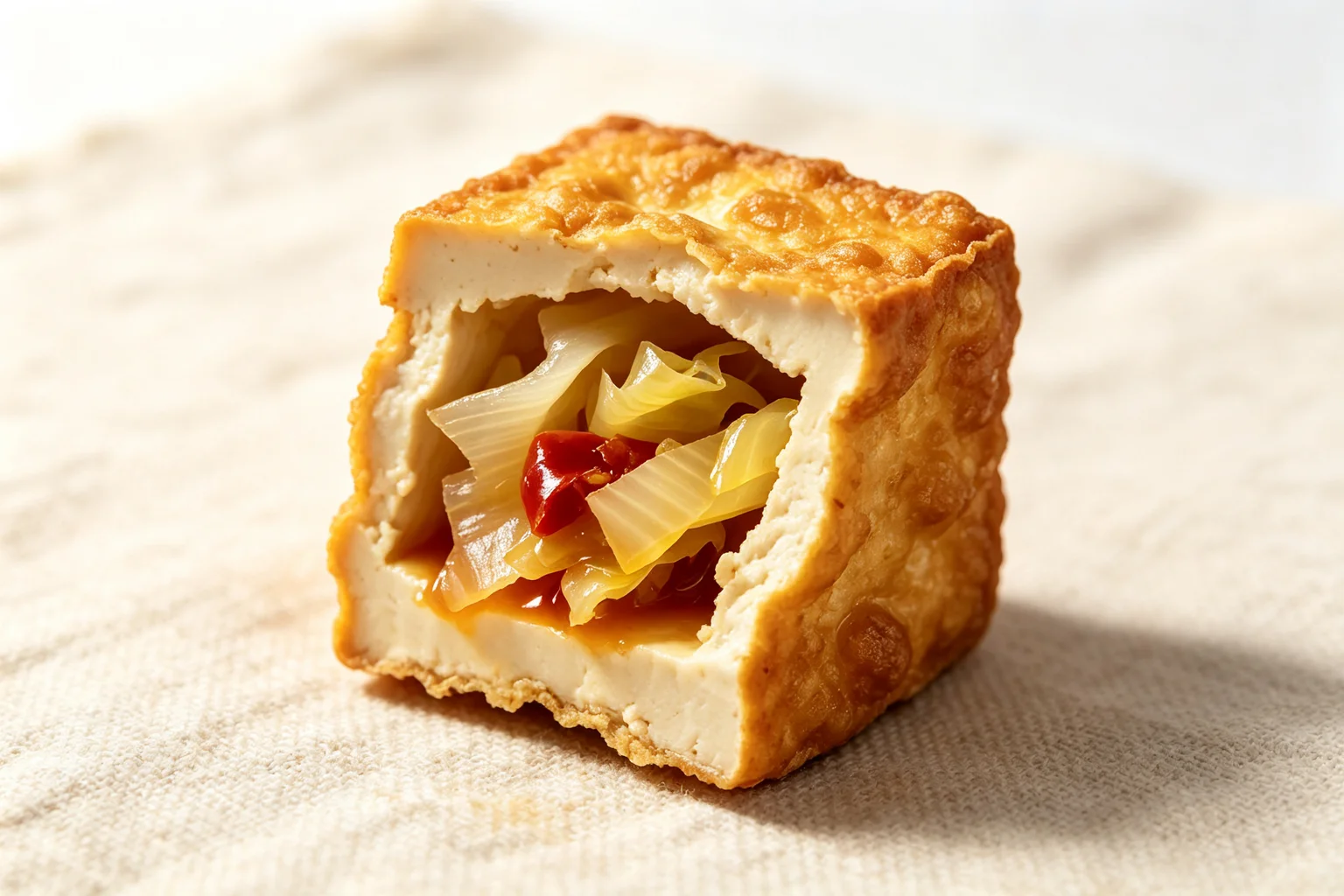
After frying, the tofu cube is hollow, a crispy shell with an air-filled interior. The Taiwanese night market technique cuts a horizontal pocket into one side of the cube, exposing this hollow space.
Pickled cabbage (泡菜, pào cài, the Taiwanese-style lightly fermented cabbage, tangier and less spicy than Korean kimchi) and chilli sauce are spooned into the pocket. The hollow interior acts as a reservoir. The sauce fills the space and contacts the interior surface of the tofu shell from every direction simultaneously rather than just coating the exterior.
When bitten, the tooth breaks through the crispy exterior shell and immediately encounters the sauce-soaked interior surface. A single bite delivers the crispy exterior, the sauce-saturated interior, the acid from the pickled cabbage, and the heat from the chilli simultaneously. This is what makes the sauce pocket technique more than presentation, it changes the structure of every bite.
Without the pocket: the sauce sits on the exterior and the interior stays dry. The bite delivers the tofu and then the sauce separately. With the pocket: everything is integrated from the first contact.
What is the difference between Taiwanese, Hunan, and Hong Kong stinky tofu?
All three are deep-fried or cooked stinky tofu but the techniques, presentations, and flavour profiles differ enough that they are genuinely different eating experiences.
Taiwanese style (this recipe): deep-fried at high temperature to produce the hollow, airy interior. The exterior is shatteringly crispy. Served with the sauce pocket technique, pickled cabbage and chilli sauce stuffed into a cut pocket in the tofu. The focus is on the textural contrast between crispy exterior and sauce-soaked interior.
Hunan style: not deep-fried but braised or steamed. The fermented tofu is placed in a spicy sauce and cooked slowly, absorbing the sauce throughout. The result is soft, deeply flavoured, intensely spicy. No crispy exterior. Eaten as part of a rice meal rather than as a street snack.
Hong Kong style: deep-fried like Taiwanese but then tossed in a thick savoury sauce rather than served with the pocket technique. The sauce coats the exterior. The interior is less hollow than Taiwanese style because the frying temperature is often slightly lower.
The Taiwanese version is the most internationally recognised and the most visually distinctive. It is the version associated with night market culture and the version that most non-Taiwanese people encounter first.
Ingredients
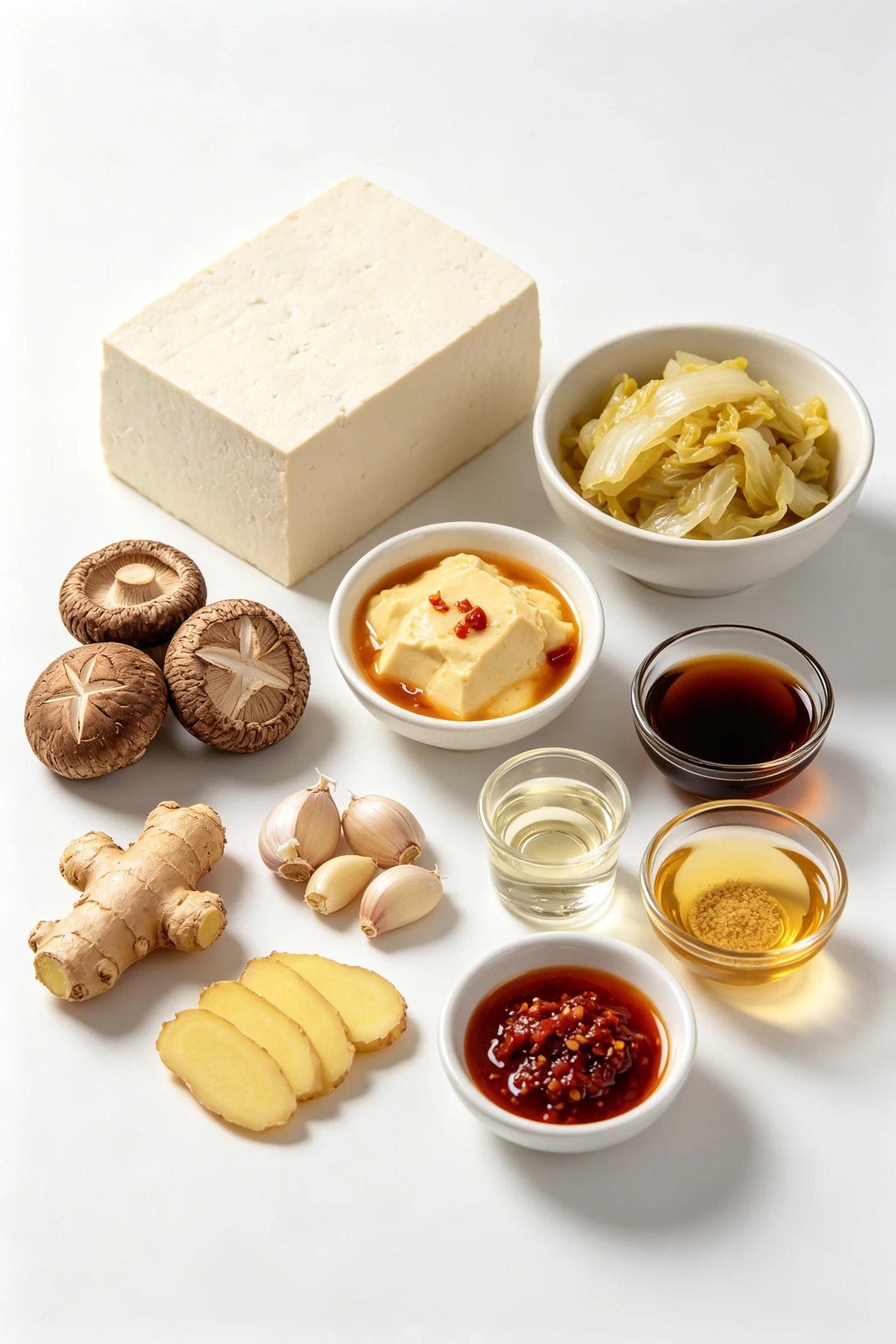
Serves 4 as a snack or appetiser
Fermentation brine:
- 4 tbsp fermented bean curd (nán rǔ / 南乳, white variety, from the jar), mashed
- 3 tbsp of the fermented bean curd liquid from the jar
- 500ml (2 cups) water
- 4 garlic cloves, smashed
- 2cm fresh ginger, sliced
- 2 dried shiitake mushrooms
- 2 tbsp Shaoxing wine
- 1 tbsp rice wine vinegar
- 1 tsp salt
Tofu:
- 400g (14oz) firm tofu, cut into 5cm cubes, patted dry
For frying:
- Neutral oil for deep frying (approximately 1 litre)
Taiwanese sauce pocket filling:
- 1 cup Taiwanese pickled cabbage (pào cài) or kimchi, drained and roughly chopped
- 3 tbsp chilli garlic sauce (sambal or similar)
- 1 tbsp light soy sauce
- 1 tsp sesame oil
- 1 tsp sugar
Instructions
Step 1: Make the brine
Combine all brine ingredients in a clean glass jar or non-reactive container. Stir well until the fermented bean curd is fully dissolved and dispersed.
Step 2: Ferment the tofu
Pat the tofu cubes completely dry. Submerge them fully in the brine.
Ferment at room temperature for 24-36 hours, or in the refrigerator for 36-48 hours. The tofu will change colour from white to a pale grey or light brown. The brine will smell significantly stronger by the end. Both are correct and expected.
Step 3: Make the sauce filling
Combine the drained pickled cabbage, chilli garlic sauce, soy sauce, sesame oil, and sugar in a small bowl. Taste and adjust, it should be spicy, slightly sour, and savoury.
Step 4: Drain and dry the tofu
Remove the fermented tofu cubes from the brine with a slotted spoon. Reserve the brine in the refrigerator for the next batch, it is now a more potent starter culture.
Step 5: Deep fry at 190°C
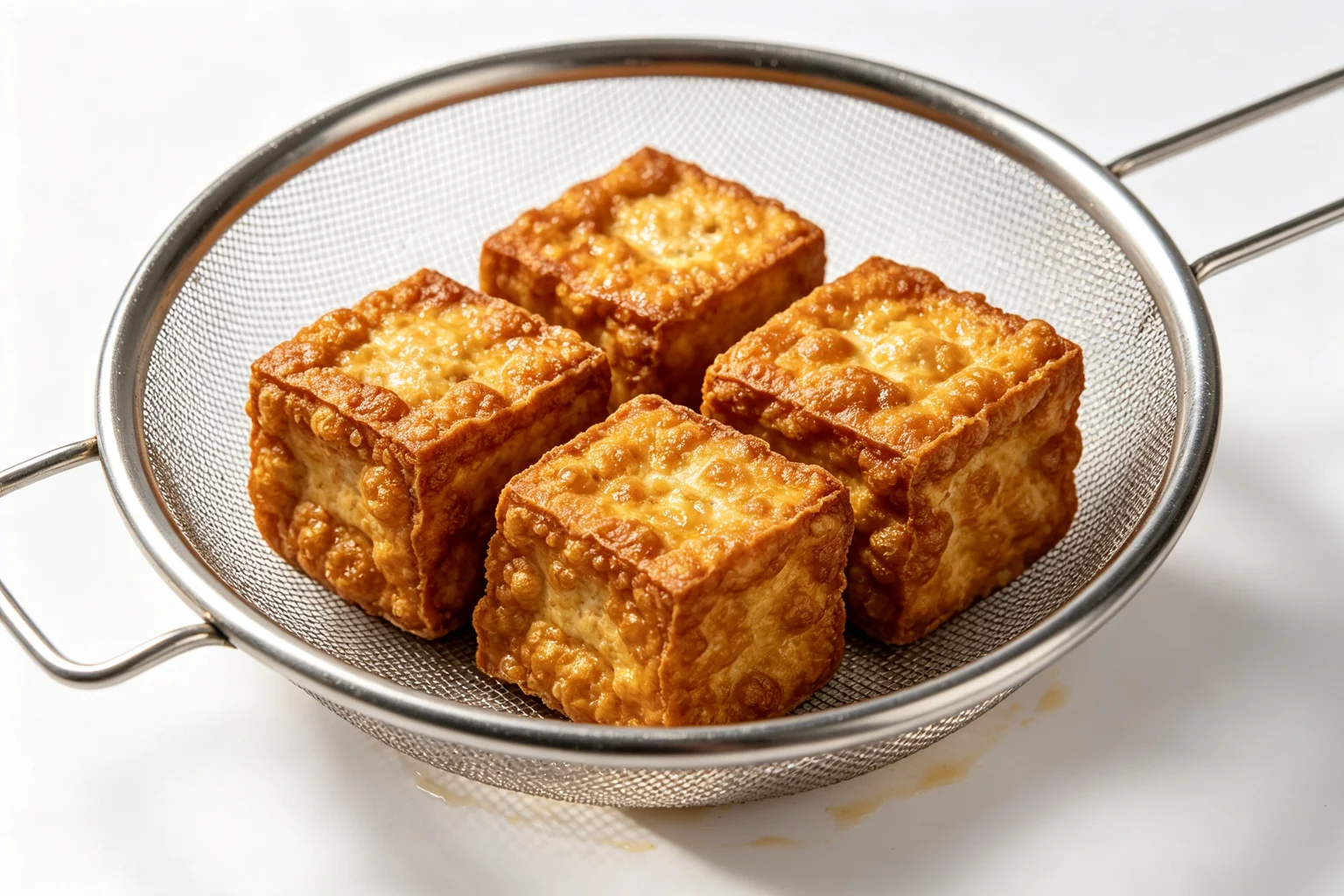
Heat neutral oil to 190°C in a wok or deep heavy-based pot. Verify temperature with a thermometer or with the wooden chopstick test, steady immediate bubbles at the base.
Fry the tofu in batches of 4-6 cubes, do not crowd the oil, which drops the temperature. Fry for 4-5 minutes until deep golden and blistered on the exterior. After 3-4 minutes, tap each cube with the back of a spoon or chopstick. A hollow, drumlike sound means the interior water has fully escaped and the cube is done. A dull thud means more time is needed.
Remove with a slotted spoon. Drain on a wire rack, not kitchen paper, which traps steam and softens the base.
Allow the oil to return to 190°C between batches.
Step 6: Cut the pocket and fill
While the tofu is still very hot, cut a horizontal pocket into one side of each cube using a sharp knife, cut approximately two-thirds of the way through, leaving three sides intact. Open the pocket carefully.
Serve immediately. The crispy exterior begins softening within minutes.
How do you store stinky tofu and how do you know if it has gone bad?
Fermented brine: Keeps refrigerated for up to 4 weeks. The microbial culture remains active and each use deepens the brine’s character. Discard if you see mould (fuzzy growth, not the thin white film which is normal), if it smells rancid rather than funky, or if the liquid turns an unusual colour beyond pale grey-brown.
Fermented uncooked tofu: Once fermented, the tofu cubes can be kept submerged in the brine in the refrigerator for up to 5 days. The fermentation continues slowly at refrigerator temperature, the tofu will become more assertive the longer it sits.
Fried stinky tofu: Best eaten within 10 minutes of frying. The hollow interior begins absorbing ambient moisture and the exterior softens progressively. Refrigerated fried stinky tofu can be reheated in an air fryer at 200°C for 3-4 minutes to partially restore crispness, the exterior will not return to its just-fried state but the interior sauce pocket holds well.
How to know if the fermentation has gone wrong: Healthy fermentation produces a progressively stronger version of the fermented bean curd smell, funky, pungent, deeply savoury. Signs of failed fermentation: pink or orange discolouration of the brine (indicates wrong bacteria), fuzzy mould growth on the tofu surface (not just the brine surface), a rancid or putrid smell that is distinctly different from the sulphurous fermented smell. If in doubt, discard and start again with a fresh brine.
Love Chinese food?
Check out my complete guide to Chinese home cooking, pantry essentials, and techniques.
FAQ
Is the fermentation smell normal and will it fill the house? Yes and yes. The volatile sulphur compounds produced during fermentation are the source of the smell, hydrogen sulphide, methanethiol, and dimethyl sulphide, and they are present in high concentrations in the fermentation jar. Keep the jar in a well-ventilated area or outside during fermentation if the smell is a concern. The good news: the smell reduces dramatically during frying as these volatile compounds evaporate at 190°C. The fried dish smells significantly less aggressive than the fermentation jar.
Can I use the fermented bean curd brine from this recipe again? Yes. The spent brine contains an active microbial culture that deepens with each use. Strain out the old solids, add fresh water to maintain volume, add a small amount of new fermented bean curd, and refrigerate. The second and subsequent batches produce more complex, more assertive stinky tofu because the microbial population has matured. Some Taiwanese vendors maintain the same brine for years.
Why does my stinky tofu come out dense and not hollow? The oil temperature was too low. Below approximately 185°C, the surface of the tofu does not seal rapidly enough to trap the interior steam. The moisture escapes gradually from the beginning of frying without building the pressure needed to hollow the interior. Use a thermometer. If you do not have one, test with a small piece of tofu, it should immediately sizzle and begin to colour within 10-15 seconds. If it sizzles slowly, wait for the oil to heat further before proceeding.
How is Taiwanese pickled cabbage different from kimchi? Taiwanese pào cài (泡菜) is lightly fermented napa cabbage with a clean, sour, slightly sweet character and minimal spice. The fermentation is shorter and less aggressive than kimchi, and no gochugaru (Korean chilli paste) is used. The result is tangier and less complex than kimchi but crisper and more refreshing. Kimchi is an acceptable substitute for the sauce pocket and provides more heat and depth. The pickled cabbage is specifically chosen for its clean acidity, it cuts through the richness of the fried tofu without overwhelming the fermented character of the tofu itself.
You might also like: Check out our complete Chinese cooking guide for more essential ingredients and techniques.
Stinky Tofu Recipe (臭豆腐 / Chou Doufu)
Stinky Tofu, Chinese Street Food, Taiwanese Chili Sauce
PT30M
PT10M
PT48H40M (includes 48-hour fermentation)
Nutrition Facts
Ingredients
- 4 tbsp fermented bean curd (nán rǔ / 南乳, white variety, from the jar), mashed
- 3 tbsp of the fermented bean curd liquid from the jar
- 500ml (2 cups) water
- 4 garlic cloves, smashed
- 2cm fresh ginger, sliced
- 2 dried shiitake mushrooms
- 2 tbsp Shaoxing wine
- 1 tbsp rice wine vinegar
- 1 tsp salt
- 400g (14oz) firm tofu, cut into 5cm cubes, patted dry
- Neutral oil for deep frying (approximately 1 litre)
- 1 cup Taiwanese pickled cabbage (pào cài) or kimchi, drained and roughly chopped
- 3 tbsp chilli garlic sauce (sambal or similar)
- 1 tbsp light soy sauce
- 1 tsp sesame oil
- 1 tsp sugar
Instructions
- Combine all brine ingredients in a clean glass jar or non-reactive container. Stir well until the fermented bean curd is fully dissolved and dispersed. The brine should smell strongly of fermented bean curd and garlic.
- Pat the tofu cubes completely dry. Submerge them fully in the brine. The cubes must be completely covered, weigh them down with a small plate or zip-lock bag filled with water if they float. Cover the container loosely, do not seal it airtight, as gases are produced during fermentation. Ferment at room temperature for 24-36 hours, or in the refrigerator for 36-48 hours. The tofu will change colour from white to a pale grey or light brown. The brine will smell significantly stronger by the end. Both are correct and expected.
- Combine the drained pickled cabbage, chilli garlic sauce, soy sauce, sesame oil, and sugar in a small bowl. Taste and adjust, it should be spicy, slightly sour, and savoury. Set aside.
- Remove the fermented tofu cubes from the brine with a slotted spoon. Reserve the brine in the refrigerator for the next batch, it is now a more potent starter culture. Pat the tofu cubes dry with kitchen paper. They should smell strongly at this point. The smell will reduce dramatically during frying.
- Heat neutral oil to 190°C in a wok or deep heavy-based pot. Verify temperature with a thermometer or with the wooden chopstick test, steady immediate bubbles at the base. Fry the tofu in batches of 4-6 cubes, do not crowd the oil, which drops the temperature. Fry for 4-5 minutes until deep golden and blistered on the exterior. After 3-4 minutes, tap each cube with the back of a spoon or chopstick. A hollow, drumlike sound means the interior water has fully escaped and the cube is done. A dull thud means more time is needed. Remove with a slotted spoon. Drain on a wire rack, not kitchen paper, which traps steam and softens the base. Allow the oil to return to 190°C between batches.
- While the tofu is still very hot, cut a horizontal pocket into one side of each cube using a sharp knife, cut approximately two-thirds of the way through, leaving three sides intact. Open the pocket carefully. Spoon the pickled cabbage mixture into the hollow interior. Do not overfill, the sauce should stay mostly inside the pocket. Serve immediately. The crispy exterior begins softening within minutes. ## How do you store stinky tofu and how do you know if it has gone bad? Fermented brine: Keeps refrigerated for up to 4 weeks. The microbial culture remains active and each use deepens the brine's character. Discard if you see mould (fuzzy growth, not the thin white film which is normal), if it smells rancid rather than funky, or if the liquid turns an unusual colour beyond pale grey-brown. Fermented uncooked tofu: Once fermented, the tofu cubes can be kept submerged in the brine in the refrigerator for up to 5 days. The fermentation continues slowly at refrigerator temperature, the tofu will become more assertive the longer it sits. Fried stinky tofu: Best eaten within 10 minutes of frying. The hollow interior begins absorbing ambient moisture and the exterior softens progressively. Refrigerated fried stinky tofu can be reheated in an air fryer at 200°C for 3-4 minutes to partially restore crispness, the exterior will not return to its just-fried state but the interior sauce pocket holds well. How to know if the fermentation has gone wrong: Healthy fermentation produces a progressively stronger version of the fermented bean curd smell, funky, pungent, deeply savoury. Signs of failed fermentation: pink or orange discolouration of the brine (indicates wrong bacteria), fuzzy mould growth on the tofu surface (not just the brine surface), a rancid or putrid smell that is distinctly different from the sulphurous fermented smell. If in doubt, discard and start again with a fresh brine.
Did you make this recipe?
Tag @asianfoodsdaily on Instagram or leave a comment below!
Testing Notes
Tested in Asha's kitchen. Last reviewed July 22, 2025.
Ingredient Substitutions
Substitution notes coming soon.
About Asha
Half Asian, half African cook raised between two food-obsessed cultures. I've spent 10 years learning Asian cooking traditions through family, friends, and thousands of hours at the stove — testing every dish until it works in a standard home kitchen.
Read my full storyRelated Recipes
More delicious dishes you might enjoy

Loading comments...