Quick Korean Cucumber Kimchi

Jump to Section
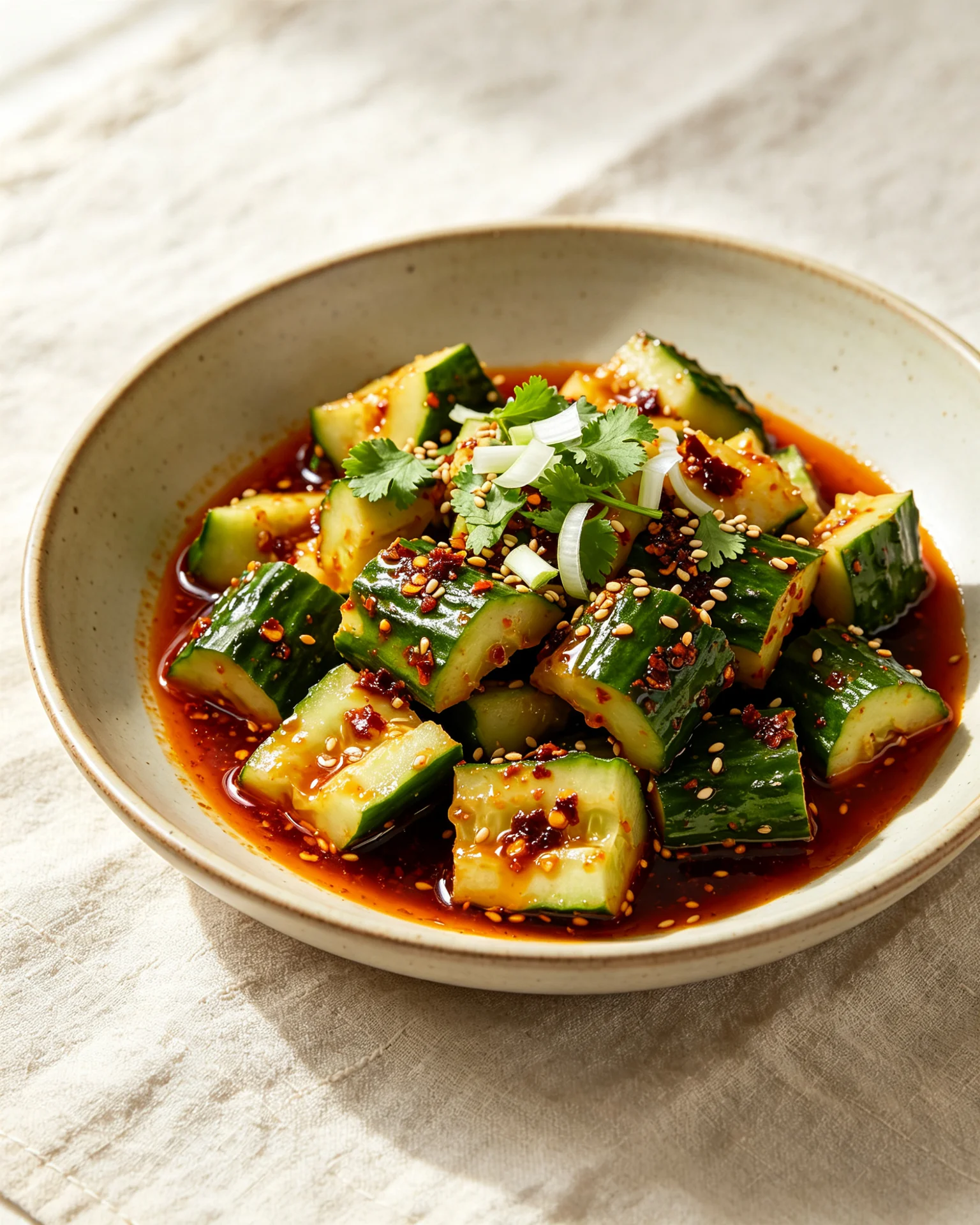
Korean cucumber kimchi, known as oi sobagi (오이소박이), is a refreshing, spicy fermented side dish made by stuffing fresh cucumbers with a seasoned paste of gochugaru, garlic, ginger, and scallions. Unlike traditional napa cabbage kimchi, cucumber kimchi is ready in hours and delivers a crisp, cooling crunch alongside bold Korean flavours. It pairs beautifully with steamed rice, grilled meats, and noodle dishes.
What Is Korean cucumber kimchi ?
Oi sobagi translates literally to “stuffed cucumber.” It belongs to the larger family of kimchi — Korea’s iconic category of salted, seasoned, and fermented vegetables. According to Wikipedia’s overview of kimchi, kimchi has been a cornerstone of Korean cuisine for centuries, with hundreds of regional and seasonal variations. Cucumber kimchi is the summer staple: lighter, faster, and crunchier than its napa cabbage counterpart.
Korean cucumbers are salted to draw out moisture through osmosis, then packed with a vivid filling of gochugaru, garlic, ginger, and scallions. The result can be eaten fresh or left to ferment for 1–2 days for deeper tang. If you enjoy bold Korean flavours, you might also love this kimchi soup recipe — a warming, deeply savoury bowl that puts kimchi front and centre.
Why This Recipe Works
This recipe is the result of multiple test batches targeting specific variables.
Recipe Testing Notes
- Batch 1 (salt concentration): Two tablespoons of salt per 500g cucumber produced noticeably crunchier results than one tablespoon. The lower-salt batch softened within 24 hours.
- Batch 2 (gochugaru ratio): Three tablespoons per 4 cucumbers delivered correct heat and colour. Two tablespoons produced a pale, mild result lacking the signature vibrancy.
- Batch 3 (fish sauce alternatives): Regular fish sauce won on depth and fermentation aroma. Soy sauce worked but yielded a flatter flavour. Vegan fish sauce was a solid plant-based option.
- Batch 4 (fermentation timing): The 6-hour window at room temperature gave the best balance of crunch and gentle tang. Refrigerating after 6 hours extended shelf life without texture loss.
- Failures documented: English cucumbers used without salting released so much water the filling slid off entirely. Pre-minced jarred garlic produced a noticeable sulfurous off-flavour during fermentation.
- Optimal result: Korean cucumbers, 2 tablespoons coarse salt, 3 tablespoons gochugaru, fresh garlic, 6 hours at room temperature, then refrigerated.
Korean cucumber kimchi Ingredients
For the cucumbers (serves 4):
- 4 Korean cucumbers (or 6 Persian cucumbers) — bring to room temperature 30 minutes before salting
- 2 tablespoons coarse sea salt
- 1 teaspoon sugar (aids osmosis and balances any bitterness in the cucumber skin)
For the filling:
- 3 tablespoons gochugaru — see adjustment guide in Pro Tips
- 4 cloves garlic, freshly minced
- 1 teaspoon fresh ginger, finely grated
- 3 scallions, green parts only, rinsed and finely chopped
- 1 tablespoon fish sauce (or soy sauce for vegan)
- 1 teaspoon sesame oil
- 1 teaspoon sugar (feeds initial lacto-fermentation; does not make the dish sweet)
- 1 tablespoon toasted sesame seeds (optional)
Equipment
- Sharp chef’s knife — for precise cross-cuts without splitting the cucumber all the way through.
- Large mixing bowl — glass or stainless steel; avoid reactive metals.
- Colander — for rinsing and draining salted cucumbers. Discard the released brine.
- Wide-mouth mason jar (1-litre) — non-reactive, easy to seal, and wide enough to pack cucumbers without bruising them. A fermentation weight or small zip-lock bag filled with water makes a good press-down tool to keep pieces submerged.
- Silicone or disposable gloves — gochugaru stains intensely; essential for stuffing.
- Microplane or fine grater — for lump-free ginger.
How to Make Korean cucumber kimchi
1. Bring cucumbers to temperature. Remove cucumbers from the fridge 30 minutes before starting. Cold cucumbers slow osmosis and absorb salt unevenly.
2. Prepare the cucumbers. Wash and trim both ends. Cut into 5 cm (2-inch) segments. On each segment, make two perpendicular cuts from the top down — each cut about 1.5–2 cm deep — stopping roughly 1 cm from the base so the four quarters stay connected and form a pocket. Too shallow and the pocket won’t open for filling; too deep and the quarters separate entirely.
3. Salt the cucumbers. Toss segments with coarse salt and sugar. Leave for 20–30 minutes. Salt draws water out of the cucumber cells via osmosis, partially collapsing the cell walls — a process called plasmolysis. This is what creates the ideal texture: flexible enough to stuff, firm enough to stay crisp. Under 15 minutes and the cucumbers stay too rigid; over 40 minutes and they turn rubbery and excessively soft.
4. Rinse and dry. Drain the cucumbers and discard the released brine. Rinse once under cold water, then pat thoroughly dry. Wet cucumbers dilute the filling and produce watery results.
5. Make the filling. Combine gochugaru, garlic, ginger, scallions, fish sauce, sesame oil, and sugar into a thick paste. The mixture should cling to a spoon without dripping — similar in consistency to thick hummus or soft cookie dough. If too dry, add ½ teaspoon water; if too wet, stir in ½ teaspoon more gochugaru. Taste and adjust before stuffing.
6. Stuff the cucumbers. Wearing gloves, gently open each pocket and press filling in generously, ensuring it grips the flesh on all sides.
7. Pack and rest. Transfer to a jar, packing snugly to minimise air gaps. If available, press a fermentation weight on top to keep cucumbers submerged as liquid rises. Leave at room temperature for 4–6 hours. After 3 hours, briefly open the jar — this releases CO₂ that builds up during active fermentation and prevents pressure overflow or cracked lids. Press any floating pieces back down. Then seal and continue resting. Extend to 12 hours maximum for tangier flavour, then refrigerate.
8. Serve. Eat immediately after the rest period or refrigerate for up to 5 days. Signs fermentation is working: tiny bubbles in the filling, a gently sour aroma, and slightly cloudy liquid — all normal. Discard if cucumbers turn slimy, develop a putrid smell, or show visible mould.
Common Substitutions
- Korean cucumbers → Persian cucumbers: Best available substitute; thin-skinned and low-moisture.
- English cucumbers: Works, but salt for 40 minutes and dry very thoroughly.
- Fish sauce → soy sauce: Use 1:1; milder and less complex but fully functional.
- Gochugaru → crushed red pepper flakes: Use half the quantity; lacks the fruity undertone of Korean gochugaru.
Pro Tips
Step 1: — jarred pre-minced garlic
Always use freshly minced garlic — jarred pre-minced garlic develops off-flavours during fermentation.
Step 2: — fine salt over-penetrates
Use coarse salt, not fine table salt — fine salt over-penetrates and is difficult to rinse out evenly.
Step 3: — mild gochugaru (common
Calibrate your gochugaru — mild gochugaru (common in generic supermarket brands) tastes like sweet paprika raw; increase to 4 tablespoons. Spicy varieties like Taeyangcho deliver immediate tongue heat; reduce to 2 tablespoons. Always taste raw before mixing the full batch.
Step 4: — at room temperature
Do not over-ferment — at room temperature above 22°C (72°F), cucumbers lose crunch rapidly. Move to the fridge before the 12-hour mark.
Step 5: — scallions can carry
Rinse scallions thoroughly — scallions can carry soil bacteria that compete with the desired lacto-fermentation. Using only the green parts further reduces this risk.
Common Mistakes to Avoid
- Skipping the salting step — the most common error; results in watery, flavour-diluted kimchi.
- Using cold cucumbers straight from the fridge — cold cucumbers slow osmosis; bring to room temperature first.
- Over-rinsing — one brief rinse removes excess surface salt. Multiple rinses strip natural cucumber flavour.
- Loose packing — air gaps cause uneven fermentation; pack jars snugly and use a weight where possible.
- Never opening the jar during fermentation — CO₂ pressure builds as fermentation activates; burping the jar after 3 hours prevents overflow and uneven results.
Easy Variations
Vegan version: Swap fish sauce for soy sauce or diluted white miso. Fully plant-based and still full of flavour.
Quick banchan style: Skip the fermentation entirely. Coat cucumber rounds in the seasoning paste and serve immediately as a fresh side. If you enjoy crisp cucumber-forward dishes, this Thai cucumber and shrimp salad is another light, refreshing option.
Sesame-forward version: Double the sesame seeds and add an extra teaspoon of sesame oil; pairs exceptionally well with bibimbap.
Serving Suggestions
Oi sobagi is traditionally served as banchan alongside a Korean meal, but works well in many contexts:
- Alongside steamed rice as a simple, balanced accompaniment.
- Next to kimchi fried rice — the fresh crunch contrasts beautifully with the warm, smoky rice.
- As a counterpoint to rich, fatty dishes like grilled pork belly; the acidity and heat cut cleanly through the fat.
- Alongside ramen or Korean noodle soups for welcome textural contrast.
Storage and Reheating
Cucumber kimchi is always served cold or at room temperature — never reheated.
- Refrigerator: Airtight container, up to 5 days. Flavour deepens on days 2–3.
- Freezing: Not recommended — cucumbers become mushy once thawed.
- Best window: Days 1–3 for maximum crunch; days 3–5 for a punchier fermented character.
Nutrition Information
Per serving (3–4 stuffed pieces), approximate values:
| Nutrient | Amount |
|---|---|
| Calories | ~35 kcal |
| Carbohydrates | 5g |
| Protein | 1.5g |
| Fat | 1g |
| Sodium | ~480mg |
| Fibre | 1g |
Naturally low-calorie and gluten-free when made with tamari, cucumber kimchi also provides beneficial live cultures when consumed within the first few days of fermentation.
Love Korean food?
Check out my complete guide to Korean home cooking, pantry essentials, and techniques.
Frequently Asked Questions
1. Can I make cucumber kimchi without gochugaru? Gochugaru cannot be replicated exactly. A blend of sweet paprika and a small pinch of cayenne approximates the colour and mild heat, but the distinctive fruity depth of oi sobagi genuinely requires proper Korean gochugaru for an authentic result.
2. How long does cucumber kimchi take to ferment, and how will I know it’s working? At 20–22°C (68–72°F), 4–6 hours produces a pleasantly tangy result. Active fermentation shows as tiny bubbles in the filling, a gently sour aroma, and slightly cloudy liquid in the jar — all normal and desirable signs of lacto-fermentation.
3. Is cucumber kimchi safe to eat? Properly fermented oi sobagi — tangy-smelling, with visible bubbles and no mould — is safe to eat. The acidic environment created by lacto-fermentation inhibits harmful bacteria. Discard if cucumbers turn slimy or pink, smell putrid, or show visible mould.
4. What cucumbers work best, and does it matter which variety I choose? Korean cucumbers (also labelled kirby or pickling cucumbers) are ideal — thin-skinned, low-moisture, and lightly sweet. Persian cucumbers are the best widely available substitute. Avoid English cucumbers where possible; their high water content produces a softer, more diluted result even with extended salting.
5. Can I use cucumber kimchi the same way I use cabbage kimchi? Mostly yes — it works as banchan, alongside soups, and in rice dishes. The key difference is texture and shelf life; oi sobagi is crunchier and fresher but does not ferment as deeply or keep as long. For more ideas using bold Korean and Asian flavours, the kimchi soup recipe and chicken pad thai are both excellent next steps.
Final Note
Korean cucumber kimchi is one of the most approachable fermented recipes in any cuisine. It asks for minimal ingredients, no specialised equipment, and a few hours of patience. Salt well, dry thoroughly, taste your filling before stuffing, burp the jar mid-fermentation, and refrigerate before the crunch is lost. Keep a jar in the fridge throughout summer and it will quickly become one of those quiet, indispensable staples you reach for with nearly every meal.
You Might Also Like
The kimchi fried rice turns leftover rice into a bold weeknight dinner in 20 minutes. The kimchi soup recipe is a warming bowl that shines with older, more fermented kimchi. The Thai cucumber and shrimp salad offers a crisp, herby cucumber alternative. For a classic noodle dinner, the chicken pad thai delivers Thai street-food flavours in an easy home-kitchen format.
You might also like: Check out our complete Korean cooking guide for more essential ingredients and techniques.
Quick Korean Cucumber Kimchi
Side Dish, Korean Recipes, Cucumber
PT30M
PT0M
PT4.5H
Ingredients
- 4 Korean cucumbers (or 6 Persian cucumbers) — bring to room temperature 30 minutes before salting
- 2 tablespoons coarse sea salt
- 1 teaspoon sugar (aids osmosis and balances any bitterness in the cucumber skin)
- 3 tablespoons gochugaru — see adjustment guide in Pro Tips
- 4 cloves garlic, freshly minced
- 1 teaspoon fresh ginger, finely grated
- 3 scallions, green parts only, rinsed and finely chopped
- 1 tablespoon fish sauce (or soy sauce for vegan)
- 1 teaspoon sesame oil
- 1 teaspoon sugar (feeds initial lacto-fermentation; does not make the dish sweet)
- 1 tablespoon toasted sesame seeds (optional)
Instructions
- 1. Bring cucumbers to temperature. Remove cucumbers from the fridge 30 minutes before starting. Cold cucumbers slow osmosis and absorb salt unevenly.
- 2. Prepare the cucumbers. Wash and trim both ends. Cut into 5 cm (2-inch) segments. On each segment, make two perpendicular cuts from the top down — each cut about 1.5–2 cm deep — stopping roughly 1 cm from the base so the four quarters stay connected and form a pocket. Too shallow and the pocket won't open for filling; too deep and the quarters separate entirely.
- 3. Salt the cucumbers. Toss segments with coarse salt and sugar. Leave for 20–30 minutes. Salt draws water out of the cucumber cells via osmosis, partially collapsing the cell walls — a process called plasmolysis. This is what creates the ideal texture: flexible enough to stuff, firm enough to stay crisp. Under 15 minutes and the cucumbers stay too rigid; over 40 minutes and they turn rubbery and excessively soft.
- 4. Rinse and dry. Drain the cucumbers and discard the released brine. Rinse once under cold water, then pat thoroughly dry. Wet cucumbers dilute the filling and produce watery results.
- 5. Make the filling. Combine gochugaru, garlic, ginger, scallions, fish sauce, sesame oil, and sugar into a thick paste. The mixture should cling to a spoon without dripping — similar in consistency to thick hummus or soft cookie dough. If too dry, add ½ teaspoon water; if too wet, stir in ½ teaspoon more gochugaru. Taste and adjust before stuffing.
- 6. Stuff the cucumbers. Wearing gloves, gently open each pocket and press filling in generously, ensuring it grips the flesh on all sides.
- 7. Pack and rest. Transfer to a jar, packing snugly to minimise air gaps. If available, press a fermentation weight on top to keep cucumbers submerged as liquid rises. Leave at room temperature for 4–6 hours. After 3 hours, briefly open the jar — this releases CO₂ that builds up during active fermentation and prevents pressure overflow or cracked lids. Press any floating pieces back down. Then seal and continue resting. Extend to 12 hours maximum for tangier flavour, then refrigerate.
- 8. Serve. Eat immediately after the rest period or refrigerate for up to 5 days. Signs fermentation is working: tiny bubbles in the filling, a gently sour aroma, and slightly cloudy liquid — all normal. Discard if cucumbers turn slimy, develop a putrid smell, or show visible mould.
- ## Common Substitutions
- - Korean cucumbers → Persian cucumbers: Best available substitute; thin-skinned and low-moisture.
- - English cucumbers: Works, but salt for 40 minutes and dry very thoroughly.
- - Fish sauce → soy sauce: Use 1:1; milder and less complex but fully functional.
- - Gochugaru → crushed red pepper flakes: Use half the quantity; lacks the fruity undertone of Korean gochugaru.
Did you make this recipe?
Tag @asianfoodsdaily on Instagram or leave a comment below!
Testing Notes
Tested in Asha's kitchen. Last reviewed June 10, 2025.
Ingredient Substitutions
Substitution notes coming soon.
About Asha
Half Asian, half African cook raised between two food-obsessed cultures. I've spent 10 years learning Asian cooking traditions through family, friends, and thousands of hours at the stove — testing every dish until it works in a standard home kitchen.
Read my full storyTechnique & Pantry Guides
Related Recipes
More delicious dishes you might enjoy


Loading comments...