Japanese vs Korean BBQ: Key Differences
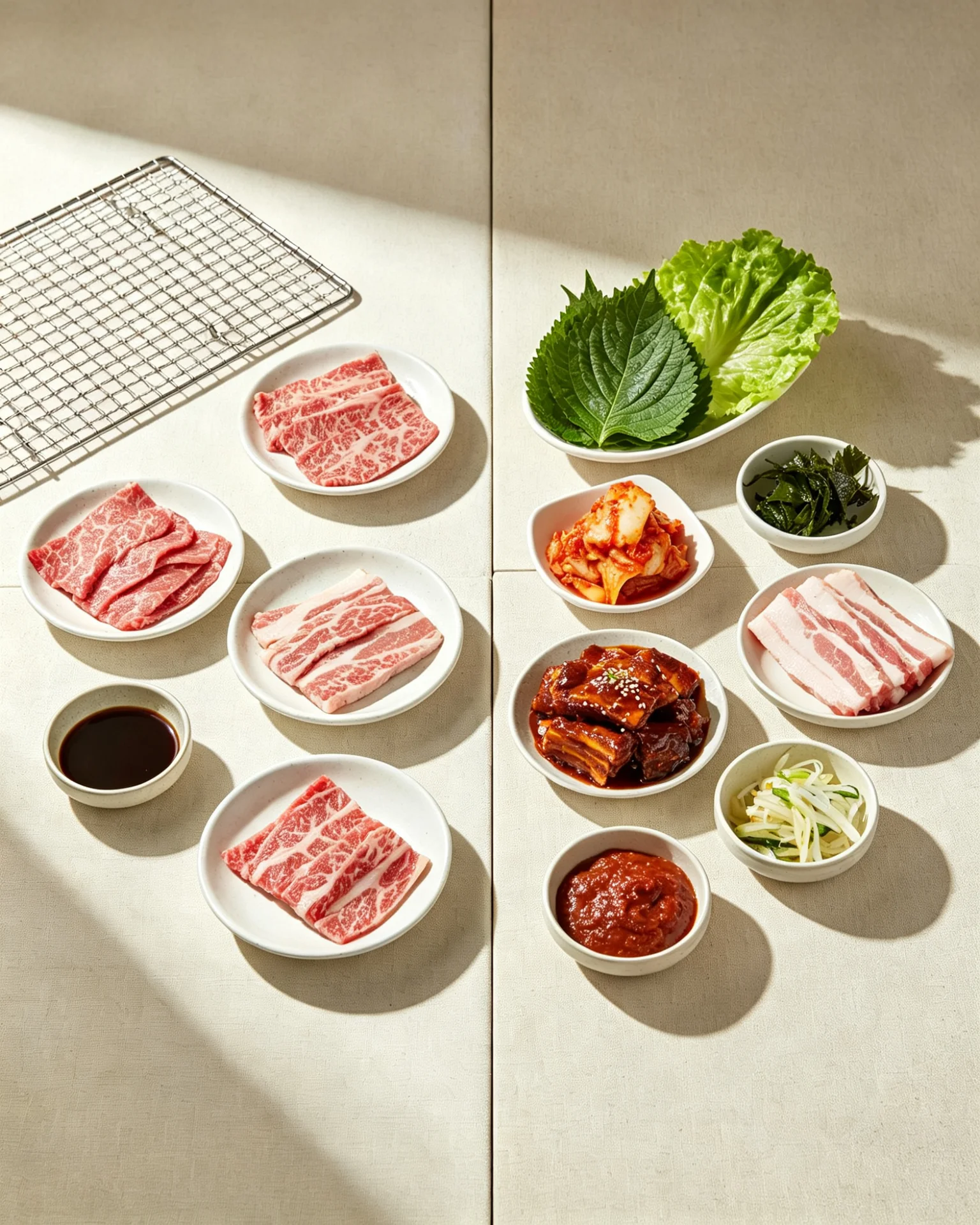
Both involve a grill in the middle of the table and people cooking their own meat. That is roughly where the similarities end.
Japanese yakiniku and Korean BBQ look similar from the outside, the communal grill, the small plates of meat, the social eating format. But the philosophy behind each is different enough that people who love one do not always love the other. Japanese yakiniku is built around restraint: minimal seasoning, premium cuts, careful grilling, sauce applied after. Korean BBQ is built around flavour layering before the grill even heats up: marinated meat, bold banchan spread, wrapped bites with multiple components. One is about the ingredient. The other is about the combination.
This is not a ranking. Both are excellent. This is an explanation of what makes them genuinely different so you can understand what you are ordering, what to cook at home, and which experience suits what you are looking for.
Origins and the historical connection between the two
Korean BBQ has its roots in ancient Korean grilling traditions that predate written records. The practice of grilling meat over fire, wrapping it in leaves, and eating communally appears across Korean history from at least the Three Kingdoms period (57 BC to 668 AD). The flavour profiles and preparations evolved over centuries but the communal fire format remained consistent.
Yakiniku as a cuisine category is more recent and the history is complicated. The word yakiniku (焼肉) simply means grilled meat in Japanese. The modern yakiniku restaurant format, communal table grill, small portions of beef and offal, tare dipping sauce, developed largely in post-World War II Japan and was established significantly by Zainichi Korean communities adapting their grilling traditions to Japanese ingredients and dining culture. The Korean influence on yakiniku is documented and substantial. The two cuisines share a common ancestor and then diverged.
Today they are distinct enough that conflating them would be inaccurate, but understanding their shared history explains some of the structural similarities that persist.
The fundamental difference: marinade before vs sauce after
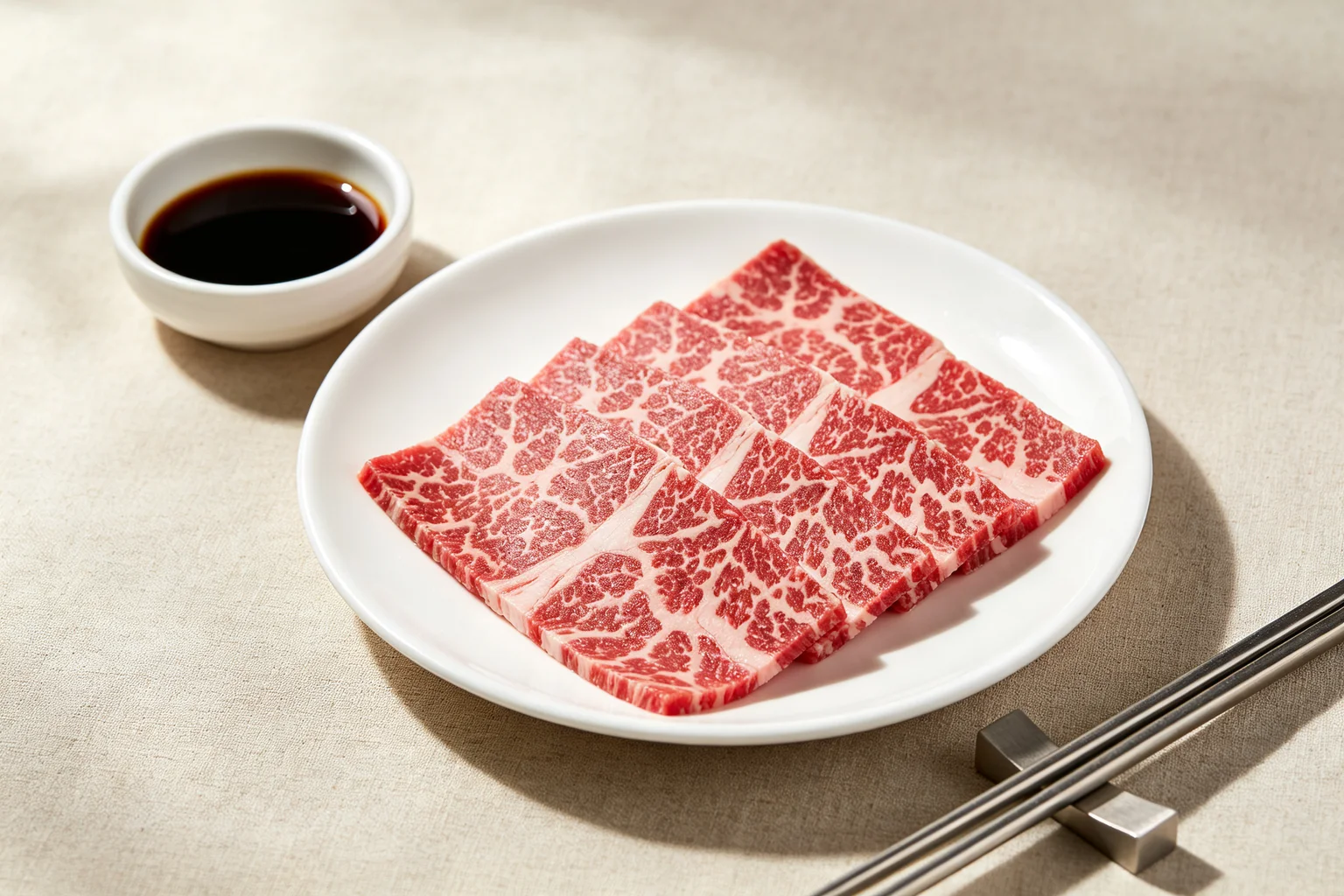
This is the clearest single distinction between the two traditions.
Korean BBQ marinates the meat before it touches the grill. Bulgogi and galbi both require hours of marinating, the soy sauce, sugar, fruit, garlic, and sesame oil penetrate the protein and become part of the meat rather than sitting on its surface. When the marinated meat hits the grill, the sugars in the marinade caramelise, the fruit enzymes have already begun tenderising the fibres, and the flavour is already inside every piece.
The marinade in Korean BBQ is also a functional necessity for many of the cuts used. Short ribs (galbi), pork belly (samgyeopsal when unmarinated, or dakgalbi-style when marinated), and thin-sliced beef all benefit from the tenderising and seasoning work that the marinade does before the grill’s direct heat makes the surface inaccessible to liquid penetration.
Japanese yakiniku typically does not marinate. The meat, particularly Wagyu beef, arrives at the table unseasoned or very lightly seasoned. The seasoning comes from tare (垂れ), the dipping sauce applied after cooking. Tare is not an afterthought. It is the primary seasoning mechanism for the entire dish. Dipping warm just-cooked meat into the cool tare deposits salt and umami onto the surface and creates a brief thermal contrast that is part of the experience.
The logic behind this sequence: if you are using premium Wagyu beef with BMS (Beef Marbling Score) grades of 8 to 12, the intramuscular fat content is high enough that the meat bastes itself from within during cooking. The fat melts rapidly at grill temperature and coats the meat continuously. Adding a marinade on top of this would mask the specific flavour that the premium ingredient provides. The tare enhances rather than replaces.
Charcoal: binchotan vs the Korean style
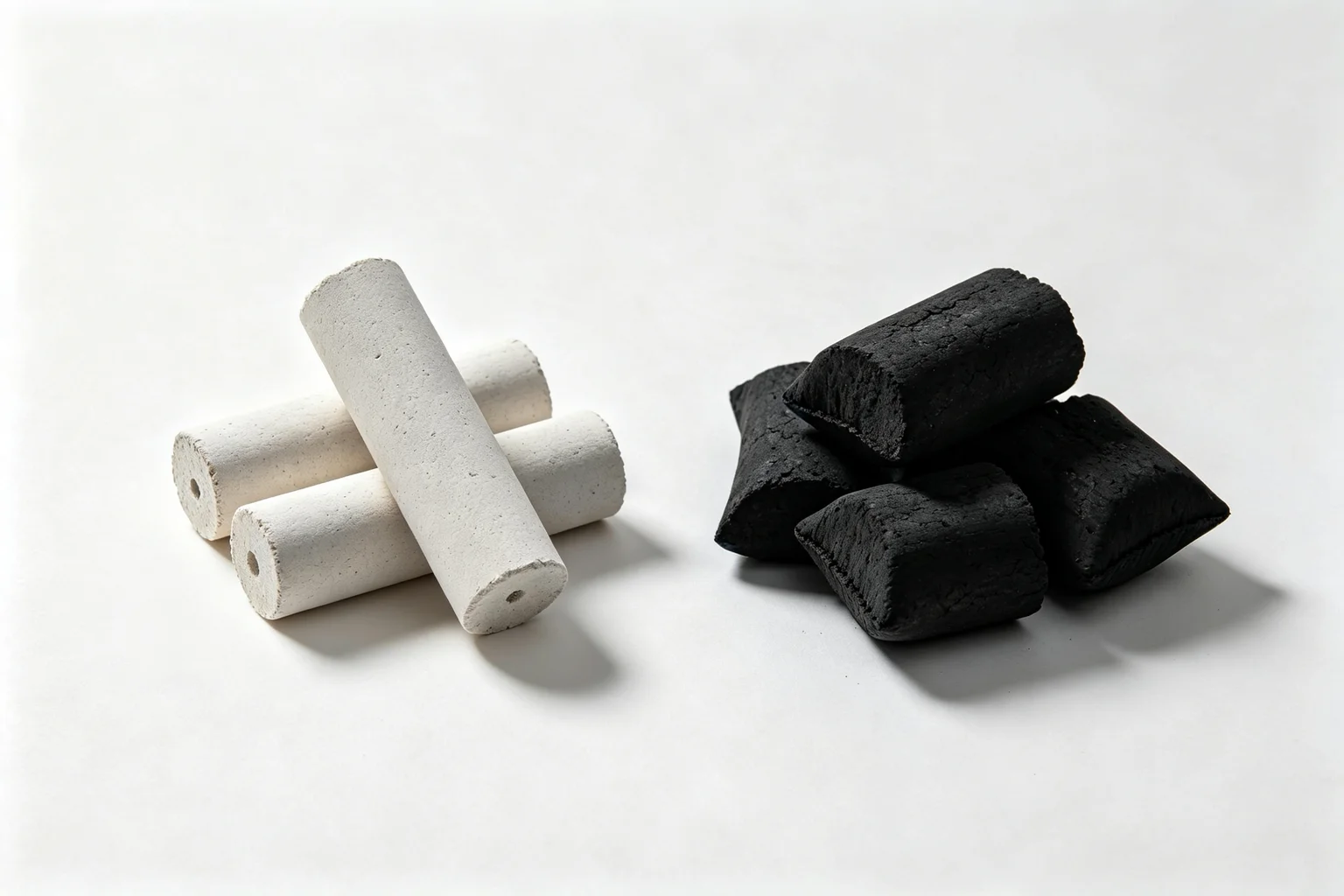
The charcoal difference is one of the most significant technical distinctions between the two traditions and the least explained.
Japanese yakiniku restaurants that take the cooking seriously use binchotan (備長炭), a white charcoal produced by firing oak (ubame oak is traditional) at extremely high temperatures, typically above 1,000°C, and then rapidly quenching it in a mixture of earth, sand, and ash. This production process drives off almost all the moisture and volatile organic compounds from the wood. The result is a charcoal with near-zero volatile content.
Near-zero volatiles means binchotan produces almost no smoke during use. The meat cooks in radiant heat, infrared radiation from the glowing charcoal, rather than in hot smoky air. The flavour compounds that develop on the meat surface come entirely from the Maillard reaction between the meat proteins and the heat, not from any smoke absorption. This is why premium yakiniku has a clean, pure grilled character that is distinctly different from charcoal-grilled meat cooked over regular briquettes or wood.
Korean BBQ uses either gas grills or regular charcoal, often a cylindrical ceramic charcoal grill in traditional settings, or a modern ventilated gas grill in most contemporary restaurants. The gas grill produces consistent, controllable heat that suits the quick cooking of thinly sliced marinated meat. Regular charcoal adds light smoke. Neither approach is inferior, they are matched to what is being cooked. Heavily marinated thin slices of pork belly do not benefit from the clean precision of binchotan the way a slice of Wagyu does.
Korean BBQ: banchan, ssam, and the communal spread
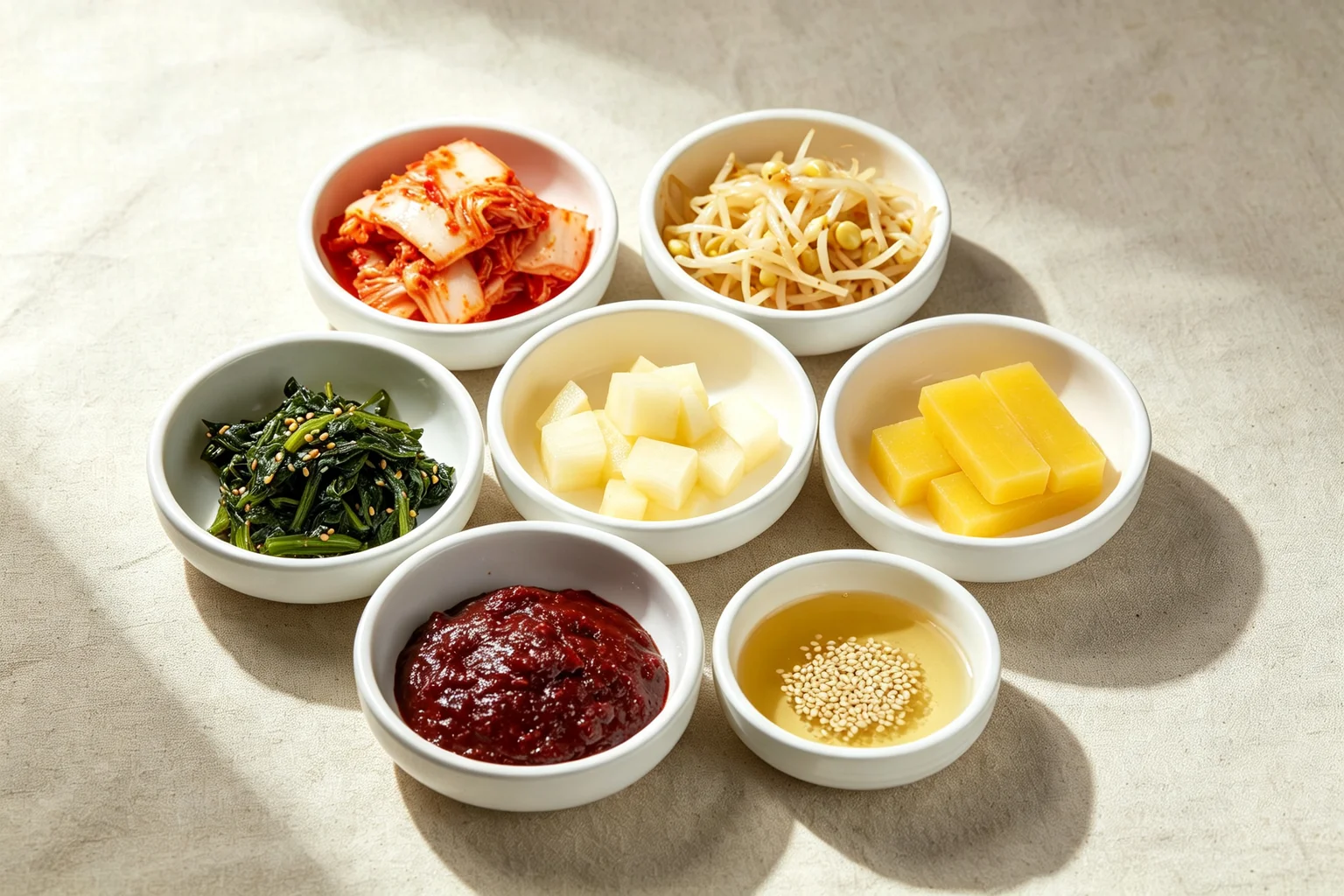
Korean BBQ is not just about the meat on the grill. The full experience involves a spread of banchan (반찬), small side dishes, that arrive alongside and are eaten throughout the meal.
Standard banchan at a Korean BBQ includes kimchi (fermented napa cabbage), kongnamul (seasoned soybean sprouts), japchae (glass noodles), pickled radish, seasoned spinach, and sometimes egg roll or potato salad. These are not appetisers, they are eaten simultaneously with the grilled meat throughout the meal. The sour, fermented, and pickled elements of the banchan reset the palate between bites of rich grilled pork or beef.
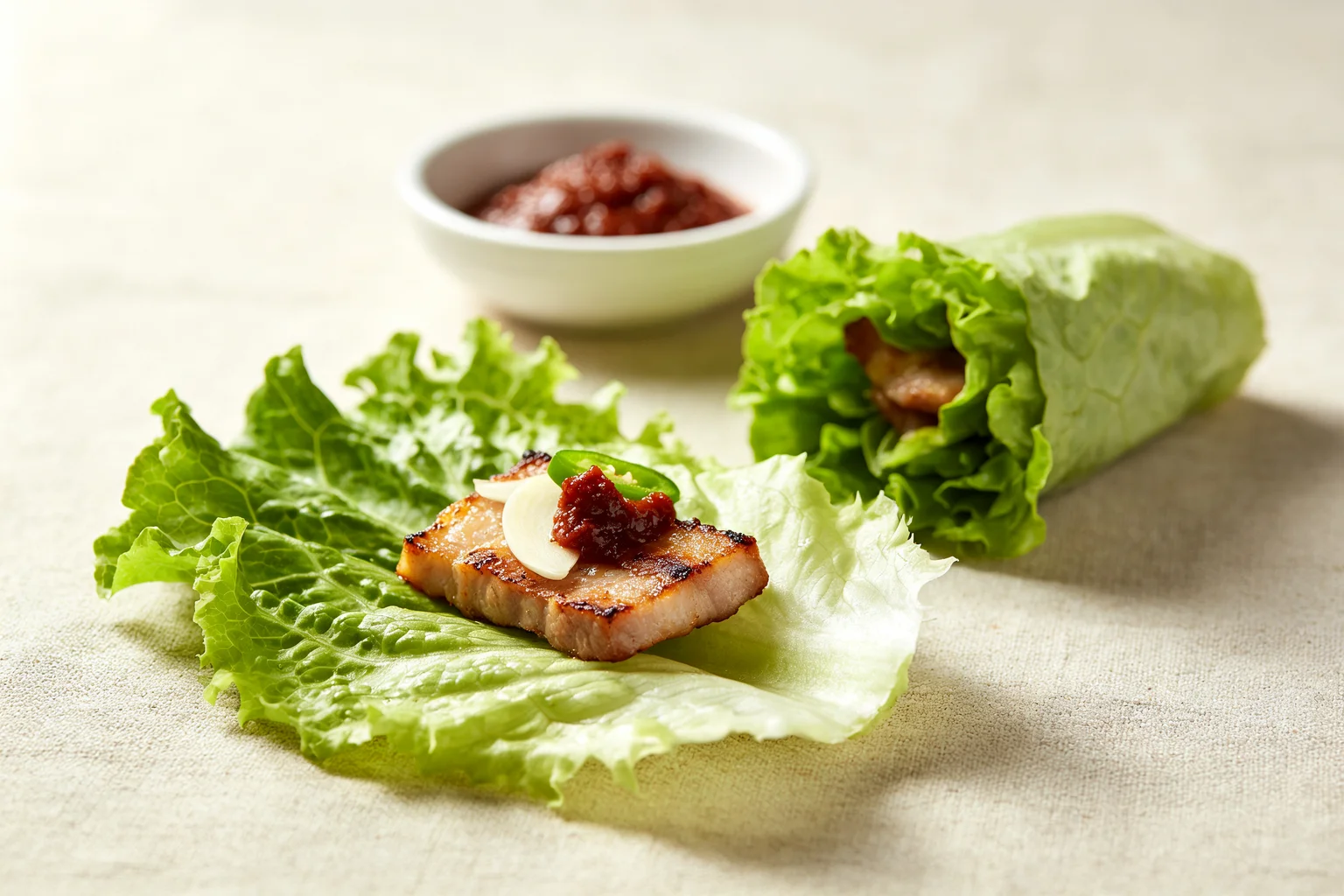
The ssam (쌈) format is equally central. Ssam means wrapped, taking a lettuce leaf, perilla leaf (kkaennip), or steamed cabbage and using it to wrap a piece of grilled meat with a small amount of ssamjang (fermented soybean and chilli paste), a sliver of raw garlic, and sometimes a piece of chilli. The bitterness of perilla and the grassiness of lettuce cut through the fat of the meat. The ssamjang adds savoury depth. The garlic adds sharpness. Each wrapped bite is a complete flavour composition.
This wrapping tradition is one of the oldest continuous food practices in Korean cuisine. It predates the modern restaurant format by centuries. At a Korean BBQ table, people are not just grilling meat, they are assembling food in real time.
Japanese yakiniku: the cuts and what to order
Japanese yakiniku menus are built around cuts and their specific cooking requirements. Understanding the cuts is the key to ordering well.
Karubi (カルビ) is short rib, the fattiest, most flavourful cut at most yakiniku restaurants. Rich, slightly chewy, suited to medium-high heat and a short grill time. The fat renders quickly and the meat develops a slightly caramelised exterior.
Rosu (ロース) is loin, leaner than karubi, with a cleaner beef flavour and a firmer texture. Better for diners who want the beef character without the richness of short rib.
Tan (タン) is beef tongue, thinly sliced. A uniquely textured cut that grills quickly and has a mild, slightly mineral flavour. Often served with a lemon squeeze rather than tare.
Harami (ハラミ) is skirt steak, outside of the main muscle, with an intense beefy flavour and a slightly fibrous texture. One of the most popular cuts at yakiniku restaurants for its flavour-to-price ratio.
Wagyu at higher BMS grades (A4, A5) produces meat where the intramuscular fat creates a buttery texture that dissolves as you eat rather than requiring significant chewing. At these grades, smaller portion sizes are appropriate, two to three slices is a meaningful serving, not a starter.
Korean BBQ: galbi, samgyeopsal, and the standard order
Korean BBQ menus are built around specific dishes rather than cuts.
Galbi (갈비) is marinated beef short ribs, cut across the bone into thin strips. The soy-pear-sesame marinade caramelises on the grill and the bone adds flavour during cooking. Galbi is the celebratory dish, served at birthdays, special occasions, and any meal where the occasion calls for something richer than everyday cooking.
Samgyeopsal (삼겹살) is unmarinated pork belly, grilled directly. No marinade, the fat renders on the grill and the meat develops a crispy exterior. Served wrapped in lettuce with ssamjang and raw garlic. The most widely eaten Korean BBQ dish and the one most associated with Korean drinking culture.
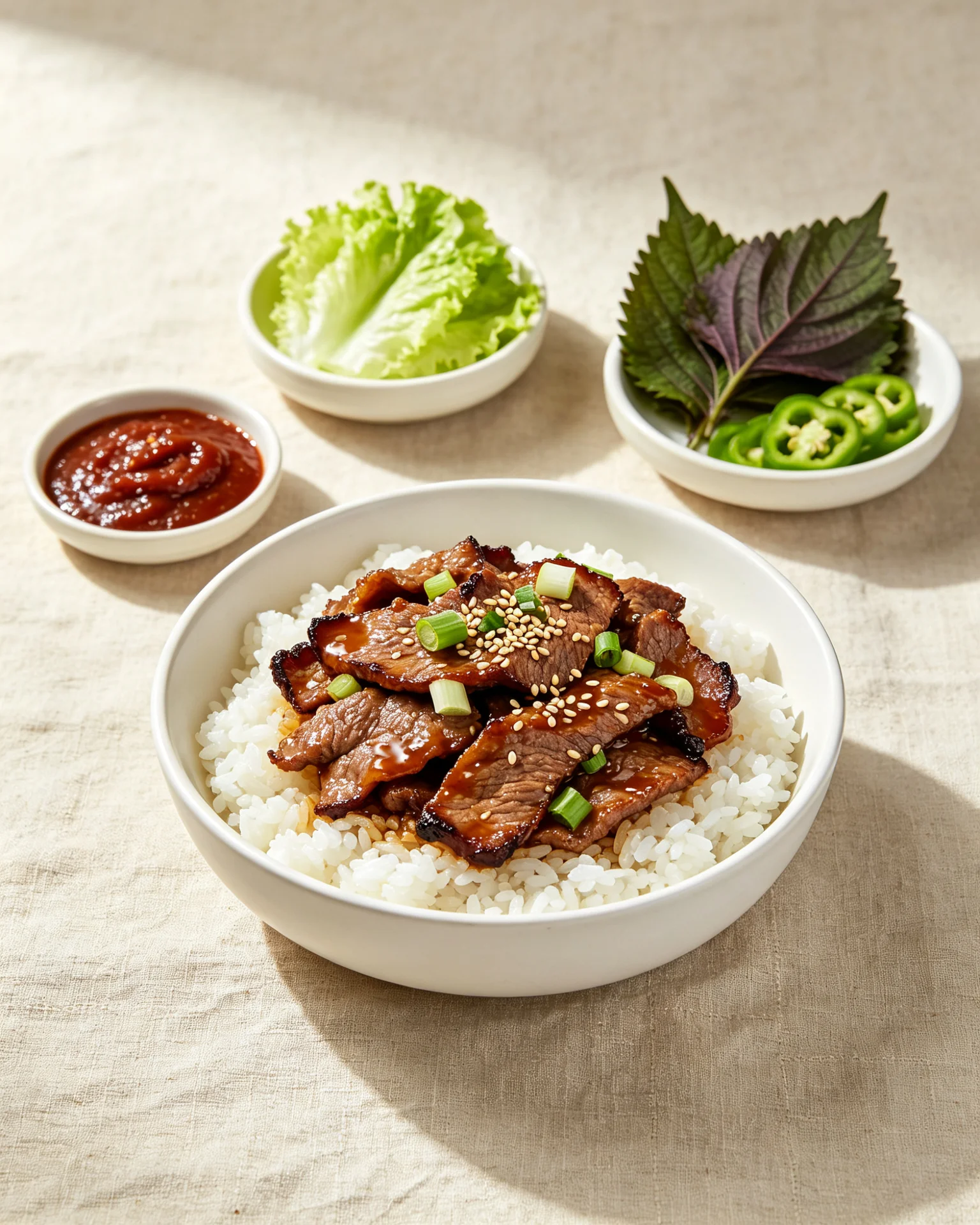
Bulgogi (불고기) is the marinated beef version, thinly sliced with a sweet-savoury soy and pear marinade, grilled quickly. The marinade caramelises into a glossy coating. A complete recipe for bulgogi including the Asian pear enzyme mechanism is on the bulgogi recipe page.
Dakgalbi (닭갈비) is spicy marinated chicken, less common at BBQ restaurants but increasingly available. Spicy, rich, and suited to those who find pork belly too fatty.
The sauces side by side
Japanese yakiniku tare is the primary seasoning. Most yakiniku restaurants offer two styles: shio (salt-based, lighter, suited to delicate cuts like tongue and white meat) and soy-based (darker, richer, suited to karubi and harami). A third style, miso-based, appears at some restaurants. The tare is served in a small individual dish for each diner. Meat is dipped before eating.
Korean BBQ sauces are more varied and served as condiments alongside rather than as primary seasoning. Ssamjang (the fermented soybean and chilli paste) is the core condiment, it goes into the lettuce wraps rather than directly onto grilled meat. Ganjang gejang (soy sauce for dipping) is used at some restaurants. Sesame oil with salt is a classic dip for samgyeopsal. Kimchi is its own acidic condiment alongside.
The key difference: in yakiniku, the sauce seasons an unmarinated protein. In Korean BBQ, the sauce accompanies a protein that is already seasoned from marinating. The function is different.
What to cook at home
For yakiniku at home: thinly sliced beef short rib or loin, cooked in a cast iron pan or on a table grill over the highest heat available. A tare made from soy sauce, mirin, sake, garlic, and sesame oil, served in a small bowl for dipping. The cooking is fast. The key is heat and not overcrowding.
For Korean BBQ at home: the bulgogi and teriyaki chicken recipes on this site cover the marination and cooking technique for both Korean and Japanese grilled chicken in detail. For pork belly samgyeopsal, slice 1cm thick and grill in a cast iron pan over high heat until the fat has rendered and the exterior is crispy. Serve with lettuce, perilla, ssamjang, and raw garlic.
The banchan spread is the hardest part to replicate at home, it requires either buying from a Korean grocery store or making several dishes in advance. Kimchi from a jar, pickled radish, and a simple seasoned spinach (blanched, sesame oil, garlic, soy) covers the minimum. Japchae is on this site as well and works as part of a Korean BBQ spread.
Choosing between them
The question of which to choose depends on what the occasion calls for.
Choose Japanese yakiniku when: you want a quieter, more focused meal where the quality of the ingredient is the point. You are with two to four people and want a considered eating experience. You are willing to spend more per person for the premium cut quality.
Choose Korean BBQ when: you are with a larger group and want a loud, interactive, social meal. You want variety, different marinades, different proteins, different banchan, the wrapping format. You want to eat more for a lower per-head spend. You want the full spread experience.
Both are excellent. They are optimised for different things. A person who says Korean BBQ is better than yakiniku (or vice versa) is usually comparing the experience they had, not the cuisines themselves.
About Asha
Half Asian, half African cook raised between two food-obsessed cultures. I've spent 10 years learning Asian cooking traditions through family, friends, and thousands of hours at the stove — testing every dish until it works in a standard home kitchen.
Read my full storyRecipes to Try
Korean Beef Bulgogi Recipe (불고기)
Gyudon Recipe (Japanese Beef Bowl)

How to Make Korean Steamed Eggs (Gyeran-jjim) Like a Pro

Japanese Carrot Ginger Dressing (Restaurant-Style)

How to Make Japanese Fried Chicken (Karaage)

Crispy Chicken Katsu Curry Udon Recipe in Rich Japanese Broth

Japanese Steakhouse Hibachi Chicken (Teppanyaki Style)

How to Make Korean Marinated Eggs (Mayak Eggs)

How to Make Korean Jangjorim (Easy Soy-Braised Beef & Eggs)

Buta no Kakuni – Japanese Braised Pork Belly Recipe

Quick Korean Cucumber Kimchi
Loading comments...