Bangladeshi Kacchi Biryani Recipe (কাচ্চি)
Jump to Section
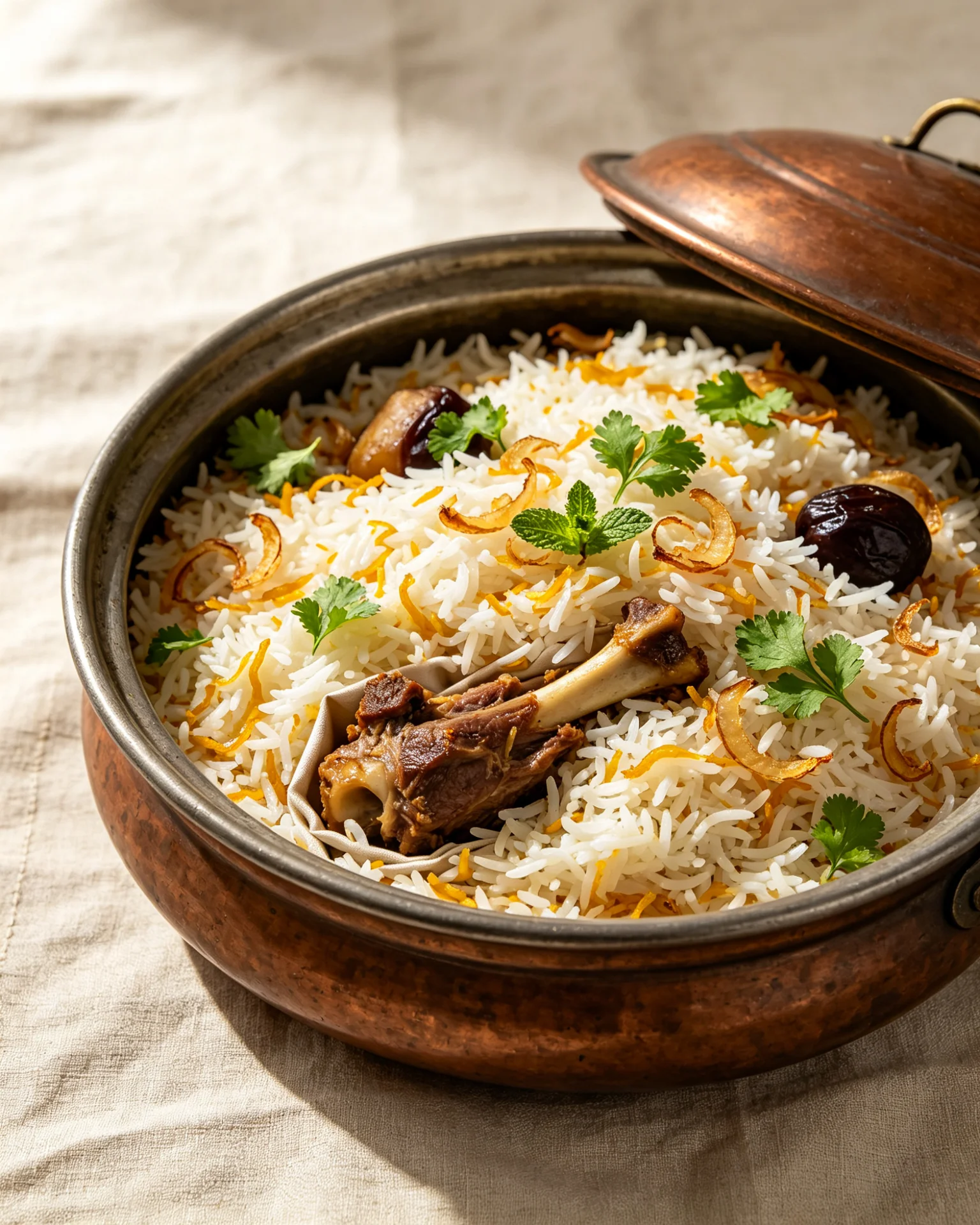
The first time I made kacchi biryani I had also recently made pakki biryani, the version where the meat is pre-cooked before layering with rice. Both used the same spices, the same basmati, the same amount of care. The pakki rice tasted of the spices added to it. The kacchi rice tasted of the mutton itself, a depth that was in the rice, not just on top of it.
The reason is that kacchi biryani uses raw marinated meat. As the raw meat cooks in the sealed pot, it releases its juices downward. The steam generated carries dissolved protein compounds, spice extracts, and fat upward through the rice layers above. The rice completes its cooking by absorbing this flavour-laden steam rather than plain water. Pre-cooked meat has already expelled its juices. There is no second release, no upward migration, no way for the rice to absorb what the meat no longer has to give.
This bidirectional flavour exchange, meat compounds rising, fragrance from kewra and saffron descending, is what kacchi biryani produces and what no other biryani technique replicates. It is also why this recipe takes two days.
What is kacchi biryani and where does it come from?
Kacchi (কাচ্চি) means raw in Bengali. Kacchi biryani is the biryani where the meat goes in raw.
The dish is inseparable from Dhaka, Bangladesh, specifically old Dhaka, the dense historic core of the city where Mughal culinary traditions took root during centuries of rule and were absorbed into the local Dhakai cooking identity. The biryani that emerged in old Dhaka was distinct from Hyderabadi biryani (which also uses the raw meat technique) and distinct from Kolkata biryani (which uses pre-cooked meat and adds potato), the Dhakai spice profile is its own, typically milder and more fragrant, with kewra water and rose water as the primary perfume notes.
Kacchi biryani in Dhaka is dawat food, dawat meaning feast or invitation. It is the dish cooked for weddings, for Eid celebrations, for the arrival of important guests, for any occasion significant enough to merit the two-day preparation. Professional biryani cooks, called baburchi, built entire careers around producing kacchi biryani for large gatherings. The recipe’s complexity is not incidental, it is appropriate to the occasion it was designed for.
Making kacchi biryani at home for everyday eating would be unusual. Understanding the dawat context makes the elaborate preparation make sense.
What is the difference between kacchi and pakki biryani?
Kacchi (raw) and pakki (cooked) are the two structural approaches to biryani and they produce genuinely different results.
In pakki biryani, the meat is cooked first, braised or simmered with spices until tender. The cooked meat is then layered with par-cooked rice and the pot goes on dum to finish and allow the flavours to meld. The meat arrives at the dum phase already fully flavoured and tender. The rice absorbs the spices and ghee applied to it during layering.
In kacchi biryani, raw marinated meat goes directly into the pot as the bottom layer. Par-cooked rice is layered on top. During the dum cook, everything cooks simultaneously and the flavour exchange between raw meat and raw-ish rice happens in real time.
The practical consequence: kacchi biryani rice tastes of the specific meat cooking underneath it. Pakki biryani rice tastes of the spices mixed into it. Both are correct. They are different dishes that share a name and a technique.
Why does raw meat at the bottom produce better rice?
This is the mechanism that defines kacchi biryani and the reason pre-cooked meat cannot substitute.
When raw marinated mutton is placed at the bottom of the sealed pot and heat is applied, the meat begins cooking. As the proteins denature and contract, they expel the juices held within the muscle fibres, juices now carrying dissolved spice compounds, fat-soluble aromatics from the marinade, protein fragments, and collagen that is beginning to break down into gelatin.
These juices pool at the bottom of the pot. The heat converts them to steam. This steam rises upward through the par-cooked rice layers, and as it rises it carries the dissolved flavour compounds with it. The rice, with its starch not yet fully gelatinised, absorbs this rising steam. The starch completes its gelatinisation by incorporating the flavour-rich steam rather than plain water or plain stock.
Simultaneously, the kewra water and saffron milk drizzled on top of the rice work downward as moisture follows the heat gradient. The top layers absorb the most fragrance; the bottom layers absorb the most meat flavour.
A pre-cooked piece of mutton sitting at the bottom of a dum pot has already expelled its juices during the first cook. When reheated in the dum, it releases very little additional liquid. The upward steam is largely water steam from whatever liquid is in the pot, not meat juice steam. The rice above absorbs water. The flavour migration does not happen.
What does green papaya do to the mutton?
Mutton (goat or mature sheep) has significantly more connective tissue than chicken or young lamb. The collagen in this connective tissue requires either long cooking time or an enzyme intervention to break down into the soft, gelatin-like texture that makes mutton tender.
Raw green papaya contains papain, a cysteine protease enzyme that breaks peptide bonds in proteins. Applied to mutton as a paste and left overnight, papain penetrates the meat and breaks down two specific structures: the myofibrillar proteins (actin and myosin) that form the contractile muscle fibres, and the collagen in the connective tissue between and around muscle groups.
This is the same enzyme class as bromelain in raw pineapple and the cysteine proteases in Asian pear used in the bulgogi marinade on this site. The mechanism is the same: enzymatic breakdown of protein bonds before heat is applied, reducing the time and temperature required during cooking to achieve tenderness.
The practical result: with overnight papain marination, mutton kacchi biryani achieves full tenderness in 45-60 minutes of dum cooking. Without papain, the same mutton would require 2+ hours of braising to reach comparable tenderness, far longer than the rice can stay on heat without overcooking.
One important constraint: papain denatures above approximately 75°C and stops working. Its entire window of activity is during the cold marination period. Once the pot goes on heat, the enzyme is rapidly deactivated. The marination time is therefore not compressible, a 30-minute papaya paste application does not produce the same result as an 8-hour or overnight one.
What are beresta and why do they matter beyond crunch?
Beresta (বেরেস্তা) are thinly sliced onions fried in oil or ghee until they turn deep golden-brown and crispy. Every kacchi biryani recipe includes them. Most recipes treat them as a garnish. They are not a garnish.
During the frying process, the Maillard reaction between the onion’s natural sugars and amino acids produces hundreds of caramelised aromatic compounds, pyrazines, melanoidins, furfurals. These are the same compound classes produced in the char of Vietnamese pork chops and the caramelisation of palm sugar in pad thai. Beresta has a specific sweet, complex, deeply caramelised character that raw or cooked onion does not have.
When beresta is scattered between and over the rice layers before the pot is sealed for dum cooking, two things happen. First, the steam rising through the pot condenses slightly as it reaches the cooler upper layers. This condensed moisture is absorbed by the crispy beresta, softening them progressively over the 45-60 minute dum cook. Second, as they soften, the caramelised compounds dissolve into the surrounding rice and moisture, the beresta effectively melts its flavour into the biryani.
What went in as a crispy topping comes out as an integrated flavour component running through the biryani. This is why beresta quantity matters and why raw onion cannot substitute. The caramelised compounds from the frying Maillard reaction are what the biryani absorbs. Without them, there is nothing to absorb.
Why is the dough seal not optional?
The dough seal is the step that makes the dum technique work. Without it, kacchi biryani becomes something else, undercooked meat under partially cooked rice in a loosely flavoured broth.
During dum cooking, the raw meat at the bottom produces steam as its moisture converts to vapour under heat. This steam is both the cooking medium for the rice above and what maintains the elevated internal temperature inside the pot. The sealed environment produces slightly elevated pressure, enough to raise the internal cooking temperature above the ambient boiling point of water, which speeds both meat tenderisation and rice gelatinisation.
Any gap in the lid seal allows steam to escape. Steam escaping means the internal temperature drops, the cooking medium for the rice diminishes, and the pressure-dependent tenderisation of the meat decreases. The rice above may not complete cooking. The meat below may remain tough despite the papain pre-treatment.
A rope of flour-and-water dough pressed firmly around the rim where the lid meets the pot creates an airtight seal. This is conceptually the original pressure cooker, a sealed vessel that retains steam to maintain elevated internal temperature. The dough is not decorative. It is structural.
Modern substitute: heavy-duty aluminium foil pressed tightly and completely around the rim, with the lid pressed down on top. The foil must cover the entire gap without any breaks. Check the seal before placing on heat.
What are kewra water, saffron milk, and aloo bukhara?
These three ingredients form the perfume and flavour accent layer of kacchi biryani, the components that distinguish Dhakai biryani from other biryani styles.
Kewra water (কেওড়া জল) is distilled from the screwpine flower (Pandanus odoratissimus). It has an intensely floral, slightly sweet, distinctly South Asian fragrance with no direct Western equivalent. A few drops are drizzled over the rice layers before sealing. The fragrance is volatile and mostly preserved by the sealed environment, it is still vivid when the pot is opened at the table. Available at South Asian grocery stores.
Saffron milk: Saffron threads bloomed in warm milk (approximately 60-70°C) for 15-20 minutes before use. The warm milk extracts both the water-soluble crocin (the gold colour compound) and the heat-released safranal (the primary aromatic compound). Fat in the milk carries the slightly fat-soluble aromatic compounds more completely than water alone. The result: deeper colour and more pronounced saffron fragrance than saffron dissolved in plain water. Drizzled over the top rice layer in a pattern before sealing.
Aloo bukhara (আলু বোখারা) are dried sour plums, small, wrinkled, intensely tart preserved plums used in South Asian cooking. They are placed over the meat layer before the rice goes on top. During dum cooking they soften and release their tartaric and malic acids into the surrounding meat and bottom rice layer. This acid counterbalances the richness of the mutton fat and the sweetness of the beresta, the same acid-fat balance function that nuoc cham performs for Vietnamese pork chops and calamansi for Filipino pancit. Find them at South Asian or Middle Eastern grocery stores.
Ingredients
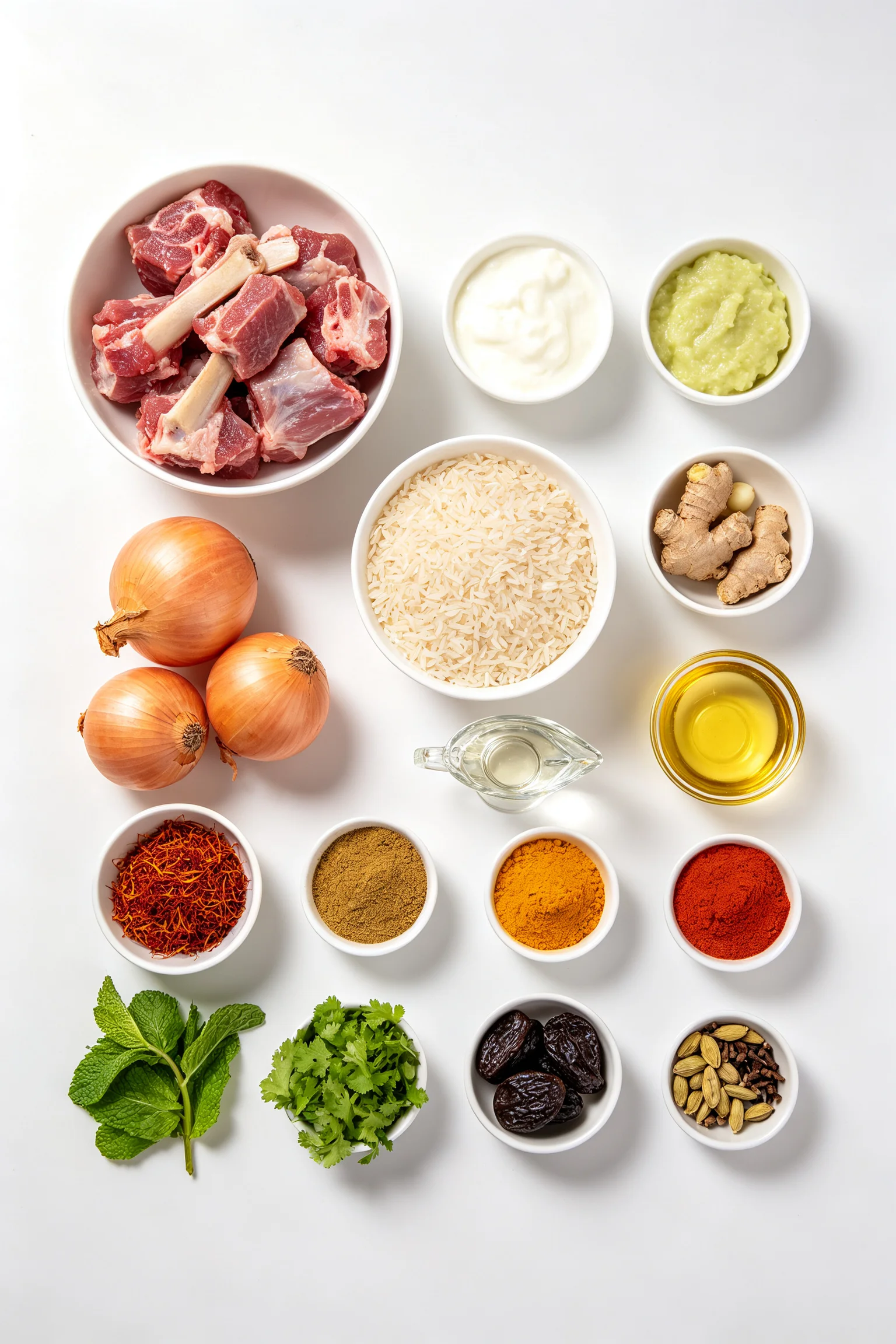
Serves 6
Mutton marinade (prepare the night before):
- 1kg (2.2lb) bone-in mutton or goat pieces, large chunks
- 1 cup (240g) full-fat yogurt, whisked
- 3 tbsp raw green papaya paste (peel, seed, and blend with a little water)
- 2 tbsp ginger-garlic paste
- 1 tsp red chilli powder
- 1 tsp turmeric
- 1 tsp ground cumin
- 1 tsp ground coriander
- 1 tsp garam masala
- 1 tsp salt
- 2 tbsp neutral oil or ghee
- 4-6 green chillies, sliced
Beresta (make 1-2 hours ahead or day before):
- 4 large onions, sliced paper-thin
- Neutral oil or ghee for frying (enough for 3cm depth)
- Pinch of salt
Rice layer:
- 500g (2½ cups) aged basmati rice, soaked 30 minutes, drained
- Water for par-cooking, well-salted
- 2 bay leaves, 4 green cardamom, 2 black cardamom, 1 cinnamon stick, 4 cloves (for par-cook water)
Finishing and fragrance layer:
- 3 tbsp ghee, melted
- 1 tbsp warm milk with 10-15 saffron threads, bloomed 15 minutes
- 1 tsp kewra water
- ½ cup beresta (from above)
- 4-6 aloo bukhara (dried sour plums)
- Fresh mint and coriander, large handfuls
- 4-6 fried potato halves (optional but traditional Dhakai addition, fry until golden before assembling)
Dough seal:
- 100g (¾ cup) plain flour mixed with enough water to form a pliable dough rope
Instructions
Day 1: marinate the meat and make the beresta. Day 2: par-cook rice, assemble, and dum cook.
Day 1, Step 1: Marinate the mutton
Combine yogurt, green papaya paste, ginger-garlic paste, and all the dry spices with oil and salt. Mix until smooth. Add the mutton pieces and coat thoroughly. Work the marinade into every cut surface. Cover and refrigerate overnight, minimum 8 hours, 12-16 hours optimal. The papain in the green papaya needs this time to work on the connective tissue.
Day 1, Step 2: Make the beresta
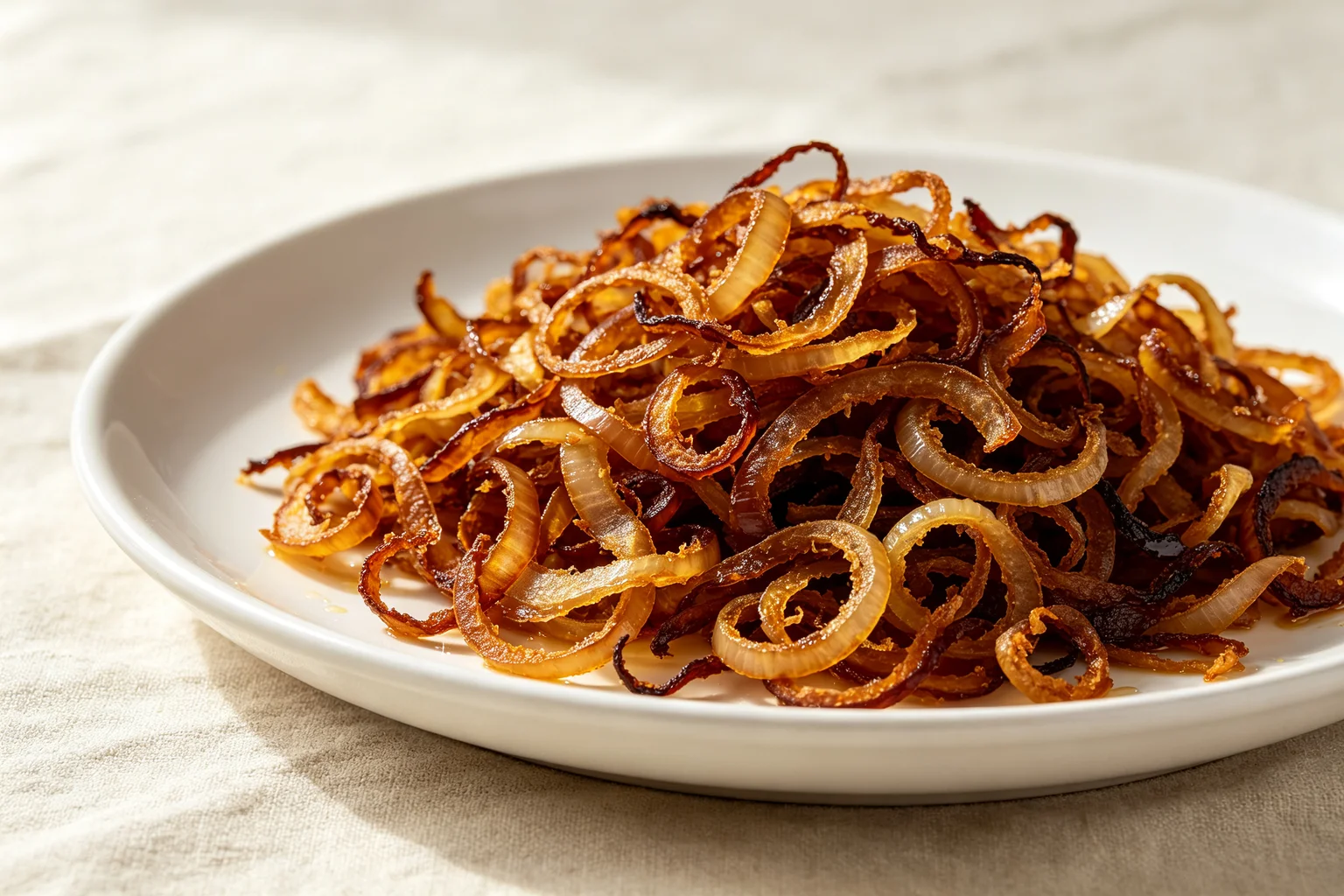
Slice the onions as thinly as possible, paper-thin is the goal. A mandoline produces the most consistent result. Spread on kitchen paper and leave 10 minutes to dry slightly.
Heat oil or ghee in a wide pan to 160-170°C. Add the onions in large batches, they will sizzle vigorously. Fry over medium heat, stirring frequently, until they turn deep golden-brown and crispy. This takes 15-20 minutes per batch. Do not rush, pale beresta has not developed the full Maillard character needed.
Remove with a slotted spoon. Drain on kitchen paper. Sprinkle with a pinch of salt. They will crisp further as they cool. Store at room temperature in an open bowl, a sealed container traps moisture and they lose their crispness.
Day 2, Step 3: Par-cook the rice
Bring a large pot of well-salted water to a boil with the whole spices. Add the soaked and drained basmati. Cook for exactly 5-6 minutes, the rice should be approximately 70% cooked: tender on the outside, still with a firm white core in the centre. Drain immediately through a colander. Spread on a tray to cool and stop the cooking. The rice must not be soft, it will complete cooking during dum.
Day 2, Step 4: Bloom the saffron
Add saffron threads to the warm milk. Leave 15 minutes until the milk turns deep gold and smells intensely of saffron.
Day 2, Step 5: Assemble the biryani
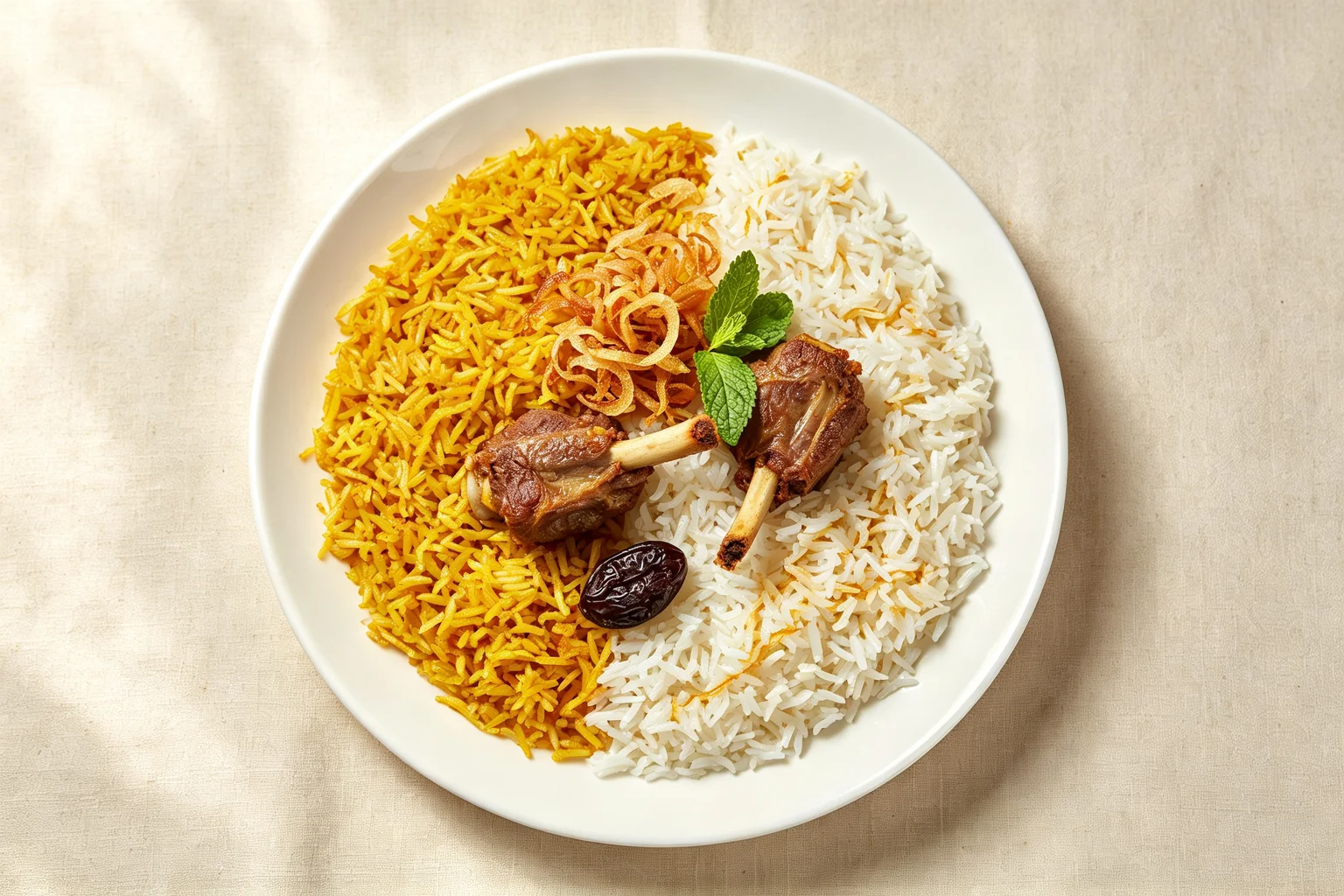
Use a heavy-bottomed pot with a tight-fitting lid, a Dutch oven or traditional handi.
Spread the marinated mutton in an even layer at the bottom. Scatter the aloo bukhara over the meat. Add the fried potato halves if using. Scatter half the fresh mint and coriander.
Gently spoon the par-cooked rice over the meat, spreading in an even layer. Do not press down. Scatter half the beresta over the rice. Add the remaining mint and coriander. Drizzle the saffron milk in a pattern over the top, not uniformly, as the variation produces the biryani’s characteristic colour contrast. Drizzle the kewra water. Drizzle the melted ghee. Scatter the remaining beresta.
Day 2, Step 6: Seal and dum cook
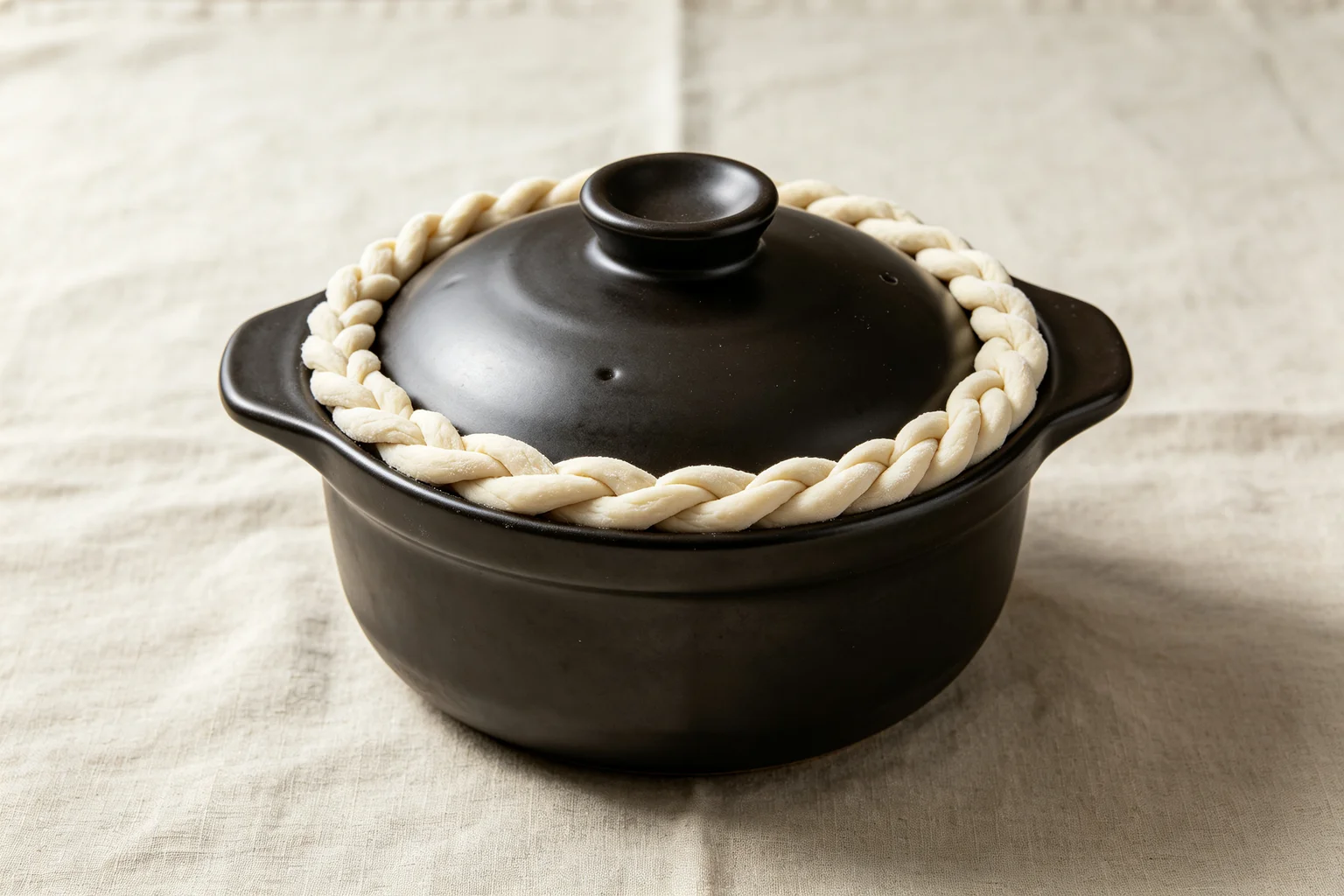
Roll the flour dough into a long rope. Press firmly around the entire rim of the pot where the lid meets the pot edge. Place the lid on top and press down firmly. The dough should create a complete seal with no gaps. Alternatively, press heavy-duty aluminium foil completely around the rim and place the lid on top.
Place the sealed pot on the stovetop over high heat for 5 minutes, this initial high heat starts the steam generation. Reduce to the lowest possible heat. Cook on the lowest heat for 45-55 minutes.
Do not open the lid during cooking. The seal must stay intact.
Day 2, Step 7: Rest and open
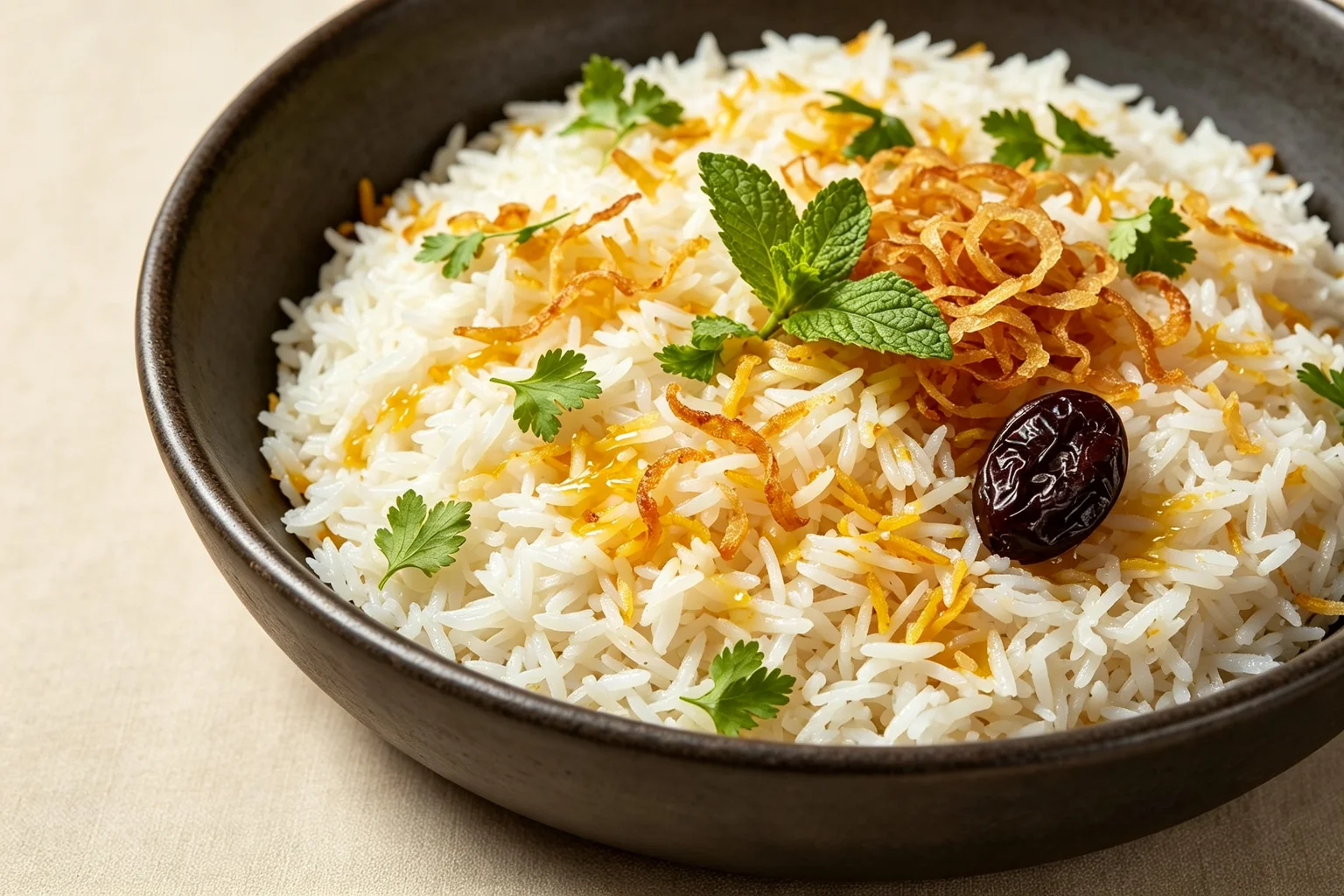
After 45-55 minutes, remove from heat. Leave sealed for 10 minutes, the residual heat continues cooking and the steam settles.
Break the dough seal and remove the lid away from you, the released steam is very hot. The rice should be fully cooked, fluffy, and streaked with saffron gold. The aroma of kewra and saffron should be immediately present.
Gently fold the biryani from the bottom upward using a large spoon, not stirring, but folding in sections so the bottom meat and flavour-rich bottom rice integrates with the fragrant top rice. Serve directly from the pot.
How do you serve kacchi biryani?
The traditional Dhakai accompaniments:
Borhani (বোরহানি): The specific Bangladeshi drink served with kacchi biryani at every dawat. Spiced yogurt blended with coriander, mint, green chilli, black salt, and cumin. The acidity and cooling character of the yogurt drink cuts through the richness of the biryani in a way that plain raita does not. A separate borhani recipe is on this site.
Salad: Simple sliced cucumber, tomato, and onion with a squeeze of lime and a pinch of salt. The raw vegetables provide crunch and freshness against the rich biryani.
Begun bhorta: Roasted aubergine mashed with raw mustard oil, onion, and green chilli. A traditional Bangladeshi side that pairs naturally with biryani. A separate recipe is on this site.
Love Bangladeshi food?
Check out my complete guide to Bangladeshi home cooking, pantry essentials, and techniques.
FAQ
What is the difference between kacchi and Hyderabadi biryani? Both use the raw meat dum technique, this is the main similarity. The differences are in the spice profile, the fragrance agents, and the cultural context. Hyderabadi biryani uses a more assertive spice blend with dried red chilli as a primary heat source. Bangladeshi kacchi uses a milder spice profile where kewra water and saffron are the primary aromatic notes. Hyderabadi biryani is associated with the Nizam court cuisine of the Deccan. Bangladeshi kacchi is specifically Dhakai and is associated with Mughal-influenced cooking adapted to Bangladeshi ingredients and tastes. The dishes share a technique, not a recipe.
Can I use chicken instead of mutton? Yes. Chicken kacchi biryani uses bone-in chicken pieces, drumsticks and thighs. The papaya paste marination time reduces to 2-3 hours rather than overnight since chicken has far less connective tissue than mutton. The dum cook time reduces to 30-35 minutes. The rest of the recipe is identical. The result has less depth than mutton kacchi because chicken releases less gelatine-rich liquid during cooking, but it is still significantly better than pakki biryani because the bidirectional flavour migration still occurs.
Why is my mutton still tough after the dum cook? Two possible causes. First, the green papaya paste was not applied long enough, the papain enzyme needs at least 8 hours at refrigerator temperature to meaningfully break down the collagen in mutton. Less than 4 hours produces minimal tenderisation. Second, the dough seal had gaps and steam escaped during cooking, the elevated temperature and pressure inside the sealed pot is what finishes the tenderisation that the papain started. If steam escapes, the internal temperature drops and the mutton may not reach sufficient temperature to complete the collagen-to-gelatin conversion.
What can I substitute for kewra water? Kewra water has no precise substitute, its floral, slightly grassy fragrance is unique to the screwpine flower. Rose water is the most commonly used alternative and produces a pleasant but distinctly different result. The biryani will smell of rose rather than kewra. A small amount of orange blossom water also works as a substitute. If no floral water is available, the biryani is still complete, the saffron milk provides enough aromatic character on its own. Kewra water is available at any South Asian grocery store and is inexpensive.
Bangladeshi Kacchi Biryani Recipe (কাচ্চি)
PT8H (includes overnight marination)
PT1H30M
PT9H30M
Nutrition Facts
Ingredients
- 1kg (2.2lb) bone-in mutton or goat pieces, large chunks
- 1 cup (240g) full-fat yogurt, whisked
- 3 tbsp raw green papaya paste (peel, seed, and blend with a little water)
- 2 tbsp ginger-garlic paste
- 1 tsp red chilli powder
- 1 tsp turmeric
- 1 tsp ground cumin
- 1 tsp ground coriander
- 1 tsp garam masala
- 1 tsp salt
- 2 tbsp neutral oil or ghee
- 4-6 green chillies, sliced
- 4 large onions, sliced paper-thin
- Neutral oil or ghee for frying (enough for 3cm depth)
- Pinch of salt
- 500g (2½ cups) aged basmati rice, soaked 30 minutes, drained
- Water for par-cooking, well-salted
- 2 bay leaves, 4 green cardamom, 2 black cardamom, 1 cinnamon stick, 4 cloves (for par-cook water)
- 3 tbsp ghee, melted
- 1 tbsp warm milk with 10-15 saffron threads, bloomed 15 minutes
- 1 tsp kewra water
- ½ cup beresta (from above)
- 4-6 aloo bukhara (dried sour plums)
- Fresh mint and coriander, large handfuls
- 4-6 fried potato halves (optional but traditional Dhakai addition, fry until golden before assembling)
- 100g (¾ cup) plain flour mixed with enough water to form a pliable dough rope
Instructions
- *Day 1: marinate the meat and make the beresta. Day 2: par-cook rice, assemble, and dum cook.*
- Combine yogurt, green papaya paste, ginger-garlic paste, and all the dry spices with oil and salt. Mix until smooth. Add the mutton pieces and coat thoroughly. Work the marinade into every cut surface. Cover and refrigerate overnight, minimum 8 hours, 12-16 hours optimal. The papain in the green papaya needs this time to work on the connective tissue.
- Slice the onions as thinly as possible, paper-thin is the goal. A mandoline produces the most consistent result. Spread on kitchen paper and leave 10 minutes to dry slightly. Heat oil or ghee in a wide pan to 160-170°C. Add the onions in large batches, they will sizzle vigorously. Fry over medium heat, stirring frequently, until they turn deep golden-brown and crispy. This takes 15-20 minutes per batch. Do not rush, pale beresta has not developed the full Maillard character needed. Remove with a slotted spoon. Drain on kitchen paper. Sprinkle with a pinch of salt. They will crisp further as they cool. Store at room temperature in an open bowl, a sealed container traps moisture and they lose their crispness.
- Bring a large pot of well-salted water to a boil with the whole spices. Add the soaked and drained basmati. Cook for exactly 5-6 minutes, the rice should be approximately 70% cooked: tender on the outside, still with a firm white core in the centre. Drain immediately through a colander. Spread on a tray to cool and stop the cooking. The rice must not be soft, it will complete cooking during dum.
- Add saffron threads to the warm milk. Leave 15 minutes until the milk turns deep gold and smells intensely of saffron.
- Use a heavy-bottomed pot with a tight-fitting lid, a Dutch oven or traditional handi. Spread the marinated mutton in an even layer at the bottom. Scatter the aloo bukhara over the meat. Add the fried potato halves if using. Scatter half the fresh mint and coriander. Gently spoon the par-cooked rice over the meat, spreading in an even layer. Do not press down. Scatter half the beresta over the rice. Add the remaining mint and coriander. Drizzle the saffron milk in a pattern over the top, not uniformly, as the variation produces the biryani's characteristic colour contrast. Drizzle the kewra water. Drizzle the melted ghee. Scatter the remaining beresta.
- Roll the flour dough into a long rope. Press firmly around the entire rim of the pot where the lid meets the pot edge. Place the lid on top and press down firmly. The dough should create a complete seal with no gaps. Alternatively, press heavy-duty aluminium foil completely around the rim and place the lid on top. Place the sealed pot on the stovetop over high heat for 5 minutes, this initial high heat starts the steam generation. Reduce to the lowest possible heat. Cook on the lowest heat for 45-55 minutes. Do not open the lid during cooking. The seal must stay intact.
- After 45-55 minutes, remove from heat. Leave sealed for 10 minutes, the residual heat continues cooking and the steam settles. Break the dough seal and remove the lid away from you, the released steam is very hot. The rice should be fully cooked, fluffy, and streaked with saffron gold. The aroma of kewra and saffron should be immediately present. Gently fold the biryani from the bottom upward using a large spoon, not stirring, but folding in sections so the bottom meat and flavour-rich bottom rice integrates with the fragrant top rice. Serve directly from the pot. ## How do you serve kacchi biryani? The traditional Dhakai accompaniments: Borhani (বোরহানি): The specific Bangladeshi drink served with kacchi biryani at every dawat. Spiced yogurt blended with coriander, mint, green chilli, black salt, and cumin. The acidity and cooling character of the yogurt drink cuts through the richness of the biryani in a way that plain raita does not. A separate borhani recipe is on this site. Salad: Simple sliced cucumber, tomato, and onion with a squeeze of lime and a pinch of salt. The raw vegetables provide crunch and freshness against the rich biryani. Begun bhorta: Roasted aubergine mashed with raw mustard oil, onion, and green chilli. A traditional Bangladeshi side that pairs naturally with biryani. A separate recipe is on this site.
Did you make this recipe?
Tag @asianfoodsdaily on Instagram or leave a comment below!
Testing Notes
Tested in Asha's kitchen. Last reviewed June 11, 2026.
Ingredient Substitutions
Substitution notes coming soon.
About Asha
Half Asian, half African cook raised between two food-obsessed cultures. I've spent 10 years learning Asian cooking traditions through family, friends, and thousands of hours at the stove — testing every dish until it works in a standard home kitchen.
Read my full storyRelated Recipes
More delicious dishes you might enjoy


Loading comments...