Filipino

Pancit Bihon Recipe (Filipino Noodles)
 Pancit Bihon Recipe (Filipino Noodles)
A
Asha
This post may contain affiliate links which means I may earn commissions for purchases made through links at no extra cost to you. See Disclaimer for more information.

The first time I made pancit bihon at home, I soaked the noodles in warm water while I prepared everything else. By the time I was ready to cook, they had been in the water for about 20 minutes. They looked fine, soft, pliable, easy to handle. The moment they went into the hot wok with the broth, they collapsed. Within two minutes they were a soft, slightly gluey mass that stuck to everything and had no texture at all. The soaking had over-hydrated the rice starch before cooking even began. When the noodles hit the wok there was no absorption capacity left, they sat in the liquid and turned to mush.

The fix is cold water and a timer. Eight to ten minutes in cold water produces noodles that are pliable, they bend without snapping, but still have resistance. They spring back slightly when you release them. That resistance is the remaining absorption capacity that the broth and seasoning will fill during cooking. Soak too long and it is gone.

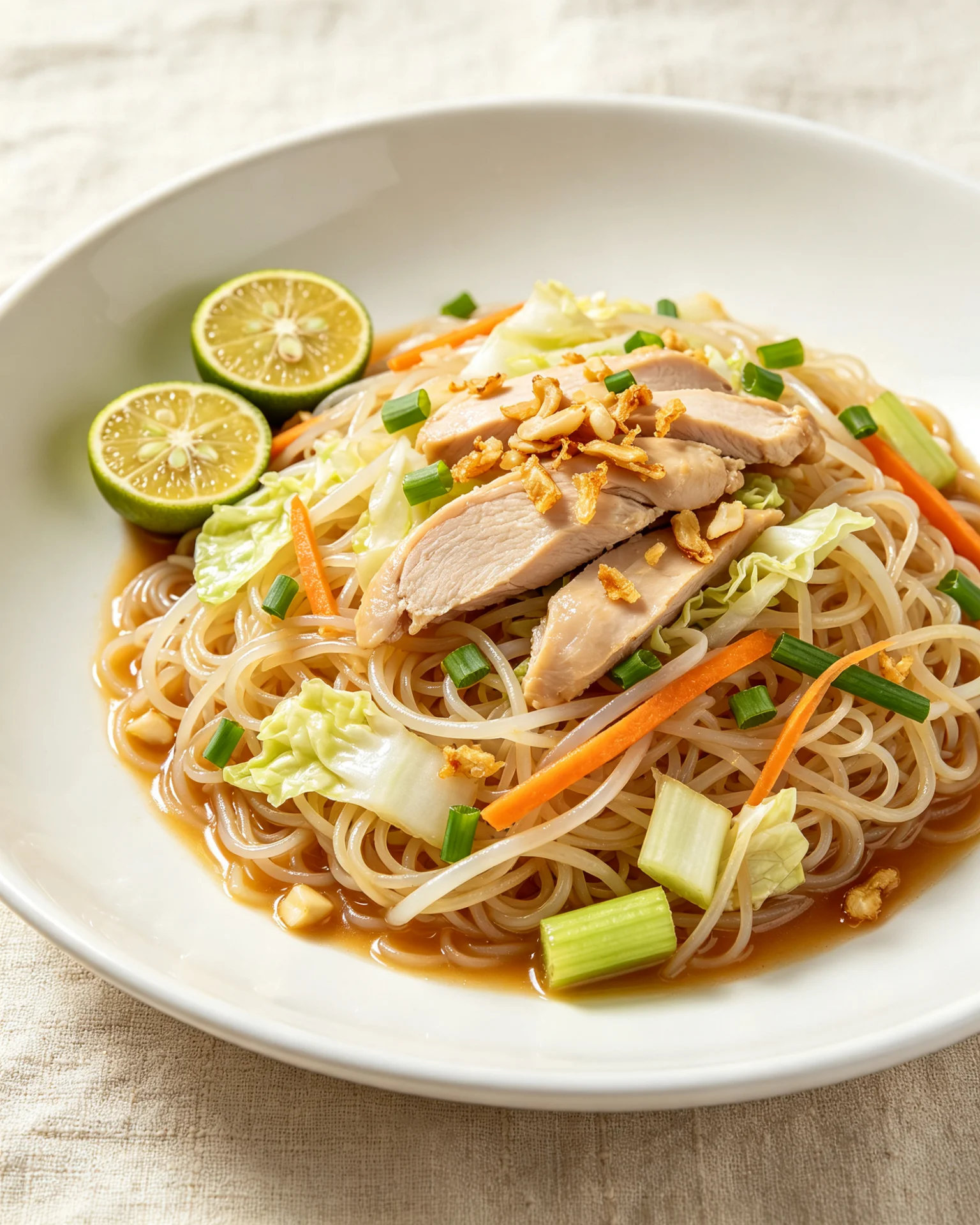
Pancit bihon Filipino rice vermicelli noodles with chicken, cabbage, carrot, celery and spring onion topped with fried garlic and calamansi on a white ceramic plate on linen surface

What is pancit bihon and what makes it different from other pancit?

Pancit bihon guisado is the thin rice vermicelli version of pancit, the most widely made Filipino noodle dish and one of the most recognisable foods at Filipino celebrations. Bihon refers to the noodles: thin threads made from rice starch and water, dried into bundles, sold in clear plastic packages at every Asian grocery store.

There are several distinct types of pancit and the differences are structural, not just superficial.

Pancit bihon uses rice starch noodles. Rice starch absorbs liquid readily, the noodles soak up the seasoned broth during cooking, depositing the flavour compounds inside each strand. The finished dish is light, slightly chewy, and seasoned throughout. It is the most delicate of the three main types.

Pancit canton uses egg and wheat noodles, the same family as lo mein. Wheat noodles do not absorb broth the same way. They cook through by boiling or stir-frying and the sauce coats the outside rather than penetrating inside. The result is chewier, richer, and more substantial.

Pancit sotanghon uses glass noodles made from mung bean starch. Mung bean starch produces a translucent noodle with a slippery, slightly gelatinous texture. It absorbs liquid differently from rice starch and the finished texture is softer and less distinct than bihon.

This recipe is bihon. If you use canton or sotanghon noodles the cooking technique changes, the soaking instructions, the broth volume, and the final texture will all be different.

Where does pancit come from and why is it served at birthdays?

Pancit arrived in the Philippines with Hokkien Chinese traders from Fujian Province, who established trading communities in the Philippine archipelago from the 10th century onward. The word pancit itself is borrowed from the Hokkien pian i sit, meaning something conveniently cooked. The noodle dish came with it, adapted over centuries to local ingredients and Filipino cooking traditions.

The birthday tradition comes from the same Chinese cultural roots. In Chinese and later Filipino belief, long noodles symbolise long life, the length of the noodle strand represents the length of the life of the person being celebrated. Pancit served at Filipino birthday parties is always kept uncut. The long strands hang from the serving spoon and guests eat them without breaking them. Cutting the noodles during preparation, or snapping them before serving, is considered bad luck, it symbolically shortens the life of the person being honoured.

This is why pancit is present at almost every Filipino birthday table regardless of what else is served. It is not just food. It is a wish made edible.

How do you soak bihon noodles correctly?

Cold water. Eight to ten minutes. Drain and use immediately.

The mechanism: bihon noodles are dried rice starch. When submerged in water the starch granules absorb water and swell, making the noodle pliable. The rate of hydration depends on the water temperature. Cold water hydrates slowly and evenly, the noodles reach the correct texture gradually and there is a window of several minutes where they stay at the right level of pliability.

Warm or hot water hydrates the outer surface rapidly while the centre is still dry and stiff. The outer layer becomes over-hydrated before the inside has softened fully. The noodles feel pliable but are structurally uneven, and they continue hydrating fast once removed from the water.

The correct texture after soaking: the noodle bends easily without snapping but springs back slightly when released. This slight resistance is the remaining absorption capacity. During cooking it fills with the seasoned broth, this is how the flavour gets inside the noodle rather than just coating the surface.

Over-soaked noodles have no remaining capacity. They turn mushy within minutes of hitting a hot pan. Under-soaked noodles snap and break into short pieces rather than bending with the other ingredients. The 8-10 minute cold water soak is not approximate, it matters.

Why do you add the noodles last and cook them in broth?

Two reasons, timing and seasoning.

Timing: bihon noodles added to the pan at the beginning over-absorb the cooking liquid while the chicken and vegetables are still finishing. By the time everything else is cooked the noodles have taken up too much liquid and become gluey. Added last, the noodles have 3-4 minutes of cooking time in the broth, exactly enough to absorb the right amount without going past the texture threshold.

Seasoning: the broth is where all the flavour goes. Soy sauce, oyster sauce, fish sauce, and the chicken cooking juices all dissolve into the broth. When the soaked bihon is added and begins absorbing this liquid, the dissolved seasonings travel with the liquid into the noodle interior through osmosis. The noodle ends up seasoned throughout, every bite tastes of the complete dish, not just the coating.

Tossing cooked noodles with sauce at the end produces surface seasoning only. The interior of the noodle tastes of plain rice starch. The outside tastes of soy sauce. The broth-absorption method is what separates properly made pancit from noodles with sauce poured over them.

The broth should be partially absorbed at the end, not fully evaporated. Some liquid remaining in the pan means the noodles are correctly cooked. Fully dry noodles have absorbed too much, the starch is beginning to dry out again and the texture will be slightly sticky.

What does calamansi do and why is it not optional?

Calamansi is a small Filipino citrus fruit, a hybrid of mandarin orange and kumquat, with a distinctive sweet-tart character and citric acid concentration similar to lime juice. It is served alongside pancit bihon at every Filipino table and squeezed over the noodles immediately before eating.

The reason it matters is the same reason nuoc cham is served alongside Vietnamese rice paper rolls, or lime with Thai food. Pancit bihon is seasoned primarily with soy sauce and oyster sauce, both high in sodium and glutamate. Heavy salt and umami without an acid counterbalance produces a dish that tastes complete but slightly flat. The acid from calamansi juice lowers the pH of each bite slightly, which increases the perceived brightness of all the other flavours and counterbalances the heaviness of the soy sauce.

Without calamansi the dish tastes correct but lacks lift. With it the noodles taste more alive. Adding more soy sauce does not fix this, the problem is not insufficient seasoning, it is the absence of acid.

If calamansi is unavailable, lime juice at equal quantity is the closest substitute. Lemon juice works but has a slightly different aromatic character. Do not use vinegar, it provides acidity without the citrus fragrance that completes the dish.

Ingredients

Overhead flat lay of pancit bihon ingredients on white surface including rice vermicelli noodles, boneless chicken thighs, soy sauce, fish sauce, chicken broth, garlic, onion, cabbage, carrot, celery, spring onions and calamansi

Serves 6

Noodles:

  • 250g (9oz) dried bihon rice vermicelli noodles
  • Cold water for soaking

Chicken:

  • 400g (14oz) boneless chicken thighs, sliced thin
  • 1 tbsp soy sauce
  • 1 tsp oyster sauce
  • ½ tsp ground black pepper

For cooking:

  • 3 tbsp neutral oil
  • 1 whole head garlic, minced
  • 1 medium onion, sliced
  • 2 tbsp soy sauce
  • 1 tbsp oyster sauce
  • 1 tbsp fish sauce (patis)
  • 500ml (2 cups) chicken broth
  • ¼ tsp ground black pepper

Vegetables:

  • ¼ head cabbage, thinly shredded
  • 2 medium carrots, julienned
  • 3 stalks celery, sliced diagonally
  • 3 spring onions, cut into 3cm pieces
  • 100g snow peas or green beans (optional)

To serve:

  • 3-4 calamansi halves per person, or lime wedges
  • Extra soy sauce on the side
  • Fried garlic topping (optional, fry minced garlic in oil until golden, drain)

Instructions

Soak the bihon first. Everything else is prepared while it soaks.

Step 1: Soak the bihon

 Dried bihon rice vermicelli noodles soaking in cold clear water in a white ceramic bowl on white surface

Place the bihon noodles in a large bowl. Cover completely with cold water. Soak for 8-10 minutes. Set a timer. The noodles should be pliable and bend without snapping but spring back slightly when released. Drain immediately when ready. Do not leave them soaking while you cook.

Step 2: Marinate the chicken

Toss sliced chicken thighs with soy sauce, oyster sauce, and black pepper. Leave for 10 minutes while the noodles soak.

Step 3: Mix the broth

Combine chicken broth, soy sauce, oyster sauce, fish sauce, and black pepper in a bowl. Stir until combined. Set aside. This is the liquid the noodles will absorb.

Step 4: Cook the chicken

Heat a large wok or wide pan over high heat. Add 2 tablespoons oil. Add the marinated chicken in a single layer. Sear for 2-3 minutes without stirring until golden on the contact side. Stir and cook 1-2 minutes more until just cooked through. Remove to a plate. Do not overcook, the chicken will return to the pan with the noodles.

Step 5: Sauté aromatics and vegetables

Thinly sliced chicken thigh pieces with julienned carrot, wilted cabbage, celery and garlic in a carbon steel wok with light soy gloss on white surface

Add remaining oil to the same wok. Add garlic and onion. Stir over medium-high heat for 1-2 minutes until softened and fragrant. Add carrots and celery. Stir fry 2 minutes. Add cabbage and snow peas if using. Toss for 1 minute, the cabbage should wilt slightly but still have some crunch.

Step 6: Add noodles and broth

Return the cooked chicken to the wok. Add the drained bihon noodles. Pour the seasoned broth over everything. Toss gently using tongs to distribute the noodles through the other ingredients without breaking them. Cover with a lid and cook over medium heat for 3-4 minutes until most of the broth is absorbed.

Remove the lid. Toss once more. The noodles should be tender, evenly coated, and slightly glossy from the remaining sauce. There should be a small amount of liquid still in the pan, not fully dry. Add spring onions and toss once.

Step 7: Serve

Pancit bihon rice vermicelli noodles with sliced chicken, carrot, cabbage and spring onion topped with fried garlic and lime on a white ceramic plate on linen surface

Plate immediately. Top with fried garlic if using. Serve with calamansi halves or lime wedges on the side. Each person squeezes calamansi over their own serving at the table.

How do you store and reheat pancit bihon?

Pancit bihon keeps in the refrigerator for 2 days. The noodles continue absorbing moisture overnight and the texture softens slightly. The flavour deepens. Day two pancit is often more intensely flavoured than freshly made.

To reheat: add a small splash of chicken broth or water to the pancit in a pan over medium heat. Toss gently until heated through and the added liquid is absorbed. Do not microwave dry, the noodles tighten and stick together without additional moisture. A splash of water in the microwave with a covered plate works acceptably if a pan is not available.

Pancit bihon does not freeze well. The rice starch network breaks down during freezing and the noodles become waterlogged and soft when thawed.

Love Filipino food?

Check out my complete guide to Filipino home cooking, pantry essentials, and techniques.

READ THE GUIDE

FAQ

What is the difference between pancit bihon and pancit canton? Pancit bihon uses thin rice vermicelli noodles made from rice starch. The noodles absorb the seasoned broth during cooking, depositing the flavour compounds inside each strand. The result is light, delicate, and seasoned throughout. Pancit canton uses egg and wheat noodles that are chewier and thicker. The sauce coats the outside rather than being absorbed inside. Both are Filipino pancit dishes but they have different textures, different cooking techniques, and a noticeably different eating experience.

Why do Filipinos serve pancit at birthdays? Pancit noodles symbolise long life in Filipino culture, a tradition rooted in the Chinese cultural beliefs brought to the Philippines by Hokkien Chinese traders from Fujian Province. The long noodle strands represent a long life for the person being celebrated. At Filipino birthday celebrations pancit is always served uncut, breaking or cutting the noodles is considered bad luck because it symbolically shortens the life of the birthday person.

Can I use chicken breast instead of thighs for pancit bihon? Yes, but thigh produces a better result. Chicken breast sliced thin and stir-fried at high heat can become slightly dry before the noodle stage. Thigh at 15-20% fat stays moist through the full cooking process. If using breast, slice thinner than thigh, 3-4mm, and reduce the initial searing time to 90 seconds per side to avoid overcooking before the noodles are added.

What can I substitute for calamansi? Lime juice at equal quantity is the closest substitute, similar citric acid concentration with a different but compatible aromatic profile. Lemon juice works but has a slightly more floral, less tart character. Do not substitute with vinegar, it provides acidity without the citrus fragrance that completes the dish. In the Philippines, bottled calamansi juice is available at most Asian grocery stores and keeps well in the refrigerator as a substitute for fresh.

You might also like: Check out our complete Filipino cooking guide for more essential ingredients and techniques.

Main course

Pancit Bihon Recipe (Filipino Noodles)

Filipino
Medium
6
Main Ingredients

Filipino Recipes, Main Dish, Rice Noodles

Prep

PT15M

Cook

PT25M

Total

PT40M

Nutrition Facts

Calories 162
Protein 11 g
Fat 7 g
Carbs 13 g

Ingredients

  • 250g (9oz) dried bihon rice vermicelli noodles
  • Cold water for soaking
  • 400g (14oz) boneless chicken thighs, sliced thin
  • 1 tbsp soy sauce
  • 1 tsp oyster sauce
  • ½ tsp ground black pepper
  • 3 tbsp neutral oil
  • 1 whole head garlic, minced
  • 1 medium onion, sliced
  • 2 tbsp soy sauce
  • 1 tbsp oyster sauce
  • 1 tbsp fish sauce (patis)
  • 500ml (2 cups) chicken broth
  • ¼ tsp ground black pepper
  • ¼ head cabbage, thinly shredded
  • 2 medium carrots, julienned
  • 3 stalks celery, sliced diagonally
  • 3 spring onions, cut into 3cm pieces
  • 100g snow peas or green beans (optional)
  • 3-4 calamansi halves per person, or lime wedges
  • Extra soy sauce on the side
  • Fried garlic topping (optional, fry minced garlic in oil until golden, drain)

Instructions

  1. Step 1: Soak the bihon - Place the bihon noodles in a large bowl. Cover completely with cold water. Soak for 8-10 minutes. Set a timer. The noodles should be pliable and bend without snapping but spring back slightly when released. Drain immediately when ready. Do not leave them soaking while you cook.
  2. Step 2: Marinate the chicken - Toss sliced chicken thighs with soy sauce, oyster sauce, and black pepper. Leave for 10 minutes while the noodles soak.
  3. Step 3: Mix the broth - Combine chicken broth, soy sauce, oyster sauce, fish sauce, and black pepper in a bowl. Stir until combined. Set aside. This is the liquid the noodles will absorb.
  4. Step 4: Cook the chicken - Heat a large wok or wide pan over high heat. Add 2 tablespoons oil. Add the marinated chicken in a single layer. Sear for 2-3 minutes without stirring until golden on the contact side. Stir and cook 1-2 minutes more until just cooked through. Remove to a plate. Do not overcook, the chicken will return to the pan with the noodles.
  5. Step 5: Sauté aromatics and vegetables - Add remaining oil to the same wok. Add garlic and onion. Stir over medium-high heat for 1-2 minutes until softened and fragrant. Add carrots and celery. Stir fry 2 minutes. Add cabbage and snow peas if using. Toss for 1 minute, the cabbage should wilt slightly but still have some crunch.
  6. Step 6: Add noodles and broth - Return the cooked chicken to the wok. Add the drained bihon noodles. Pour the seasoned broth over everything. Toss gently using tongs to distribute the noodles through the other ingredients without breaking them. Cover with a lid and cook over medium heat for 3-4 minutes until most of the broth is absorbed. Remove the lid. Toss once more. The noodles should be tender, evenly coated, and slightly glossy from the remaining sauce. There should be a small amount of liquid still in the pan, not fully dry. Add spring onions and toss once.
  7. Step 7: Serve - Plate immediately. Top with fried garlic if using. Serve with calamansi halves or lime wedges on the side. Each person squeezes calamansi over their own serving at the table.

Did you make this recipe?

Tag @asianfoodsdaily on Instagram or leave a comment below!

Asha

About Asha

Half Asian, half African cook raised between two food-obsessed cultures. I've spent 10 years learning Asian cooking traditions through family, friends, and thousands of hours at the stove — testing every dish until it works in a standard home kitchen.

Read my full story
#Filipino Recipes #Main Dish #Rice Noodles #Dairy-Free #Weeknight Dinner #Quick & Easy Asian Recipes #Filipino #Main course

Related Recipes

Post your Comment

Loading comments...