Mohinga Recipe — Burmese Fish Noodle Soup
Jump to Section
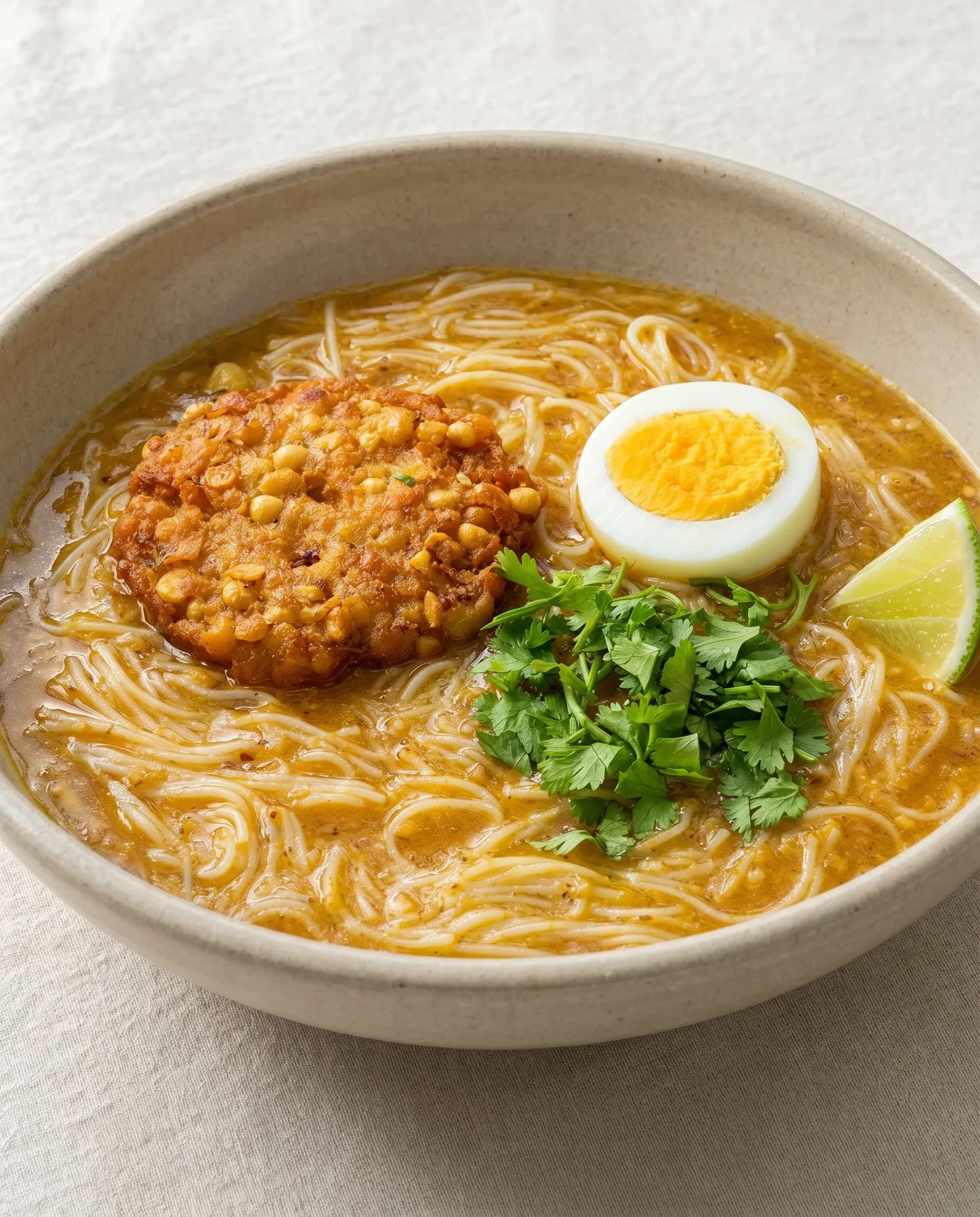
Mohinga is the dish Myanmar wakes up to. Every morning, from the street stalls around Shwedagon Pagoda to the tea shops of Mandalay, vendors set up their big pots before sunrise. The broth has been going since the night before. By 6am the smell of lemongrass, fish sauce, and black pepper pulls people off the street. It is eaten quickly, standing up or perched on a plastic stool, before the city starts moving. It is breakfast, but it is the kind of breakfast that stays with you.
For the full context on Burmese cooking techniques and ingredients, the complete Burmese food guide covers everything you need to understand before cooking this dish. The broth is built in two stages: first the fish stock, then the aromatic base, then the two are combined and thickened. It takes about an hour and a half. But the result is a bowl of soup that genuinely tastes like nothing else: deep, slightly funky from the fish paste, fragrant from the lemongrass, thickened to a silky consistency by the chickpea flour, and finished at the table with a spread of garnishes that each person adds to their own taste.
What makes mohinga different from other noodle soups
Most noodle soups are built on a single broth: stock, aromatics, seasoning, done. Mohinga is built in two completely separate stages that are combined only at the end, and that two-stage structure is what gives it its particular depth.
Stage one is a clean fish stock. Catfish (or firm white fish) is simmered with lemongrass, turmeric, and water until the fish is cooked through. The fish is removed and the broth is strained. This produces a light, fragrant base that carries the lemongrass and turmeric but nothing heavier.
Stage two is an aromatic paste. Onion, garlic, ginger, lemongrass, and dried chilli are ground to a paste and fried in peanut oil until the oil separates, using the see-byan method that defines Burmese cooking. Shrimp paste and paprika go in next. This paste cooks in the oil until it is dark, intensely fragrant, and completely transformed from its raw state.
The fish stock is then poured into the aromatic paste. Banana stem goes in. The whole thing simmers. Then toasted chickpea flour and toasted rice powder are stirred in to thicken the broth to a consistency slightly heavier than consommé but lighter than a cream soup, with enough body to coat the rice noodles without being stodgy.
The two-stage method means the broth has both clean brightness from the fish stock and deep, roasted savouriness from the fried aromatic paste. You cannot produce both qualities from a single pot.
The banana stem: what it is and how to prepare it
Banana stem is the inner core of the banana plant trunk, the fibrous pale yellow cylinder at the centre of the stalk, available canned in most Asian grocery stores. Fresh banana stem requires significant preparation: the outer layers must be peeled away until you reach the tender inner core, which is then sliced and immediately soaked in acidulated water to prevent browning.
In mohinga, banana stem does two things. Texturally, it absorbs the broth as it cooks, becoming tender while retaining a slight fibrous chew that contrasts with the soft noodles and flaked fish. Flavour-wise, it is mild and neutral. It contributes nothing of its own but carries the broth beautifully.
If you cannot find banana stem (fresh or canned), the most common substitute is canned bamboo shoots sliced thin. They provide similar texture and neutral flavour. Pearl onions, kept whole, are another substitute that softens properly in the broth, though the texture is different. Do not skip the banana stem equivalent entirely. The broth needs something with body in it besides the fish.
Using canned banana stem: Drain and rinse thoroughly. Slice into 5mm rounds. Add directly to the broth. No pre-soaking or acidulating needed. Canned banana stem is already partially cooked and will soften fully in about 15-20 minutes of simmering.
Using fresh banana stem: Peel the outer layers until you reach the pale, tender core, usually 6-8 layers in. Slice into 5mm rounds immediately and submerge in cold water with a squeeze of lime juice or a splash of vinegar to prevent browning. Drain just before adding to the broth.
Why does mohinga need toasted chickpea flour?
Every mohinga recipe that omits toasted chickpea flour and rice powder produces a thin, watery soup that does not coat the noodles properly. The thickening is structural to the dish. Without it, the broth and noodles sit separately in the bowl rather than integrating.
Both flours must be toasted before use. Raw chickpea flour added directly to liquid produces lumps and a raw, beany flavour. Toasted chickpea flour produces a nutty, slightly smoky depth that is one of the defining flavour notes of authentic mohinga.
To toast: spread the chickpea flour in a dry pan over medium heat, stirring constantly, for 3-4 minutes until golden and fragrant. It darkens quickly. Watch it. Remove immediately and cool on a cold plate. Do the same with the rice powder. Both can be toasted in advance and stored in an airtight container.
The correct consistency of finished mohinga broth is slightly thicker than pho but thinner than a bisque. It should coat a spoon lightly and hold its consistency without becoming gluey. Add the thickening gradually, stir well after each addition, and stop when the consistency is right.
Ingredients
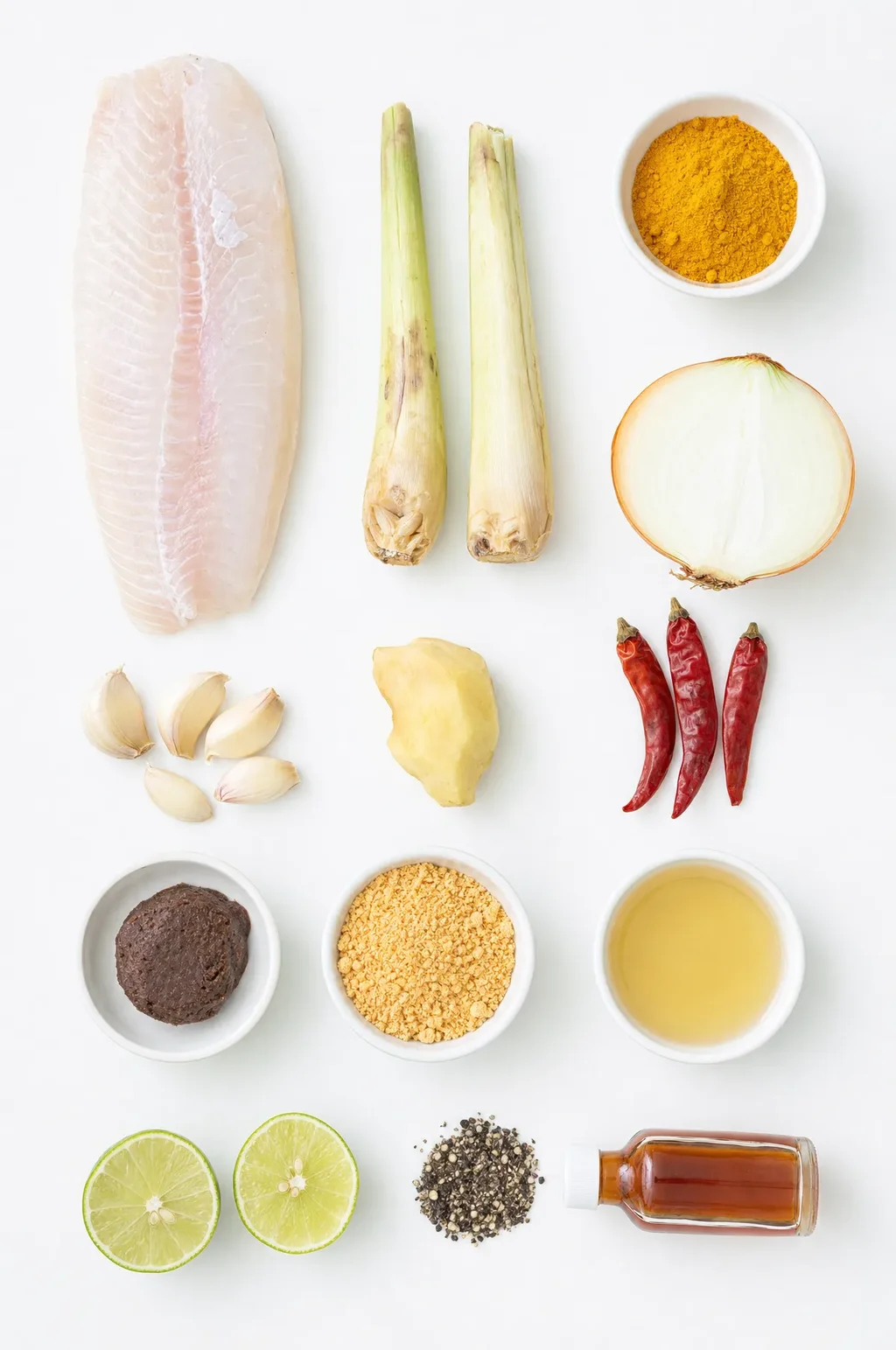
Serves 4
For the fish stock:
- 500g (1lb 2oz) catfish fillets, or substitute firm white fish such as cod, pollock, or barramundi
- 2 lemongrass stalks, bruised and roughly cut
- ½ tsp ground turmeric
- 1 litre (4 cups) water
For the aromatic paste:
- 1 large onion, roughly chopped
- 5 garlic cloves
- 3cm piece fresh ginger, peeled
- 2 lemongrass stalks, white part only, roughly sliced
- 3 dried red chillies, soaked in hot water for 10 minutes
For the broth:
- 4 tbsp peanut oil (or neutral oil)
- 1 tsp shrimp paste (ngapi or belacan)
- 1 tsp paprika
- ½ tsp ground turmeric
- 200g (7oz) canned banana stem, drained and sliced, or canned bamboo shoots
- 3 tbsp chickpea flour (besan), toasted
- 2 tbsp rice powder (or rice flour), toasted
- 3 tbsp fish sauce, or to taste
- 1 tsp ground black pepper
- 1 tsp ground white pepper
For the noodles:
- 300g (10oz) dried thin rice vermicelli noodles, cooked according to packet instructions
Garnishes (essential, not optional):
- 4 boiled eggs, halved
- 4 tbsp fried shallots
- 4 tbsp garlic oil (6 garlic cloves thinly sliced, fried in 4 tbsp peanut oil until golden)
- 2 limes, cut into wedges
- Fresh coriander leaves
- Dried chilli flakes
- Fish sauce at the table
- Crispy fritters (split pea or shallot) — optional but traditional
Instructions
Step 1: Make the fish stock
Place the catfish fillets in a medium saucepan with the lemongrass, turmeric, and water. Bring to a gentle simmer over medium heat.
Remove the fish and set aside to cool. Strain the broth through a fine sieve into a bowl and discard the lemongrass. You should have approximately 800ml-1 litre of clear, golden stock. Set aside.
When the fish is cool enough to handle, flake it into large pieces, carefully removing any bones. Set the flaked fish aside. Do not shred it finely. You want visible chunks in the finished soup.
Step 2: Make the aromatic paste
Place the onion, garlic, ginger, lemongrass (white part), and drained soaked chillies in a food processor or blender. Blend to a smooth paste, adding a tablespoon of water if needed to help it blend.
Step 3: Fry the paste (see-byan)
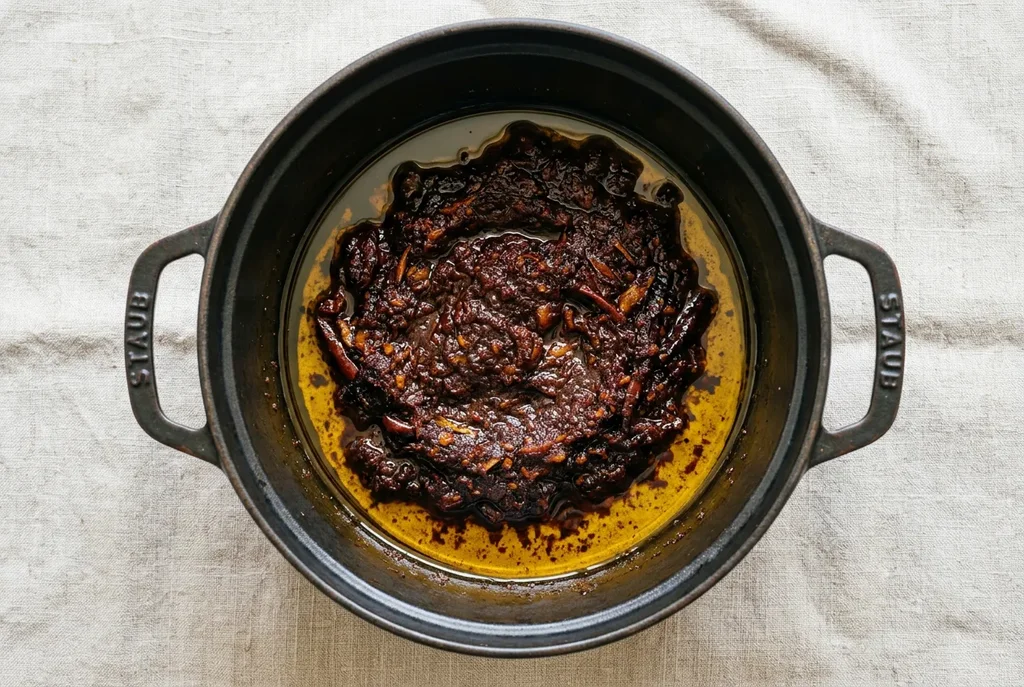
Heat the peanut oil in a large, heavy-based pot over medium heat. Add the aromatic paste.
Add the shrimp paste, paprika, and turmeric. Stir through and fry for another 2 minutes. The paste should now be a deep reddish-brown colour and smell intensely fragrant.
Step 4: Build the broth
Pour the fish stock into the pot with the fried paste. Stir well to combine.
In a small bowl, mix the toasted chickpea flour and rice powder with enough cold water to make a smooth, pourable paste, about 6-8 tablespoons of water. Slowly pour this into the simmering broth, stirring constantly. Simmer for 5 minutes, stirring occasionally, until the broth thickens slightly.
Add the fish sauce, black pepper, and white pepper. Taste. Mohinga should be salty, slightly funky, deeply savoury, and aromatic. Adjust fish sauce for saltiness and add more black pepper if needed. Black pepper is not a background note in mohinga. It is a primary flavour.
Add the flaked fish back to the broth. Stir gently to incorporate. Keep on very low heat until ready to serve.
Step 5: Prepare the garnishes
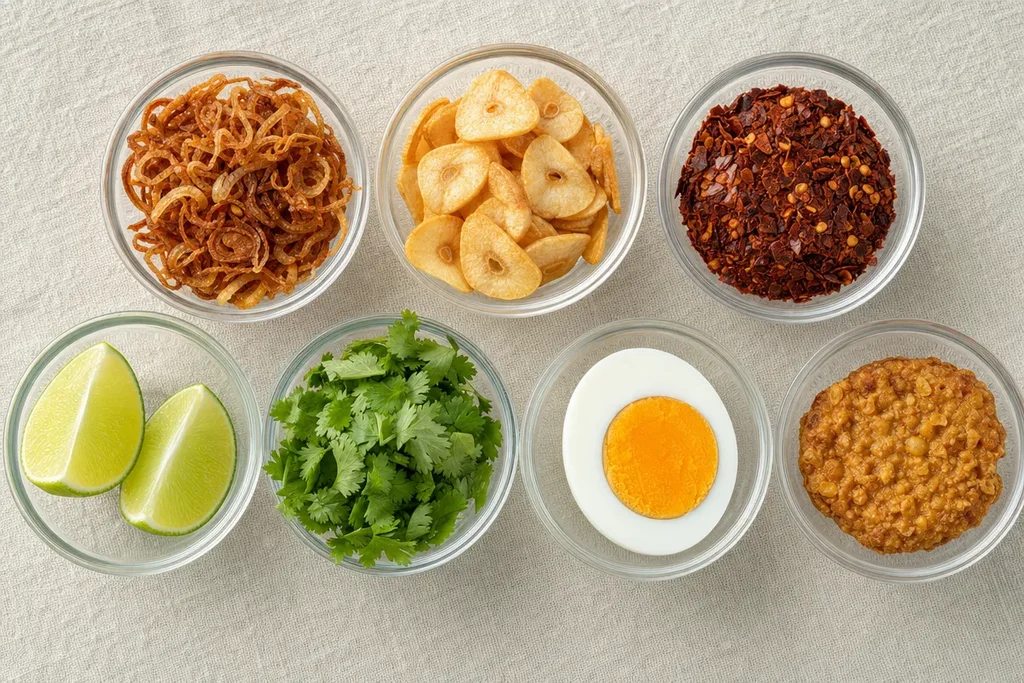
While the broth simmers, prepare the garnishes. Make the garlic oil by frying thinly sliced garlic in peanut oil over medium heat until golden.
Step 6: Serve
Place a portion of drained rice noodles in each bowl. Ladle the hot broth over the noodles, making sure each bowl gets pieces of banana stem and flaked fish.
Serve immediately with extra fish sauce, lime wedges, and dried chilli on the table. Mohinga is always finished at the table. Each person adjusts their own bowl.
Catfish vs white fish: what changes
Catfish is the traditional fish for mohinga. It has a slightly earthy, rich flavour from the freshwater environment and a firm texture that holds up well to simmering and flaking. The broth made from catfish has more depth and slightly more funk than a broth made from ocean fish. That earthiness is part of what makes traditional mohinga taste the way it does.
Firm white ocean fish (cod, pollock, barramundi, snapper) produces a cleaner, brighter broth with less depth. The flavour is still good but it is noticeably lighter. To compensate, increase the shrimp paste from 1 teaspoon to 1½ teaspoons and add an extra tablespoon of fish sauce. This adds back some of the savoury depth the catfish would have contributed.
Avoid oily fish like salmon, mackerel, or sardines. The fat makes the broth heavy and the flavour overwhelms the lemongrass aromatics.
How do you store and reheat mohinga?
The mohinga broth stores well in the refrigerator for up to 4 days and freezes for up to 3 months. Store the broth, fish, and noodles separately. The noodles turn soft and bloated if left in the broth overnight. Always cook them fresh or store drained and tossed with a little oil.
To reheat: bring the broth to a gentle simmer. If it has thickened too much in the refrigerator (the chickpea flour causes this), add a splash of water and stir to loosen. Cook fresh noodles or briefly rinse refrigerated noodles in boiling water.
Love Burmese food?
Check out my complete guide to Burmese home cooking, pantry essentials, and techniques.
FAQ
What fish is used in mohinga? Traditional mohinga uses catfish, specifically freshwater catfish native to Myanmar’s rivers and the Irrawaddy Delta. Outside Myanmar, catfish is available in many Asian grocery stores and some supermarkets. Firm white ocean fish (cod, pollock, barramundi) works well as a substitute, though the broth is lighter and slightly less earthy in flavour. Increase the shrimp paste slightly when using ocean fish to add back some depth.
What is the banana stem in mohinga? Banana stem is the inner core of the banana plant trunk: pale yellow, fibrous, and mildly flavoured. In mohinga it absorbs the broth and provides a slightly chewy texture that contrasts with the soft noodles. It is available canned in most Asian grocery stores. Canned bamboo shoots are the closest substitute if banana stem is unavailable.
Can you make mohinga without shrimp paste? Shrimp paste provides the fermented umami base that is one of the defining flavour notes of authentic mohinga. Without it the broth tastes thin and incomplete. For a vegan version, substitute 1 tablespoon of white miso mixed with ½ teaspoon of nori powder, which approximates the fermented savoury depth without the fish character. The result is different but more complete than simply omitting it.
Why is my mohinga broth watery? The broth needs both toasted chickpea flour and toasted rice powder to reach the correct consistency. If one or both were omitted, or if the flours were not toasted before adding, the broth will be thin. Fix it by toasting an extra tablespoon of chickpea flour, mixing it with cold water to a smooth paste, and stirring it into the simmering broth. Simmer for 5 minutes after adding.
Is mohinga eaten only for breakfast? Mohinga is traditionally a breakfast dish in Myanmar, sold by street vendors from early morning and eaten before work. However it is eaten throughout the day and is available in tea shops and restaurants at all hours. Outside Myanmar, making a full pot of mohinga for dinner or weekend brunch is the most practical approach for home cooks.
You might also like: Check out our complete Burmese cooking guide for more essential ingredients and techniques.
Mohinga Recipe — Burmese Fish Noodle Soup
PT30M
PT45M
PT1H15M
Nutrition Facts
Ingredients
- 500g (1lb 2oz) catfish fillets, or substitute firm white fish such as cod, pollock, or barramundi
- 2 lemongrass stalks, bruised and roughly cut
- ½ tsp ground turmeric
- 1 litre (4 cups) water
- 1 large onion, roughly chopped
- 5 garlic cloves
- 3cm piece fresh ginger, peeled
- 2 lemongrass stalks, white part only, roughly sliced
- 3 dried red chillies, soaked in hot water for 10 minutes
- 4 tbsp peanut oil (or neutral oil)
- 1 tsp shrimp paste (ngapi or belacan)
- 1 tsp paprika
- ½ tsp ground turmeric
- 200g (7oz) canned banana stem, drained and sliced, or canned bamboo shoots
- 3 tbsp chickpea flour (besan), toasted
- 2 tbsp rice powder (or rice flour), toasted
- 3 tbsp fish sauce, or to taste
- 1 tsp ground black pepper
- 1 tsp ground white pepper
- 300g (10oz) dried thin rice vermicelli noodles, cooked according to packet instructions
- 4 boiled eggs, halved
- 4 tbsp fried shallots
- 4 tbsp garlic oil (6 garlic cloves thinly sliced, fried in 4 tbsp peanut oil until golden)
- 2 limes, cut into wedges
- Fresh coriander leaves
- Dried chilli flakes
- Fish sauce at the table
- Crispy fritters (split pea or shallot) — optional but traditional
Instructions
- Place the catfish fillets in a medium saucepan with the lemongrass, turmeric, and water. Bring to a gentle simmer over medium heat. Do not boil. A hard boil makes the broth cloudy and the fish tough. Simmer for 10-12 minutes until the fish is just cooked through and flakes easily when pressed. Remove the fish and set aside to cool. Strain the broth through a fine sieve into a bowl and discard the lemongrass. You should have approximately 800ml-1 litre of clear, golden stock. Set aside. When the fish is cool enough to handle, flake it into large pieces, carefully removing any bones. Set the flaked fish aside. Do not shred it finely. You want visible chunks in the finished soup.
- Place the onion, garlic, ginger, lemongrass (white part), and drained soaked chillies in a food processor or blender. Blend to a smooth paste, adding a tablespoon of water if needed to help it blend. Alternatively use a large mortar and pestle, the traditional method, which produces a slightly coarser paste with better texture.
- Heat the peanut oil in a large, heavy-based pot over medium heat. Add the aromatic paste. Fry, stirring frequently, for 8-10 minutes until the paste darkens significantly, loses its raw smell, and the oil begins to separate and pool around the edges of the paste. This is the see-byan moment: the oil returning. Do not rush this step. The paste must be properly cooked or the broth will taste raw and sharp. Add the shrimp paste, paprika, and turmeric. Stir through and fry for another 2 minutes. The paste should now be a deep reddish-brown colour and smell intensely fragrant.
- Pour the fish stock into the pot with the fried paste. Stir well to combine. Add the banana stem. Bring to a simmer and cook for 15-20 minutes until the banana stem is tender. In a small bowl, mix the toasted chickpea flour and rice powder with enough cold water to make a smooth, pourable paste, about 6-8 tablespoons of water. Slowly pour this into the simmering broth, stirring constantly. Simmer for 5 minutes, stirring occasionally, until the broth thickens slightly. Add the fish sauce, black pepper, and white pepper. Taste. Mohinga should be salty, slightly funky, deeply savoury, and aromatic. Adjust fish sauce for saltiness and add more black pepper if needed. Black pepper is not a background note in mohinga. It is a primary flavour. Add the flaked fish back to the broth. Stir gently to incorporate. Keep on very low heat until ready to serve.
- While the broth simmers, prepare the garnishes. Make the garlic oil by frying thinly sliced garlic in peanut oil over medium heat until golden. Watch carefully, it burns in seconds. Strain through a sieve and save both the oil and the crispy garlic chips separately. Cook the rice noodles according to packet instructions and drain.
- Place a portion of drained rice noodles in each bowl. Ladle the hot broth over the noodles, making sure each bowl gets pieces of banana stem and flaked fish. Add two boiled egg halves. Spoon garlic oil over the surface. Top with fried shallots and fried garlic chips. Add coriander, a wedge of lime, and chilli flakes. Serve immediately with extra fish sauce, lime wedges, and dried chilli on the table. Mohinga is always finished at the table. Each person adjusts their own bowl. ## Catfish vs white fish: what changes Catfish is the traditional fish for mohinga. It has a slightly earthy, rich flavour from the freshwater environment and a firm texture that holds up well to simmering and flaking. The broth made from catfish has more depth and slightly more funk than a broth made from ocean fish. That earthiness is part of what makes traditional mohinga taste the way it does. Firm white ocean fish (cod, pollock, barramundi, snapper) produces a cleaner, brighter broth with less depth. The flavour is still good but it is noticeably lighter. To compensate, increase the shrimp paste from 1 teaspoon to 1½ teaspoons and add an extra tablespoon of fish sauce. This adds back some of the savoury depth the catfish would have contributed. Avoid oily fish like salmon, mackerel, or sardines. The fat makes the broth heavy and the flavour overwhelms the lemongrass aromatics. ## How do you store and reheat mohinga? The mohinga broth stores well in the refrigerator for up to 4 days and freezes for up to 3 months. Store the broth, fish, and noodles separately. The noodles turn soft and bloated if left in the broth overnight. Always cook them fresh or store drained and tossed with a little oil. To reheat: bring the broth to a gentle simmer. If it has thickened too much in the refrigerator (the chickpea flour causes this), add a splash of water and stir to loosen. Cook fresh noodles or briefly rinse refrigerated noodles in boiling water.
Did you make this recipe?
Tag @asianfoodsdaily on Instagram or leave a comment below!
Testing Notes
Tested in Asha's kitchen. Last reviewed June 1, 2026.
Ingredient Substitutions
Substitution notes coming soon.
About Asha
Half Asian, half African cook raised between two food-obsessed cultures. I've spent 10 years learning Asian cooking traditions through family, friends, and thousands of hours at the stove — testing every dish until it works in a standard home kitchen.
Read my full storyTechnique & Pantry Guides
Related Recipes
More delicious dishes you might enjoy


Loading comments...