Momo Achar Recipe (Nepali Dipping Sauce)
Jump to Section
I made momo achar twice on the same day once, one batch to serve immediately, one batch to eat the next morning. Same tomatoes, same timur, same sesame, same proportions. The next-day version was noticeably better. The garlic had mellowed from aggressively raw to something more integrated. The timur had distributed more evenly through the sauce. The sesame depth was present in every spoonful rather than concentrated near the seed pieces.
The improvement happens because momo achar is not a static sauce once assembled. The citric acid from the roasted tomatoes and lime continues breaking down the harsh allicin compounds in the raw garlic as it sits, the same acid-allicin interaction covered in the cucumber salad recipe on this site. The volatile aromatics in the timur and ginger redistribute through the sauce over 12-24 hours. Sesame oil compounds diffuse more evenly. If time allows, make the achar the day before. If it does not, make it at least an hour ahead of serving.
What is momo achar and why does it matter as much as the momo itself?
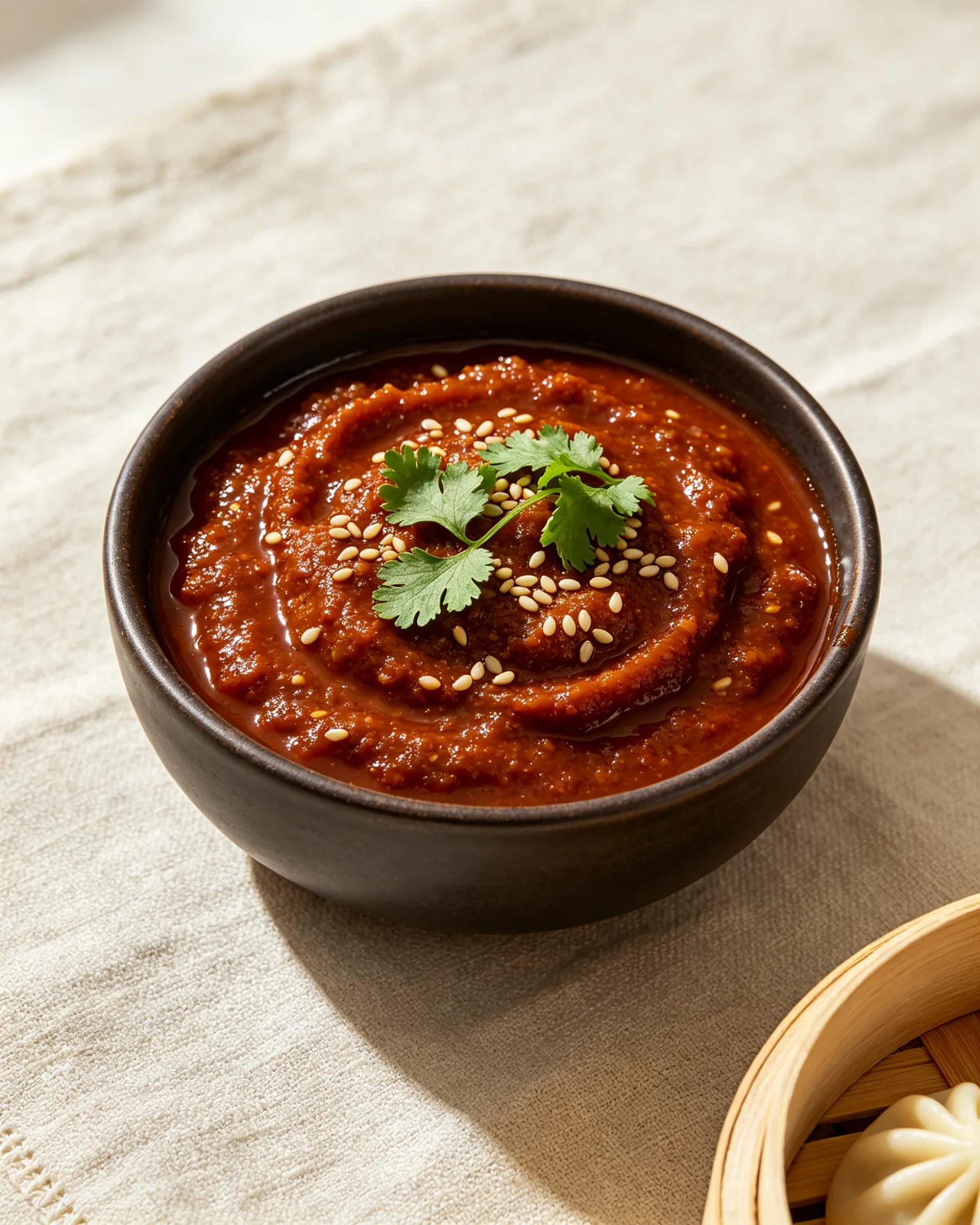
Momo achar (मःमः अचार) is the tomato-sesame-timur dipping sauce that accompanies Nepali momo at every momo stall, restaurant, and household in Nepal. It is not a condiment in the way ketchup is a condiment, something optional on the side. It is structurally part of the dish.
Tibetan momo, the ancestor of Nepali momo, was served with chilli-garlic sauce or pickled daikon. When Newar traders brought momo to Kathmandu and adapted it to local flavours, the tomato-sesame achar was the Nepali addition that defined the new version as distinctly Nepali rather than Tibetan. The achar is what turned a Tibetan dumpling into a Nepali institution.
Without it, Nepali momo is correct but incomplete. The thick, smoky, nutty, numbing achar provides the contrast that makes each momo bite more interesting, the mild wrapper and juicy filling against the bold sauce. The timur’s numbing effect on the tongue amplifies the momo’s other flavours with each subsequent bite.
Three versions exist and they are not interchangeable. Each serves a specific purpose.
The three versions and when to use each
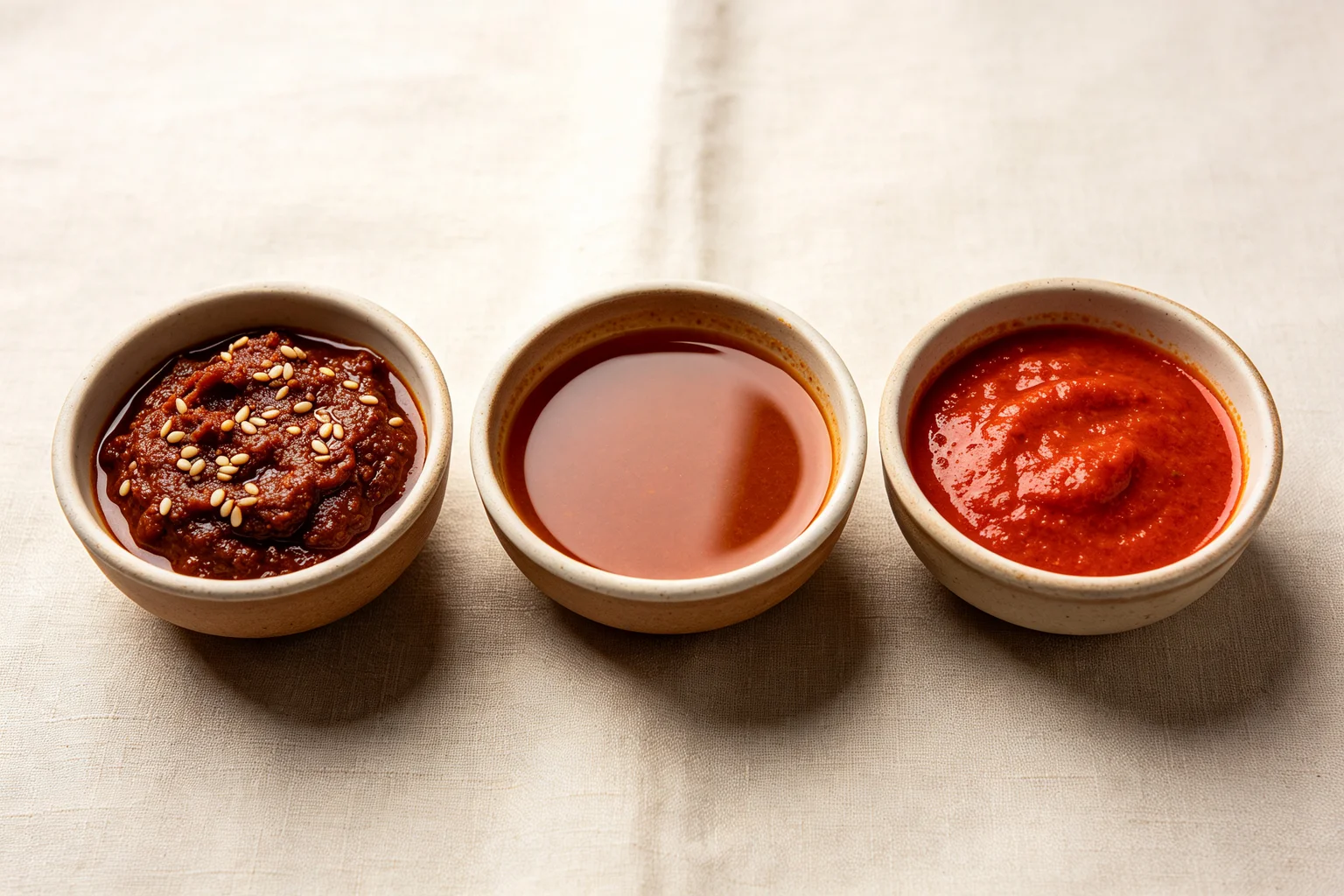
Classic roasted tomato-sesame achar is the standard. Thick, smoky, deeply flavoured from charred tomatoes and toasted sesame. Served as a dipping sauce alongside steamed momo. This is the version found at momo bhatti stalls across Kathmandu and the one most people mean when they say momo achar.
Jhol achar is the soup version. The same roasted tomato-sesame base is thinned with stock or water into a thin, spiced broth. Momos are placed directly in the jhol achar bowl and eaten with the soup, this is the preparation known as jhol momo (jhol = soup in Nepali). The momo soaks in the warm spiced broth rather than being dipped. A separate recipe for jhol momo is on this site.
Quick pan-cooked version skips the roasting. Tomatoes are sautéed in oil with spices until soft and mushy, then blended. Faster to make, 15 minutes rather than 45, but produces a brighter, less smoky sauce without the Maillard depth of charred tomatoes. For weeknight momo when time is short.
This page covers all three. Start with the classic.
Why do you roast the tomatoes until charred?
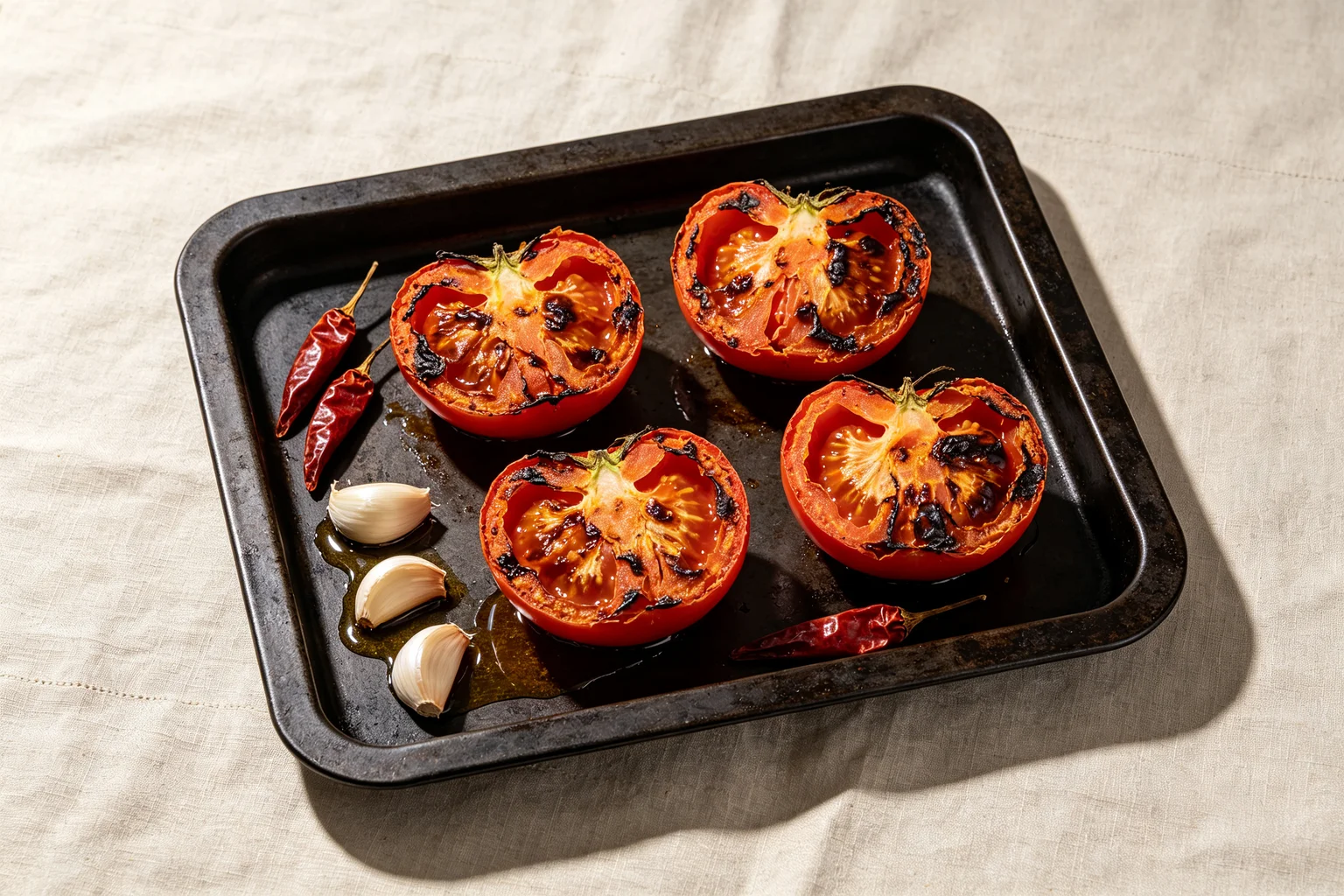
Roasting serves the same function here as in the Nepali chicken momo recipe on this site: it drives off the tomato’s water (approximately 94% of raw tomato weight) and concentrates the flavour compounds into a smaller volume. A roasted tomato weighs approximately 40-50% less than its raw equivalent. The achar made from that volume of roasted tomato is significantly thicker and more intensely flavoured than raw-blended tomato sauce of the same original weight.
The char on the tomato skin adds the specific smoky depth that distinguishes momo achar from marinara. Direct oven heat at 220°C or open flame charring produces Maillard reaction at the exposed tomato surfaces, melanoidins and heterocyclic aromatic compounds that give a slightly bitter, caramelised complexity to the sauce.
Leaving some of the charred skin in during blending adds depth. Removing all of it produces a cleaner, brighter sauce. The correct amount is somewhere between, remove the most heavily charred sections but leave the lightly charred skin in for character.
The instruction to roast until charred is not an approximation. Pale roasted tomatoes produce a mildly flavoured sauce. Dark charred tomatoes produce the achar.
Why must the sesame seeds be toasted?
Raw sesame seeds contain volatile aromatic compounds, primarily sesamol, sesamin, and sesamolin, within their structure, protected by the outer hull. In their raw state these compounds are not fully released into surrounding food.
Dry toasting in a pan at medium heat causes the hull to rupture as internal moisture converts to steam and expands. The sesame oil releases onto the seed surface. This oil then undergoes Maillard reaction with the seed’s proteins at the toasting temperature, producing nutty, roasted aromatic compounds including pyrazines and furans.
The difference in the finished achar is significant. Raw sesame seeds ground into sauce produce a flat flavour with a slight raw bitterness. Toasted sesame seeds ground into sauce produce the intense nutty depth that is momo achar’s defining secondary flavour after the charred tomato.
Toast in a dry pan over medium heat, stirring constantly, until the seeds begin to pop and turn light golden, 2-3 minutes. Remove from heat immediately when they start to colour. Sesame seeds burn fast.
What does blooming mustard oil with fenugreek do?
Raw mustard oil has a sharp, pungent character from erucic acid and allyl isothiocyanate, the same compound responsible for the heat in mustard and wasabi. In its raw state, mustard oil can dominate everything else in the achar rather than supporting it.
Heating mustard oil to its smoke point (approximately 250°C) drives off the most volatile of these pungent compounds as vapour. This is why Bangladeshi and Nepali recipes instruct heating mustard oil until smoking before proceeding, the initial pungency mellows significantly after this brief high-heat phase.
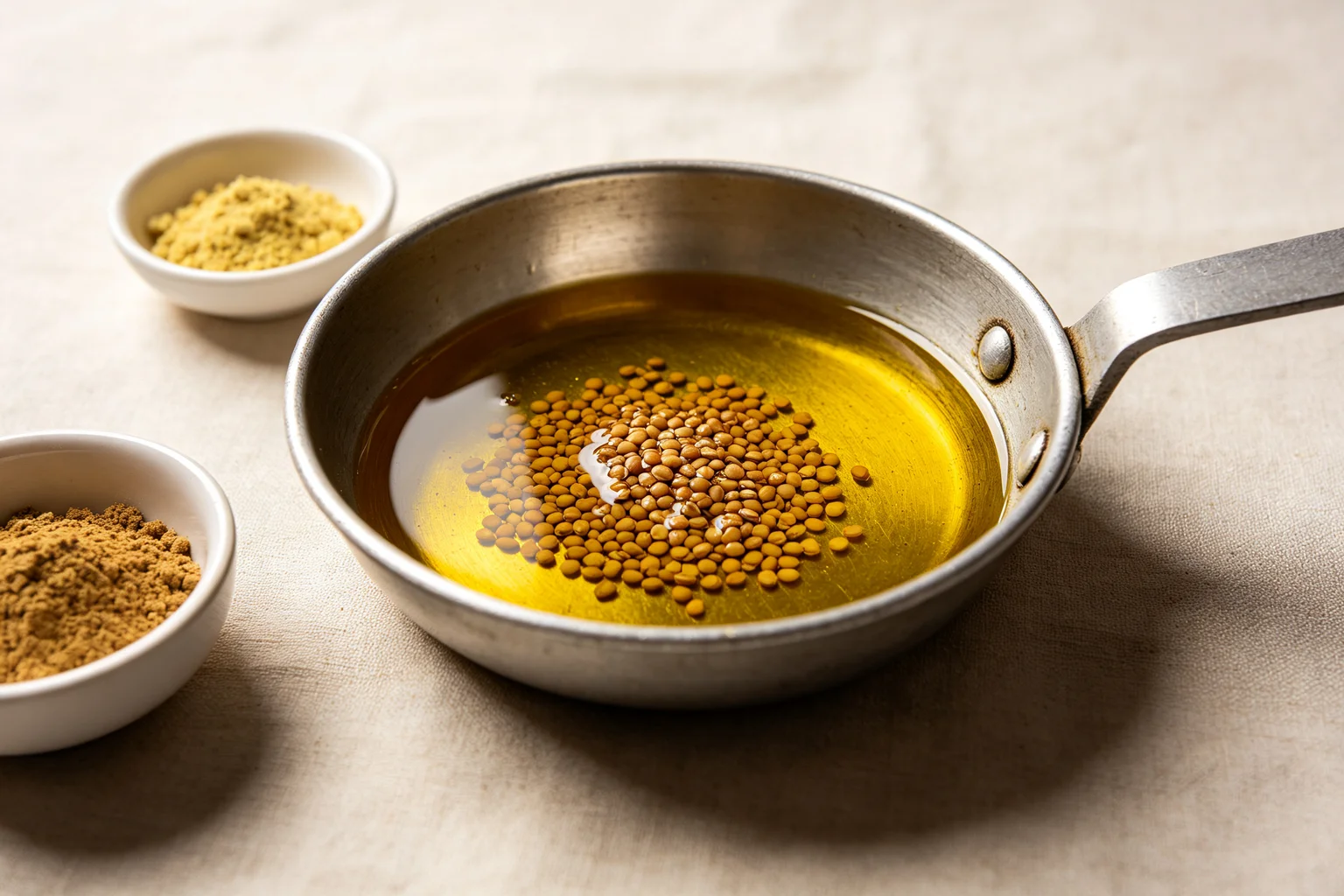
Adding fenugreek (methi) seeds to the smoking oil produces a secondary effect: the seeds briefly fry and release their own aromatic compounds, primarily sotolone, which has a maple-caramel character, into the oil. The resulting bloomed mustard oil retains the distinctive mustard character without the harsh rawness, enriched with fenugreek’s bitter-sweet depth.
If mustard oil is unavailable, neutral oil works acceptably. The achar will taste slightly different, less pungent, less complex, but still correct. Do not use olive oil.
Why does timur go in after blending off heat?
Timur contains hydroxy-alpha-sanshool, the volatile compound responsible for the numbing-tingling sensation that defines authentic momo achar. This is the same compound discussed in the Nepali chicken momo recipe on this site, and the same principle applied to Sichuan peppercorn in the mapo tofu and tteokbokki recipes: sanshool evaporates rapidly at cooking temperatures.
If timur is added to the achar while the blended mixture is still hot, most of the sanshool evaporates before the sauce reaches the table. The achar has timur flavour but minimal numbing effect.
Added after blending, once the mixture has cooled to below 50°C, the sanshool compounds are preserved. The numbing sensation arrives at full intensity with the first spoonful and continues through the meal.
Add the timur last. Stir to incorporate. Do not reheat the achar after adding it.
What does hing (asafoetida) do in momo achar?
Asafoetida (hing) is dried resin from the roots of Ferula plants. In its raw powdered form it has an intensely pungent smell from organo-sulphur compounds, primarily di-n-propyl disulphide, structurally related to the allicin compounds in garlic and onion.
When hing contacts heat or acid, these volatile sulphur compounds partially break down and their intensity reduces. In a sauce built on roasted tomatoes and lime juice, the hing’s raw pungency mellows to a background allium depth, a resonance that makes the garlic and onion flavours already present in the achar seem fuller and more complete. It is the same amplifying effect as a pinch of MSG in a dish that already has glutamate, it does not add a new flavour, it makes the existing flavours more themselves.
The quantity rule is strict: approximately 1/8 teaspoon per batch. Less than this and the effect is negligible. More and the di-n-propyl disulphide compounds overwhelm rather than support, the achar smells and tastes of hing rather than of momo achar.
If hing is unavailable, the achar is still correct without it. A small extra clove of garlic partially substitutes for the allium depth.
Recipe 1, Classic Roasted Tomato-Sesame Achar
Makes approximately 1 cup. Serves 4-6 as a dipping sauce. Best made 1-24 hours ahead. Keeps refrigerated for 5 days.
Ingredients:
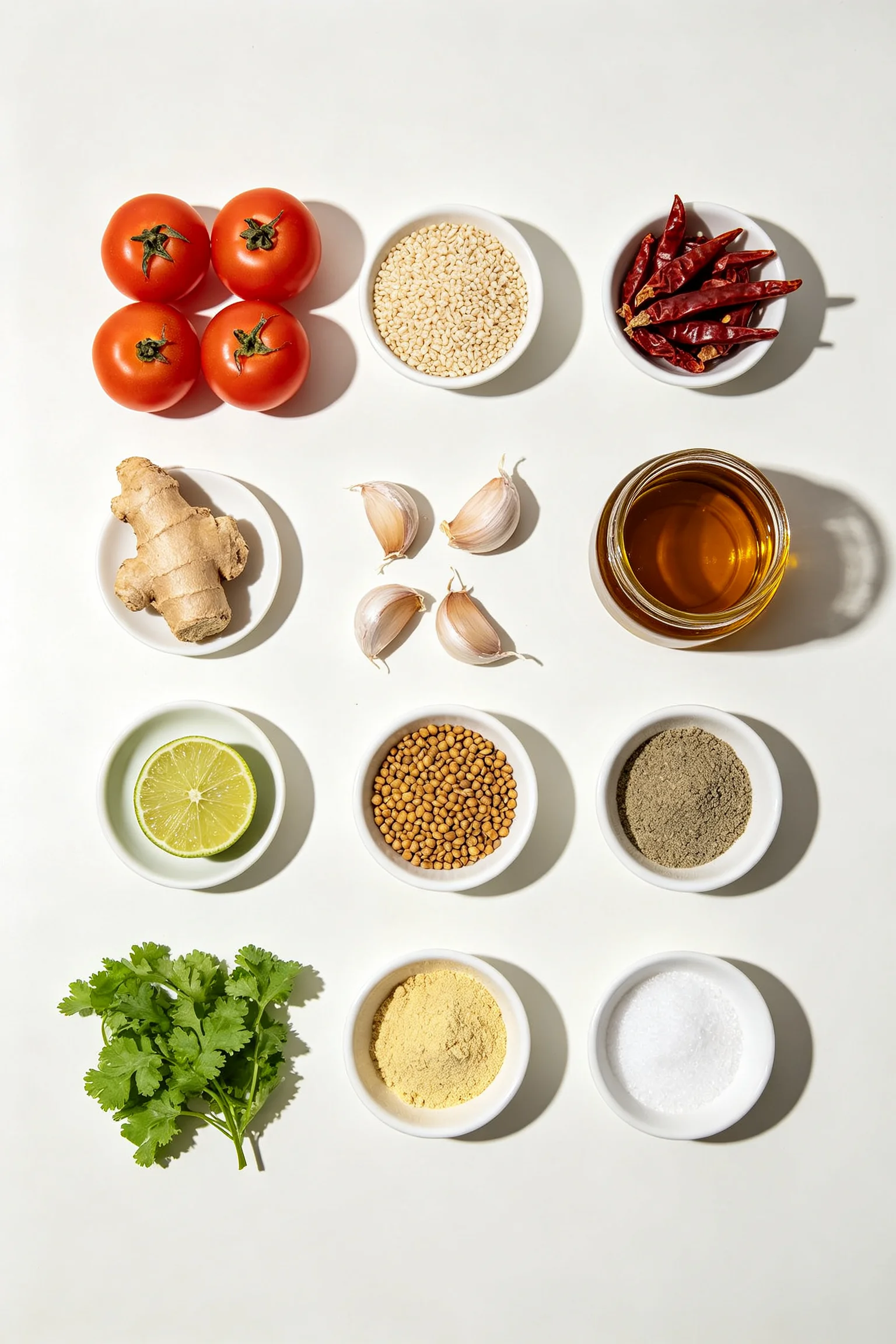
- 4 medium ripe tomatoes, halved
- 3 tbsp sesame seeds (til), raw
- 4-6 dried red chillies (adjust for heat)
- 4 cloves garlic, unpeeled
- 2cm fresh ginger, roughly sliced
- 2 tbsp mustard oil (or neutral oil)
- ¼ tsp fenugreek seeds (methi)
- ½ tsp ground timur or Sichuan peppercorn (added off heat after blending)
- ⅛ tsp asafoetida (hing)
- 1 tbsp lime juice
- Small handful fresh coriander
- Salt to taste
Method:
Preheat oven to 220°C. Place tomato halves cut-side up on a baking tray alongside the unpeeled garlic cloves and dried red chillies. Roast 25-30 minutes until tomatoes are blistered, slightly collapsed, and charred at the edges. Remove. Squeeze garlic from skins.
Toast sesame seeds in a dry pan over medium heat, stirring constantly, for 2-3 minutes until golden and beginning to pop. Remove immediately.
Heat mustard oil in a small pan over high heat until smoking. Add fenugreek seeds and hing. Fry 20-30 seconds until fenugreek is golden, it will smell intensely. Remove from heat immediately.
Combine roasted tomatoes, garlic, soaked chillies, ginger, toasted sesame, and coriander in a blender. Blend to a thick, slightly coarse paste. Do not over-blend, some texture from the sesame is correct.
Transfer to a bowl. Add the bloomed mustard oil mixture. Add lime juice. Stir to combine. Taste and adjust salt.
Wait for the mixture to cool to below 50°C. Add the ground timur. Stir.
Rest for at least 15 minutes before serving. Better after 1-2 hours. Best the next day.
Recipe 2, Jhol Achar (Soup Version for Jhol Momo)
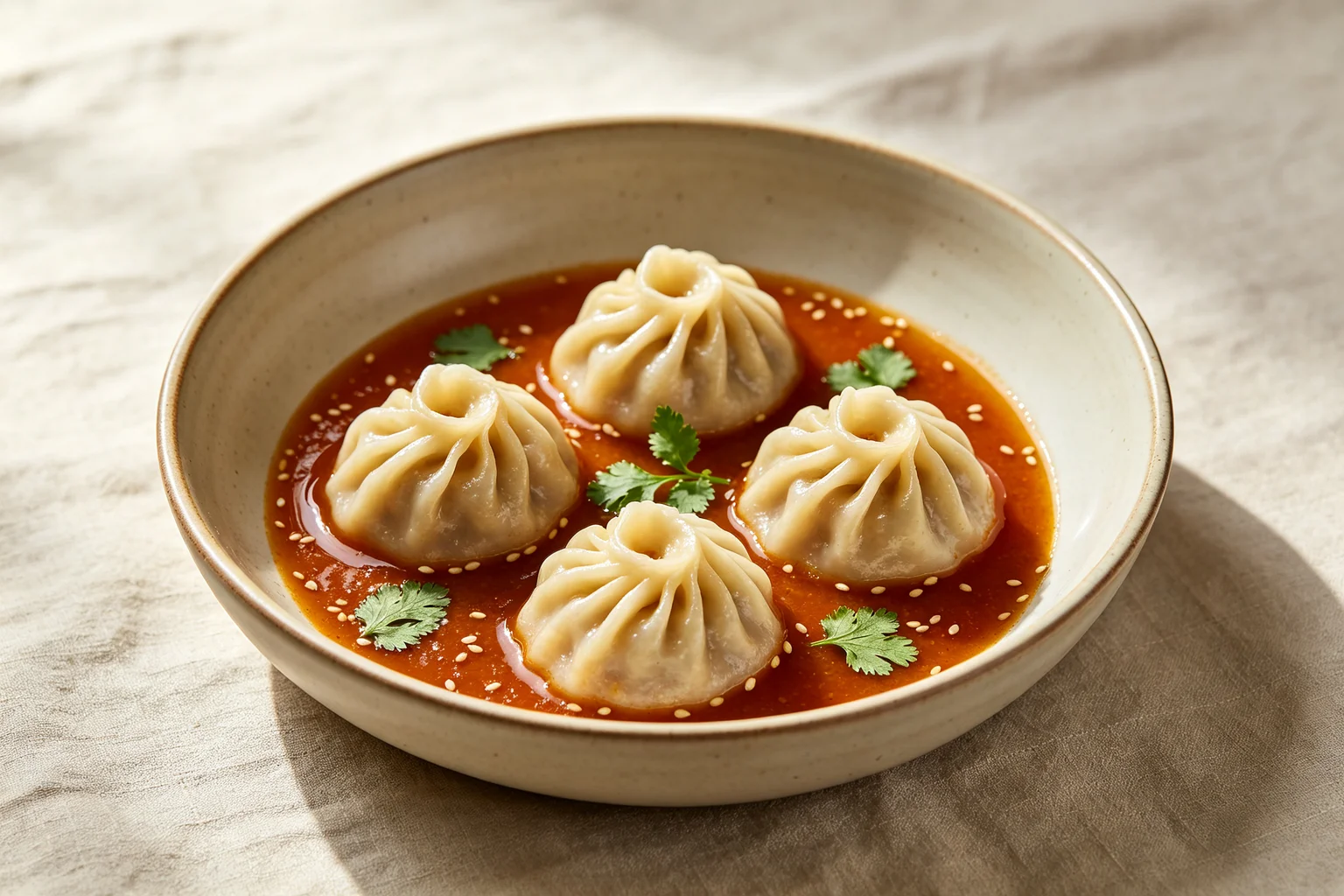
Makes approximately 2 cups of soupy achar. Served warm, poured directly over steamed momo in a bowl.
Ingredients:
- 1 cup classic roasted tomato-sesame achar (from Recipe 1)
- 300ml (1¼ cups) vegetable or chicken stock
- 1 tsp soy sauce
- ½ tsp sesame oil
- Extra timur to taste
Method:
Combine the classic achar with stock in a small saucepan. Whisk to combine. Heat gently over medium heat until simmering. Add soy sauce and sesame oil. Taste and adjust salt and chilli. The jhol should be thin enough to pour and drink but still have body from the sesame and tomato.
To serve: place steamed momo in a deep bowl. Pour the hot jhol achar over the top until the momo are sitting in approximately 1cm of broth. Eat with a spoon.
Recipe 3, Quick Pan-Cooked Achar
Ready in 15 minutes. No roasting required. Best for weeknight momo when time is short.
Ingredients:
- 4 medium tomatoes, roughly chopped
- 2 tbsp sesame seeds, toasted
- 3-4 dried red chillies
- 4 cloves garlic, minced
- 2cm fresh ginger, grated
- 2 tbsp neutral oil
- ½ tsp cumin seeds
- ½ tsp turmeric
- ½ tsp ground coriander
- ½ tsp ground timur (added off heat)
- 1 tbsp lime juice
- Salt to taste
- Fresh coriander to finish
Method:
Heat oil in a pan over medium heat. Add cumin seeds and fry 30 seconds until spluttering. Add dried chillies, garlic, and ginger. Fry 1-2 minutes until golden. Add turmeric and ground coriander. Stir 30 seconds.
Add chopped tomatoes. Cook over medium heat, stirring occasionally, until tomatoes completely break down and the mixture is thick and mushy, 10-12 minutes. Remove from heat.
Add toasted sesame seeds. Cool slightly. Blend to a thick paste. Transfer to a bowl. Add lime juice, timur off heat, and fresh coriander. Taste and adjust salt.
This version is brighter and less smoky than the classic roasted version. It works well but the Maillard depth from charring is absent. Make the classic when time allows.
Love Nepali food?
Check out my complete guide to Nepali home cooking, pantry essentials, and techniques.
FAQ
What is the difference between momo achar and regular tomato chutney? Three things distinguish momo achar from standard tomato chutney. First, timur, the Himalayan Sichuan pepper that produces the numbing sensation characteristic of Nepali food. No South Indian or general Indian tomato chutney uses timur. Second, toasted sesame seeds ground into the sauce, which produce a nutty depth that Indian chutneys typically do not have. Third, the charring technique, momo achar uses direct char on the tomatoes rather than simply roasting or sautéeing. Together these produce a sauce with a specifically Nepali Himalayan character.
Can I make momo achar without timur? Yes. The achar will be spicy, smoky, and nutty but will not have the numbing-tingling sensation that timur provides. Ground Sichuan peppercorn is the closest substitute in terms of the numbing effect, the aromatic character is slightly different but the sanshool compound produces a similar result. If neither is available, the achar is still good and correct without it, it simply lacks the specifically Himalayan character.
How long does momo achar keep? Classic roasted tomato-sesame achar keeps refrigerated for 5 days. The flavour continues developing for the first 24-48 hours before stabilising. After 5 days the raw garlic and coriander begin to lose brightness. The quick pan-cooked version keeps 3-4 days. Jhol achar keeps 3 days refrigerated, reheat gently before serving, adding a splash of stock if it has thickened.
What is jhol momo and how does jhol achar differ from the classic? Jhol momo is steamed momo served in a bowl with warm spiced broth rather than alongside a dipping sauce. The broth is jhol achar, the classic roasted tomato-sesame achar thinned with stock to a pourable consistency. The momo soaks in the broth, absorbing the tomato and sesame flavour from the outside while the filling stays juicy inside. It is a completely different eating experience from dipped momo. A separate jhol momo recipe is on this site.
Momo Achar Recipe (Nepali Dipping Sauce)
PT15M
PT30M
PT45M
Nutrition Facts
Ingredients
- 4 medium ripe tomatoes, halved
- 3 tbsp sesame seeds (til), raw
- 4-6 dried red chillies (adjust for heat)
- 4 cloves garlic, unpeeled
- 2cm fresh ginger, roughly sliced
- 2 tbsp mustard oil (or neutral oil)
- ¼ tsp fenugreek seeds (methi)
- ½ tsp ground timur or Sichuan peppercorn (added off heat after blending)
- ⅛ tsp asafoetida (hing)
- 1 tbsp lime juice
- Small handful fresh coriander
- Salt to taste
- 1 cup classic roasted tomato-sesame achar (from Recipe 1)
- 300ml (1¼ cups) vegetable or chicken stock
- 1 tsp soy sauce
- ½ tsp sesame oil
- Extra timur to taste
- 4 medium tomatoes, roughly chopped
- 2 tbsp sesame seeds, toasted
- 3-4 dried red chillies
- 4 cloves garlic, minced
- 2cm fresh ginger, grated
- 2 tbsp neutral oil
- ½ tsp cumin seeds
- ½ tsp turmeric
- ½ tsp ground coriander
- ½ tsp ground timur (added off heat)
- 1 tbsp lime juice
- Salt to taste
- Fresh coriander to finish
Instructions
- Preheat oven to 220°C. Place tomato halves cut-side up on a baking tray alongside the unpeeled garlic cloves and dried red chillies. Roast 25-30 minutes until tomatoes are blistered, slightly collapsed, and charred at the edges. Remove. Squeeze garlic from skins.
- Toast sesame seeds in a dry pan over medium heat, stirring constantly, for 2-3 minutes until golden and beginning to pop. Remove immediately.
- Heat mustard oil in a small pan over high heat until smoking. Add fenugreek seeds and hing. Fry 20-30 seconds until fenugreek is golden, it will smell intensely. Remove from heat immediately.
- Combine roasted tomatoes, garlic, soaked chillies, ginger, toasted sesame, and coriander in a blender. Blend to a thick, slightly coarse paste. Do not over-blend, some texture from the sesame is correct.
- Transfer to a bowl. Add the bloomed mustard oil mixture. Add lime juice. Stir to combine. Taste and adjust salt.
- Wait for the mixture to cool to below 50°C. Add the ground timur. Stir.
- Rest for at least 15 minutes before serving. Better after 1-2 hours. Best the next day.
- ## Recipe 2, Jhol Achar (Soup Version for Jhol Momo)
- Combine the classic achar with stock in a small saucepan. Whisk to combine. Heat gently over medium heat until simmering. Add soy sauce and sesame oil. Taste and adjust salt and chilli. The jhol should be thin enough to pour and drink but still have body from the sesame and tomato.
- To serve: place steamed momo in a deep bowl. Pour the hot jhol achar over the top until the momo are sitting in approximately 1cm of broth. Eat with a spoon.
- ## Recipe 3, Quick Pan-Cooked Achar
- *Ready in 15 minutes. No roasting required.* *Best for weeknight momo when time is short.*
- Heat oil in a pan over medium heat. Add cumin seeds and fry 30 seconds until spluttering. Add dried chillies, garlic, and ginger. Fry 1-2 minutes until golden. Add turmeric and ground coriander. Stir 30 seconds.
- Add chopped tomatoes. Cook over medium heat, stirring occasionally, until tomatoes completely break down and the mixture is thick and mushy, 10-12 minutes. Remove from heat.
- Add toasted sesame seeds. Cool slightly. Blend to a thick paste. Transfer to a bowl. Add lime juice, timur off heat, and fresh coriander. Taste and adjust salt.
- This version is brighter and less smoky than the classic roasted version. It works well but the Maillard depth from charring is absent. Make the classic when time allows.
Did you make this recipe?
Tag @asianfoodsdaily on Instagram or leave a comment below!
Testing Notes
Tested in Asha's kitchen. Last reviewed June 14, 2026.
Ingredient Substitutions
Substitution notes coming soon.
About Asha
Half Asian, half African cook raised between two food-obsessed cultures. I've spent 10 years learning Asian cooking traditions through family, friends, and thousands of hours at the stove — testing every dish until it works in a standard home kitchen.
Read my full storyRelated Recipes
More delicious dishes you might enjoy


Loading comments...