4 Japanese Ramen Styles Explained
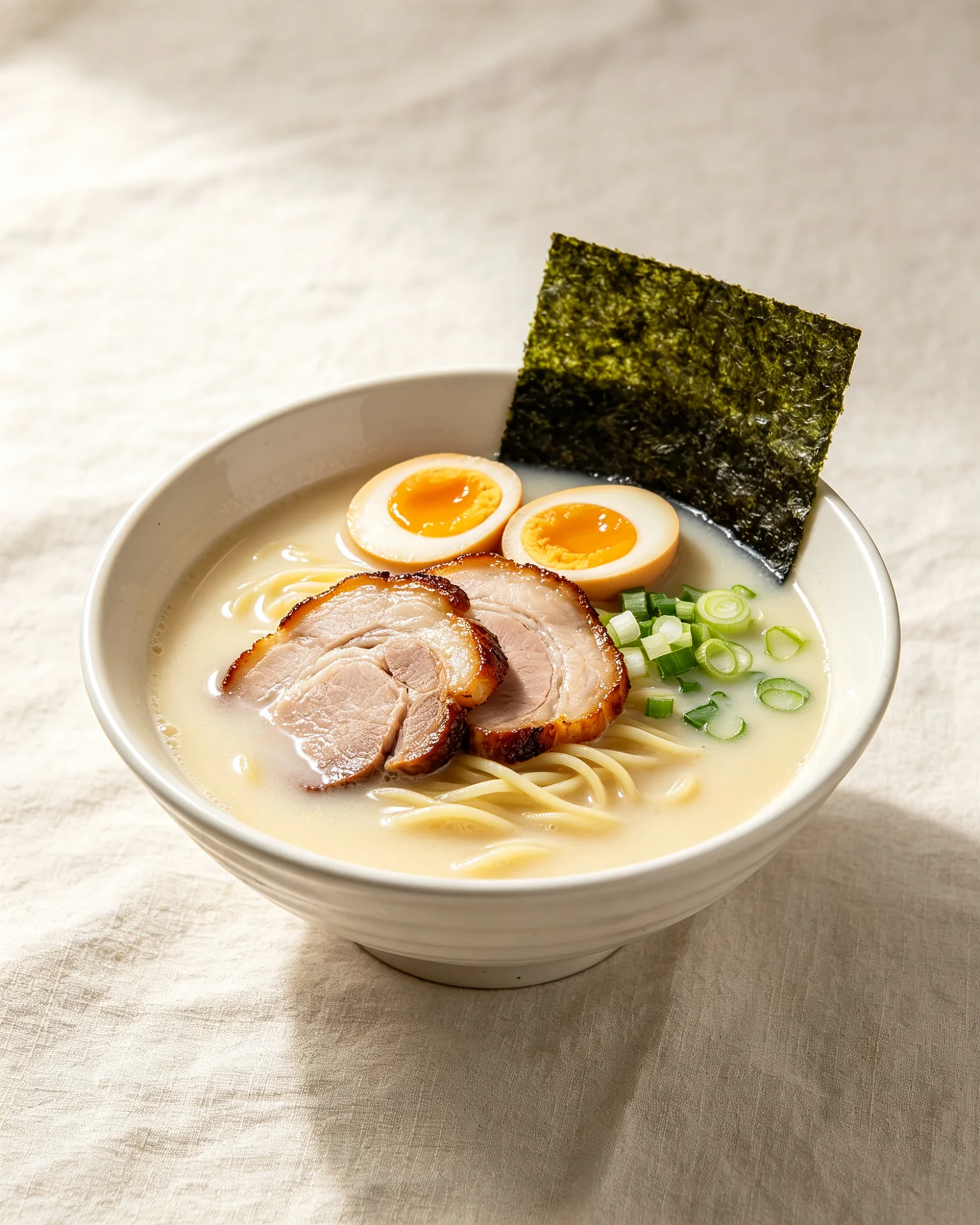
Most people who love ramen think about the four styles, shoyu, shio, miso, tonkotsu, as four different types of broth. This is a common misunderstanding that makes ramen harder to understand than it needs to be. Three of those four are not broth types. They are tare.
Understanding the tare system is the single most useful thing you can know about ramen, and almost nothing written about ramen in English explains it clearly.
The broth and the tare: the structure of a bowl of ramen
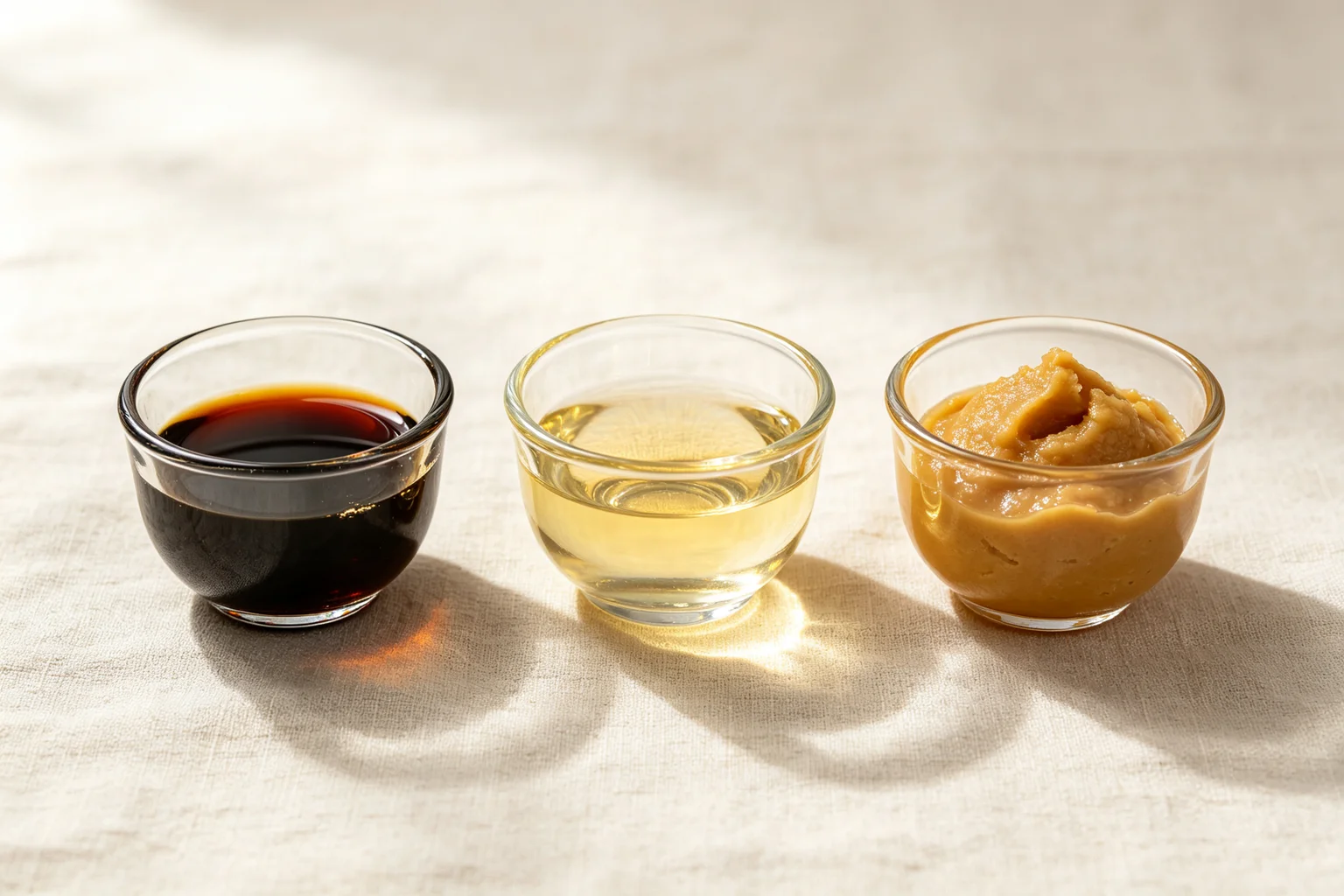
Every bowl of ramen has two primary liquid components: the broth (スープ, sūpu) and the tare (タレ, seasoning concentrate).
The broth is the long-simmered liquid base, typically made from pork bones, chicken bones, dashi (fish and kelp), or a combination. This is where the body of the soup comes from.
The tare is a small amount of highly concentrated seasoning added to the broth at the moment of serving. It is where the primary salt and flavour character come from. The tare is added separately rather than cooked into the broth, this allows a single broth to produce multiple ramen styles depending on which tare is used.
Shoyu, shio, and miso are tare types, not broth types:
Shoyu tare (醤油タレ) is a soy sauce-based concentrate, dark, savoury, and rich in glutamate. It is the most common tare in Tokyo-style ramen.
Shio tare (塩タレ) is a salt-based concentrate, lighter and more delicate, often made with sea salt combined with sake, mirin, and sometimes citrus. It allows the broth’s natural flavour to come through more clearly than shoyu.
Miso tare (味噌タレ) is made from fermented soybean paste, the richest, most complex of the three, with deep fermented character. Associated with Sapporo and Hokkaido ramen.
Tonkotsu (豚骨) is not a tare at all. Tonkotsu is a broth base, the result of boiling pork bones at a rolling boil for 8-18 hours until the bones release their collagen, fat, and marrow into the liquid. It is the broth itself that defines tonkotsu, and it is typically seasoned with shoyu or shio tare at serving.
A bowl of tonkotsu shoyu ramen is tonkotsu broth plus shoyu tare. A bowl of chicken shio ramen is chicken broth plus shio tare. The matrix of broth bases and tare types produces dozens of distinct combinations, which is part of why ramen varies so dramatically from shop to shop even when the style name is the same.
Where does ramen come from?
Ramen as a concept derives from Chinese lamian (拉面, hand-pulled wheat noodles) brought to Japan by Chinese immigrants and traders, particularly through the port cities of Yokohama and Kobe in the late 19th and early 20th centuries. The word ramen is the Japanese pronunciation of the Chinese characters for lamian.
What happened next was a complete transformation. Japanese cooks applied their own culinary logic to the Chinese noodle concept, developing the alkaline kansui noodle, the tare seasoning system, distinctly Japanese toppings (chashu braised pork, ajitsuke tamago marinated egg, menma fermented bamboo shoots, nori), and the regional broth styles that now define the dish. The result bears the lineage of lamian but is genuinely Japanese.
The modern ramen boom in Japan, which produced the regional style differentiation that exists today, happened largely in the post-WWII period, when cheap American wheat imports made wheat flour abundant and portable ramen stalls proliferated across Japanese cities. The dish expanded from a simple noodle soup into a complex regional tradition in a remarkably short time.
The four main Japanese ramen styles
Shoyu ramen (醤油ラーメン)
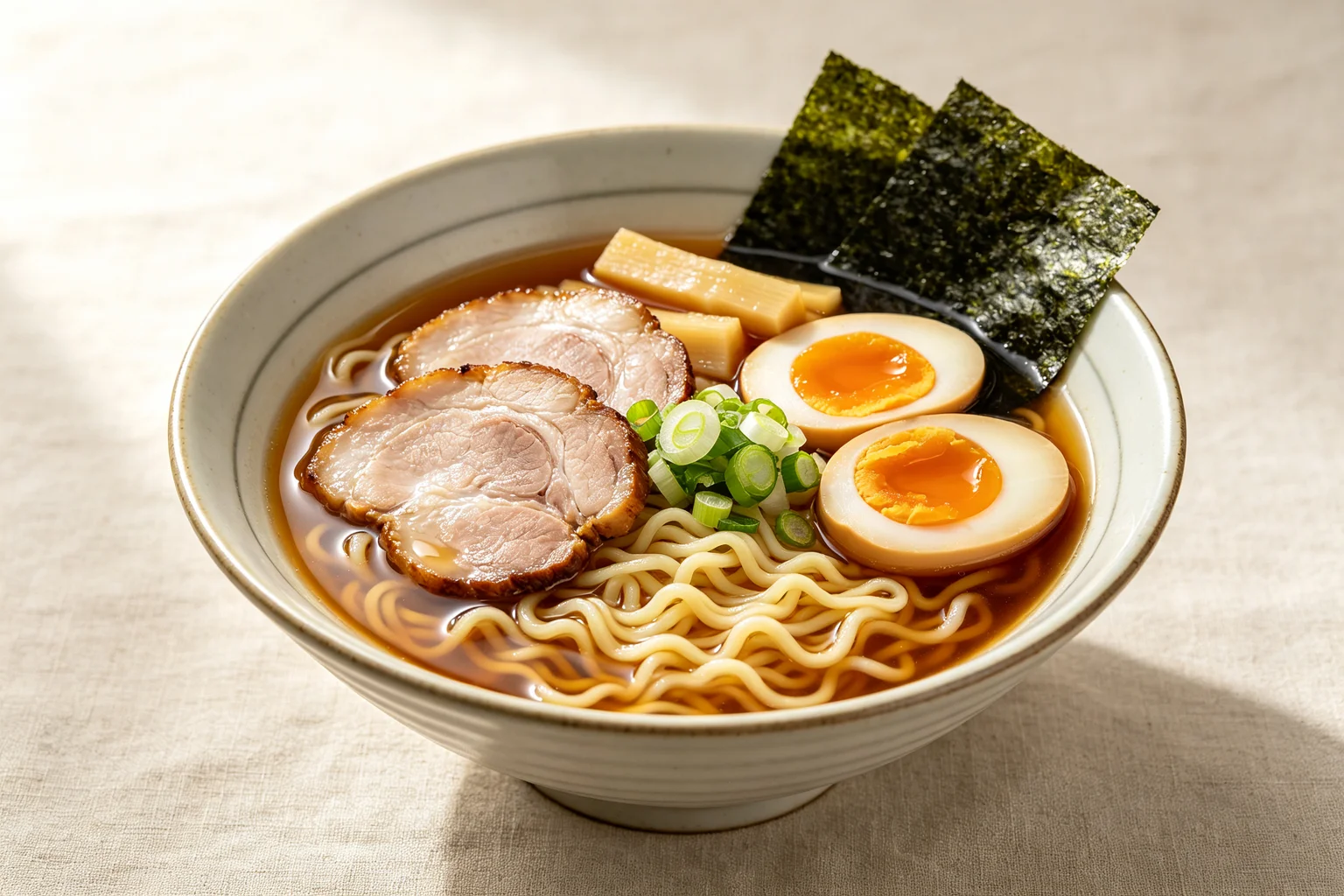
Shoyu ramen is the oldest and most widespread ramen style in Japan, if you eat ramen in Japan without specifying a style, you will often receive shoyu by default.
The tare is made from soy sauce combined with various aromatics, sake, mirin, garlic, ginger, sometimes chicken fat or pork fat. The broth base varies by region and shop but is typically chicken, dashi, or a combination. The finished broth is clear to light brown, translucent, and noticeably savoury from the soy sauce glutamate.
Tokyo shoyu ramen uses a chicken-and-dashi broth with a relatively assertive shoyu tare. Kitakata ramen (Fukushima Prefecture) is a lighter shoyu style with thick, wavy noodles. Both are shoyu ramen but taste noticeably different because the broth base and tare concentration differ.
The noodles for shoyu ramen are typically medium thickness with moderate waviness, the moderate alkalinity of the kansui noodle pairs well with the clear broth, which allows the noodle’s springiness to be part of the eating experience.
Shio ramen (塩ラーメン)
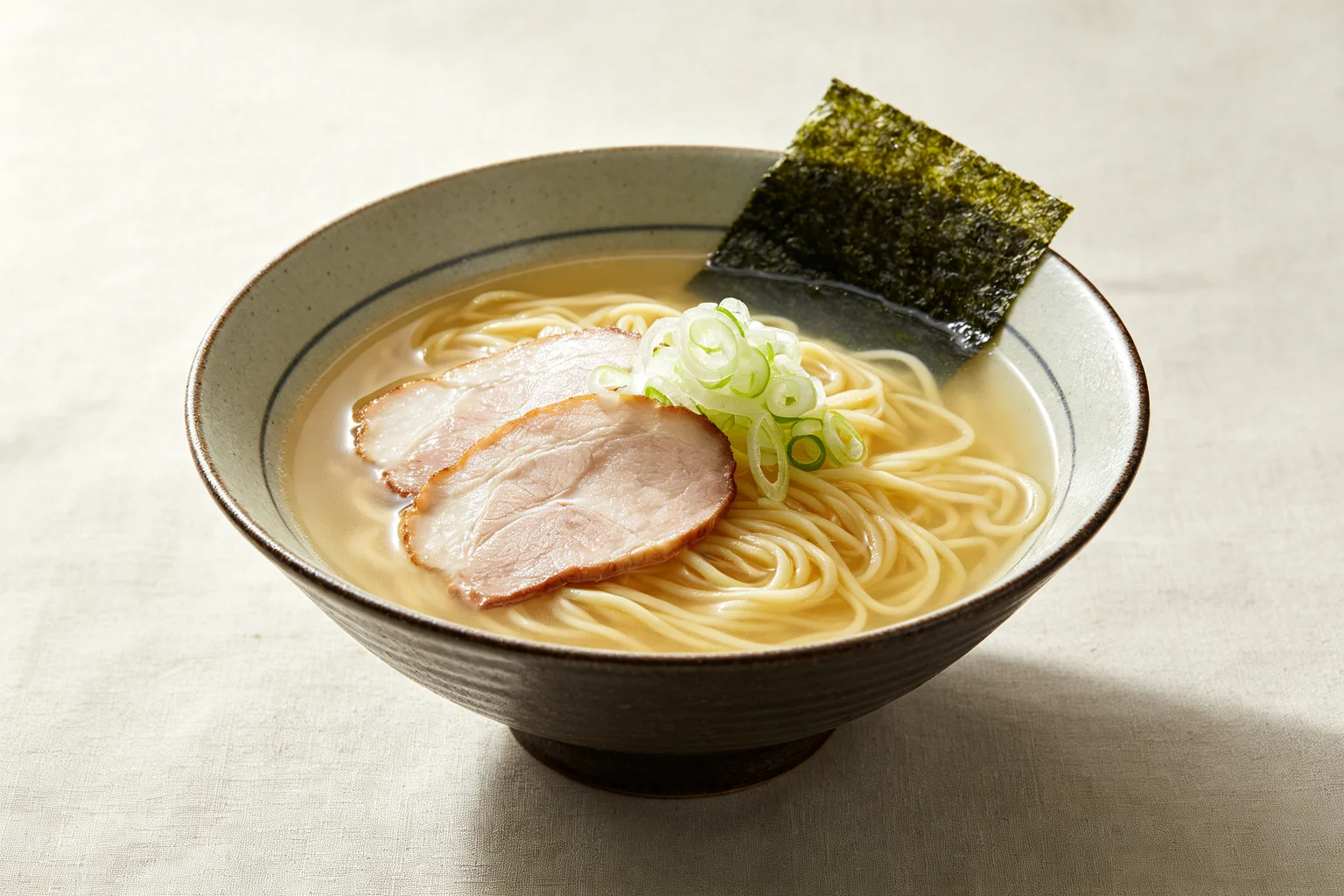
Shio ramen is the most delicate and technically demanding of the four styles. The absence of soy sauce or miso means the broth’s natural flavour must carry the bowl, there is nowhere to hide poorly made broth.
The tare is primarily salt, combined with sake, mirin, sometimes kombu or dried seafood, and occasionally citrus. The broth base is usually chicken, seafood, or a combination, pork bone bases are rarely used for shio because the pork fat would dominate the delicate salt seasoning.
The finished broth is pale golden to almost clear, one of the visual markers of a well-made shio ramen is its transparency. The flavour should be clean, slightly sweet from the sake, and deeply savoury without the dark complexity of shoyu.
Hakodate ramen (Hokkaido) is the most famous shio style, developed in the port city where Chinese and Japanese cooking traditions first met. It is served with straight or lightly wavy noodles and typically topped with simple ingredients that do not overwhelm the delicate broth.
Miso ramen (味噌ラーメン)
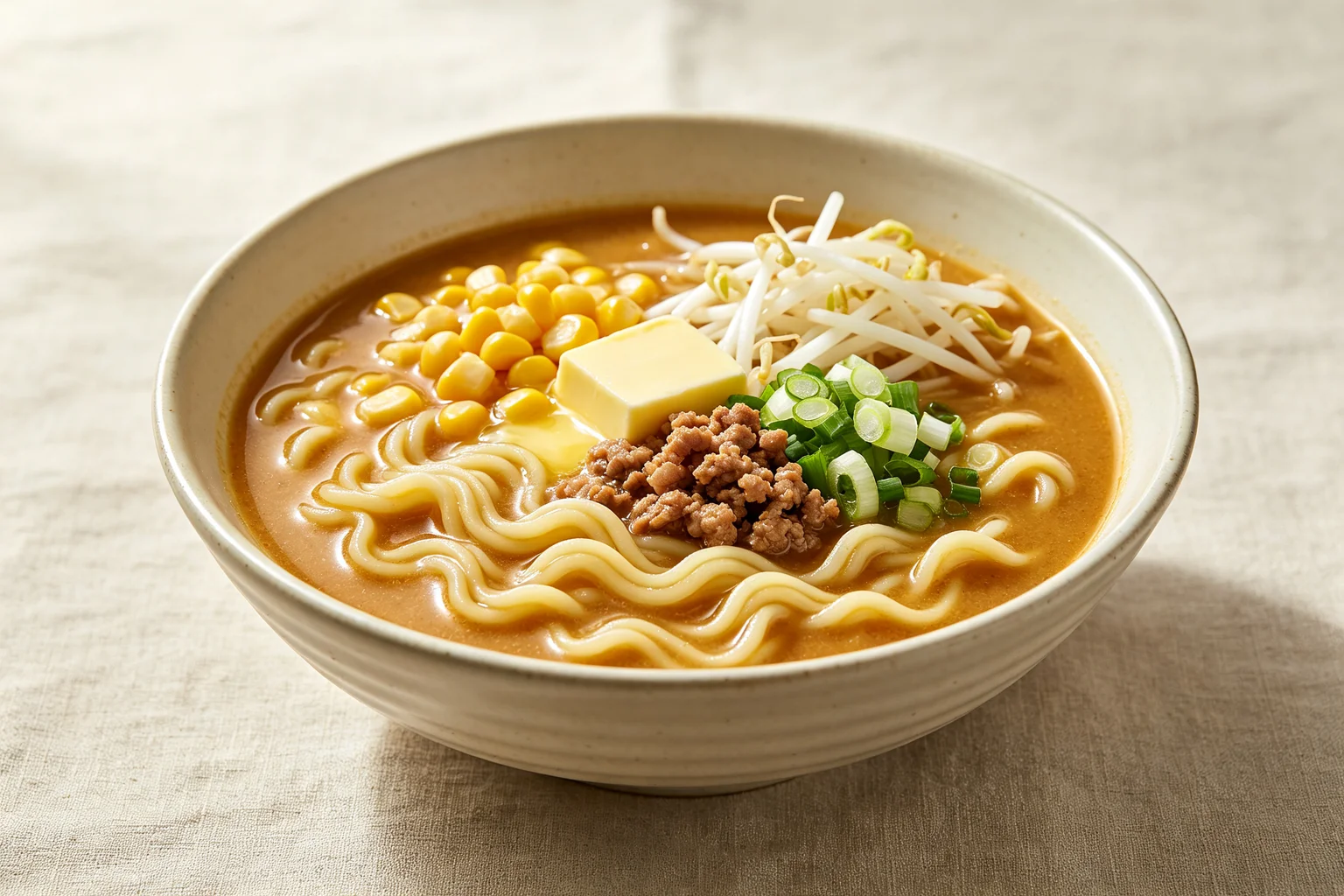
Miso ramen is the newest of the four main Japanese styles, developed in Sapporo, Hokkaido in the 1950s and 1960s. The cold northern winters of Hokkaido created demand for a richer, more warming ramen than the lighter styles popular in central Japan.
The tare is made from miso paste, typically a combination of red and white miso, sometimes with added sesame, garlic, or ginger. Miso contains free glutamate from the soy protein fermentation (the same mechanism as gochujang in tteokbokki) and the tare adds significant umami depth alongside the salt character.
The broth base for Sapporo miso ramen is typically pork bone or chicken with added pork fat. The finished broth is opaque and full-bodied. Miso ramen toppings are assertive, corn, butter, bean sprouts, ground meat, bamboo shoots, because the broth is strong enough to accommodate flavours that would overwhelm a shio or shoyu bowl.
The Hokkaido origin is relevant: the corn, butter, and hearty vegetable toppings reflect the agricultural products of the northern island. Miso ramen tastes of its geography.
Tonkotsu ramen (豚骨ラーメン)
Tonkotsu ramen from Fukuoka (Hakata district) is the outlier in the four-style framework because it is defined by its broth base rather than its tare.
The broth is made by boiling pork bones, specifically leg bones and trotters, at a full rolling boil for 8-18 hours. The rolling boil is critical and intentional. At this temperature the fat from the bones breaks into tiny droplets that remain permanently suspended in the liquid rather than rising to the surface. These suspended fat droplets scatter light and produce the opaque, milky-white colour that makes tonkotsu immediately recognisable.
This is the opposite physics of pho broth. Vietnamese pho requires a gentle simmer specifically to keep fat droplets large so they rise to the surface and can be skimmed, producing clear broth. Tonkotsu requires vigorous boiling to break fat droplets small so they emulsify permanently into the broth, producing white broth. Same ingredient (bones and fat), opposite technique, opposite visual result.
The collagen in the pork bones dissolves over the long cook into gelatin, which contributes the thick, slightly viscous body of tonkotsu broth. A properly made tonkotsu broth gels in the refrigerator from the gelatin content, the same quality marker as well-made pho or chicken stock.
Hakata tonkotsu ramen (the Fukuoka original) uses thin, straight noodles, minimal toppings, and offers kaedama, the option to refill your noodles into the remaining broth. The noodles are ordered by firmness (kae = softness level). The bowl is about the broth and the interaction between the broth and the noodle, not the toppings.
Why ramen noodles are springy: alkaline chemistry
All ramen noodles share one characteristic that distinguishes them from other wheat noodles: they are made with kansui (かん水), an alkaline solution of potassium carbonate and sodium bicarbonate.
The alkaline environment (pH 9-11) causes the gluten proteins in the wheat flour to cross-link differently than they do in neutral or acidic dough. The bonds that form in alkaline conditions produce a more extensible, springier dough, one that stretches before tearing rather than tearing immediately under tension. This is the same chemistry that makes siu mai wrappers springy and Hong Kong wonton noodles have their characteristic bounce, covered in more detail in the siu mai recipe on this site.
The alkaline environment also causes the flavone compounds in wheat flour to appear more yellow, which is why ramen noodles are typically pale yellow rather than the white of pasta or udon.
Different ramen styles pair with different noodle specifications, the noodle is not interchangeable between styles. Thin straight noodles for tonkotsu (they cook quickly in refills and stay firm in the rich broth). Wavy medium noodles for shoyu and miso (the waves hold broth). Thicker, more elastic noodles for shio (the delicate broth lets the noodle character come through).
Korean ramyeon: a separate tradition
Korean ramyeon (라면) is frequently described as a spicier version of Japanese ramen. This understates how different the two products are.
Korean ramyeon developed from instant noodle technology introduced to Korea in 1963, Samyang Foods launched the first Korean instant ramen inspired by Nissin’s Japanese product. The Korean version was adapted from the beginning for Korean palate preferences: significantly spicier (gochugaru-based rather than salt or soy), with the fermented depth that characterises Korean condiments, and a soup packet system built for instant preparation.
The flavour diverged rapidly from Japanese ramen. Korean ramyeon broth is built on dried anchovy or beef stock combined with gochugaru, garlic, and fermented elements. The spice level that most Koreans consider normal for ramyeon would be unusually hot in a Japanese ramen context. The noodle format (wavy, slightly chewier) also differs from most Japanese ramen noodles.
Korean ramyeon also developed its own distinct preparation culture, cooking the noodles in the soup rather than separately, adding eggs, cheese, kimchi, and rice cakes directly to the pot, eating from the pot rather than transferring to a bowl. The famous Korean “ramyeon house” culture is different from the Japanese ramen shop experience in almost every dimension.
Both are descended from Chinese wheat noodle traditions mediated through 20th-century food industrialisation. They are genuinely different dishes that happen to share a phonetically similar name.
Southeast Asian noodle soups that are not ramen
The existing blog post treats Southeast Asian noodle soups as regional variations of ramen. They are not related to ramen. They are independent noodle traditions with their own histories.
Vietnamese pho uses rice noodles, not wheat noodles, and the broth is built on charred aromatics and bone stock with specific late-added spices, a completely different construction from ramen. The pho recipe on this site covers the charring mechanism, parboiling, and spice timing in detail.
Malaysian laksa uses rice vermicelli in a coconut milk and sambal-based broth, spice-based, not stock-based, with no connection to the ramen tare system.
Burmese mohinga uses rice noodles in a fermented fish and lemongrass broth. The broth is thickened with rice flour rather than collagen. The Burmese cuisine guide on this site covers mohinga as one of Burma’s defining dishes.
Thai boat noodles use pork blood as a broth component and are historically associated with canal boat vendors in Bangkok, a specific Thai tradition with no ramen connection.
These dishes deserve to be understood on their own terms rather than as variations of a Japanese dish they predate, parallel, or developed independently from. Grouping them under “ramen across Asia” misrepresents all of them.
What to order if you are new to ramen
Start with shoyu if you want to understand the tare system clearly, the broth is clean enough to show how the soy seasoning works without the richness of tonkotsu dominating.
Start with tonkotsu if you want richness and body, the experience of the milky broth is distinctive and the kaedama refill culture in Hakata-style shops is worth experiencing.
Start with shio if you are eating somewhere that makes their own broth, a great shio ramen is the most technically impressive bowl because the broth has nowhere to hide.
Start with miso if you are cold and want comfort, Hokkaido miso ramen with corn and butter is one of the most genuinely warming things you can eat.
Avoid shops where you cannot read the menu well enough to know whether they are using house-made broth or commercial tare packets, the quality gap is significant. In Japan, look for shops with visible bone broth pots. Outside Japan, any shop listing their broth cooking time is a good sign.
About Asha
Half Asian, half African cook raised between two food-obsessed cultures. I've spent 10 years learning Asian cooking traditions through family, friends, and thousands of hours at the stove — testing every dish until it works in a standard home kitchen.
Read my full storyRecipes to Try

Crispy Chicken Katsu Curry Udon Recipe in Rich Japanese Broth

Japanese Steakhouse Hibachi Chicken (Teppanyaki Style)
Japanese Teriyaki Chicken Recipe (照り焼き)

How to Make Japanese Fried Chicken (Karaage)

Instant Ramen Is Better Than Most Restaurant Ramen Bowl

Japanese Carrot Ginger Dressing (Restaurant-Style)

Japanese Yakisoba Stir Fry Noodles Recipe | Asian Foods Daily

Japanese-Style Teriyaki Beef Bowl

Buta no Kakuni – Japanese Braised Pork Belly Recipe

Japanese Katsu Bowl with Tonkatsu Sauce

Japanese Fried Fish Cakes (Satsuma- Age)
Loading comments...