What Is Mirin and How Is It Different from Sake?
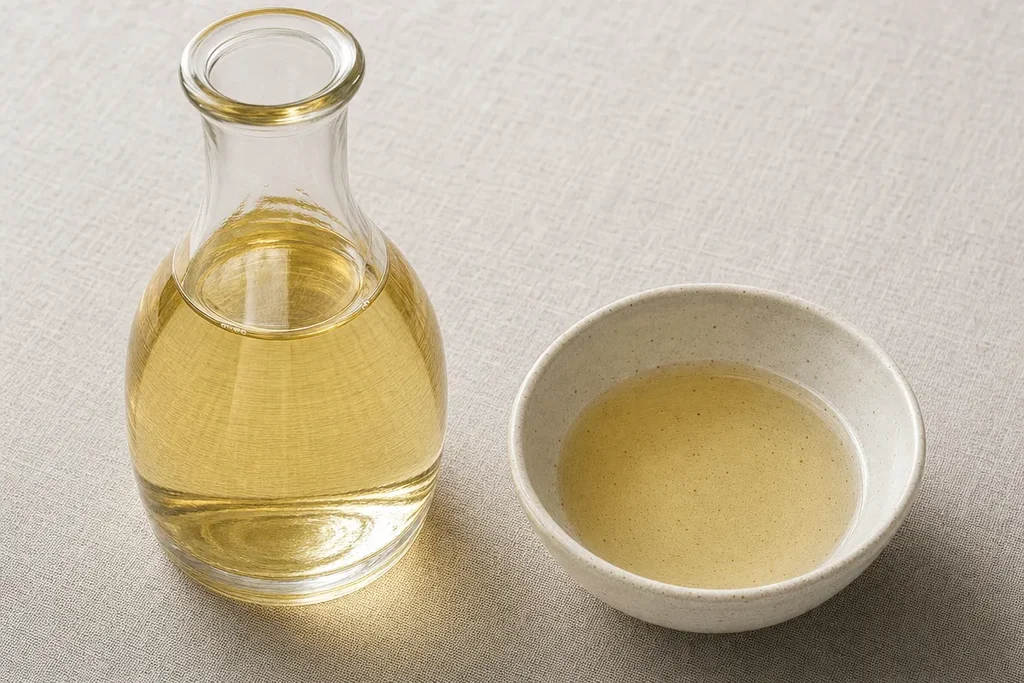
Mirin (みりん) is the sweet rice wine that gives Japanese cooking its characteristic glossy finish and gentle sweetness. I confused it with sake for the first two years I was cooking Japanese food seriously — they are both rice wines, both clear, both sold in similar bottles. I used them interchangeably and produced dishes that were either too dry or too sweet without understanding why.
They are not interchangeable. Sake is dry. Mirin is sweet. Sake removes odours from fish and meat. Mirin adds sweetness and produces a glaze. Both appear in Japanese sauce ratios precisely because they do different jobs simultaneously.
What is mirin made from and how is it produced?
Mirin is made from glutinous rice fermented with koji mould and mixed with shochu (a distilled spirit). The fermentation converts the rice starches into sugars — producing a naturally sweet liquid with approximately 40 to 50% sugar content and 14% alcohol. Hon mirin (true mirin) is produced through this natural fermentation process and aged for 40 to 60 days.
The distinction between mirin types matters for cooking. Hon mirin (本みりん) — true mirin — is produced through natural fermentation and produces the best flavour and glaze. Mirin-style condiment (みりん風調味料) — the most common supermarket version — is made with glucose syrup and alcohol rather than through fermentation. It is significantly cheaper but produces a less complex flavour and does not caramelise as effectively.
Real mirin is worth buying for Japanese cooking. The price difference between hon mirin and mirin-style condiment is small and the flavour difference is noticeable in finished dishes.
How does mirin differ from sake?
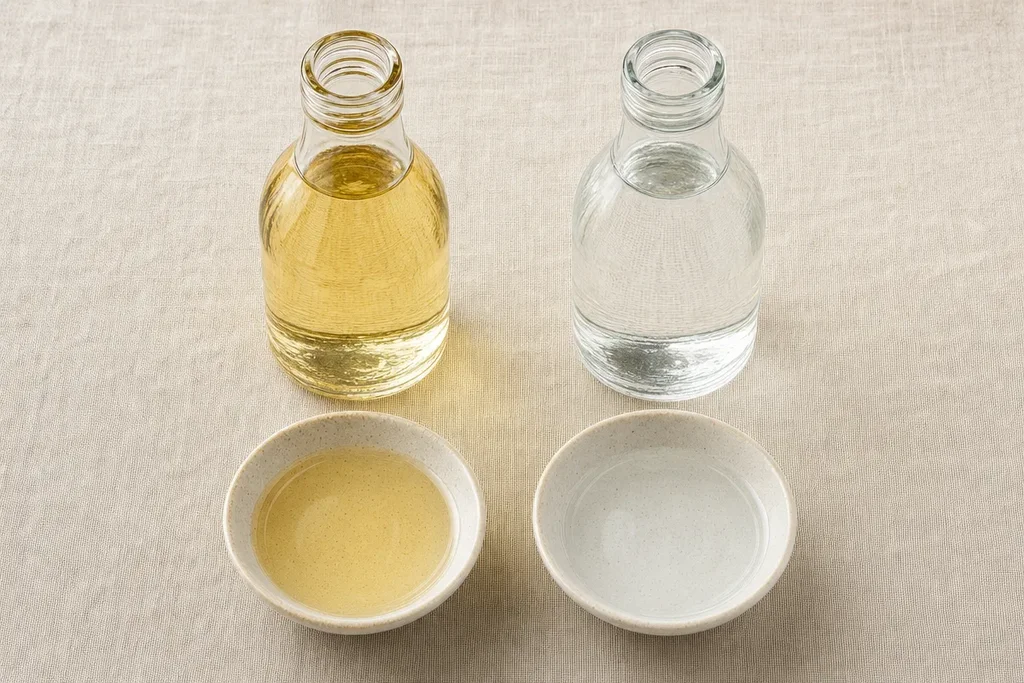
Sake is dry Japanese rice wine — approximately 15 to 16% alcohol with minimal residual sugar. It is used in cooking to remove fishy and meaty odours from protein, add subtle depth to sauces, and tenderise meat. Mirin is sweet Japanese rice wine — 14% alcohol with 40 to 50% sugar content. It is used to add sweetness, produce a glossy finish on glazes, and balance the saltiness of soy sauce.
The ratio in most Japanese sauces: 2 parts soy sauce, 2 parts mirin, 1 part sake. Each component does a different job — soy sauce provides umami and salt, mirin provides sweetness and glaze, sake provides depth and removes odours. Removing any one element changes the sauce fundamentally.
How do you use mirin in Japanese cooking?
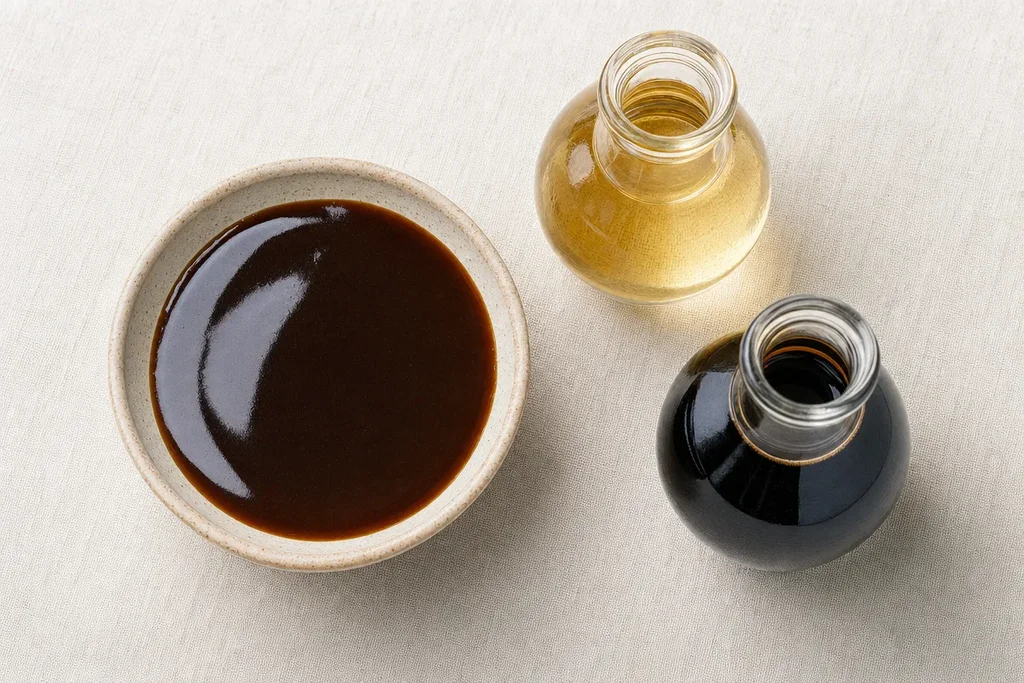
Mirin appears in almost every Japanese sauce, glaze, and seasoning. The four primary uses are teriyaki sauce, ramen tare, nimono (simmered dishes), and sushi rice seasoning.
Teriyaki sauce: Combine 3 tablespoons soy sauce, 3 tablespoons mirin, 1 tablespoon sake, and 1 teaspoon sugar. Brush onto protein repeatedly during grilling — each application caramelises and builds a lacquered crust. The mirin is what produces the gloss and caramelisation — sake alone cannot do this.
Ramen tare: Tare is the concentrated seasoning sauce stirred into ramen broth. Shoyu tare combines soy sauce, mirin, and sake in a 4:2:1 ratio. The mirin balances the saltiness of the soy sauce and adds the characteristic sweetness of Japanese ramen. See the Japanese cooking guide for the full ramen tare technique.
Nimono (simmered dishes): Nimono uses a dashi-based broth seasoned with soy sauce, mirin, and sake to produce a sweet-savoury glaze on simmered vegetables, tofu, and fish. The ratio is approximately 4 parts dashi, 1 part soy sauce, 1 part mirin.
Sushi rice: Sushi rice seasoning combines rice vinegar, sugar, and salt — mirin is not traditionally used. However, some modern recipes substitute a small amount of mirin for sugar to add complexity to the seasoning.
Can you substitute mirin?
For a direct substitute: combine 1 tablespoon dry sherry or dry white wine with ½ teaspoon sugar per tablespoon of mirin. This approximates the sweetness and slight alcoholic depth but will not produce the same glaze quality as hon mirin.
Do not substitute sweet sherry — it has a different flavour profile and is too sweet. Do not substitute rice vinegar — it is acidic rather than sweet and will change the dish fundamentally.
Mirin is available at Japanese grocery stores, Asian supermarkets, and online. Hinode and Kikkoman both produce reliable hon mirin available internationally.
How do you store mirin?
Hon mirin keeps at room temperature before opening for up to 2 years. After opening, store in a cool dark place and use within 3 months for best flavour — the alcohol evaporates slowly after opening. Mirin-style condiment keeps refrigerated for up to 6 months after opening.
FAQ
What is the difference between mirin and sake?
Mirin is sweet Japanese rice wine with 40 to 50% sugar content — used for sweetness and glaze in sauces and marinades. Sake is dry Japanese rice wine with minimal sugar — used to remove odours from fish and meat and add depth to sauces. Most Japanese sauce ratios use both simultaneously because they perform different functions.
Can I substitute mirin with rice wine vinegar?
No — rice wine vinegar is acidic, not sweet. Mirin is sweet, not acidic. They are opposite flavour profiles. For a mirin substitute use dry sherry or dry white wine combined with a small amount of sugar — 1 tablespoon wine plus ½ teaspoon sugar per tablespoon of mirin.
Is mirin alcoholic?
Hon mirin contains approximately 14% alcohol — similar to a full-bodied wine. The alcohol evaporates during cooking. Mirin-style condiment contains less than 1% alcohol and can be used without cooking off the alcohol. If serving to people who avoid alcohol, cook the mirin in the sauce for at least 2 to 3 minutes before serving.
What is hon mirin vs mirin-style condiment?
Hon mirin is produced through natural fermentation of glutinous rice — it has genuine sweetness, complexity, and caramelises beautifully as a glaze. Mirin-style condiment is made with glucose syrup and alcohol — cheaper, less complex, and does not caramelise as effectively. For serious Japanese cooking, hon mirin is worth the small additional cost.
About Asha
Half Asian, half African cook raised between two food-obsessed cultures. I've spent 10 years learning Asian cooking traditions through family, friends, and thousands of hours at the stove — testing every dish until it works in a standard home kitchen.
Read my full storyRecipes to Try

How to Make Tender Apple Braised Pork Chops

Easy Asian Pasta Salad Recipe
Peking Duck Recipe (北京烤鸭)
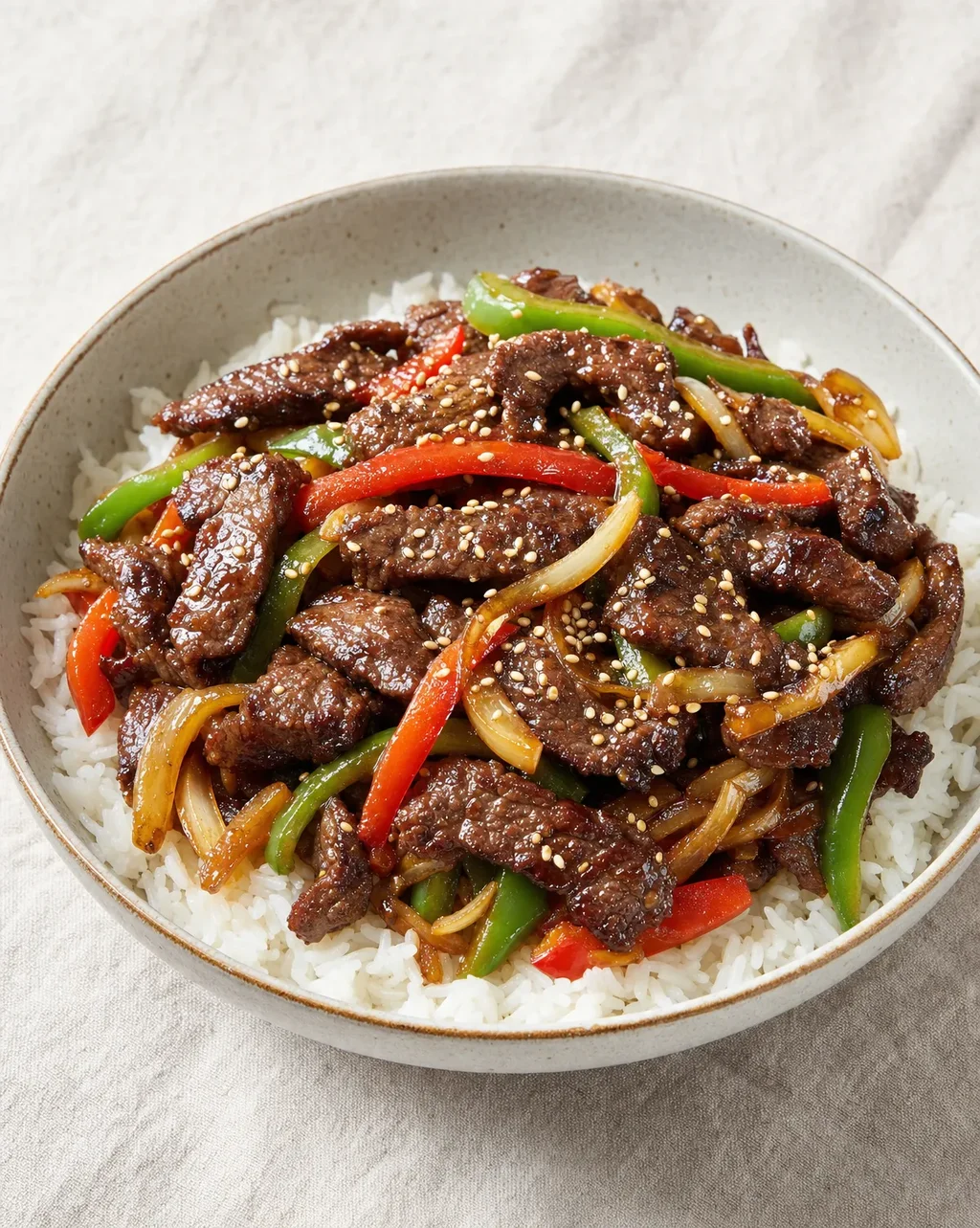
Pepper Steak Stir Fry Recipe (Chinese Style)

Japanese Steakhouse Hibachi Chicken (Teppanyaki Style)

Easy Ma La Xiang Guo At Home

Dinuguan Recipe – Filipino Pork Blood Stew (Chocolate Meat)
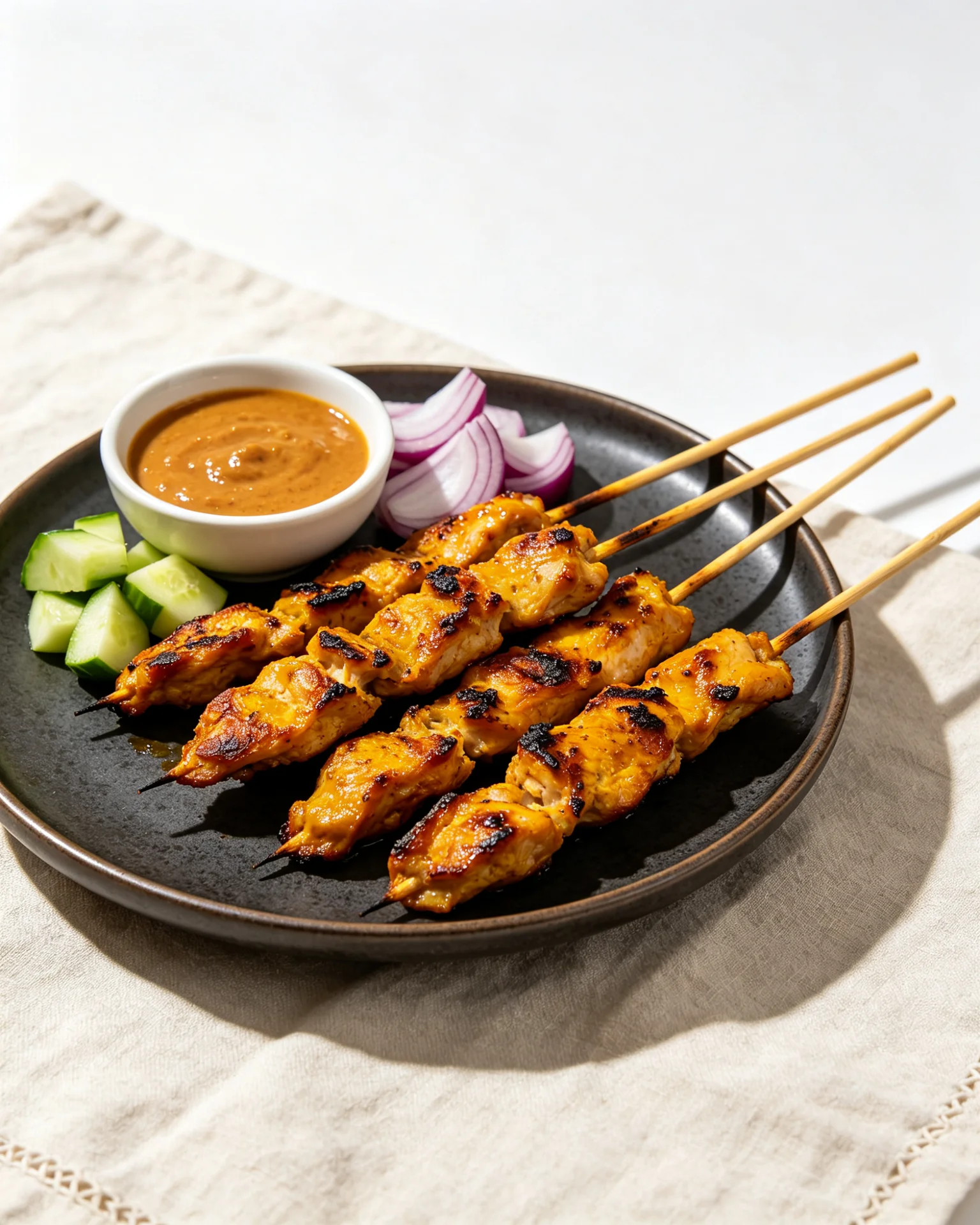
Chicken Satay Recipe (Sate Ayam)

Bang Bang Chicken Skewers Recipe

How to Make Traditional Kimchi (Foolproof Seven Day Plan)

BBQ Pork Fried Rice Recipe: Better Than Takeout

Loading comments...