Vietnamese Lemongrass Chicken Recipe
Jump to Section
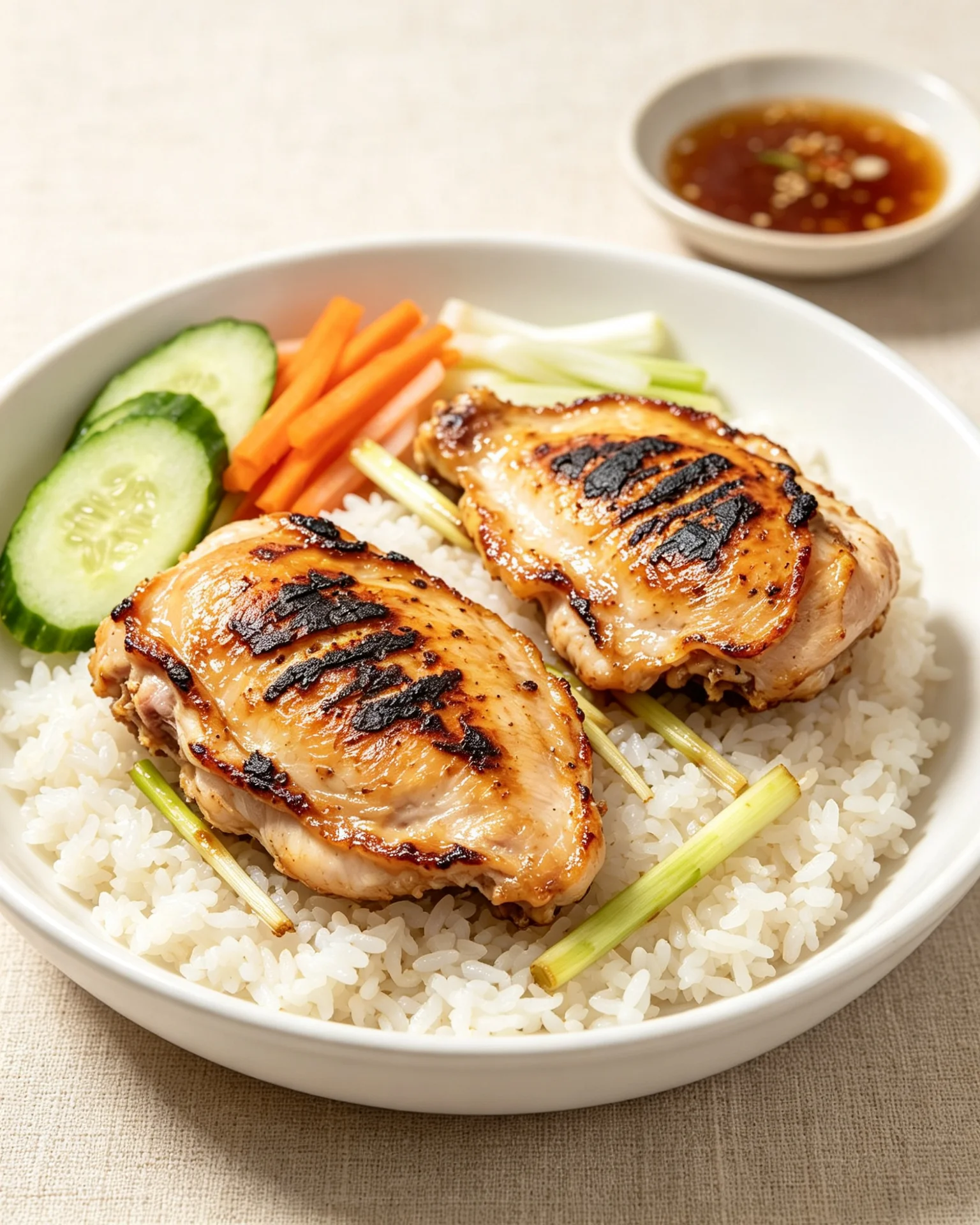
The first time I made gà nướng sả at home, the marinade was right but the heat was too low. The chicken cooked through with good colour but no char. It tasted of lemongrass and fish sauce, which was fine, but it was missing the smoky depth that made the dish at the restaurant so different. The lemongrass smell from the raw marinade and the lemongrass smell from a properly charred piece of chicken are not the same thing. The Maillard reaction transforms the citral compounds in the marinade into something smokier and more complex during high-heat cooking. Without that transformation, the dish tastes of its ingredients but not of itself.
The fix was heat. Very high heat for the first 2-3 minutes to develop the char, then reduced heat to cook through without burning the sugars. That sequence produces the caramelised, slightly smoky edges that define the dish. This recipe explains the full technique, including why the lemongrass preparation matters as much as the marinating time.
What is gà nướng sả and which version is this recipe?
Gà nướng sả (gà = chicken, nướng = grilled or roasted, sả = lemongrass) is Vietnamese grilled lemongrass chicken. It is one of the most widely eaten chicken dishes in Vietnam, found at street food stalls, home kitchens, and Vietnamese restaurants across Southeast Asia and wherever Vietnamese communities have settled.
Two different dishes go by the name Vietnamese lemongrass chicken in English. Gà nướng sả is the grilled version: whole pieces or bone-in thighs marinated in lemongrass, fish sauce, garlic, and sugar, then cooked over high heat until charred at the edges. The marinade penetrates the meat over several hours and the char develops the smoky aromatic depth the dish is built around.
Gà xào sả ớt is the stir-fried version: chicken cut into small pieces, stir-fried with finely minced fresh lemongrass and chilli. No extended marinating. The lemongrass is fried directly in oil until fragrant before the chicken is added. More immediate, more aggressively spiced, completely different technique and flavour profile.
This recipe is gà nướng sả. The SERP for “Vietnamese lemongrass chicken” returns both dishes mixed together. This is the grilled version.
Served two ways. Over steamed rice as cơm gà nướng sả, the simplest version, rice absorbing the juices from the chicken. Or over rice vermicelli with fresh herbs, sliced cucumber, bean sprouts, and nuoc cham as bún gà nướng, the version you find at Vietnamese restaurants, where the fresh herbs and acid from the nuoc cham balance the richness of the charred chicken.
Why do you use only the inner stalk of lemongrass?
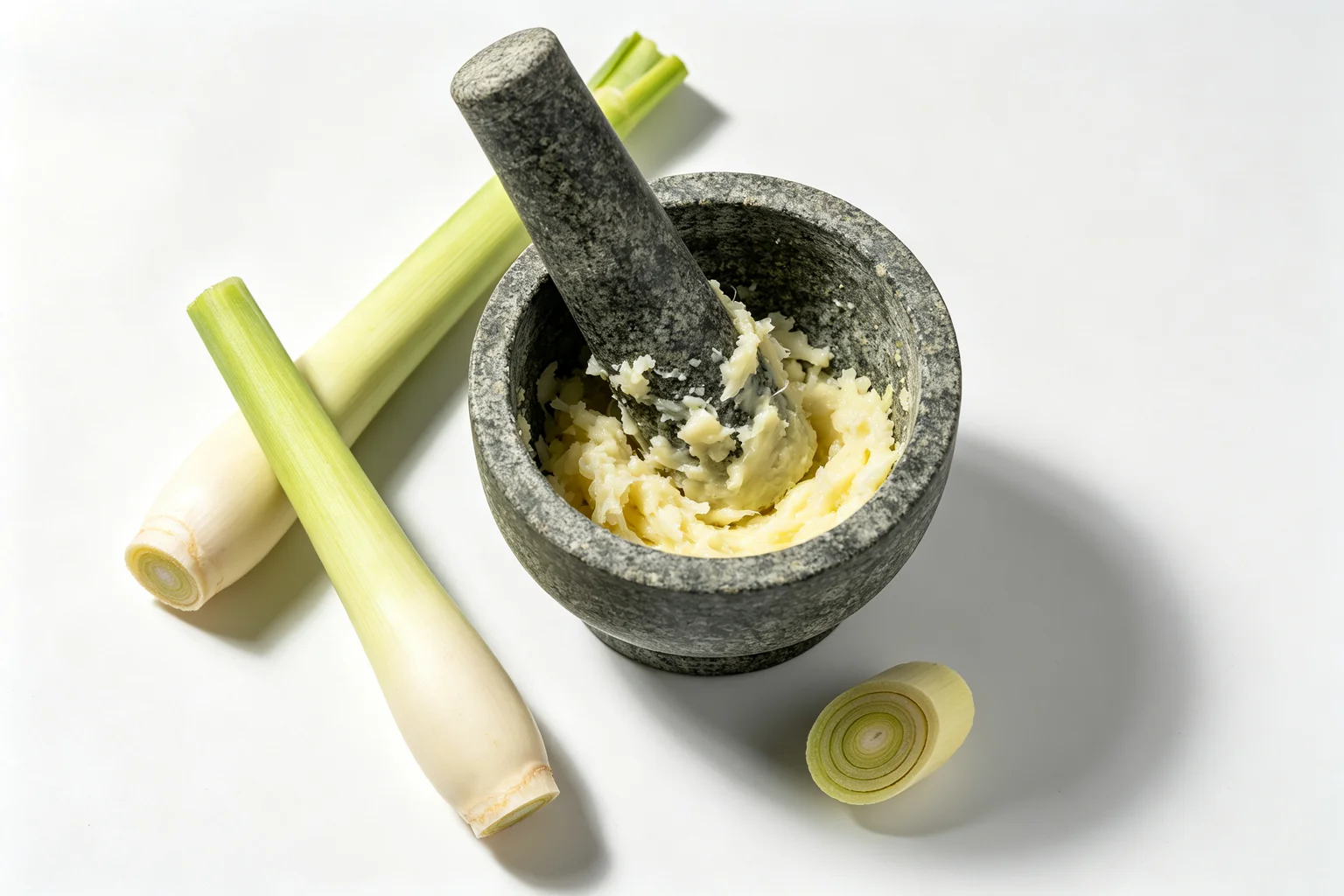
Lemongrass contains citral, geraniol, and citronellal as its primary aromatic compounds, the molecules responsible for the distinctive citrusy, slightly floral fragrance. These compounds are present throughout the plant but only accessible from one part of it.
The outer leaves of lemongrass are composed primarily of tough cellulose fibres. The aromatic compounds are locked inside the cell walls of these fibres, which do not rupture during cooking, grilling, or marinating. A marinade made with the outer leaves extracts almost none of the fragrance, the lemongrass sits in the liquid contributing almost nothing.
The inner stalk is different. Peel away the tough outer layers until you reach the pale yellow-white portion at the base, approximately the bottom 10-12cm of the plant. These inner cells have thinner, more fragile walls. Pounding in a mortar or finely mincing in a food processor ruptures them, releasing the aromatic oils directly into the marinade. The smell when you pound the inner stalk is immediate and intense, that is the citral releasing.
Always use fresh lemongrass for this recipe. Dried lemongrass has lost most of its volatile aromatic compounds during the drying process. Frozen lemongrass that has been frozen from fresh is acceptable, the freezing process partially ruptures the cell walls and accelerates aromatic release when thawed.
Why is neutral oil in the marinade?
Citral and geraniol are partially fat-soluble. They dissolve more readily in oil than in water.
A marinade that contains only water-based ingredients, fish sauce, lime juice, soy sauce, extracts the water-soluble aromatic compounds from the pounded lemongrass but leaves behind the fat-soluble fraction. The fish sauce glutamate penetrates the meat effectively. The lemongrass aroma does not penetrate as deeply.
Adding neutral oil to the marinade dissolves the fat-soluble aromatic compounds from the lemongrass and carries them into the intramuscular fat and the fat beneath the skin during marinating. When the chicken cooks, these fat-carried aromatics release from inside the meat as well as from the surface. The lemongrass fragrance in the finished dish is more present and more integrated.
Two tablespoons of neutral oil in the marinade for four thighs is enough. More and the marinade becomes greasy and does not coat the chicken evenly.
What does fish sauce do in this marinade that salt cannot?
Fish sauce contains approximately 950mg of glutamate per 100ml. Salt contains none.
Glutamate is water-soluble and penetrates muscle protein fibres during marinating through diffusion, moving from the high-concentration marinade into the lower-concentration interior of the meat. In the first 30-60 minutes, the glutamate seasons the outermost muscle layers. After 2-4 hours, it reaches the centre of a boneless thigh. This is why overnight marinating produces a noticeably more deeply seasoned piece of chicken than 30-minute marinating.
Salt achieves surface seasoning through osmotic pressure, it draws moisture from the meat and some of the dissolved salt re-enters along with that moisture. The mechanism is less effective at depth and produces no umami contribution.
Fish sauce also contains volatile aromatic compounds from fermentation, the same esters and organic acids that give it its distinctive smell. These soften and become more savoury during cooking rather than staying pungent. The amount used in the marinade (2-3 tablespoons) produces savoury depth without any noticeable fish flavour in the finished chicken.
Why does char matter and how do you get it without burning?
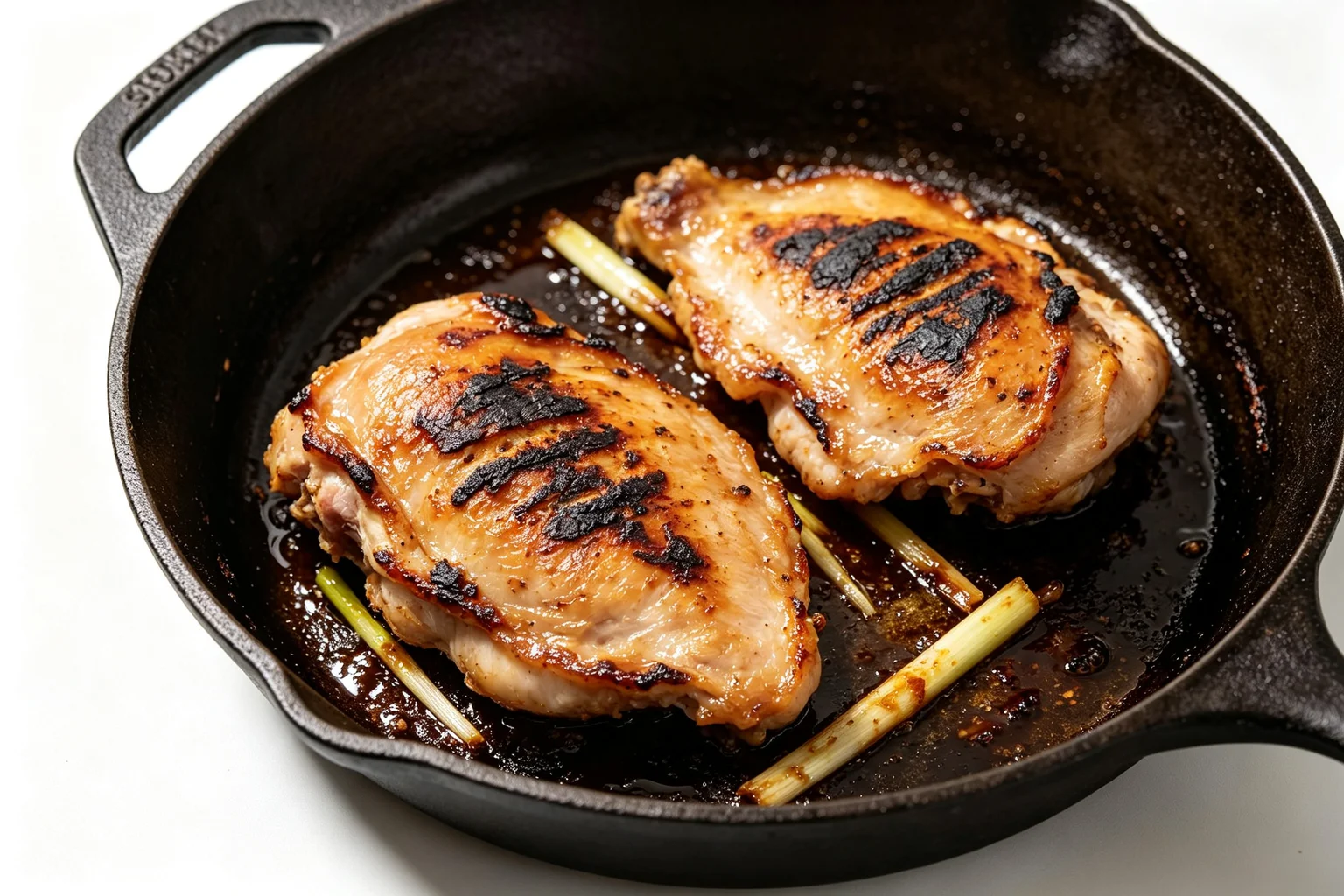
The Maillard reaction on a lemongrass-marinated chicken surface produces compounds that are not present in the raw marinade.
At approximately 140-165°C, the sugars and amino acids in the marinade begin reacting. When the temperature reaches 180-200°C at the chicken surface, which requires direct contact with a very hot pan or grill, the reaction accelerates and produces pyrazines, furans, and other heterocyclic compounds. These are the molecules responsible for the smoky, slightly bitter, deeply aromatic smell of properly charred grilled meat. The same class of compounds produced during hú là in kung pao chicken and in roasted coffee.
Without reaching these temperatures, cooking at medium heat, for example, the marinade caramelises lightly but the full Maillard reaction does not occur. The chicken tastes of its marinade ingredients but lacks the transformed, deeper character of properly charred meat.
The practical challenge is that the marinade contains significant sugar from the honey and brown sugar. Sugar burns above approximately 180°C if held too long. The correct technique: heat the pan or grill to very high heat. Add the chicken and leave without moving for 2-3 minutes until the contact side has developed visible dark char. Flip once. Reduce the heat to medium. Cook through on the second side at lower temperature. The char develops in the first 2-3 minutes. The interior cooks through in the remaining 6-8 minutes at lower heat.
Ingredients
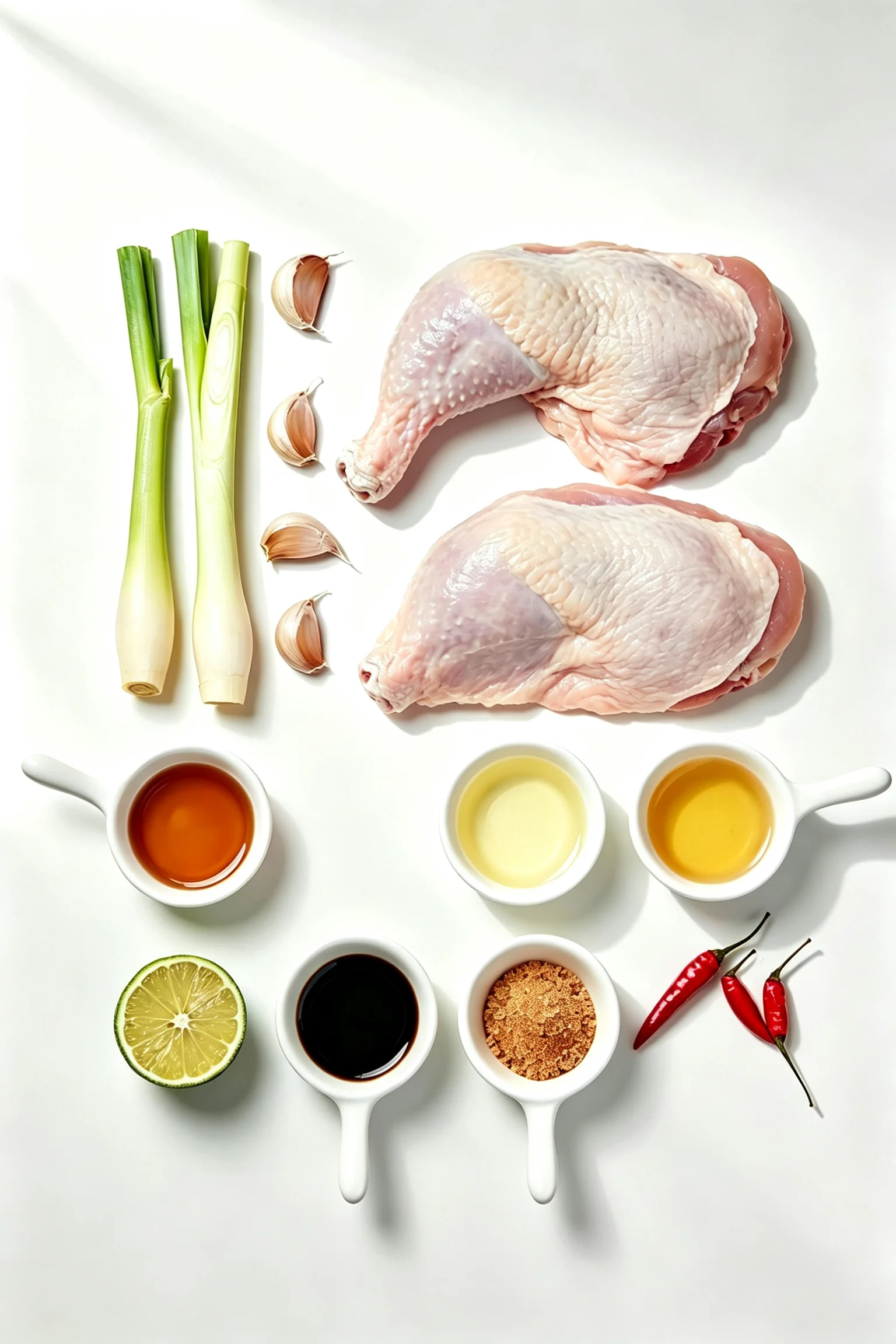
Serves 4
Chicken and marinade:
- 8 bone-in skin-on chicken thighs (approximately 1.2kg / 2lb 10oz)
- 3 lemongrass stalks, outer leaves removed, inner stalk finely pounded or minced
- 4 garlic cloves, finely minced
- 2 shallots, finely minced
- 3 tbsp fish sauce
- 2 tbsp neutral oil
- 1½ tbsp brown sugar or honey
- 1 tbsp light soy sauce
- 1 tsp dark soy sauce (for colour)
- ½ tsp ground black pepper
- 1 tsp turmeric powder (optional, adds colour and a subtle earthiness)
To serve as cơm gà nướng sả (rice bowl):
- Steamed jasmine rice
- Sliced cucumber
- Pickled daikon and carrot (đồ chua)
- Sliced spring onion
- Nuoc cham (recipe below)
To serve as bún gà nướng (vermicelli bowl):
- 200g dried rice vermicelli, cooked and cooled
- Large handful bean sprouts
- Fresh mint leaves
- Fresh perilla leaves (tía tô) or Thai basil
- Sliced cucumber
- Nuoc cham
Nuoc cham:
- 2 tbsp fish sauce
- 1 tbsp lime juice (freshly squeezed)
- 1 tbsp sugar
- 3 tbsp water
- 1 bird’s eye chilli, thinly sliced
- 1 small garlic clove, finely minced
Instructions
Start the marinade at least 2 hours before cooking. Overnight is better.
Step 1: Prepare the lemongrass
Remove all the tough outer leaves from each lemongrass stalk until you reach the pale yellow-white inner portion. Trim the root end and the upper green stalk, leaving approximately 10-12cm of inner stalk.
Step 2: Make the marinade
Combine the minced lemongrass, garlic, shallots, fish sauce, neutral oil, brown sugar, light soy, dark soy, black pepper, and turmeric in a bowl. Mix well until the sugar dissolves.
Score each chicken thigh 2-3 times through the skin to the bone with a sharp knife. This allows the marinade to penetrate more quickly and gives the skin more surface area for char development.
Add the chicken to the marinade. Work the marinade into the score marks and under the skin where possible. Cover and refrigerate for at least 2 hours, ideally overnight.
Remove from the refrigerator 20-30 minutes before cooking.
Step 3: Make the nuoc cham
Stir together fish sauce, lime juice, sugar, and water until the sugar dissolves. Add chilli and garlic.
Step 4: Cook the chicken
On a grill or griddle pan: Heat to the highest possible temperature. Place the chicken skin-side down. Leave without moving for 2-3 minutes until the skin has developed visible dark char marks. Flip. Reduce heat to medium. Cook for 6-8 more minutes until cooked through, juices run clear when the thickest part is pierced.
On a stovetop in a cast iron or heavy pan: Heat the pan over high heat until smoking. Add a small amount of neutral oil. Place the chicken skin-side down. Leave without touching for 2-3 minutes until the skin chars. Flip. Reduce heat to medium-low. Cover partially. Cook 8-10 minutes until cooked through.
Rest for 5 minutes before serving. The juices redistribute and the char aroma intensifies slightly as the meat rests.
Step 5: Assemble and serve
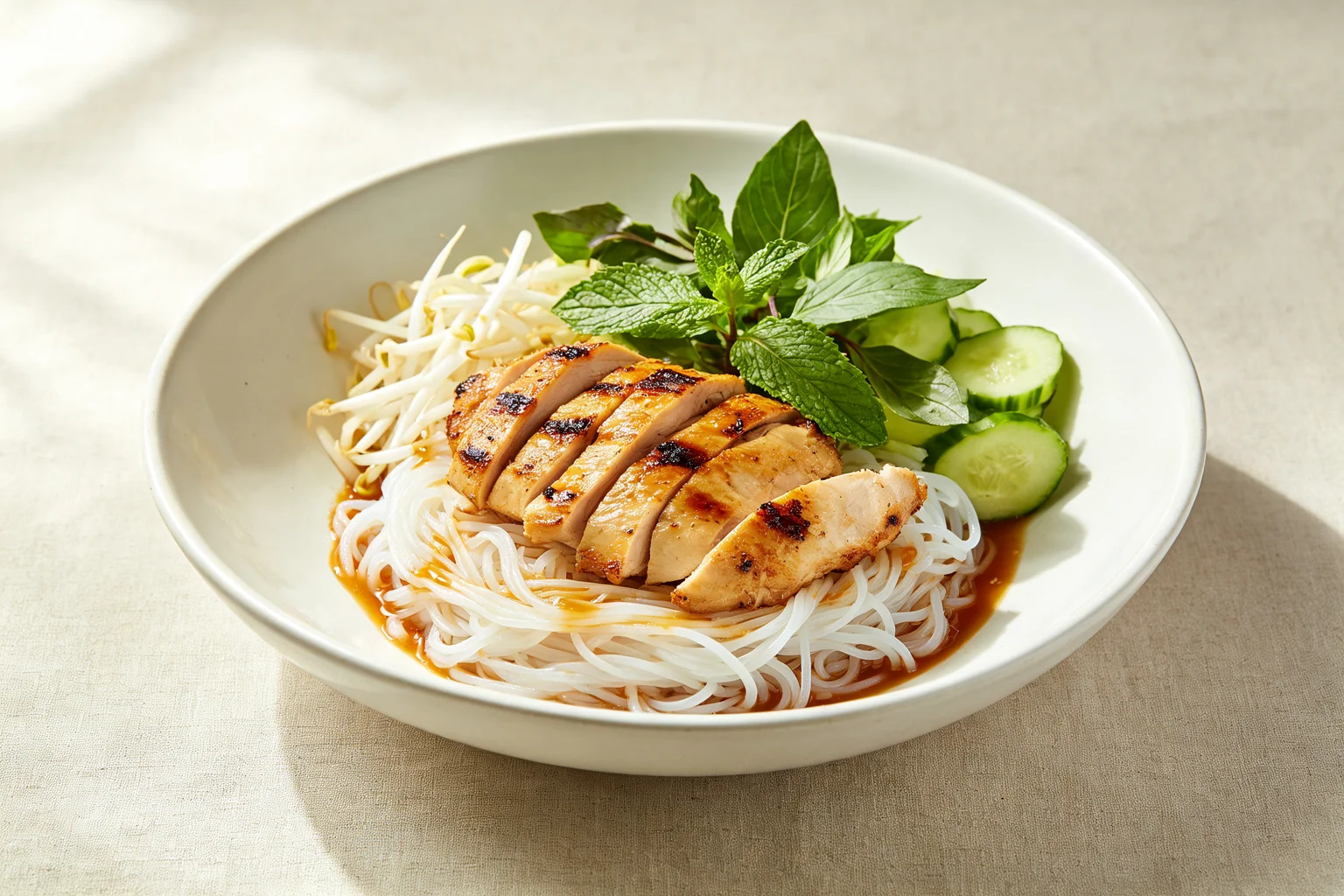
Rice bowl: Serve whole thighs or sliced chicken over steamed rice with cucumber, pickled vegetables, spring onion, and nuoc cham alongside.
Vermicelli bowl: Place a nest of cooled vermicelli in a bowl. Add bean sprouts, fresh herbs, and cucumber. Slice the chicken and lay over the noodles. Pour nuoc cham over the top at the table.
How do you store and reheat Vietnamese lemongrass chicken?
Cooked chicken keeps in the refrigerator for 3 days. The char softens and the lemongrass aroma deepens overnight, the flavour of leftover gà nướng sả is often better than fresh on day one.
To reheat: place in a very hot pan skin-side down for 2-3 minutes to re-develop some char on the skin. Flip and heat through. Do not microwave, it makes the skin soft and removes any remaining char character.
The marinated raw chicken keeps in the refrigerator for 24 hours and freezes well in the marinade for up to 3 months. Thaw overnight in the refrigerator before cooking.
Love Vietnamese food?
Check out my complete guide to Vietnamese home cooking, pantry essentials, and techniques.
FAQ
Can I use chicken breast instead of thighs for gà nướng sả? Breast works but requires more care. It has less intramuscular fat than thigh and dries out faster at the high heat needed for char development. If using breast: pound to an even thickness of approximately 2cm, reduce the searing time to 90 seconds per side before reducing heat, and pull at an internal temperature of 72°C rather than waiting for visual cues. Thigh is significantly more forgiving.
Can I use dried or frozen lemongrass? Frozen lemongrass that was frozen fresh is the best substitute, the freezing process partially ruptures the cell walls, releasing aromatic compounds more readily when thawed. Dried lemongrass has lost most of its volatile citral and geraniol during the drying process and produces a noticeably less fragrant result. If using dried, increase the quantity by 50% and soak in the neutral oil component of the marinade for 30 minutes before adding other ingredients.
How long should I marinate the chicken? Two hours is the minimum for the fish sauce glutamate to penetrate the outer muscle layers and for the lemongrass aromatics to infuse the fat. Four hours produces a noticeably more flavourful result. Overnight (8-12 hours) is the ideal for bone-in thighs, the glutamate reaches the bone and the fat beneath the skin is fully saturated with lemongrass aromatics. Beyond 24 hours the fish sauce begins to cure the surface of the meat, changing the texture slightly.
What is bún gà nướng and how is it different from serving over rice? Bún gà nướng is a Vietnamese vermicelli bowl, rice vermicelli noodles, sliced grilled chicken, fresh herbs (mint, perilla, Vietnamese coriander), bean sprouts, cucumber, and nuoc cham, all assembled at the table. The fresh herbs and the acid from the nuoc cham cut through the richness of the charred chicken fat in a way that plain rice does not. The rice bowl version (cơm gà nướng sả) is simpler and more filling. The vermicelli bowl is lighter and more herb-forward. Both are correct, the choice depends on what you want from the meal.
You might also like: Check out our complete Vietnamese cooking guide for more essential ingredients and techniques.
Vietnamese Lemongrass Chicken Recipe
PT2H15M (includes 2hr marinating)
PT15M
PT2H30M
Nutrition Facts
Ingredients
- 8 bone-in skin-on chicken thighs (approximately 1.2kg / 2lb 10oz)
- 3 lemongrass stalks, outer leaves removed, inner stalk finely pounded or minced
- 4 garlic cloves, finely minced
- 2 shallots, finely minced
- 3 tbsp fish sauce
- 2 tbsp neutral oil
- 1½ tbsp brown sugar or honey
- 1 tbsp light soy sauce
- 1 tsp dark soy sauce (for colour)
- ½ tsp ground black pepper
- 1 tsp turmeric powder (optional, adds colour and a subtle earthiness)
- Steamed jasmine rice
- Sliced cucumber
- Pickled daikon and carrot (đồ chua)
- Sliced spring onion
- Nuoc cham (recipe below)
- 200g dried rice vermicelli, cooked and cooled
- Large handful bean sprouts
- Fresh mint leaves
- Fresh perilla leaves (tía tô) or Thai basil
- Sliced cucumber
- Nuoc cham
- 2 tbsp fish sauce
- 1 tbsp lime juice (freshly squeezed)
- 1 tbsp sugar
- 3 tbsp water
- 1 bird's eye chilli, thinly sliced
- 1 small garlic clove, finely minced
Instructions
- *Start the marinade at least 2 hours before cooking. Overnight is better.*
- Remove all the tough outer leaves from each lemongrass stalk until you reach the pale yellow-white inner portion. Trim the root end and the upper green stalk, leaving approximately 10-12cm of inner stalk. Pound in a mortar until bruised and fragrant, releasing the aromatic oils, then mince finely. Alternatively, slice thin and process in a small food processor until a rough paste forms.
- Combine the minced lemongrass, garlic, shallots, fish sauce, neutral oil, brown sugar, light soy, dark soy, black pepper, and turmeric in a bowl. Mix well until the sugar dissolves. Score each chicken thigh 2-3 times through the skin to the bone with a sharp knife. This allows the marinade to penetrate more quickly and gives the skin more surface area for char development. Add the chicken to the marinade. Work the marinade into the score marks and under the skin where possible. Cover and refrigerate for at least 2 hours, ideally overnight. Remove from the refrigerator 20-30 minutes before cooking.
- Stir together fish sauce, lime juice, sugar, and water until the sugar dissolves. Add chilli and garlic. Set aside. Make no more than 2 hours before serving, the lime aromatics fade.
- On a grill or griddle pan: Heat to the highest possible temperature. Place the chicken skin-side down. Leave without moving for 2-3 minutes until the skin has developed visible dark char marks. Flip. Reduce heat to medium. Cook for 6-8 more minutes until cooked through, juices run clear when the thickest part is pierced. On a stovetop in a cast iron or heavy pan: Heat the pan over high heat until smoking. Add a small amount of neutral oil. Place the chicken skin-side down. Leave without touching for 2-3 minutes until the skin chars. Flip. Reduce heat to medium-low. Cover partially. Cook 8-10 minutes until cooked through. Rest for 5 minutes before serving. The juices redistribute and the char aroma intensifies slightly as the meat rests.
- Rice bowl: Serve whole thighs or sliced chicken over steamed rice with cucumber, pickled vegetables, spring onion, and nuoc cham alongside. Vermicelli bowl: Place a nest of cooled vermicelli in a bowl. Add bean sprouts, fresh herbs, and cucumber. Slice the chicken and lay over the noodles. Pour nuoc cham over the top at the table. ## How do you store and reheat Vietnamese lemongrass chicken? Cooked chicken keeps in the refrigerator for 3 days. The char softens and the lemongrass aroma deepens overnight, the flavour of leftover gà nướng sả is often better than fresh on day one. To reheat: place in a very hot pan skin-side down for 2-3 minutes to re-develop some char on the skin. Flip and heat through. Do not microwave, it makes the skin soft and removes any remaining char character. The marinated raw chicken keeps in the refrigerator for 24 hours and freezes well in the marinade for up to 3 months. Thaw overnight in the refrigerator before cooking.
Did you make this recipe?
Tag @asianfoodsdaily on Instagram or leave a comment below!
Testing Notes
Tested in Asha's kitchen. Last reviewed June 4, 2025.
Ingredient Substitutions
Substitution notes coming soon.
About Asha
Half Asian, half African cook raised between two food-obsessed cultures. I've spent 10 years learning Asian cooking traditions through family, friends, and thousands of hours at the stove — testing every dish until it works in a standard home kitchen.
Read my full storyRelated Recipes
More delicious dishes you might enjoy

Loading comments...