Sri Lankan Food: Complete Cuisine Guide
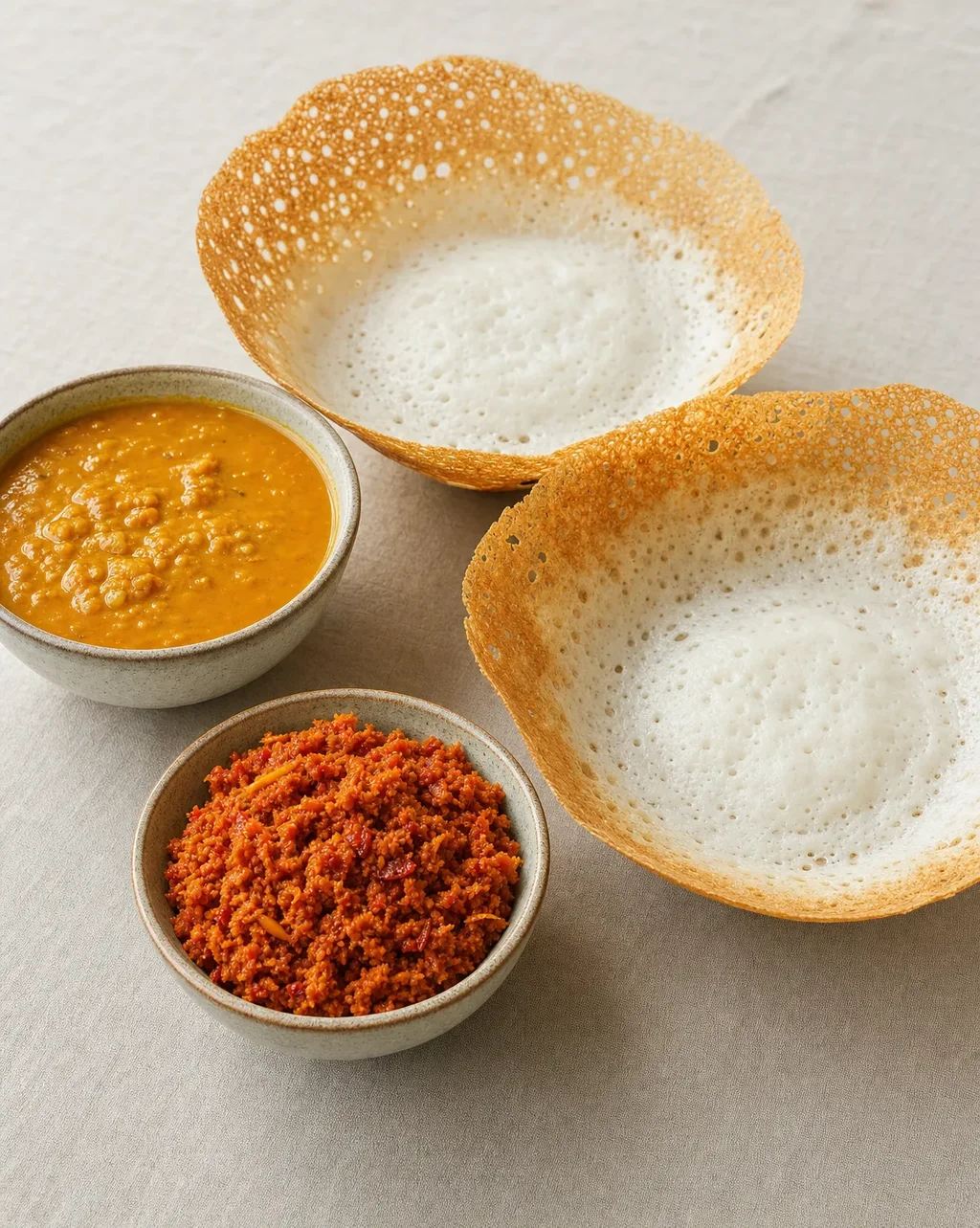
Sri Lankan food is a distinct cuisine built on roasted spice, coconut milk, and a souring agent called goraka. It is not a regional variation of Indian food. It has its own flavor logic, its own meal structure, and its own ingredient vocabulary. If you have never cooked it before, this guide gives you the framework to understand it before you cook your first dish.
What is Sri Lankan food?
Sri Lankan food is a cuisine from the island of Sri Lanka, centered on a daily meal format of steamed rice served alongside multiple curries, a sambol, and a lentil dish called parippu. The defining flavor characteristics are heat from fresh green and dried red chillies, depth from roasted curry powder, sourness from goraka or tamarind, and richness from coconut milk.
That description sounds close to South Indian cooking, and the two share a common ancestor. But Sri Lankan food diverges from Indian food in one critical way: the spice roasting. Sri Lankan black curry is made with a curry powder where the whole spices — coriander, cumin, fennel, cardamom, cloves, cinnamon — are dry-roasted until dark brown before grinding. That roasting step produces a flavour that is smokier, deeper, and more bitter than anything in an unroasted Indian curry powder. When someone tastes a Sri Lankan black curry and says it tastes different from Indian curry, that is almost always the reason.
There is also a white curry tradition, made with unroasted spice and generous coconut milk. The same ingredient — say, a drumstick or a piece of jackfruit — cooked as a black curry and as a white curry produces two completely different dishes. Understanding this roasted/unroasted distinction is the single most useful entry point into Sri Lankan cooking.
What does a traditional Sri Lankan meal look like?
A traditional Sri Lankan meal consists of a large portion of steamed white rice surrounded by a selection of small dishes: at minimum one curry (fish, meat, or vegetable), parippu (red lentils cooked with coconut milk and tempered with curry leaves and mustard seeds), pol sambol (a fresh coconut relish), and a cooked green vegetable. Lunch is the main meal of the day in most Sri Lankan homes.
The rice is not flavored. It is the neutral base that absorbs the surrounding dishes. What makes a Sri Lankan meal satisfying is the range of flavors happening at the same time — the heat of the sambol, the richness of the curry, the brightness of a piece of lime. No single component is meant to be eaten alone.
For people coming from other cuisines, this “rice and curry” format is worth understanding as a concept before cooking the individual recipes. Once you understand that the format is a system — a starchy base plus protein plus vegetable plus condiment plus acid — you will find it easy to build your own Sri Lankan meal with whatever ingredients you have.
What are the essential ingredients in Sri Lankan cooking?
Sri Lankan cooking requires a specific set of ingredients that are not interchangeable. These are not optional additions — they define whether a dish tastes authentically Sri Lankan or like a generic curry.
Coconut. Sri Lankan cooking uses coconut in three forms: scraped fresh coconut for sambols, thick coconut milk for curries and desserts, and thin coconut milk added to braises and soups. Coconut oil is the traditional cooking fat. Each form behaves differently and produces a different result.
Maldive fish. Dried, cured, and hardened tuna from the Maldives. It functions as an umami base in sambols, curries, and soups. Maldive fish has a hard, sharp texture when raw. It softens slightly when cooked but never fully dissolves. The flavour it adds is deep, savory, and fishy in a way that has no good substitute. For vegan cooking, dried shiitake mushroom or nori provides a partial replacement, though the result is not the same.
Goraka. A dried, black, curved fruit from the Garcinia family. It is the souring agent in Sri Lankan fish curries, most famously in ambul thiyal. Goraka produces a sour flavour that is darker and less citrusy than tamarind. Tamarind is the closest substitute, though the flavour is noticeably lighter. If you see a Sri Lankan fish curry recipe that calls for neither goraka nor tamarind, something is wrong.
Curry leaves (karapincha). Fresh curry leaves are used in tempering. Dried curry leaves have almost no flavour. If you cannot find fresh curry leaves, leave them out rather than substitute with dried.
Pandan (rampe). Long, flat, fragrant leaves used in rice cooking, curries, and desserts. In Sri Lankan rice, a folded pandan leaf is always cooked with the water before adding the rice.
Roasted curry powder. The foundation of Sri Lankan black curries. Made from dry-roasting coriander, cumin, fennel, black pepper, curry leaves, and several other spices until dark, then grinding. Look for brands labelled “roasted” or “black” curry powder. Unroasted curry powder produces a completely different result.
What are the most important Sri Lankan dishes to know?
Rice and curry. The daily meal format. Not a single dish but an entire meal system.
Hoppers (appa) Fermented rice flour and coconut milk pancakes cooked in a small wok-shaped pan, creating a bowl shape with crispy edges and a soft, spongy centre. Egg hoppers — with an egg broken into the centre before the batter sets — are the most common version.
Kottu roti A Sri Lankan street food made by chopping godamba roti with vegetables, eggs, and meat on a flat iron griddle. The metallic sound of the blades chopping on the griddle is one of the defining sounds of Colombo at night.
Pol sambol A fresh condiment made from scraped coconut, dried chilli, red onion, lime juice, and salt. It appears on almost every Sri Lankan breakfast table and alongside rice and curry.
Parippu Red lentils cooked with turmeric, coconut milk, and finished with a tempering of curry leaves, mustard seeds, dried red chilli, and shallots in coconut oil. The one dish served at every meal regardless of what else is on the table.
Ambul thiyal. A dry fish curry from the southern coast, cooked with goraka until the liquid almost completely reduces, leaving the fish coated in a dark, intensely sour paste.
Watalappan. A dense, dark steamed coconut custard made with jaggery (kithul treacle), eggs, and cardamom.
How is Sri Lankan food different from Indian food?
Sri Lankan food differs from Indian food in five specific ways that a home cook will notice immediately.
First, Sri Lankan curry powder is almost always roasted. The full dark-roast process in Sri Lankan black curry powder produces a bitter, smoky base that has no equivalent in Indian cooking.
Second, coconut is used more heavily and in more forms. Fresh scraped coconut appears as a condiment at almost every meal.
Third, maldive fish functions as a base flavour in Sri Lankan cooking in a way that has no direct parallel in Indian cuisine.
Fourth, goraka as a souring agent is specific to Sri Lankan cooking. It is not used in Indian cuisine.
Fifth, the meal format is different. The Sri Lankan rice-and-curry format is consistent across the island and forms the backbone of daily eating in a way that is more uniform than most Indian regional meal structures.
What are the regional differences in Sri Lankan cuisine?
Jaffna and the Tamil north. Known for dry heat, less coconut milk, and intensely spiced dishes. Jaffna crab curry is the most famous dish from this region.
Colombo and the western coast. The home of Sri Lankan street food: kottu roti at night, isso wade at the roadside, parippu with roast paan for breakfast.
The south coast. Famous for ambul thiyal and the coastal cooking tradition centred on fresh tuna, kingfish, and crab.
Malay and Burgher traditions. The Malay community brought watalappan and rice cooked in meat broth. The Burgher community left lamprais — rice and several curries wrapped and baked in a banana leaf.
Where do you start if you have never cooked Sri Lankan food?
Start with parippu. Red lentils, coconut milk, curry leaves, and a tempering of mustard seeds and shallots. It teaches the two most important techniques in Sri Lankan cooking: cooking lentils with coconut milk and tempering.
Once parippu is comfortable, make pol sambol. Fresh scraped coconut, dried chilli, red onion, lime. No cooking required. This teaches the flavour balance that Sri Lankan food depends on.
After those two, you have the condiment and the staple side. Add any Sri Lankan curry alongside them and you have a complete meal.
Love Sri Lankan food?
Check out my complete guide to Sri Lankan home cooking, pantry essentials, and techniques.
FAQ
What makes Sri Lankan food spicy? Sri Lankan food gets its heat primarily from dried red chillies used in curry powders and sambols, and fresh green chillies added to curries. Heat level varies by region, with Jaffna and the south coast producing the spiciest dishes. Many Sri Lankan dishes can be made milder by reducing the chilli quantity without losing the underlying flavor.
Is Sri Lankan food the same as Indian food? No. Sri Lankan food shares some ingredients with South Indian cooking but has a distinct cuisine built around roasted curry powder, maldive fish, goraka, and a specific meal format. The roasted curry powder used in Sri Lankan black curries has no direct equivalent in Indian cooking.
Is Sri Lankan food vegetarian or vegan friendly? Many Sri Lankan dishes are naturally vegan. Parippu, pol sambol, coconut sambol, most vegetable curries, and jackfruit curry are all vegan when made with coconut oil. Maldive fish appears in some sambols and curries — asking for it to be omitted is common practice.
What is the staple food of Sri Lanka? Rice is the staple food of Sri Lanka, eaten at lunch and often at dinner. For breakfast, hoppers (appa), string hoppers (indi appa), or roti served with curry and pol sambol are the most common staples.
What is the national dish of Sri Lanka? Rice and curry is generally considered the national dish — though it is more accurately a meal format than a single dish. The specific combination of rice with multiple curries, parippu, and pol sambol is the defining daily meal of Sri Lankan culture.
About Asha
Half Asian, half African cook raised between two food-obsessed cultures. I've spent 10 years learning Asian cooking traditions through family, friends, and thousands of hours at the stove — testing every dish until it works in a standard home kitchen.
Read my full storyRecipes to Try
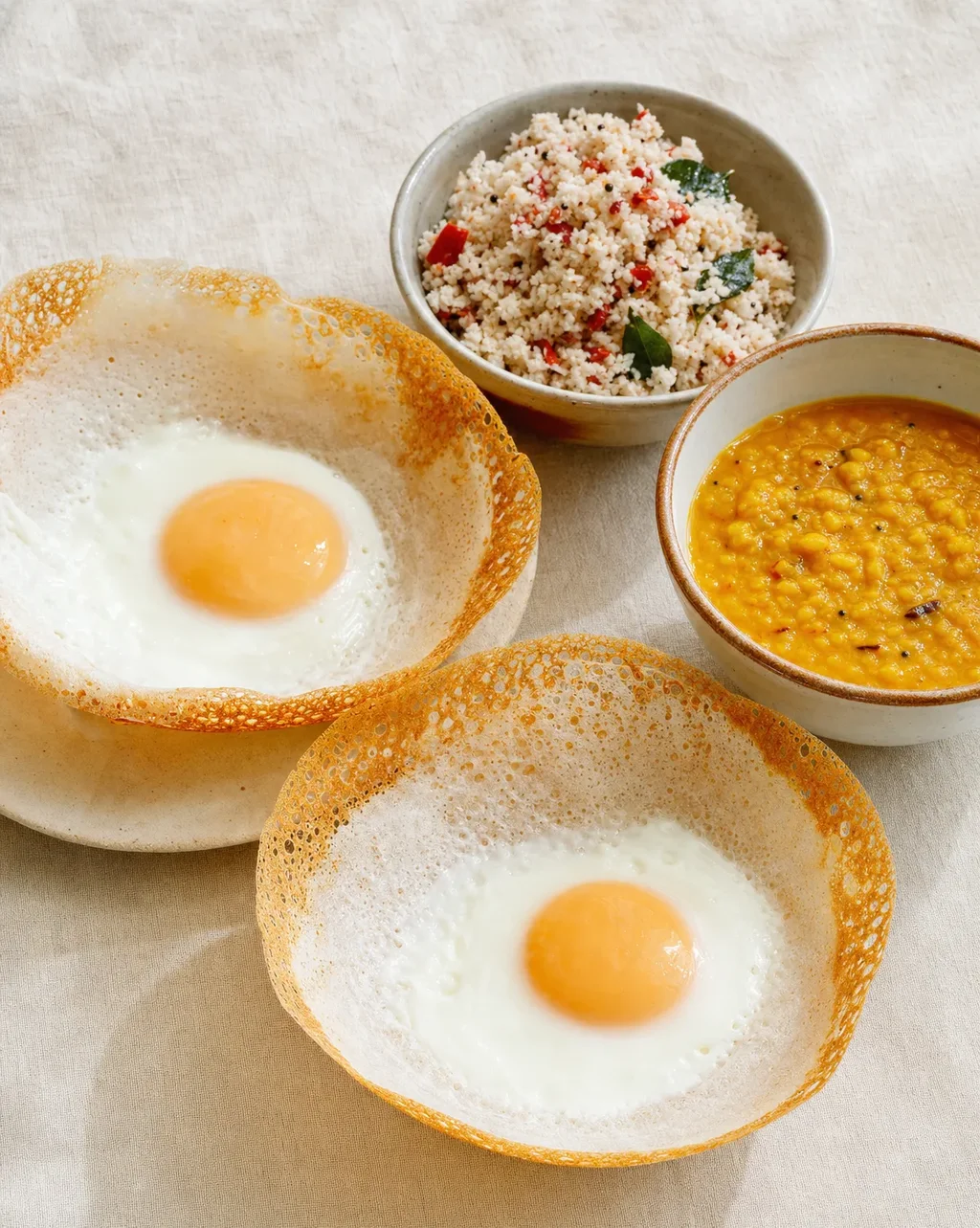
Sri Lankan Hoppers (Appa) Recipe — Plain and Egg Hoppers
Sri Lankan Pol Sambol (Coconut Sambol) Recipe
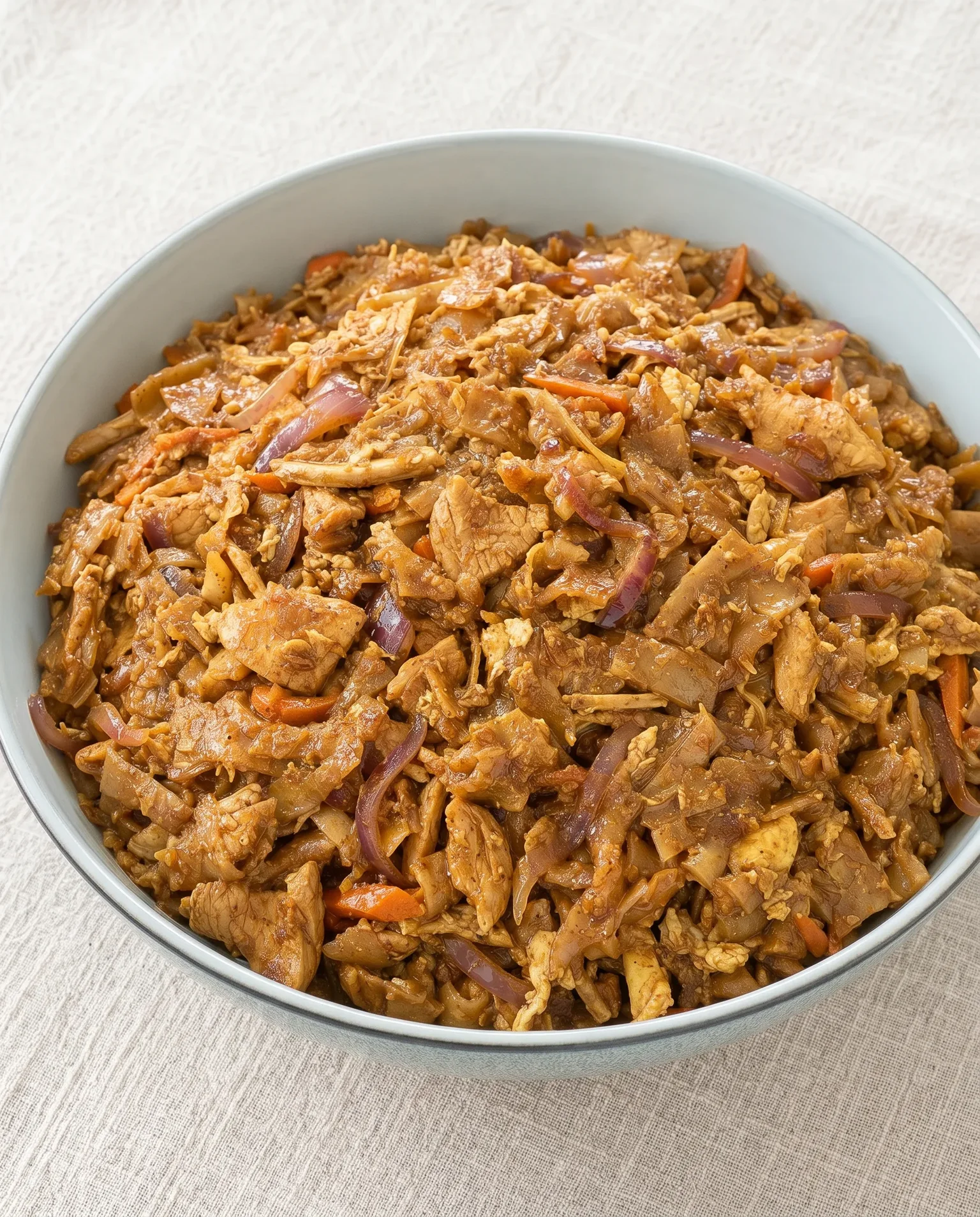
Sri Lankan Chicken Kottu Roti Recipe (With Homemade Godamba Roti)

Sri Lankan Parippu (Dhal Curry) Recipe

Easy Ma La Xiang Guo At Home

Egg Noodle Soup with Shrimp Wontons
Chicken Satay Recipe (Sate Ayam)

How to Make Crispy Honey Garlic Chicken

Best Spicy Edamame Recipe

Quick & Easy Mongolian Beef — Better Than Takeout

Bang Bang Chicken Skewers Recipe

Loading comments...